For nearly half a century, Apple’s identity has been forged in the crucible of absolute control. From the vertical integration of hardware and software to the curated walled garden of the App Store, Apple’s promise to the consumer has always been binary: you either embrace the Apple ecosystem, or you accept a disjointed experience elsewhere. Apple built its empire on the premise that it alone possessed the secret sauce to integrate technology seamlessly into the human experience.
However, the rise of Generative AI has exposed a structural vulnerability in this fortress. Today, the company that once dictated the pace of the industry finds itself in an uncomfortable position: Siri, the digital face of the Apple experience, needs Google to survive. This reliance represents more than a technical pivot; it is a fundamental challenge to the "Apple Way."
The Genesis of the Siri Problem
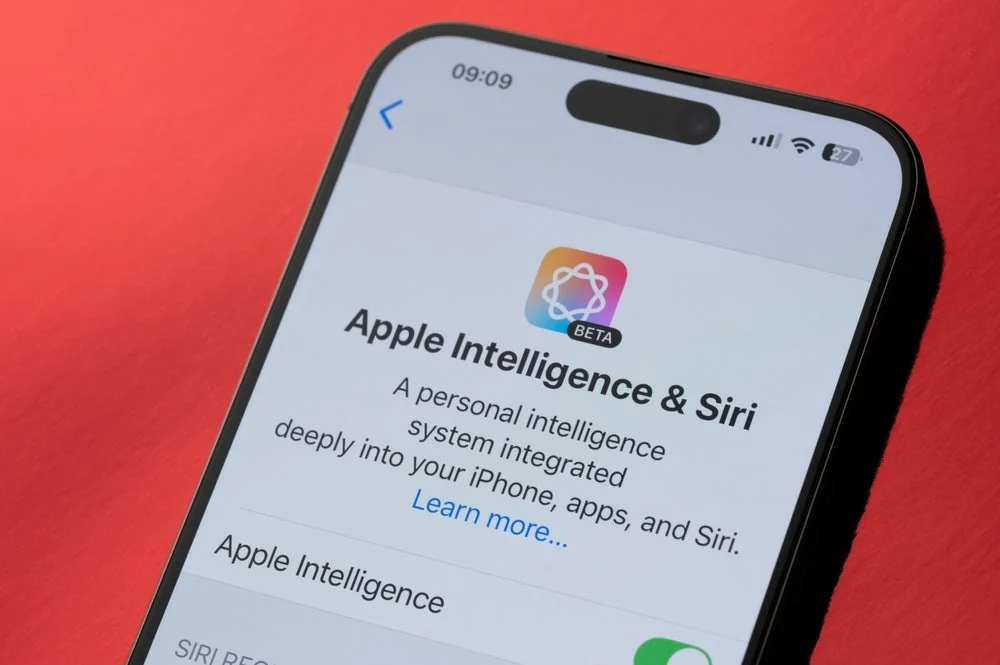
Apple’s brand is built on the narrative of the "curated experience." Whether it is the privacy architecture of the iPhone or the intuitive nature of macOS, the company’s competitive advantage has always been its ability to own every layer of the stack. When Apple introduced its "Apple Intelligence" initiative in 2024, the goal was to apply this same philosophy to the AI era.
The promise was clear: Apple would deliver AI that was personalized, deeply integrated, and, above all, private. Siri, once the pioneer of voice assistants, was meant to be the cornerstone of this evolution. It was supposed to evolve from a simple task-automation tool into an intelligent, context-aware agent capable of orchestrating complex workflows across applications.
Instead, Siri has become the site where Apple’s mythology has begun to fray. The anticipated leap in intelligence—promised to be transformative—was met with a series of development roadblocks. By March 2025, the reality had set in: the advanced, multi-step capabilities that users were promised were being delayed indefinitely, with major updates pushed into 2026. This was not merely a software delay; it was a strategic failure that left Apple trailing behind agile competitors like OpenAI, Google, and Microsoft.
A Chronology of the AI Stumble
The timeline of Apple’s current predicament illustrates a company struggling to maintain its momentum in a fast-moving market:
- June 2024: Apple announces "Apple Intelligence," a suite of generative AI features designed to modernize Siri. The marketing narrative emphasizes on-device processing and "Private Cloud Compute" to maintain Apple’s reputation for data security.
- Late 2024: Early developer previews suggest that while the new Siri is more aesthetically pleasing, its actual reasoning capabilities remain limited compared to Large Language Models (LLMs) from competitors.
- March 2025: A watershed moment occurs when Apple publicly acknowledges that several high-profile AI features for Siri will not meet their release targets. Reports from Reuters and MacRumors confirm that the most advanced functionalities are pushed to 2026.
- Mid-2025: Market analysts and critics, including major coverage from The Wall Street Journal, begin to openly question Apple’s AI strategy, highlighting a growing "innovation gap" between Apple and its rivals.
- Late 2025: Apple begins to pivot, integrating third-party AI models—specifically Google’s Gemini—to provide the heavy lifting that its internal systems cannot yet handle.
Supporting Data and the Innovation Gap
The criticism leveled against Apple is not merely subjective; it is reflected in the functional limitations of the current Siri. Despite the 2024 updates, the assistant remains largely trapped in the same narrow lane it has occupied since its inception. It excels at binary, simple commands: setting timers, checking the weather, and managing basic text inputs.
However, when tested against complex, multi-step prompts that require context, judgment, or cross-app integration, Siri frequently defaults to "I found this on the web." In an era where users expect AI to function as a personal assistant capable of synthesizing information from emails, calendars, and third-party apps, this lack of agency is a critical deficit.
Market data suggests that Apple’s delay has allowed competitors to capture the "early adopter" segment of the AI market. While Apple remains a hardware juggernaut, its lack of a proprietary, high-performing LLM has forced it into a position where it must rely on partnerships. This creates a revenue-sharing and technological-dependency model that is entirely foreign to the company’s historical operating model.
The Philosophical Contradiction of the Google Pivot
The decision to bring Google’s Gemini into the Siri experience is, perhaps, the most significant indicator of Apple’s current crisis. For decades, Apple has marketed "Control" as the primary ingredient for "Quality." By outsourcing the intelligence of its flagship assistant to a competitor, Apple has inadvertently admitted that its internal R&D has hit a wall.
While Apple’s PR team has meticulously crafted a narrative of "user choice" and "privacy-first integration," the market impact is simpler: the company that built its reputation on owning the entire process needed Google’s help to remain credible.
This creates an emotional disconnect for the consumer. The "Apple magic" is predicated on the idea that the hardware and software are inseparable, and that this union is what makes the device "just work." By introducing a third-party AI backend, Apple is essentially telling its users that the "Apple experience" now has an expiration date, after which a Google-powered solution must take over.
The Art of the Diversion: How Leaks Became a Shield
If the Siri failure is the "problem," then the recent surge of leaks regarding future hardware is the "distraction."
In a masterclass of communications management, Apple has utilized the media’s obsession with rumors to shift the conversation away from software failures. While the company struggles with AI, the tech press has been flooded with reports of:
- Foldable iPhones
- Touchscreen MacBooks
- Smart glasses
- Next-generation wearable health tech
These leaks function as a strategic smoke screen. In a traditional corporate environment, a leak is a loss of control—an uncontrolled release of sensitive information. However, within the Apple ecosystem, leaks have been weaponized as a marketing tool. By feeding the rumor mill, Apple allows the public to obsess over the "next big thing" rather than the "failed current thing."
This creates a self-sustaining cycle of anticipation. When the software fails to impress, the company provides a new hardware blueprint for the media to decode. It is a sophisticated, perhaps even desperate, way to regain narrative control. It forces the public to view Apple not as a company struggling with code, but as a company currently "building the future."
Strategic Implications and Future Outlook
Apple stands at a crossroads. Its current strategy of "AI via partnership" is a stopgap, not a long-term solution. If Apple is to regain its reputation as an innovation leader, it must achieve three things:
- Reclaim the Intelligence Layer: Apple must prove that it can build or train a proprietary model that rivals the reasoning capabilities of Gemini or GPT-4. Relying on Google is a luxury that will eventually erode Apple’s margins and its brand integrity.
- Define the "Human" AI Experience: Rather than chasing raw power, Apple’s path to victory lies in context. If Apple can use its access to user data—within its privacy framework—to create an AI that is more relevant than a raw, powerful LLM, it may still win the consumer market.
- Modernize the Infrastructure: The delay in Siri’s development suggests that Apple’s underlying software architecture may be struggling to support the high-compute demands of modern AI. A major structural overhaul of the operating system may be necessary.
The "Siri problem" is, ultimately, a microcosm of the challenges facing Apple as it transitions into an AI-first company. The company’s historical success was built on creating hardware that felt like magic. Now, that magic must be sustained through invisible, hyper-intelligent software.
If Apple fails to bridge this gap, it risks becoming a hardware utility—a company that provides the screen for someone else’s intelligence. But if it succeeds, it will prove that it can adapt its philosophy of control to a world where the most important asset is no longer the device in your hand, but the intelligence that lives inside it. For now, the narrative is a work in progress, and the world is watching to see if Apple can truly innovate its way out of its own mythology.