By Nadica Naceva
Published October 15, 2026 | 12 min read
In the ultra-competitive landscape of direct-to-consumer (D2C) e-commerce, few brands manage to pull off the elusive pivot from a niche product recommendation to an established, premium luxury staple. For decades, the luxury bedding and loungewear markets were dominated by heritage department store brands, legacy textiles companies, and legacy European names that relied on multi-generational prestige, high-end retail footprints, and glossy, traditional magazine advertisements.
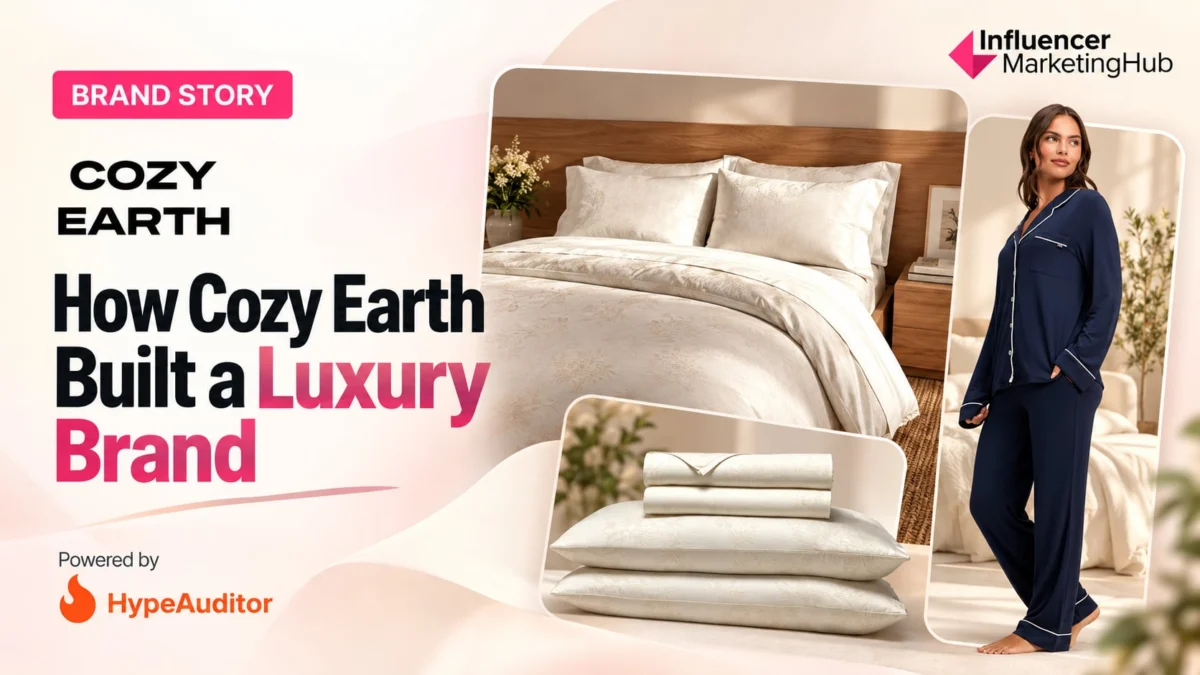
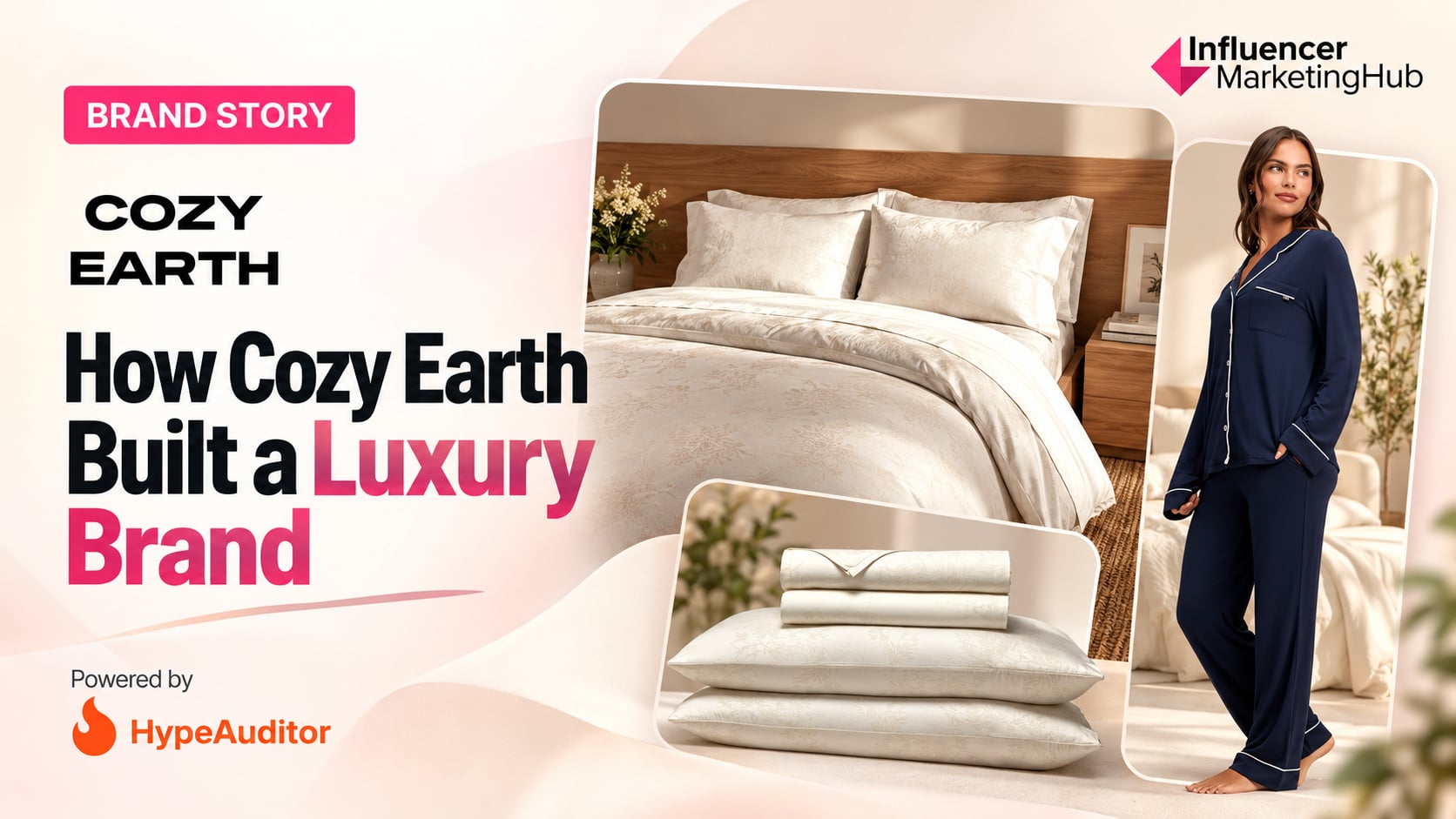
Enter Cozy Earth. Founded on the promise of exceptionally soft, temperature-regulating bamboo bedding, the brand did not rely on traditional luxury playbooks. Instead, Cozy Earth constructed its empire on the backbone of modern digital media: authentic influencer marketing, creator-led product recommendations, and word-of-mouth advocacy scaled to a massive corporate level.
Today, Cozy Earth is a case study in how digital content, when aligned with uncompromising product quality, can reshape consumer perceptions of luxury. By treating influencers not merely as transactional advertising channels, but as core brand architects, the company achieved what few modern D2C brands ever manage—sustainable, long-term brand equity.
Main Facts: The Blueprint of Cozy Earth’s Success
At its core, Cozy Earth’s strategy represents a fundamental shift in how high-ticket, premium goods are marketed. While traditional brands spend millions securing physical shelf space in luxury retailers like Neiman Marcus or Bloomingdale’s, Cozy Earth leaned heavily into the digital ecosystem, optimizing every touchpoint from social proof to unboxing experiences.
Several foundational pillars define the brand’s meteoric rise:
- The Product-Led Growth Engine: Cozy Earth did not scale mediocre products with aggressive marketing; rather, they anchored their entire ecosystem on high-performance, ultra-soft, and durable textiles (primarily bamboo viscose) that naturally invited organic praise.
- Strategic Influencer Partnerships: Moving away from one-off, transactional sponsored posts, the brand focused on long-term relationships with creators who genuinely used and loved the product, fostering authentic consumer trust.
- The Oprah Effect and High-Profile Validation: Securing coveted spots on lists like Oprah’s Favorite Things provided critical mainstream validation, elevating the brand from an internet darling to a recognized household name.
- Community-Driven Social Proof: By leveraging micro- and macro-influencers across platforms like Instagram, TikTok, and YouTube, the company turned everyday recommendations into a continuous stream of social proof that lowered acquisition barriers.
Chronology: The Evolution from Niche Startup to Luxury Powerhouse
To understand how Cozy Earth transformed product recommendations into a luxury brand, it is necessary to examine the chronological evolution of the company’s growth strategies.
Phase 1: Product Validation and Early Grassroots Advocacy (Pre-2015)
When Cozy Earth first entered the market, the direct-to-consumer bedding space was already crowded with early-generation mattress-in-a-box startups and cheap synthetic sheet alternatives. Founders realized that competing on price was a losing battle. Instead, they focused heavily on material science—sourcing viscose from bamboo that offered superior moisture-wicking and cooling properties compared to traditional cotton.
In this foundational phase, growth was slow and deliberate. The brand relied heavily on early adopters, trade shows, and initial word-of-mouth recommendations. Early customers became the brand’s first micro-influencers, sharing their bedding experiences on early social media channels without formal corporate incentives.
Phase 2: The Micro-Influencer Boom and Affiliate Scaling (2016–2019)
As the D2C landscape matured, Cozy Earth recognized the untapped potential of the burgeoning influencer marketing industry. Rather than allocating massive budgets to television or print, the company redirected capital toward gifting campaigns.
They sent packages to lifestyle, interior design, and wellness creators across Instagram and YouTube. The strategy was simple: let the product speak for itself. Because the bamboo sheets offered a distinct tactile difference from standard cotton, creators were genuinely impressed, leading to unprompted or high-conversion sponsored reviews. During this window, Cozy Earth built out robust affiliate structures, transforming enthusiastic recommendations into a reliable, revenue-generating sales engine.
Phase 3: Mainstream Crossover and Validation (2020–2022)
The inflection point for Cozy Earth arrived when the brand caught the attention of major mainstream tastemakers, most notably Oprah Winfrey. Being featured on Oprah’s Favorite Things served as an institutional stamp of luxury that bridged the gap between internet-native D2C brand and legacy status.
Concurrently, the company expanded its product catalog beyond bedding into luxury loungewear, robes, and bath products. This diversification allowed creators to showcase a complete lifestyle aesthetic rather than just a single bedroom product, reinforcing the brand’s luxury positioning.
Phase 4: Omnichannel Expansion and Creator-Led Equity (2023–Present)
By the mid-2020s, Cozy Earth had matured past pure-play digital marketing. The brand transitioned into sophisticated omnichannel distribution, entering high-end retail partnerships while maintaining its core D2C creator engine.
Today, creator partnerships are structured more like brand ambassadorships. Top-tier influencers co-create seasonal collections, host live-shopping events, and participate in brand equity initiatives, cementing Cozy Earth as a permanent fixture in the modern luxury landscape.
Supporting Data: The Mechanics of Creator-Driven Luxury
To quantify the impact of Cozy Earth’s influencer strategy, market analysts and digital marketing experts frequently point to several core metrics that separate top-tier D2C brands from failing startups.
Table: Traditional Luxury vs. Cozy Earth’s Modern D2C Luxury Model
| Strategic Dimension | Traditional Luxury Brands | Cozy Earth’s D2C Luxury Model |
|---|---|---|
| Primary Acquisition Channel | Print magazines, billboard ads, flagships | Creator partnerships, social proof, video reviews |
| Trust Building Mechanism | Heritage, legacy storytelling, exclusivity | Authentic peer recommendations, unboxing videos |
| Product Feedback Loop | Slow, seasonal, retail-buyer driven | Rapid, real-time social media sentiment analysis |
| Pricing Strategy | High markup based on brand history | High markup justified by material quality + social validation |
| Customer Engagement | Top-down broadcasting | Two-way dialogue via community creators |
According to industry benchmark reports within the e-commerce sector, brands that successfully integrate creator recommendations into high-ticket items experience:
- A 35% reduction in customer acquisition costs (CAC) compared to traditional paid-search-heavy brands.
- Higher average order values (AOV), as consumers guided by trusted lifestyle influencers are more likely to purchase bundled items (e.g., sheet sets paired with matching duvet covers and loungewear).
- Significantly lower return rates, driven by the detailed, transparent video reviews provided by creators that set accurate consumer expectations regarding texture, fit, and color.
Official Responses and Industry Insights
The transformation of product recommendations into a luxury brand has not gone unnoticed by marketing executives and retail analysts. Industry leaders have frequently analyzed Cozy Earth’s trajectory to understand how digital-first brands can transcend transient internet trends.

In corporate statements and industry panels, Cozy Earth’s leadership has consistently emphasized that influencer marketing only works when the underlying product meets—and exceeds—consumer expectations.
"You can buy all the sponsored posts and influencer partnerships in the world, but if the product feels cheap, the consumer will churn after the first purchase," noted a senior brand marketing strategist during a recent retail summit. "Luxury is ultimately about trust, longevity, and sensory experience. Our creators didn’t build our luxury status for us—they amplified a quality that was already undeniable."
Digital marketing experts point out that Cozy Earth’s success stems from avoiding the "infomercial" trap common among early D2C brands. By partnering with creators who align with wellness, slow living, and home aesthetics, the brand successfully associated its products with a lifestyle of comfort and self-care, which modern consumers equate with contemporary luxury.
Implications: What Cozy Earth’s Success Means for the Future of Retail
The case of Cozy Earth offers profound lessons for brands operating across retail, fashion, home goods, and beauty sectors. As consumer skepticism toward traditional advertising grows, the mechanics of luxury branding are undergoing a permanent structural shift.
1. The Redefinition of Luxury Status Symbols
Historically, luxury was defined by exclusivity, high barriers to entry, and gatekept heritage. Cozy Earth demonstrates that modern luxury is increasingly defined by consensus validation—the collective endorsement of trusted peers and creators. When hundreds of respected lifestyle creators vouch for the quality of a product, it achieves a form of democratic prestige that traditional advertising struggles to replicate.
2. The Evolution of Influencer Compensation
The era of transactional, one-off influencer postings is giving way to deeper, performance-aligned partnerships. Brands looking to emulate Cozy Earth must invest in long-term creator relationships, treating influencers as extension of their creative and marketing departments rather than living billboards.
3. Product Excellence as the Ultimate Marketing Tool
Perhaps the most critical takeaway is that marketing amplification cannot save an inferior product. Cozy Earth’s ability to command luxury-tier pricing ($300+ for sheet sets) relies entirely on the tactile, tangible superiority of its bamboo textiles. Without the product quality to back up the creator recommendations, the brand would have remained a fleeting social media trend rather than a lasting market leader.
As the retail landscape continues to evolve through 2026 and beyond, Cozy Earth serves as a masterclass in modern brand building—proving that when authentic product recommendations meet meticulous execution, digital word-of-mouth can successfully rewrite the rules of luxury.