By Global Tech & Politics Desk
Published: November 2026
Main Facts
In a political landscape defined by seismic shifts, the 2026 midterm elections will be remembered not only for a sweeping generational wave of Democratic victories at the federal and state levels—widely interpreted as a nationwide referendum against Trumpism—but also for a grassroots backlash of unprecedented proportions. Tens of millions of Americans casting ballots across the country targeted a secondary, yet intensely local, source of frustration: the explosive, unchecked proliferation of artificial intelligence data centers.
Across 47 local midterm elections in municipalities and townships spanning the United States, voters overwhelmingly sided with measures designed to halt, slow, or impose stringent restrictions on new data center developments. According to data tracked by Data Centers on the Ballot, voters favored restrictive measures in 38 out of the 39 completed counts.
Of the remaining eight races, six are currently leading in favor of restrictions based on partial reporting, while the final two races await initial tabulations. To date, only a single ballot measure aimed at curbing data center expansion has failed: an initiative in Harwood, North Dakota, which would have mandated an independent environmental and infrastructural review before approving new builds.
Exit polls conducted by NBC News during the midterms underscore how deeply this issue has penetrated the public consciousness. A striking 56% of voters reported that the rapid expansion of AI data centers and their associated infrastructure was either a "crucial" or "a "major factor" in shaping their vote. Local communities are increasingly pushing back against the heavy environmental tolls, surging electricity bills, constant noise pollution, and dwindling regional resources required to power the modern artificial intelligence boom.
Chronology of a Grassroots Movement
The path to the unprecedented 2026 ballot box showdown was paved over several years of rapid, often opaque technological development that caught many local municipalities entirely unprepared.
2023–2024: The Generative AI Gold Rush
Following the widespread public release of advanced generative AI models, tech giants and specialized infrastructure firms scrambled to secure land, water rights, and massive energy allocations. Quietly, massive swaths of rural land, suburban peripheries, and post-industrial towns were targeted for multi-billion-dollar server complexes.
2025: The First Tensions Surface
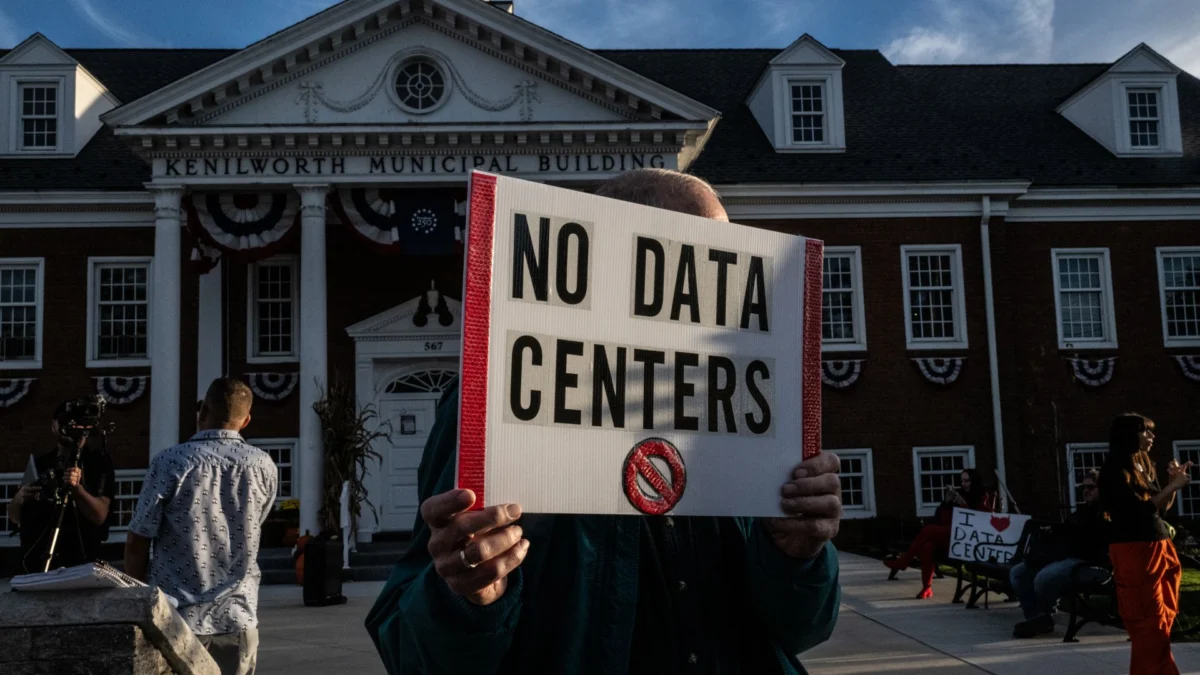
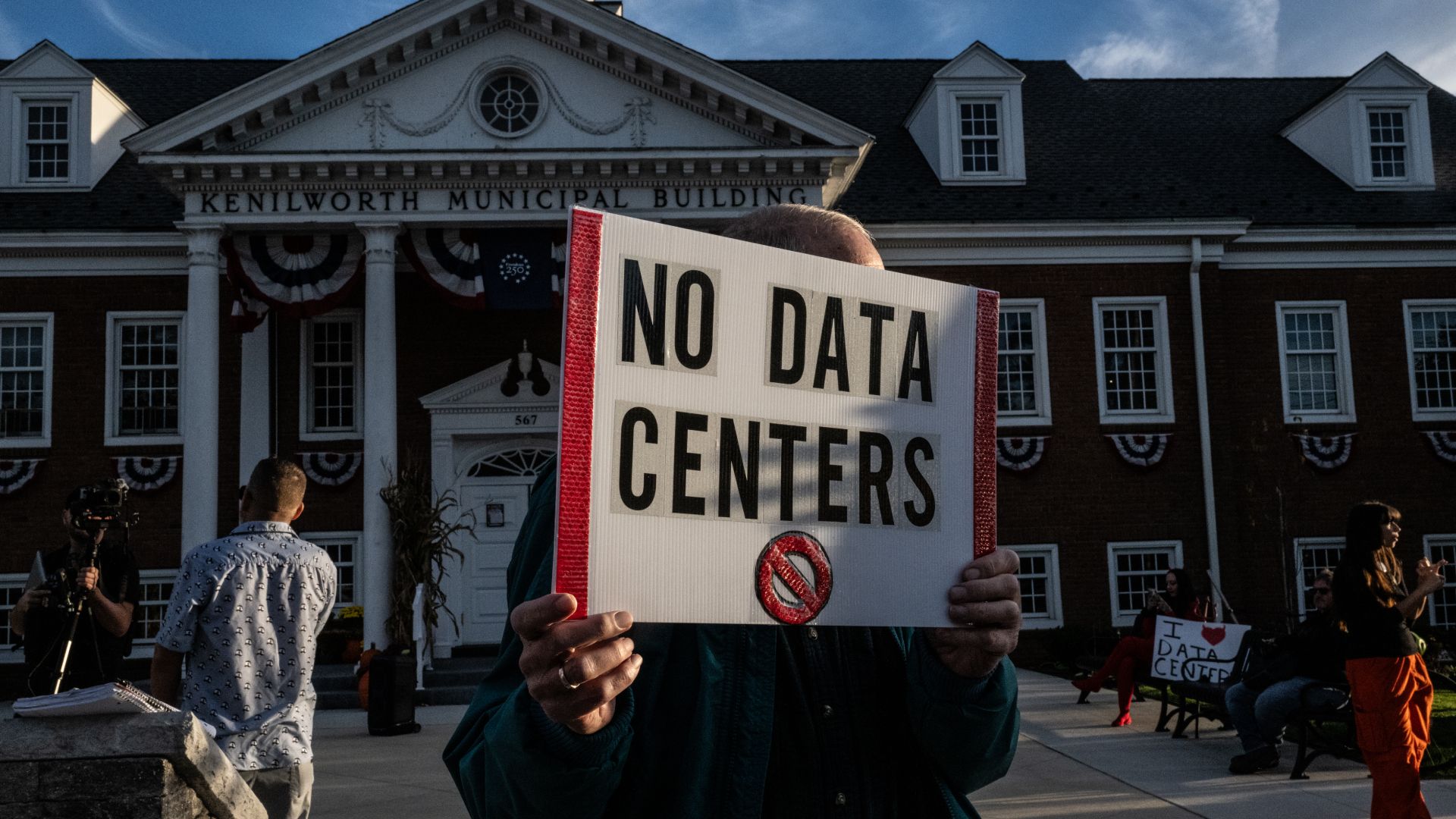
As construction began on complexes like the controversial CoreWeave AI data center in Kenilworth, New Jersey—which sparked intense, months-long local protests—residents began to realize the true footprint of these facilities. Communities encountered unexpected realities: deafening industrial cooling fan noise, skyrocketing local utility rates, and fears of strained municipal water grids. Local town halls across states like Virginia, Texas, Ohio, and New Jersey turned into battlegrounds between cash-strapped local governments eager for tax revenue and residents demanding environmental impact studies and zoning freezes.
Early 2026: Escalation to the Ballot Box
Recognizing that traditional municipal zoning boards were frequently outmatched or swayed by the deep pockets of tech conglomerates, grassroots organizations mobilized. Activists successfully gathered signatures to place direct-democracy measures onto local ballots. Citizens bypassed friendly or complacent local politicians, setting the stage for the definitive showdown during the November midterms.
November 2026: The Midterm Watershed
On election day, voters across nearly four dozen municipalities delivered a coordinated message. Rather than relying solely on legislative lobbying, communities utilized local charters, moratoriums, and direct ballot initiatives to put a legal brake on what they viewed as an unregulated corporate land grab.
Supporting Data and Municipal Outcomes
The numbers compiled from the 2026 midterms paint a stark picture of a nationwide consensus regarding tech infrastructure sprawl. The public pushback is not isolated to a single progressive enclave or conservative stronghold; it spans diverse geographic and political demographics.
- Total Ballots Tracked: 47 distinct municipal elections featured dedicated local measures concerning data center regulation.
- Completed Counts: Out of 39 finalized tallies, 38 passed, enacting strict local controls, moratoria, or zoning prohibitions. Only 1 failed (in Harwood, North Dakota).
- Pending Counts: Out of 8 unfinalized races, partial reports show pro-restriction majorities leading in all 6 partially reported districts.
- Voter Sentiment: 56% of midterm voters surveyed by NBC News identified AI infrastructure policies as a primary factor in their political decision-making, cutting across traditional party lines.
The nature of the approved measures varies by region, reflecting the specific localized anxieties of impacted communities:
- Construction Moratoria: Temporary freezes on all new data center permits to allow for comprehensive regional grid studies.
- Noise and Emission Caps: Strict local ordinances penalizing facilities for exceeding decibel limits, particularly due to the ceaseless drone of industrial-grade liquid and air cooling systems.
- Resource Protection Mandates: Requirements that data center operators secure independent water and power sources rather than draining municipal utilities traditionally relied upon by local residents.
Official Responses and Industry Reactions
The sweeping nature of the midterm results has sent shockwaves through Silicon Valley, Wall Street, and local government offices alike.
Industry representatives and trade groups have expressed deep concern over the localized legislative roadblocks. In statements released following the election, spokespeople for major cloud and AI infrastructure developers argued that halting domestic data center construction threatens America’s competitive edge in the global artificial intelligence race.
"While we completely understand and respect community concerns regarding environmental sustainability and resource management, halting infrastructure development locally risks hamstringing the nation’s technological future," noted a representative from a prominent industry advocacy coalition. "The computational demands of modern AI require massive, centralized facilities. We must work collaboratively with local stakeholders rather than locking communities into rigid moratoria that could drive critical tech innovation overseas."
Conversely, local elected officials and grassroots organizers view the election results as a long-overdue assertion of community rights. Mayors and municipal council members who previously faced intense pressure from corporate lobbyists now find themselves armed with an undeniable mandate from their constituents.
"For too long, tech giants have treated small towns and suburban neighborhoods as nothing more than cheap electricity and empty acreage," said a leading organizer for Data Centers on the Ballot. "Yesterday proved that everyday Americans are no longer willing to sacrifice their quality of life, their quiet neighborhoods, and their affordable utility bills simply to feed the bottomless computational appetite of generative AI."
Implications for the Future of AI and Local Governance
The outcomes of the November 2026 midterms carry profound implications that will shape the trajectory of both American politics and the global technology sector for years to come.
1. A New Front in American Politics
Data center policy has officially transitioned from a niche zoning dispute into a mainstream political wedge issue. Politicians running at state and federal levels can no longer afford to ignore the intersection of technological infrastructure and local quality of life. The willingness of voters to cross party lines to protect their communities signals that "NIMBYism" (Not In My Backyard) regarding AI has evolved into a sophisticated, highly organized political movement.
2. The Decentralization Dilemma
As municipal governments increasingly slam the door on traditional data center hubs—such as Northern Virginia’s heavily saturated "Data Center Alley"—tech companies will be forced to pivot. This may accelerate investments in off-grid power solutions, such as co-locating data centers directly next to nuclear or renewable energy plants in remote areas, or pushing developments into international markets with fewer regulatory hurdles.
3. Economic Versus Environmental Tensions
Local municipalities now face a difficult balancing act. While data centers promise substantial property tax revenues that can fund local schools and public services, the hidden costs—strained power grids, rolling brownout risks, acoustic pollution, and massive water consumption—frequently outweigh the fiscal benefits in the eyes of residents.
As the dust settles on the 2026 midterms, one reality remains undisputed: the unchecked expansion of the artificial intelligence era has hit a powerful, democratic speed bump. The future of AI will no longer be determined solely by venture capitalists and software engineers in Silicon Valley, but by the citizens living next door to the humming warehouses that power the digital age.