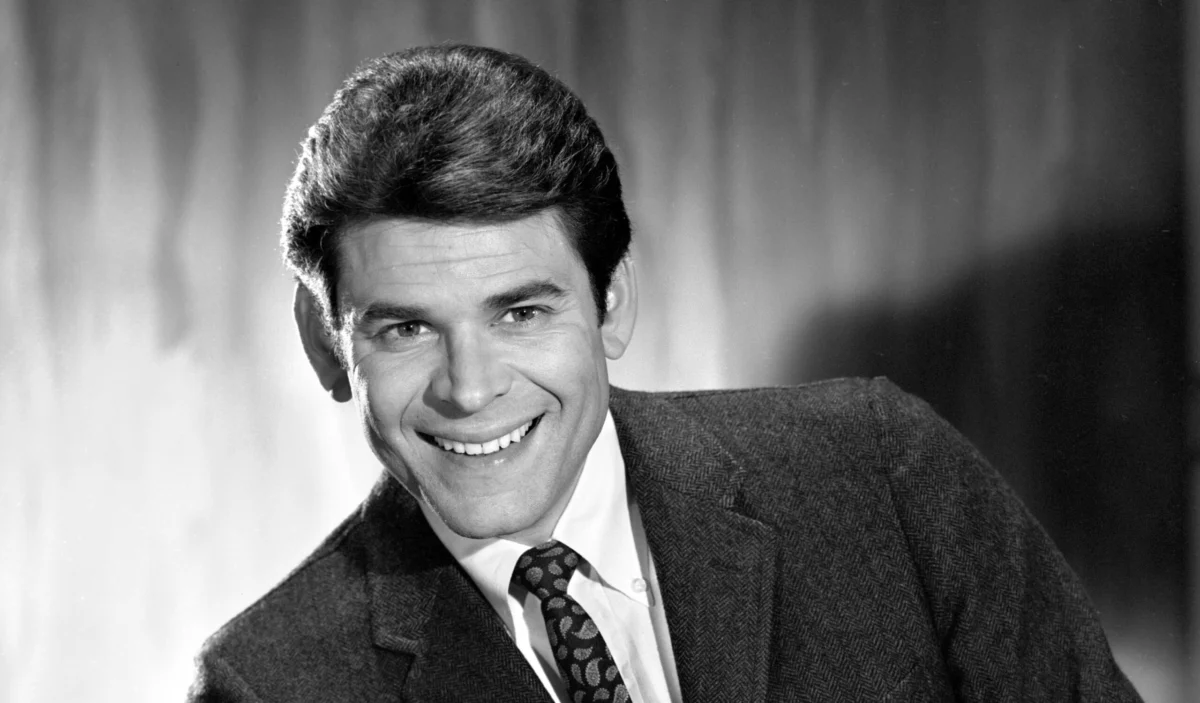
Joby Baker, a quintessential figure of mid-century American entertainment whose versatile career spanned the golden age of television, the height of the beach-party film genre, and the refined world of contemporary fine art, passed away on June 22, 2024. He was 92. Baker died of natural causes in Mount Kisco, New York, leaving behind a legacy that bridged the gap between the slapstick comedy of the 1950s and the introspective artistic movements of the late 20th century.
His passing marks the departure of one of the industry’s most reliable and charismatic "familiar faces." Whether playing the comic relief in an Elvis Presley musical, a soldier in a gritty war drama, or a quick-witted disc jockey in a classic sitcom, Baker possessed a unique ability to elevate every scene he inhabited.
Main Facts: A Life Defined by Versatility
Joby Baker’s career was characterized by an extraordinary range that few of his contemporaries could match. Born Joseph N. Baker on March 26, 1934, in Montreal, Quebec, he was a Canadian-born talent who found his true calling in the sun-drenched studios of Hollywood. His career trajectory is a roadmap of the evolution of American media, starting with guest spots on live television and transitioning into major motion pictures and long-running TV procedurals.
In a poignant coincidence noted by his family, Baker’s death occurred just ten days after the passing of Ronnie Schell, his long-time friend and co-star. The two were the comedic heartbeat of the 1967 CBS sitcom Good Morning World, a show that, while short-lived, remains a cult favorite for its sharp writing and the early-career appearance of Goldie Hawn.
Beyond the screen, Baker was a man of profound intellectual and creative depth. In his middle and later years, he successfully transitioned from the public eye of Hollywood to the contemplative world of fine art. As a painter and sculptor, he earned critical acclaim, proving that his creative well ran far deeper than the light-hearted roles that made him famous.
Chronology: From Montreal to the Berkshires
The Early Years and Hollywood Arrival (1950s)
Baker’s journey began in Montreal, where he discovered his passion for performance at a young age. Seeking the epicenter of the entertainment world, he moved to Hollywood in the early 1950s. He quickly found work in the burgeoning medium of television. His early credits read like a "who’s who" of classic broadcasting, including appearances on The Red Skelton Hour, Studio One, and The George Burns and Gracie Allen Show. These early roles allowed him to hone his timing alongside the masters of vaudeville-style comedy.
The Film Peak: Gidget, Elvis, and Disney (1959–1973)
The late 1950s and 1960s saw Baker become a staple of the silver screen. He carved out a niche in "light comic fare," most notably in the Gidget franchise. He appeared in the original 1959 Gidget starring Sandra Dee, and returned for Gidget Goes Hawaiian (1961) and Gidget Goes to Rome (1963). These films defined the "surf culture" of the era, and Baker’s presence provided a consistent thread of humor for a generation of moviegoers.

In 1965, Baker reached a new level of pop-culture visibility when he was cast in the Elvis Presley vehicle Girl Happy. Playing the bass player in Presley’s band, Baker served as the comedic foil to the "King of Rock and Roll," showcasing his ability to hold his own against the biggest stars in the world.
As the 1960s progressed, Baker became a favorite of the Walt Disney Studio. He appeared in high-profile family features such as The Adventures of Bullwhip Griffin (1967), starring Roddy McDowall, and the supernatural comedy Blackbeard’s Ghost (1968). His final major Disney credit came in 1973’s Superdad, where he shared the screen with Bob Crane and a young Kurt Russell.
The Sitcom Milestone: ‘Good Morning World’ (1967–1968)
Perhaps Baker’s most enduring contribution to television history was his starring role in Good Morning World. Created by Carl Reiner’s protégés, the show featured Baker and Ronnie Schell as Dave Lewis and Larry Clarke, a pair of morning radio DJs in Los Angeles. The show was a masterclass in "buddy comedy," contrasting Baker’s more grounded temperament with Schell’s high-energy antics. The series is also historically significant for casting Goldie Hawn in her first regular television role, playing Baker’s girlfriend, Sandy.
Dramatic Turn and Television Prolificacy (1970s–1984)
While many knew him for comedy, Baker was an accomplished dramatic actor. He spent much of the 1970s guest-starring in the era’s most prestigious dramas and procedurals. He portrayed Private Kelly in the first season of the World War II epic Combat! and made appearances in The Alfred Hitchcock Hour, Mannix, The Streets of San Francisco, and Barnaby Jones. His final acting credit came in 1984, in the television adaptation of The Paper Chase, marking the end of a three-decade run in front of the camera.
Supporting Data: A Prolific Portfolio
The sheer volume of Baker’s work provides a snapshot of his work ethic and the industry’s reliance on his talent.
- Television Credits: Over 50 unique television series, ranging from the 1950s to the 1980s.
- Film Credits: Over 15 major motion pictures, including three entries in the Gidget franchise.
- Artistic Transition: By the mid-1970s, Baker began exhibiting his art in Los Angeles. His work was eventually featured in prominent galleries across New York and New England.
- Creative Partnership: In 1984, he married the legendary Emmy-winning lyricist Dory Previn. Their marriage lasted until her death in 2012, forming a powerhouse creative duo that influenced the cultural landscape of the Berkshires.
Official Responses and Family Tribute
In a statement provided to the media, Baker’s family remembered him not just as a performer, but as a man of immense curiosity and warmth. His daughter, Michelle Wayland, who captured many of the recent photographs of the actor, emphasized his transition into the world of fine art as a period of profound personal fulfillment.
Critics of his artwork often noted that Baker’s paintings explored "memory, vulnerability, and the emotional landscape of the human experience." This introspective turn in his later years stood in fascinating contrast to the extroverted, comedic persona he maintained in Hollywood. Fellow artists in the Berkshire community, where Baker and Dory Previn lived in a historic farmhouse in Southfield, Massachusetts, described their home as a living museum, where "nearly every wall reflected a lifetime devoted to art."

Baker is survived by his daughters, Fredricka Baker and Michelle Wayland; Scott Zimmerman, whom he helped raise as a son; six grandchildren; and one great-granddaughter. The family has requested privacy as they mourn the loss of a patriarch who was as beloved in his private life as he was on the screen.
Implications: The Legacy of the Character Actor
The death of Joby Baker represents more than just the loss of a single individual; it marks the fading of a specific archetype in the entertainment industry: the versatile, dependable character actor.
The Bridge Between Genres
Baker’s ability to move seamlessly between Disney family films, Elvis musicals, and gritty war dramas is a testament to a bygone era of Hollywood versatility. In today’s highly "branded" and "niche" casting environment, actors are often pigeonholed into specific genres. Baker belonged to a generation of performers who were expected to do it all—sing, dance, deliver a punchline, and carry a dramatic monologue.
The "Familiar Face" Phenomenon
Baker was part of a select group of actors whose faces were known to millions, even if their names weren’t always on the marquee. These actors provided the social fabric of American television for decades. When viewers saw Joby Baker on screen, there was an immediate sense of comfort and professional competence. His presence guaranteed a certain level of quality, a sentiment echoed by the creators and directors who hired him repeatedly over thirty years.
The Artist’s Second Act
Perhaps the most significant implication of Baker’s life is the proof that a "second act" is possible. Many actors struggle to find identity after the limelight fades, but Baker used his departure from Hollywood to cultivate a respected career in the fine arts. He demonstrated that the creative impulse is not limited to one medium. His success in the galleries of New York and Los Angeles serves as an inspiration for artists everywhere, suggesting that the skills of observation and empathy required for acting are the same skills required for the canvas and the kiln.
As Hollywood continues to evolve into the digital age, the work of Joby Baker remains a vital link to a time when charisma, timing, and a genuine love for the craft were the primary drivers of stardom. He leaves behind a body of work that will continue to be discovered by new generations of fans through classic cinema and television archives, ensuring that his "familiar face" remains a permanent fixture of the American cultural consciousness.