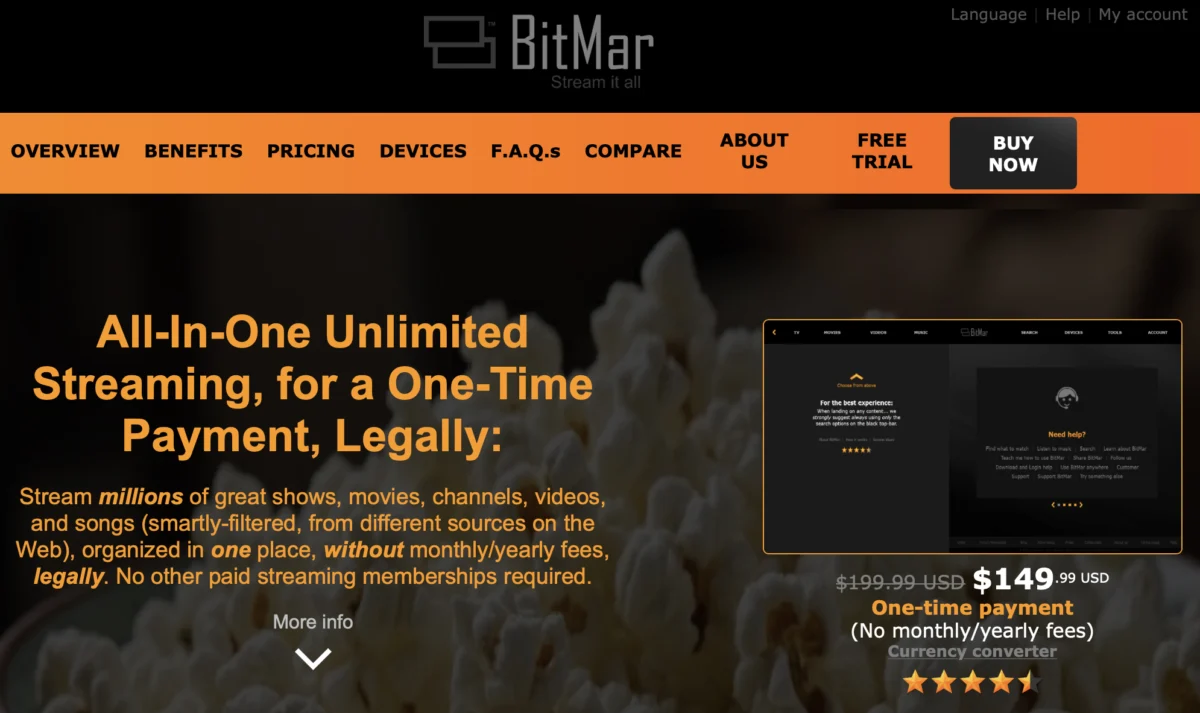
In the rapidly evolving landscape of digital media, the promise of a "universal" streaming solution has long been the holy grail for cord-cutters. However, a service calling itself BitMar has recently come under intense scrutiny for allegedly exploiting this consumer desire through misleading marketing practices. Promising to provide access to "everything, legally," the platform is reportedly charging users a one-time fee of $150 for what appears to be little more than a curated interface for free, publicly available web content.
Main Facts: The Anatomy of a Digital Shell Game
BitMar positions itself as the ultimate streaming aggregator, claiming to surpass the combined libraries of industry titans like Netflix, Disney+, Max, and Hulu, while also offering a music library that ostensibly outstrips Spotify and Apple Music. However, investigations into the platform reveal a vastly different reality.
Rather than hosting proprietary content or securing legitimate licensing deals with major studios, BitMar operates as a sophisticated web-wrapper. The platform functions by utilizing Bing search APIs and embedded links to free, ad-supported services like Pluto TV and YouTube. Essentially, users are paying a premium of $150 for a browser-like experience that directs them to content that is already freely accessible to the public at no cost.
The core of the controversy lies in the disparity between the company’s bold marketing claims and the actual utility of the product. By leveraging the names of major OTT (Over-The-Top) platforms in its promotional material—despite a lack of formal partnership with these entities—BitMar creates a deceptive impression of value. Consumers are led to believe they are purchasing a centralized portal for premium content, only to find they have purchased a "lifetime membership" to a glorified search engine.
Chronology: From Marketing Blitz to Public Backlash
The rise of the current controversy surrounding BitMar did not happen in a vacuum. It follows a predictable trajectory common to "get-rich-quick" digital service models.
- Initial Launch and Positioning: BitMar entered the market by targeting cord-cutters frustrated by the fragmentation of streaming services. By utilizing aggressive SEO tactics and social media advertising, the company successfully placed itself in front of users searching for "cheaper alternatives" to traditional cable and subscription services.
- The Outreach Campaign: As the platform gained traction, its management began a targeted outreach campaign to technology bloggers and streaming media influencers. The intent was to secure favorable reviews that would legitimize the platform’s business model. In one documented instance, the company CEO approached an industry analyst, offering a "personal lifetime membership" in exchange for "informing their audience" about the service.
- Consumer Realization: As the initial wave of users began to use the software, the discrepancy between the marketing claims and the user experience became undeniable. The inability to access premium, gated content from providers like Netflix or HBO Max—which the company implies it aggregates—led to an immediate surge in negative feedback.
- The Review Collapse: Following a period of disillusionment, the Google Play Store saw an influx of 1-star reviews. Users described the app as a "scam" and a "waste of money," pointing out that the "premium" links were simply redirects to free platforms.
Supporting Data: Analyzing the Claims vs. Reality
To understand why BitMar has drawn such sharp criticism, one must analyze the specific data points it uses to lure customers. The company’s marketing literature boasts that it provides access to "more movies and TV shows than Cable, Satellite, Netflix, Disney+, Max, Amazon Prime Video, Apple TV+, Peacock, and Hulu combined."
The Fallacy of Aggregation
In the streaming industry, "aggregation" refers to a legitimate service (like a Smart TV interface or a Roku device) that organizes different apps in one place. BitMar, however, is not a legitimate aggregator. It does not possess the licensing agreements required to display content from these services within its own player. Instead, it directs users to external sites.
If a user were to click on a link labeled "Netflix" within the BitMar app, they would either be directed to the Netflix login page or a search result, requiring an additional subscription to the actual streaming service. BitMar adds zero value to this interaction; it merely acts as an unnecessary middleman.
The "Free Content" Paradox
Much of the content the app "provides" is derived from YouTube or free, ad-supported streaming television (FAST) services like Pluto TV. By framing free content as part of a "premium" paid experience, BitMar is effectively selling air. Furthermore, the company’s own fine print acknowledges this reality, stating: "Some content may be internationally restricted. Not all content is free and/or accessible." This disclaimer serves as a legal shield, contradicting the overarching marketing message that the service provides "everything."
Official Responses and Platform Accountability
The reaction from the broader streaming community has been swift and unforgiving. Many industry experts argue that the existence of BitMar highlights a significant failure in the vetting processes of major app stores.
While Apple has notably blocked or removed the application from its App Store due to quality and compliance standards, the Google Play Store has faced criticism for allowing the app to remain listed. Industry watchdogs argue that by allowing such applications to operate, platform providers risk eroding consumer trust in legitimate digital services.
When confronted with requests for comment regarding the negative reviews and the allegations of misleading advertising, the company’s management has largely defaulted to a defensive posture. Their communications often emphasize the "technical" legality of their aggregation method, ignoring the fundamental issue of deceptive marketing. The "no-refund policy" explicitly stated on their website acts as a final barrier to those who realize they have been duped, effectively locking users into a purchase they cannot reverse.
Implications: The Future of Streaming and Consumer Trust
The BitMar saga serves as a cautionary tale for the streaming industry and for consumers navigating an increasingly complex digital ecosystem.
For Consumers: The Vigilance Gap
The primary takeaway for consumers is the necessity of extreme skepticism when faced with "all-in-one" streaming solutions that claim to bypass the standard subscription models of established providers. If a service claims to offer the combined libraries of Netflix, Disney+, and HBO for a one-time fee of $150, it is almost certainly operating on a business model that is either illegal or deceptive.
For Industry Platforms: The Vetting Responsibility
Google and other app store operators must reconsider their review protocols. The proliferation of "wrapper" apps that obfuscate their functionality not only harms consumers financially but also damages the reputation of the legitimate streaming industry. The "walled garden" approach—while sometimes criticized—is designed to protect users from malicious or low-quality software. Allowing apps like BitMar to bypass these safeguards is a disservice to the entire digital ecosystem.
The Broader Market Impact
As the streaming wars intensify and subscription fatigue sets in, the demand for simplified access will only grow. This creates an environment ripe for exploitation. Legitimate companies should take note: if the market is not provided with transparent, user-friendly, and cost-effective aggregation, bad actors will continue to fill the void with predatory products.
Conclusion
BitMar is a stark reminder of the "buyer beware" principle in the digital age. By masking a simple web-linking tool with the aggressive marketing of a major tech conglomerate, the service has successfully misled a portion of the public. However, the collective voice of the consumer—expressed through scathing reviews and public warnings—has begun to turn the tide.
For those currently considering such a purchase: avoid the allure of "lifetime memberships" to services that promise to unlock the world of streaming for a single, small fee. There is no shortcut to accessing the world’s largest content libraries legally, and paying for one is only likely to result in a $150 lesson in digital literacy. Stay away from BitMar, and support the legitimate platforms that provide clear, transparent, and fair access to the content you love.