
Betty White was more than just a television icon; she was a cultural compass. Spanning an unparalleled seven-decade career that began in the infancy of broadcast television and stretched into the digital age, White remains a singular figure in American entertainment. While she is most often remembered for her impeccable comedic timing, infectious laugh, and the warmth she brought to living rooms worldwide, her legacy is equally defined by a profound, often overlooked, philosophical depth.
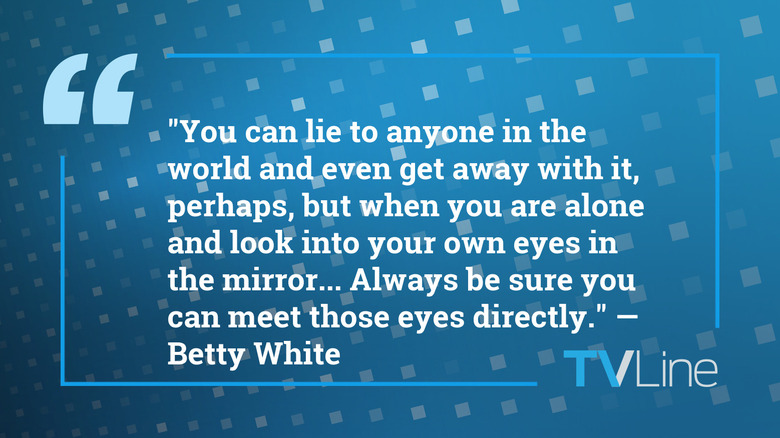
In her 2012 memoir, If You Ask Me (And Of Course You Won’t), White offered a candid reflection on the nature of morality and self-reflection that serves as a modern manifesto for personal integrity: "You can lie to anyone in the world and even get away with it, perhaps, but when you are alone and look into your own eyes in the mirror, you can’t sidestep the truth. Always be sure you can meet those eyes directly."
Main Facts: The Philosophy of the Mirror
This quote, while seemingly simple, encapsulates the core of Betty White’s character. Throughout her life, White navigated the high-pressure environment of Hollywood with a level of grace and authenticity that was rare for her era. The "mirror test," as she describes it, is not merely about avoiding dishonesty with others; it is about the fundamental necessity of living in alignment with one’s own conscience.
In an industry built on personas and public image, White’s directive suggests that the most significant audience anyone will ever perform for is their own reflection. Her wisdom posits that while social consequences can be manipulated or avoided through deception, the psychological weight of self-betrayal is inescapable. This principle guided her through decades of stardom, allowing her to remain a beloved public figure while maintaining a private life defined by steady, quiet principles.

A Chronological Journey: From Radio to Icon
To understand the weight of White’s words, one must look at the timeline of her remarkable life. Born in 1922, her professional journey began in 1949, a time when women in television were rarely seen in positions of creative control.
- 1949–1950s: The Pioneer Years: White began her career on Hollywood on Television. She quickly broke the glass ceiling by becoming one of the first women to produce her own sitcom, Life with Elizabeth, in 1953.
- 1970s: The Comedic Renaissance: Her portrayal of the icy, manipulative Sue Ann Nivens on The Mary Tyler Moore Show proved her range, earning her multiple Emmy Awards and solidifying her as a powerhouse of character acting.
- 1985–1992: The Golden Era: As Rose Nylund in The Golden Girls, White became a household name globally. Her portrayal of the naive but kind-hearted Midwesterner resonated across generations, cementing her status as a cultural icon.
- 2010–2021: The Late-Career Explosion: Following her 2010 Saturday Night Live appearance, White experienced a late-career surge, hosting Betty White’s Off Their Rockers and continuing to work until shortly before her passing in December 2021 at the age of 99.
Throughout these decades, White maintained a consistent public persona. She never became "Hollywood" in the cynical sense; she remained the girl from Oak Park, Illinois, who viewed her fame as a byproduct of her work rather than the purpose of it.
Supporting Data: The Weight of Wisdom
White’s 2012 book, If You Ask Me (And Of Course You Won’t), served as a "breezy patchwork of musings," as described by The New York Times. However, behind the breezy tone lay a rigorous commitment to ethical conduct.
When researchers and biographers analyze her life, the consistency of her message stands out. She often spoke about the importance of being "grateful" but cautioned against believing one’s own "publicity." This data point—her repeated warnings against vanity and deceit—aligns perfectly with her advice about the mirror. She understood that fame could easily distort one’s perception of reality. By maintaining a grounded, honest relationship with herself, she bypassed the pitfalls that claimed many of her contemporaries.

Her advocacy for animal rights was perhaps the most tangible expression of her honesty. It was a cause she pursued with a singular, unvarnished passion, demonstrating that her personal truths were not just internal meditations, but outward actions that she felt compelled to support, regardless of how "popular" or "fashionable" the cause was at the time.
Official Responses and Public Reception
Since her passing in 2021, the public’s appreciation for White’s wisdom has only deepened. When the quote regarding the "mirror" surfaced in recent media cycles, it sparked widespread discussion on social media platforms, with fans and peers alike citing it as a reminder of the need for moral clarity in a digital age defined by curated personas and online filters.
Critics and cultural historians have noted that White’s appeal was rooted in her "plain-spoken" nature. In a 2010 CNN interview, when asked about her secret to success, she famously quipped, "Have I got them fooled." This self-deprecating humor was the armor she used to keep the focus on her work rather than her ego. By acknowledging that she was, in part, playing a character for the public, she reinforced the importance of the private truth she kept for the mirror.
The Implications: Why Truth Matters Now
The implications of White’s advice are particularly relevant in the 21st century. We live in an era where "sidestepping the truth" has become a cultural pastime, facilitated by social media and the constant pressure to curate a perfect life. White’s message serves as a counter-cultural call to action.
1. The Erosion of Inner Peace
White suggests that the lack of honesty creates a rift between who we are and who we present to the world. When that gap grows too wide, inner peace becomes impossible. Her wisdom implies that the discomfort we feel when we are "not being ourselves" is a signal that we have lost sight of the person in the mirror.
2. The Power of Directness
By encouraging others to "meet those eyes directly," White was advocating for a form of radical self-acceptance. It is an acknowledgment that we are all flawed, but that we can live with those flaws if we are honest about them. It is the lies we tell ourselves—the rationalizations for our poor behavior—that cause the most damage to our character.
3. A Legacy of Authenticity
Betty White’s life serves as a blueprint for long-term fulfillment. She didn’t just survive in a cutthroat industry; she thrived by being, as she put it, "a good egg." Her ability to remain consistent from 1949 to 2021 is the ultimate testament to the strength of her philosophy.
Conclusion: Living the Lesson
Betty White’s life was a masterclass in the art of being human. Whether she was hosting the Macy’s Thanksgiving Day Parade or writing about the ethics of poker and pet ownership, her approach was always grounded in the same bedrock of integrity.

As we reflect on her words, we are reminded that while we may deceive the world, we cannot hide from ourselves. The mirror is the final arbiter of our actions. By choosing to live with the kind of honesty that Betty White championed, we don’t just achieve success; we achieve something far more valuable: a life that we can look at, day after day, without looking away.
She leaves behind not just a library of iconic performances, but a standard for how to treat oneself. In a world that often rewards the loudest voice or the most elaborate fabrication, Betty White’s quiet, steady insistence on the truth remains her most enduring and radical act.