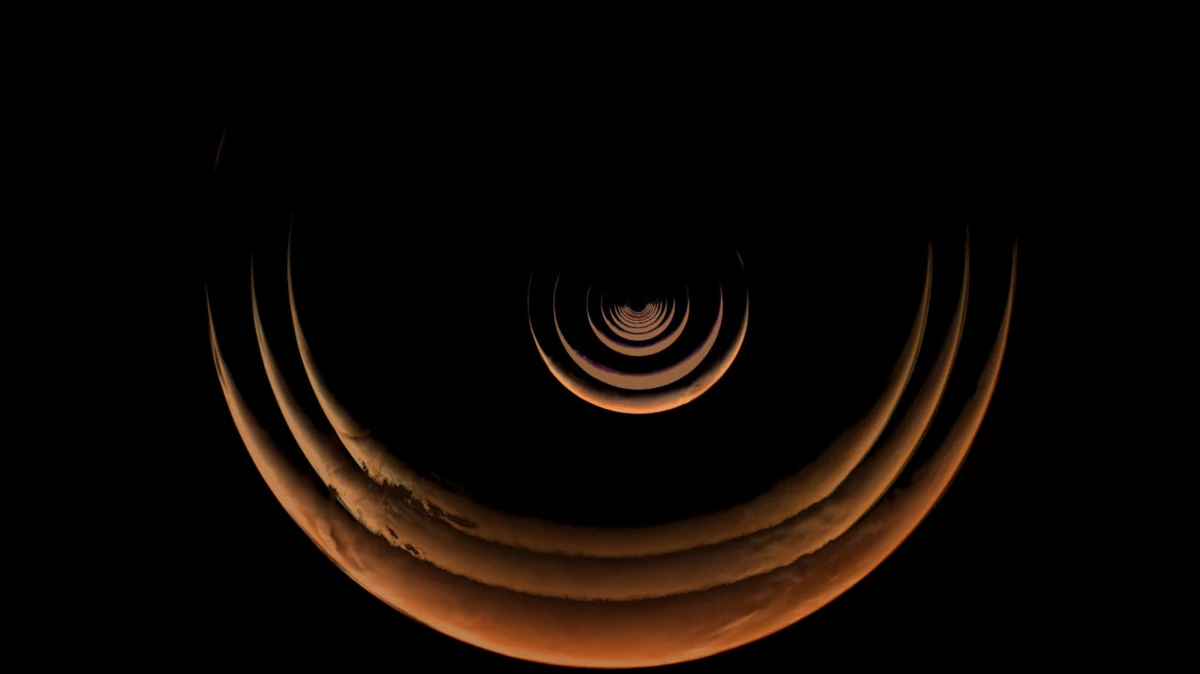
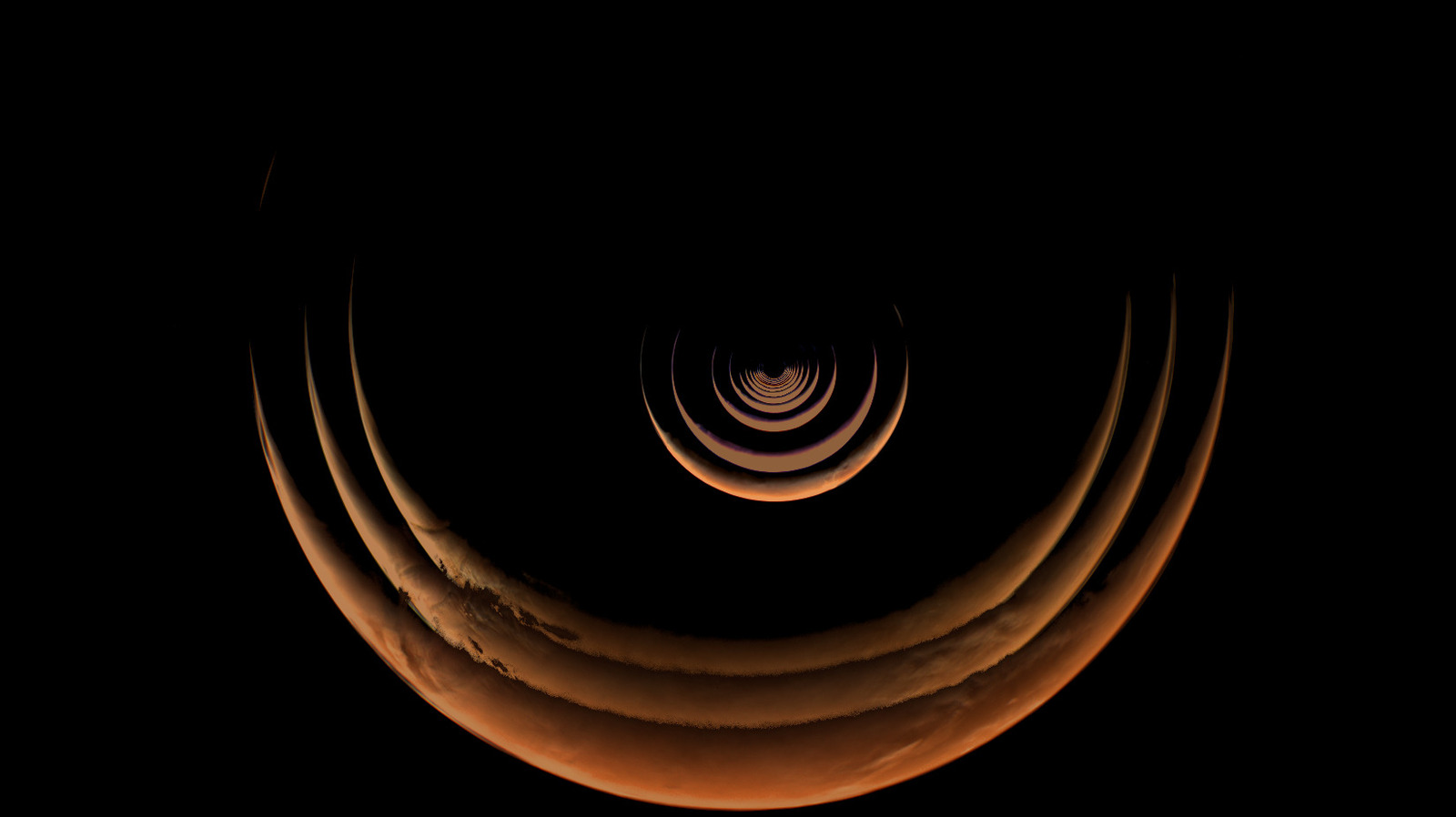
In a remarkable convergence of orbital mechanics and high-resolution imaging, NASA has unveiled a breathtaking timelapse video captured by the Psyche spacecraft during its gravity-assist flyby of Mars. The footage, released by the space agency on Friday, offers a rare, dynamic perspective of the Red Planet, serving as both a triumphant demonstration of the spacecraft’s onboard instrumentation and a critical milestone in its multi-year journey toward a metal-rich asteroid.
Main Facts: A Gravity-Assisted Success
The Psyche spacecraft, which launched in October 2023, is currently traversing the vast expanse of the solar system on a mission to explore the asteroid 16 Psyche—a mysterious, metallic object located in the main asteroid belt between Mars and Jupiter. To reach this distant destination, the spacecraft requires a complex trajectory, necessitating a "gravity assist" from Mars to gain the momentum required to propel it deeper into space while conserving its precious onboard xenon propellant.
The flyby, which reached its closest point on May 15, was not merely a navigational necessity. It provided a unique opportunity for mission scientists to test the spacecraft’s multispectral imager—a sophisticated system designed to capture high-resolution imagery and spectral data. The resulting timelapse, which stitches together thousands of individual frames, captures Mars in its crescent phase upon arrival, transitions to detailed surface features, and concludes with a view of the planet’s icy south pole as the craft departed.
Chronology of the Encounter
The mission’s encounter with Mars was a carefully choreographed series of maneuvers designed to maximize both scientific output and navigational precision.
- May 2, 2026: Psyche officially began its approach phase to Mars, activating its multispectral imager to begin the data collection process.
- May 15, 2026: The spacecraft reached its closest approach to the Red Planet. This maneuver served as a "slingshot," utilizing the gravitational pull of Mars to alter the spacecraft’s trajectory and boost its velocity.
- July 17, 2026: NASA released the processed data and the final timelapse video, providing the public with a high-definition look at the encounter.
- 2029: The projected date for Psyche’s arrival at the 16 Psyche asteroid.
Throughout the approach, the spacecraft’s imager was tasked with capturing a continuous stream of images. The objective was not only to provide a "postcard" view of the planet but to calibrate the sensitivity of the sensors against the harsh, high-contrast environment of space.
Supporting Data and Technical Significance
The multispectral imager aboard Psyche is a dual-camera system designed to provide both high-resolution images and specialized color data. By capturing the surface of Mars, the team was able to verify the instrument’s performance in a real-world, deep-space environment.
Testing for Future Challenges
One of the most critical aspects of this flyby was the practice run for "moonlet" detection. The scientists at Arizona State University (ASU), who oversee the imager instrument, used the Mars encounter to test the camera’s ability to detect small, faint objects against the backdrop of deep space. Specifically, the team successfully identified the Martian moons, Phobos and Deimos, from a significant distance.
This capability is essential for the primary mission at the asteroid 16 Psyche. Upon arrival, the spacecraft must determine if the asteroid is orbited by small "moonlets"—miniature satellites that could pose a collision risk or provide additional scientific data about the asteroid’s formation history. The success of the Mars test confirms that the Psyche imager possesses the sensitivity required to distinguish these small objects amidst the "scattered light" of a celestial body.
Propellant Conservation
The gravity assist provided by Mars is more than a navigational aid; it is an economic necessity. By utilizing the gravitational influence of a planet, NASA saves a substantial amount of propellant that would otherwise be required to manually adjust the spacecraft’s speed and path. This conserved fuel is expected to extend the operational life of the spacecraft once it reaches its target, allowing for a more comprehensive study of the asteroid’s composition.
Official Responses and Expert Insight
The scientific community has lauded the flyby as a resounding success, emphasizing the dual utility of the maneuver. Jim Bell, the Psyche imager instrument lead at Arizona State University, expressed high satisfaction with the hardware’s performance.
"The imager performed brilliantly, delivering some rarely seen views of the red planet," Bell stated in an official release. "Besides the obvious beauty of the photos, we were also able to fully test its calibration and sensitivity to scattered light."
Bell highlighted that the success of the test provides the team with a higher degree of confidence as they look toward the 2029 arrival. The ability to identify the Martian moons—targets that are small, dark, and difficult to isolate—serves as the ultimate validation that the instrument will be able to perform its primary mission once it enters the asteroid belt.
Implications: Understanding the Solar System
The Psyche mission is widely considered one of the most intriguing endeavors in current planetary science. Unlike most asteroids, which are primarily composed of rock or ice, 16 Psyche is believed to be the exposed core of a protoplanet. By studying this metallic remnant, researchers hope to gain a better understanding of the formation of the Earth’s own core, which is currently inaccessible to human exploration.
Why the Flyby Matters
- Instrument Validation: The successful use of the imager in a dynamic environment confirms that the spacecraft is "mission-ready" for the complex task of imaging an asteroid.
- Operational Efficiency: The gravity assist serves as a blueprint for future deep-space missions, proving that even as a spacecraft leaves the inner solar system, it can leverage planetary gravity to extend its reach.
- Public Engagement: High-quality visual data, such as the Mars timelapse, plays a crucial role in maintaining public interest and support for space exploration. These visuals translate complex orbital mechanics into tangible, awe-inspiring experiences for the general public.
The Road to 2029
With the Mars flyby now in the rearview mirror, the Psyche spacecraft continues its cruise phase. The journey to the asteroid belt is a long one, requiring the craft to navigate the silence of the void while maintaining contact with the Deep Space Network.
As the spacecraft continues to distance itself from the inner solar system, the data collected during this brief encounter with Mars will serve as a foundational dataset for the mission. The team at ASU and NASA will spend the coming years refining their imaging techniques and preparing the spacecraft’s other scientific instruments—including the magnetometer and the gamma-ray and neutron spectrometer—for the arrival at the asteroid.
The Psyche mission represents a frontier in planetary exploration. By visiting an object that has never been seen up close, NASA hopes to rewrite the textbooks on how planets are born and how they evolve over billions of years. The successful flyby of Mars is not just a waypoint; it is proof that the technology required to unlock these secrets is functioning perfectly, peering into the darkness to reveal the mysteries of our cosmic neighborhood.
As the spacecraft drifts toward its final destination, the images of the crescent Mars remain a poignant reminder of the scale of the mission—a tiny, human-made object dancing through the gravitational wells of the solar system to reach a treasure of metal and history billions of miles away.