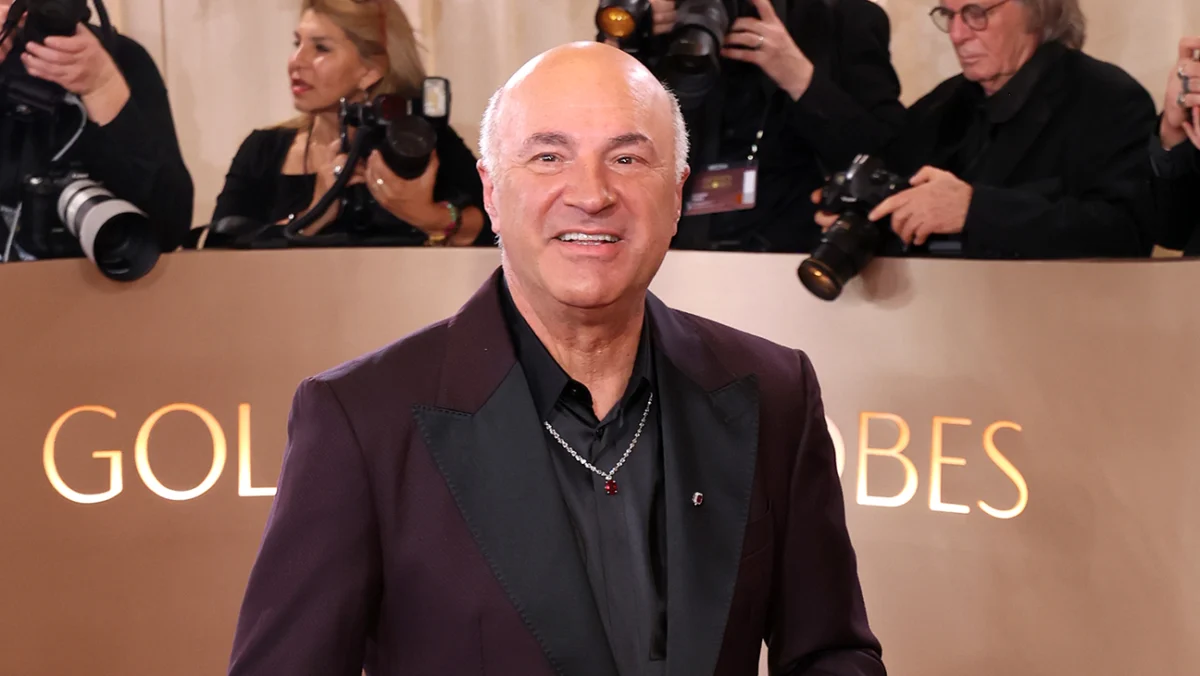
The high-stakes world of venture capital and infrastructure development has collided with the volatile landscape of cable news commentary, resulting in a significant legal battle. Kevin O’Leary, the bombastic entrepreneur and long-standing panelist on ABC’s Shark Tank, is currently the defendant in a major defamation lawsuit filed in a Utah federal district court. The litigation stems from a series of televised appearances in which O’Leary alleged that local critics of his proposed Utah-based AI data center were effectively acting as agents for the Chinese government.
The plaintiffs—a group including the advocacy organization Alliance for a Better Utah, consultancy firm Elevate Strategies, and individuals Gabrielle Finlayson and Josh Kanter—assert that O’Leary’s unsubstantiated claims have inflicted irreparable damage upon their professional reputations and personal safety. As the legal discovery process looms, the case threatens to cast a spotlight on the intersection of media responsibility, political advocacy, and the intense scrutiny surrounding artificial intelligence infrastructure.
The Genesis of the Conflict: A Clash Over Infrastructure
The dispute finds its roots in a controversial proposal to construct a massive artificial intelligence data center in Utah. As AI continues to command massive amounts of energy and physical space, such projects have become flashpoints for local debate. O’Leary, acting as an outspoken proponent of the development, viewed the project as a cornerstone of American technological sovereignty.
However, local organizations and activists raised concerns regarding the environmental impact, energy consumption, and the economic transparency of the project. Rather than engaging in a standard public relations or policy debate, O’Leary took his grievances to the national stage. Appearing on Fox News multiple times throughout May and June of this year, O’Leary characterized the opposition not as concerned citizens, but as entities compromised by foreign interests.
Chronology of the Allegations
The lawsuit outlines a targeted campaign of rhetoric that the plaintiffs claim was designed to silence dissent through character assassination.
- Early May: The initial public friction between O’Leary’s development group and the Utah-based critics began. As opposition mounted, O’Leary transitioned from discussing the merits of the project to attacking the motives of its detractors.
- Mid-May to June: Over a six-week period, O’Leary made at least 10 documented media appearances. The focal point of these appearances was a recurring narrative: that the opposition was being funneled resources from the Chinese Communist Party (CCP) to stall American AI progress.
- The Fox News Appearances: The lawsuit specifically identifies five appearances on Fox News within a three-week window as being instrumental in the "defamatory smear campaign." During these segments, O’Leary explicitly labeled Finlayson and Kanter as "proxies for the Chinese government."
- The Lawsuit Filing (July): Following a period of mounting pressure and what the plaintiffs describe as "devastating reputational harm," a formal complaint was filed in a Utah federal district court.
- The Instagram "Clarification": Last month, following the threat of legal action, O’Leary issued a statement via Instagram. Notably, the statement fell short of a formal apology, instead offering a "clarification" that he lacked evidence to support his previous claims of Chinese funding.
The Legal Argument: Reputational Harm and Media Responsibility
The complaint filed by the plaintiffs is comprehensive, alleging that O’Leary’s rhetoric went far beyond protected opinion and crossed into actionable defamation.
The Burden of Professional and Personal Damage
The plaintiffs argue that the "Chinese proxy" accusation is not merely a political insult; in the current geopolitical climate, it is a career-ending smear. For consultants and advocacy groups, being linked to foreign intelligence operations or the CCP is an allegation that can result in the immediate loss of contracts, donors, and credibility.
Gabrielle Finlayson and Josh Kanter have reported severe emotional distress, citing that the national nature of O’Leary’s platform transformed their local advocacy work into a global target. The suit highlights that the defendants have faced "ongoing threats to their physical safety," a direct consequence, they argue, of being branded as traitors on a network with millions of viewers.
The Allegation Against Fox News
A central and potentially precedent-setting aspect of the lawsuit is the inclusion of Fox News in the narrative of the alleged wrongdoing. The plaintiffs contend that Fox was not merely a passive broadcaster but an "instrumental" participant. The complaint argues that despite O’Leary’s "inherently unreliable claims," the network repeatedly provided him with a platform to disseminate these accusations without any verification or qualification.
The legal question here is whether a news organization can be held liable for failing to exercise due diligence when hosting a guest who uses their airtime to make potentially libelous, damaging claims against private individuals.
Official Responses and Strategic Defense
In the wake of the filing, the parties involved have begun to stake out their defensive positions.
Fox News Media’s Stance
Fox News has issued a firm statement in response to the litigation. The network claims that it took corrective action, stating, "Fox News Media publicly corrected the record on every program where on-air guest Kevin O’Leary’s comments were made, all of which was extensively publicized." The network’s defense strategy appears to hinge on the argument that they mitigated the harm by issuing on-air clarifications, and they have vowed to "vigorously defend" against the lawsuit.
Kevin O’Leary’s Position
As of this report, O’Leary has maintained a public stance consistent with his Instagram clarification. By stating he has "no evidence" of the funding, his legal team will likely attempt to argue that his previous statements were hyperbolic political commentary rather than statements of fact. Whether this "clarification" will suffice as a defense against defamation remains a matter for the court to decide, particularly given the repetitive nature of the claims made during his media tour.
The Broader Implications for AI and Public Discourse
The outcome of this case holds significant implications for several sectors of American society.
The "Chilling Effect" on Local Activism
If individuals can be labeled as foreign agents on national television for opposing corporate infrastructure projects, the potential for a "chilling effect" on local discourse is immense. Critics of the data center project argue that this lawsuit is a necessary step to protect the right of citizens to challenge powerful interests without fear of being framed as enemies of the state.
The Responsibility of Media Platforms
The inclusion of Fox News in the lawsuit raises vital questions about the role of news networks in the era of viral commentary. As the lines between news, opinion, and entertainment continue to blur, the accountability of broadcasters for the claims made by their invited guests will likely become a recurring legal battleground. If the court finds that the network failed in its duty of care, it could force a radical shift in how news organizations vet their guests and monitor the veracity of on-air claims.
The Role of Celebrity in Political Advocacy
Kevin O’Leary represents a growing class of "celebrity-entrepreneurs" who wield massive social media and television followings to influence public policy. This case serves as a warning that while a high profile can be a powerful tool for advocacy, it also carries a significant legal burden. When a public figure uses their platform to lob serious allegations at private citizens, the protection of the First Amendment is not absolute; it is bounded by the laws of defamation and the requirement to avoid reckless disregard for the truth.
As the case moves forward, observers will be watching closely to see how the court balances the right to free speech against the right of individuals to be protected from false, reputation-destroying accusations. The resolution of this dispute may well define the limits of rhetoric for years to come.