The landscape of artificial intelligence is undergoing a profound shift. For the past two years, the industry has been defined by the "chatbot era"—an interactive model where users engage in a back-and-forth dialogue with a Large Language Model (LLM). While tools like ChatGPT and Claude have revolutionized how we draft emails and generate code, they share a common limitation: they are passive assistants. They wait for a prompt, provide an output, and then wait for the next command. The user remains the "human in the loop," manually performing the copy-paste heavy lifting required to move data between tools.
Enter Manus, a new breed of AI designed to move beyond mere conversation. Manus is an agentic AI platform that doesn’t just respond to prompts—it executes them. By delegating multi-step processes to various digital tools, Manus represents a fundamental change in how professionals interact with technology.
The Paradigm Shift: From Chatbots to Agents
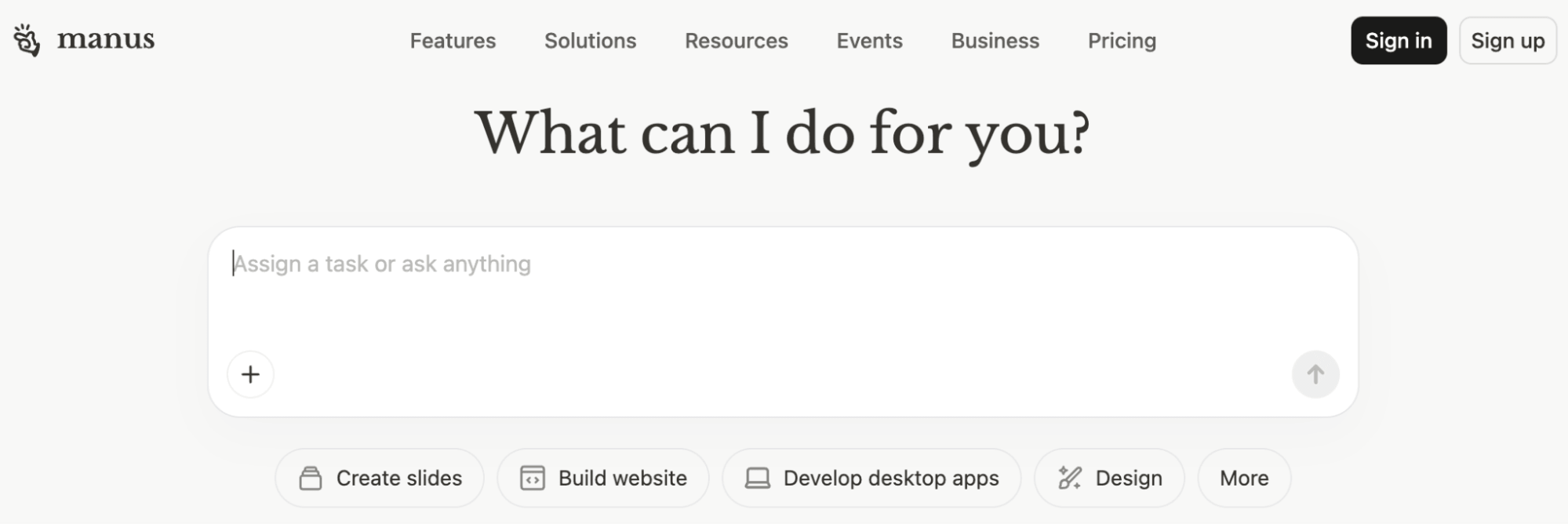
To understand the value of Manus, one must distinguish between a chatbot and an agent. A standard chatbot asks, "How can I help you?"—a question that implies the AI will provide a plan, but the user must provide the labor. In contrast, Manus asks, "What can I do for you?" and then proceeds to perform the action.
Whether it is navigating the web to research a prospect, logging into a CRM to update records, or synthesizing complex reports, Manus operates autonomously. It creates its own multi-step sequences, iterates based on results, and manages its own tool usage without requiring human intervention at every stage. Remarkably, this transition to agentic workflows does not require advanced coding skills. As marketing expert Kate vanderVoort, who co-created the framework for using Manus in business settings, notes, the barrier to entry is low enough that non-technical professionals can leverage it from day one.
Chronology: Understanding the Manus Ecosystem
The evolution of Manus is marked by its ability to integrate into various work environments, scaling from simple browser-based assistance to fully autonomous, cloud-hosted virtual computing.
1. Browser-Based Access
This is the primary entry point for most users. Manus operates within a browser window, similar to standard AI interfaces, but with a critical difference: the capability to interact with external web platforms. It can log into your professional accounts, search for prospects, and manipulate data within your preferred SaaS platforms—all while maintaining security by never exposing your actual login credentials to the user interface.
2. Local Desktop Integration
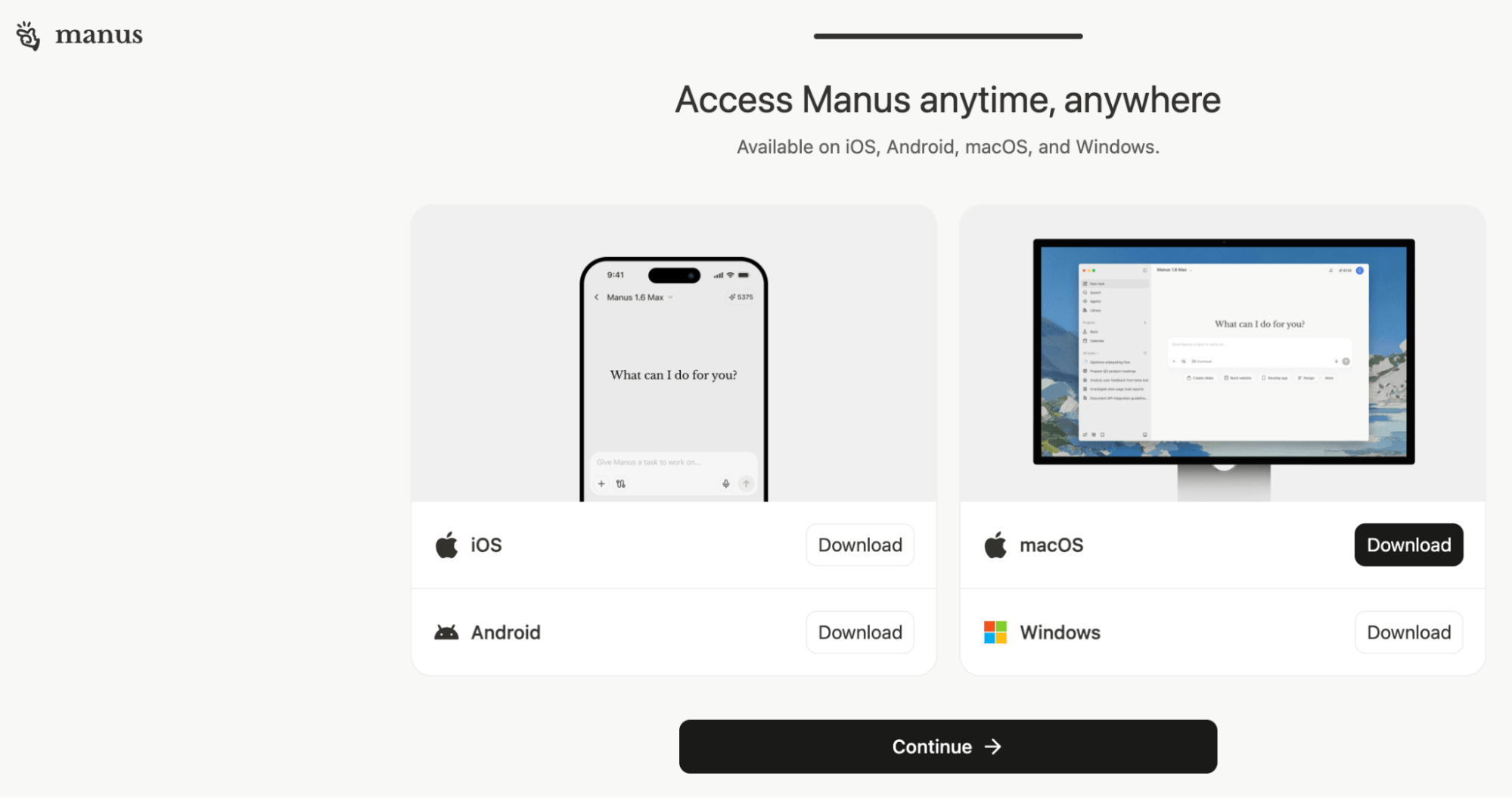
For tasks requiring access to local files, the Manus desktop application serves as a bridge. By allowing the AI to read and manipulate documents directly on your machine, it eliminates the need for manual uploads. This functionality puts Manus in direct competition with emerging tools like Claude Cowork and Perplexity Computer, turning your local workstation into an active, intelligent workspace.
3. Mobile Oversight via Telegram
Recognizing that complex tasks take time, the developers integrated Telegram support. This allows users to monitor long-running, multi-step workflows from their mobile devices while away from their desks. If an agent requires a decision or a quick input, the user can respond directly via chat, ensuring that workflows do not stall while the user is mobile.
4. The Cloud Computer: The "Always-On" Agent
The pinnacle of the Manus experience is the Cloud Computer. Unlike standard sessions that dissolve once a task is complete, the Cloud Computer runs as a persistent, virtual environment. It handles its own CLI configuration, manages its own software installations, and maintains a long-term memory. This makes it an ideal solution for 24/7 operations, such as continuous competitor scanning, social media management, or automated lead nurturing.
Supporting Data: The Economics of Agentic Automation
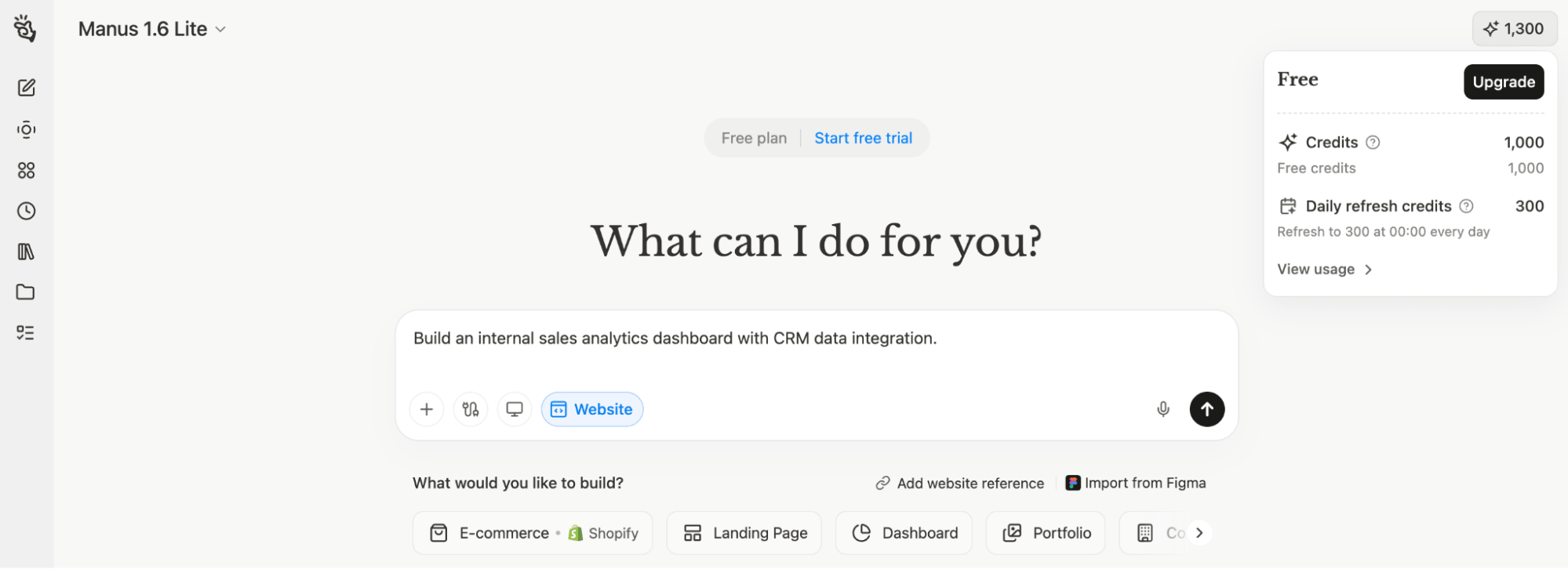
Manus operates on a credit-based subscription model, reflecting the computational cost of autonomous execution. Users pay a base subscription fee, which provides a pool of credits to fuel agent tasks.
- Credit Structure: Plans typically scale from $20 per month (4,000 credits) up to $200 (40,000 credits). A daily allotment of 300 "refresh" credits is included across all tiers to encourage daily experimentation.
- Task Costing: Simple, single-step queries might cost between 5 and 10 credits. However, complex, autonomous workflows—such as scraping data from multiple sites, synthesizing findings, and generating a 30-page proposal—can consume 900 or more credits.
While the cost per task is higher than simple text generation, the return on investment is found in time-savings. For instance, a complex proposal process that previously required three to four hours of manual work can be executed by Manus for approximately $5 worth of credits. The primary caveat for users is that monthly credits do not roll over, necessitating a strategic approach to managing high-demand workflows.
Practical Implications: Two Real-World Use Cases
The true power of agentic AI is best demonstrated through repeatable, predictable processes.
Case Study: The Consulting Proposal Workflow
Previously, Kate vanderVoort’s consulting business followed a tedious, multi-platform process. It involved shifting between Perplexity, Gemini Deep Research, and Claude to build a comprehensive client briefing. This manual "stitching" of AI outputs took hours. Today, Manus handles the entire lifecycle: research, dashboard creation, and proposal drafting. The only manual input required is the final uploading of a discovery call transcript. The result is a consistent, high-quality output delivered in a fraction of the time.
Case Study: The 42-Step Training Program
In a recent engagement with a major food and beverage manufacturer, Manus was tasked with building an extensive training program. The AI executed a 42-step workflow over 50 minutes. It identified that the project actually required seven modules rather than the proposed six and generated a comprehensive 150-page training manual complete with interactive quizzes. The efficiency of the agent saved the client significant time, as the L&D team had previously spent two years struggling to move past the early stages of the project.
Strategic Implementation: How to Prompt an Agent
The most common mistake users make is applying a "chatbot mindset" to an "agentic tool." Because agentic sessions consume credits, time spent "brainstorming" with the AI is inefficient.

1. The "Pre-Prompt" Strategy:
Before opening Manus, use a separate LLM (like Perplexity or ChatGPT) to draft your instructions. Use a voice-to-text tool to perform a "brain dump" of your requirements, then instruct the LLM: "Please write a highly optimized prompt for a Manus AI agent. Do not do the task." This creates a structured, professional brief that ensures the agent hits the ground running.
2. Leveraging Skills for Scalability:
Skills are the secret to long-term efficiency in Manus. A "skill" is essentially a package containing step-by-step instructions, context files, and examples of successful outputs. Once a task is completed successfully, it can be saved as a reusable skill. This creates a "multiplier effect," where the quality of your output improves over time as your library of custom skills grows.
Implications for the Future of Work
The rise of agentic workflows has profound implications for businesses. As organizations move toward building "Business Intelligence Centers" using SOPs (Standard Operating Procedures) as the foundation for their AI agents, the nature of human roles will evolve.

The goal is to codify your business logic into these SOPs, which act as the "instruction layer" for your AI agents. By narrating your processes—explaining not just the "how" but the "why" behind your decisions—you enable Manus to mirror your professional judgment.
Ultimately, Manus is not a replacement for human intellect; it is a force multiplier. By offloading the repeatable, procedural aspects of work to an autonomous agent, professionals are freed to focus on high-level strategy, creative problem-solving, and the human relationships that AI cannot replicate. As the agentic era gains momentum, those who learn to build and manage these workflows will find themselves with a significant competitive advantage in an increasingly automated marketplace.