By the Editorial Team
Co-created by Austin Marchese and Michael Stelzner
Main Facts
As generative artificial intelligence tools saturate digital landscapes, the cost of producing content, reports, and deliverables has plummeted toward zero. Anyone can instantly generate dozens of marketing ideas, draft comprehensive reports, or conceptualize visual campaigns with a single prompt. However, this ubiquity has birthed a new crisis for professionals: average is no longer enough.
Because standard LLM (Large Language Model) outputs rely on generalized training data, unrefined AI-generated material reads—and looks—the same. Audiences, clients, and managers have become adept at spotting unedited AI work, leading to eroded trust and diminished perceived value.
To combat this homogenization, content creators and business leaders are turning away from the race for sheer volume and focusing instead on hyper-refined quality. In a recent episode of the AI Explored podcast, AI expert Austin Marchese revealed a tactical roadmap for breaking through the noise. By establishing structured AI quality control systems—leveraging Claude projects, localized knowledge bases, and hyper-realistic internal focus groups—professionals can build automated feedback loops that catch up to 90% of critical errors, tone mismatches, and structural flaws before any human recipient ever sees the work.
Chronology and Evolution of the AI Quality System
The evolution of generative AI usage has shifted through distinct phases over the past several years, culminating in today’s sophisticated workflow integration:
- The Novelty Phase (Early AI Adoption): When tools like ChatGPT and early image generators first emerged, raw AI outputs were met with widespread wonder. Simply producing content via prompt engineering was viewed as a competitive advantage.
- The Saturation Phase (Commoditization): As tools became ubiquitous, audiences quickly grew fatigued by homogenous styles, predictable phrasing, and cookie-cutter graphics. Unrefined AI work began signaling a lack of effort, actively damaging brand credibility.
- The Transition to Quality-First Frameworks: Recognizing that brute-force generation yields diminishing returns, advanced users began separating raw ideation from rigorous editing. Rather than treating AI as a ghostwriter, forward-thinking creators began treating it as an automated quality-assurance engine.
- The Modern Architecture (Projects, Knowledge Bases, and Clones): Today, practitioners utilize advanced localized structures (such as Claude projects, "wiki" data organization, and voice-to-skill workflows) to transform general-purpose models into hyper-specialized critics modeled directly on real-world stakeholders.
Supporting Data and Industry Context
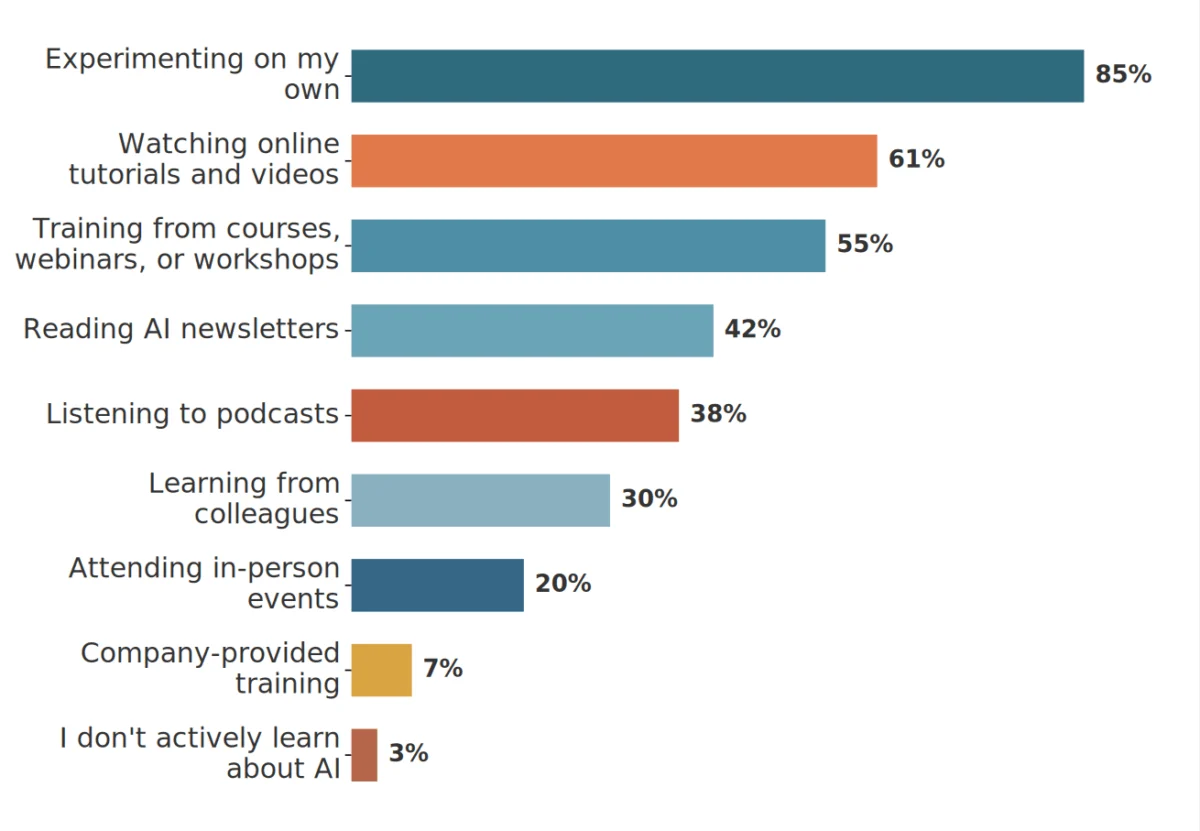
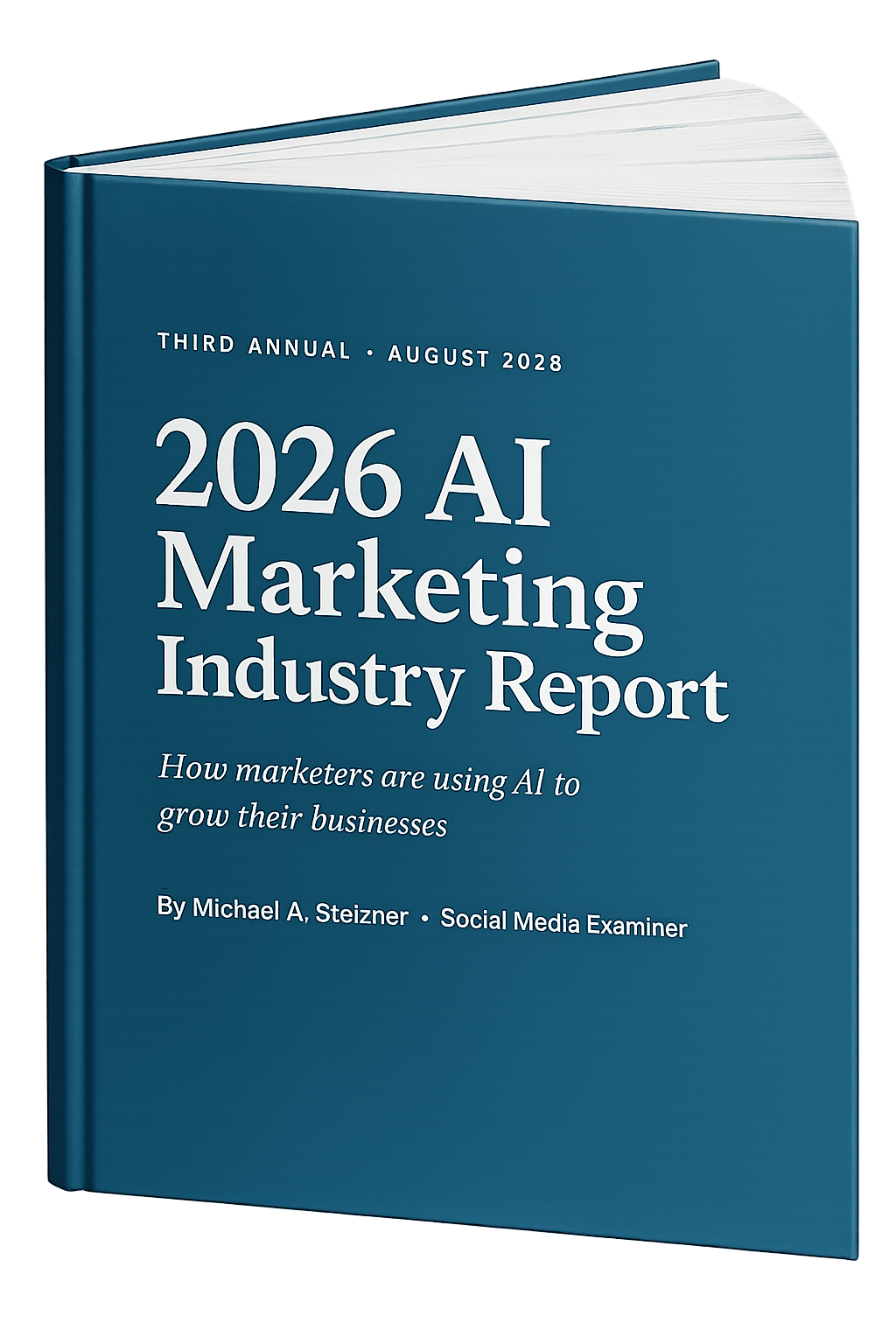
The urgency of moving past basic, unguided AI experimentation is underscored by broader industry trends. According to the third annual AI Marketing Industry Report by Social Media Examiner—which surveyed 681 marketing professionals—the landscape remains largely unstandardized and trial-and-error driven:
- 85% of marketers are forced to learn artificial intelligence tools completely on their own through independent experimentation.
- Only 7% of professionals receive formal, structured training from their employers.
- More than half of all surveyed practitioners spend their own personal funds to purchase and test AI software.
This do-it-yourself culture has created a massive skills gap. While tools are widely accessible, mastering the architecture required to make AI outputs distinct, high-value, and indistinguishable from elite human craftsmanship remains a rare competitive advantage.
Official Insights and Methodology: Building the System
To bridge the gap between mediocre automation and exceptional output, Marchese outlines a five-step technical and strategic framework designed to be deployed within modern LLM environments.
1. Establish the Technical Foundation: Projects, Knowledge Bases, and Skills
Building an effective quality control system requires moving beyond casual chat interfaces into structured environments.
- Claude Projects: Serving as the most accessible entry point (retaining roughly 80% of the effectiveness of advanced setups), users upload audience preferences, feedback history, and communication samples directly into a project’s context window.
- The "Wiki" Knowledge Base Structure: Inspired by methodologies popularized by researcher Andrej Karpathy, users organize local files into two distinct layers. A "raw" folder stores unprocessed data (such as raw call transcripts and message exports), while a "wiki" folder holds AI-processed summaries and distilled preferences. When an AI skill runs, it references the wiki for speed, dropping back to raw data only when specific quotes or granular details are required. This approach shifts users from "renting intelligence" to "owning intelligence," ensuring their intellectual property remains portable across platforms.
- Skills for Repeatable Workflows: Rather than rewriting complex prompts manually, users package multi-step operations into reusable commands. Marchese strongly advocates using voice input (via tools like Wispr Flow or Claude’s native voice feature) to converse with the AI and interview it into building these skills, capturing nuanced details that standard typing omits.
2. Identify High-Impact Force Multipliers
Applying the 80/20 rule is essential for sustainable optimization. Professionals should not attempt to use AI quality control for every minor task. Instead, they must isolate the 20% of deliverables where moving from "good" to "great" creates 80% of the impact. For a YouTube creator, this might be video packaging (titles and thumbnails); for a corporate executive, it could be the weekly executive summary; for a consultant, it is the client-facing deliverable.
3. Build AI Personas from Real Data
The core mechanism of this quality system replaces slow human-to-human feedback loops with rapid human-to-AI-clone reviews. By feeding an LLM historical data regarding a specific stakeholder—such as slack threads, email exchanges, direct messages, or past critique patterns—creators construct an accurate digital clone of their manager, client, or target viewer. The deliverable is run past this persona to catch gaps, logic errors, and tone issues prior to submission.
4. Create an Internal AI Focus Group
Moving beyond single personas, professionals can assemble a diverse "board of audience archetypes." For instance, a content piece can be simultaneously evaluated by clones representing founders, technical specialists, risk-averse decision-makers, and price-sensitive buyers. Formatting the focus group’s output into a structured numerical rating chart (0 to 10 across various metrics) provides a clear, objective benchmark for iterative improvement.

5. Calibrate Through Rigorous Iteration
A persona is only as good as its calibration. Marchese describes an iterative loop where he generated YouTube titles, tested them against his AI persona, and then cross-referenced them by texting the real human whose persona was being simulated. When discrepancies arose, he screenshotted the real feedback, fed it back into the system, and updated the persona skill. After five or six calibration cycles, the AI persona matched reality so closely that the human feedback loop became obsolete.
Implications for Professionals, Creators, and Businesses
The widespread adoption of AI-generated content has created a paradox: while the volume of information increases exponentially, its average value trends downward. This dynamic carries profound implications for the future of professional work:
- The Revaluation of Human Taste: As execution becomes commoditized, human value will no longer be measured by the ability to produce assets, but by the ability to curate, refine, and direct them. Taste, editorial judgment, and strategic vision become the ultimate market differentiators.
- Erosion vs. Enhancement of Trust: Organizations that rely on unedited, raw AI outputs risk immediate reputational damage as audiences develop acute radar for robotic communication. Conversely, organizations that implement rigorous pre-flight quality control will maintain—and even expand—their authority and trustworthiness.
- The Rise of Proprietary AI Assets: By transitioning context, personas, and structured workflows onto local environments and customizable knowledge bases, forward-looking businesses are building proprietary intellectual property that transcends any single software provider.
Ultimately, mastering artificial intelligence is no longer about learning how to type better prompts to do more work. The true winners in the modern AI economy will be those who use artificial intelligence to dramatically elevate the quality, precision, and impact of every single output that truly matters.