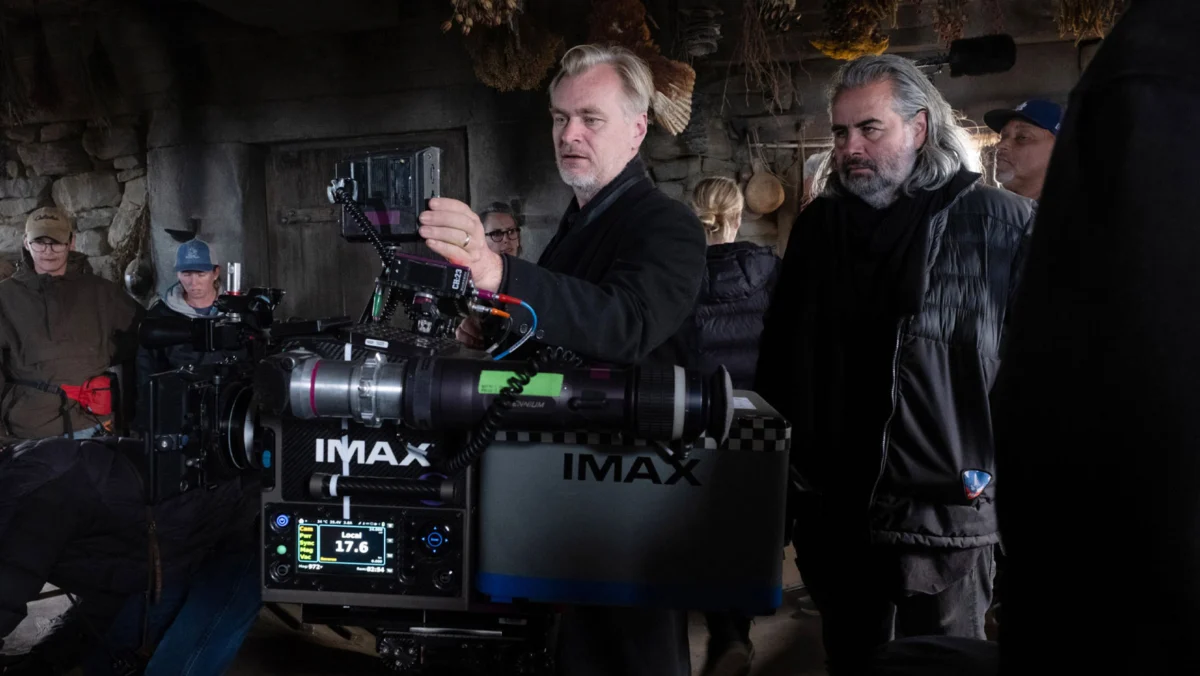
LONDON — The landscape of historical cinema is set to expand with the official commencement of principal photography for The Price of Peace, a high-stakes political thriller helmed by four-time Academy Award nominee Anthony McCarten. The production, which began this week in London, seeks to dramatize one of the most consequential diplomatic summits in human history: the 1945 Potsdam Conference.
Featuring a powerhouse ensemble led by Guy Pearce, Jared Harris, and Merab Ninidze, the film marks McCarten’s latest foray into the "corridors of power" subgenre that he has come to define through works like Darkest Hour and The Two Popes. As the production moves into full swing, the project has already garnered significant international attention, positioning itself as a major awards contender for its projected 2027 release.
Main Facts: A Triumvirate of Power and a Stellar Ensemble
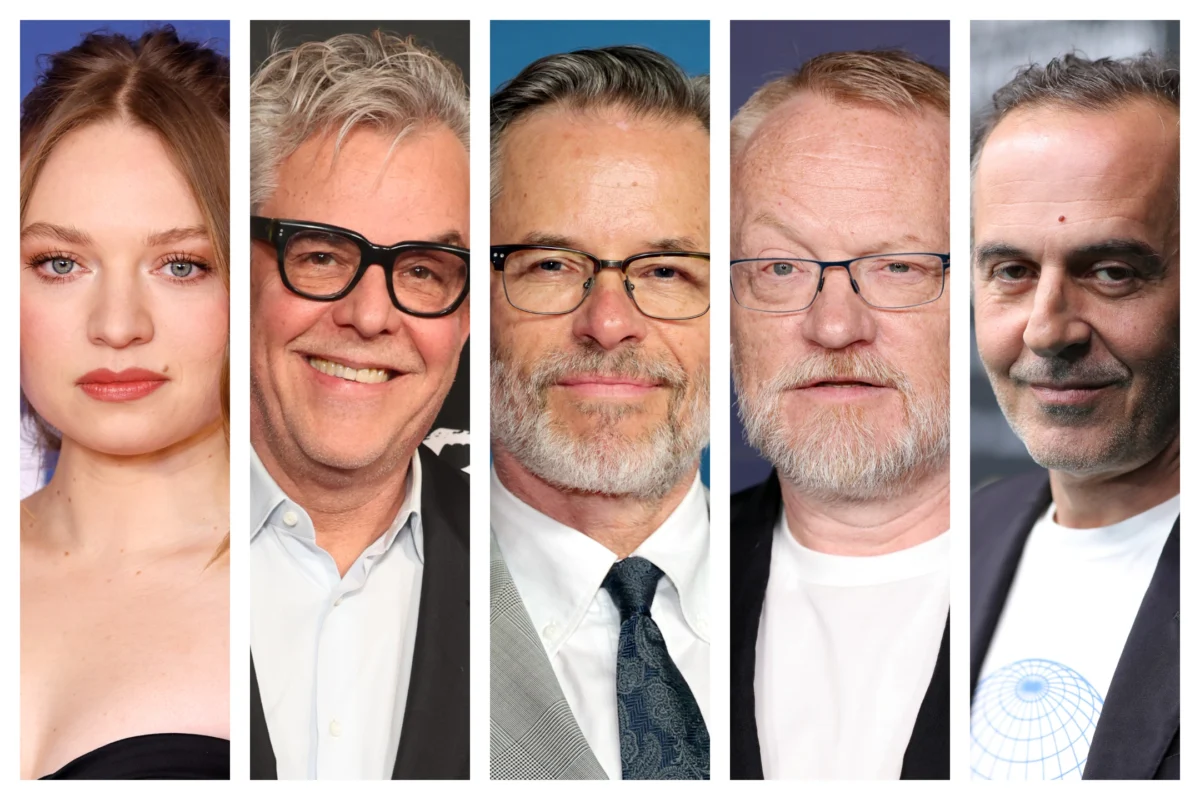
At the heart of The Price of Peace is the volatile chemistry between the "Big Three" leaders who gathered in the ruins of suburban Berlin to carve up the post-war world. Guy Pearce (L.A. Confidential, Memento) takes on the role of U.S. President Harry S. Truman, the former haberdasher from Missouri who found himself thrust into the presidency following the death of Franklin D. Roosevelt. Opposite him, Jared Harris (Chernobyl, The Crown) portrays Winston Churchill, the British Prime Minister fighting to maintain the relevance of the British Empire while facing a precarious domestic election. Completing the trio is Merab Ninidze (The Courier), who portrays the enigmatic and ruthless Soviet leader Joseph Stalin.
The production has also confirmed the addition of Mia Threapleton (The Phoenician Scheme) as Mary Churchill, the Prime Minister’s daughter and aide-de-camp, and veteran actor Danny Huston (Wonder Woman, Yellowstone) as General Leslie Groves, the military lead of the Manhattan Project.
Written and directed by McCarten, the film is produced by a consortium of international partners, including Raccoon Features, Muse of Fire Productions, and Salloway Studios. French powerhouse SND is co-producing and managing international sales, having already secured several key territories during a successful outing at the European Film Market (EFM) in Berlin earlier this year.
Chronology: July 1945 – The Birth of a New World Order
To understand the narrative weight of The Price of Peace, one must look at the specific chronological window the film inhabits. The story is set in July 1945, a period of profound transition. Nazi Germany had surrendered in May, but the Pacific War against Imperial Japan continued to rage.
The Potsdam Conference (codenamed "Terminal") took place from July 17 to August 2, 1945, at Cecilienhof Palace. The film’s narrative focuses on these crucial weeks where the camaraderie of the wartime alliance began to fracture under the pressure of ideological differences.
The Transition of Power
The conference began with Churchill representing Britain, but in a dramatic historical twist, he was replaced mid-summit by Clement Attlee after the Labour Party’s landslide victory in the UK general election. The film is expected to explore Churchill’s personal crisis as he realizes his influence is waning both at home and abroad.
The Nuclear Shadow
Simultaneously, while in Potsdam, Truman received word of the successful "Trinity" test in New Mexico—the world’s first atomic detonation. The chronology of the film will likely pivot around the moment Truman informs Stalin of a "new weapon of unusual destructive force," a disclosure that many historians cite as the opening salvo of the Cold War.
Supporting Data: The McCarten Pedigree and Technical Excellence
Anthony McCarten has established himself as the preeminent chronicler of 20th-century icons. His screenplays for The Theory of Everything (Stephen Hawking), Darkest Hour (Winston Churchill), Bohemian Rhapsody (Freddie Mercury), and The Two Popes (Pope Benedict and Pope Francis) have collectively earned dozens of Oscar nominations and several wins.
With The Price of Peace, McCarten moves into the director’s chair for a project that demands both intimate character study and grand-scale political maneuvering. To achieve this, he has assembled a top-tier technical crew:
- Cinematography: Henry Braham, whose recent work includes the visually ambitious Superman (2025) and Guardians of the Galaxy Vol. 3, will bring a modern, dynamic lens to the period setting.
- Production Design: James Merifield (Mary Queen of Scots) is tasked with recreating the bombed-out aesthetic of 1945 Berlin and the opulent yet tense atmosphere of Cecilienhof.
- Costume and Makeup: Tina Kalivas (Ballerina) and Suzanne Stokes-Munton (Nosferatu) lead the aesthetic recreation, with Vee Holt and Stuart Richards providing the prosthetic work necessary to transform Pearce and Harris into their historical counterparts.
- Musical Score: The film will be scored by Harry Gregson-Williams (The Martian, Gladiator II), known for blending orchestral grandeur with atmospheric tension.
Official Responses: Global Distribution and Production Enthusiasm
The industry response to the project has been overwhelmingly positive, particularly regarding its commercial viability in the international market. Ramy Nahas, Director of International Sales and Distribution at SND, emphasized the film’s universal appeal during the start of production.
“Following the enthusiastic response from international buyers at the European Film Market in Berlin earlier this year, we’re thrilled to see production underway,” Nahas stated. “The level of interest from distributors worldwide confirms that The Price of Peace will resonate strongly with global audiences.”
McCarten himself expressed the personal and historical weight of the project. “The Potsdam Conference represented a crucial turning point in world history, the moment when World War II transformed into the Cold War,” McCarten said. “I’m thrilled to begin production with such an extraordinary cast bringing this pivotal moment to life.”
The film’s production is a massive logistical undertaking, involving a web of producers including Jonathan Saubach, Philipp Klausing, and Matthew Salloway, alongside executive producers from various international firms like Spark Productions and Sub Rosa Group. This multi-national backing reflects the global nature of the story being told.
Implications: Cinema as a Lens for Modern Geopolitics
The production of The Price of Peace arrives at a time when historical dramas are increasingly used as mirrors for contemporary political climates. The themes of the Potsdam Conference—territorial integrity, the ethics of nuclear deterrence, and the fragility of international alliances—remain strikingly relevant in the 21st century.
The "Great Man" Theory vs. Human Vulnerability
By focusing on the personal crises of Truman, Churchill, and Stalin, McCarten is expected to challenge the "Great Man" theory of history. The synopsis suggests a "high-stakes diplomatic chess game" where personal agendas often override the collective good. For audiences, this offers a deconstruction of how global policy is often the result of human ego, exhaustion, and domestic pressure rather than purely strategic idealism.
The Rise of the Political Thriller
The success of films like Oppenheimer has proven that there is a massive global appetite for "talky," intellectually rigorous historical dramas. The Price of Peace serves as a spiritual successor or "sequel" to the events depicted in Oppenheimer and Darkest Hour, providing the final chapter of the World War II saga and the prologue to the nuclear age.
A New Chapter for the Lead Actors
For Guy Pearce and Jared Harris, the film represents a significant addition to their respective filmographies. Harris, who previously played King George VI in The Crown, returns to the Churchill era from a different vantage point. For Pearce, playing Truman offers a rare opportunity to portray a leader often overshadowed by FDR, yet whose decisions—specifically regarding the use of atomic bombs and the Marshall Plan—defined the modern era.
Looking Ahead: The Road to 2027
As principal photography continues in London, the industry will be watching closely. The film is being co-represented in the U.S. by CAA Media Finance, with a release strategy aimed at the 2027 festival circuit. Given the pedigree of the talent involved and the enduring fascination with the "Big Three," The Price of Peace is not just a film about the end of a war, but an exploration of how the peace we currently inhabit was bought, sold, and negotiated in the shadows of 1945.
With delivery expected in 2027, the film stands as a testament to the enduring power of historical narrative and the collaborative spirit of international cinema. As the world navigates its own modern "Cold War" tensions, McCarten’s exploration of the original divide may offer more than just entertainment—it may offer a necessary reflection on the cost of global stability.