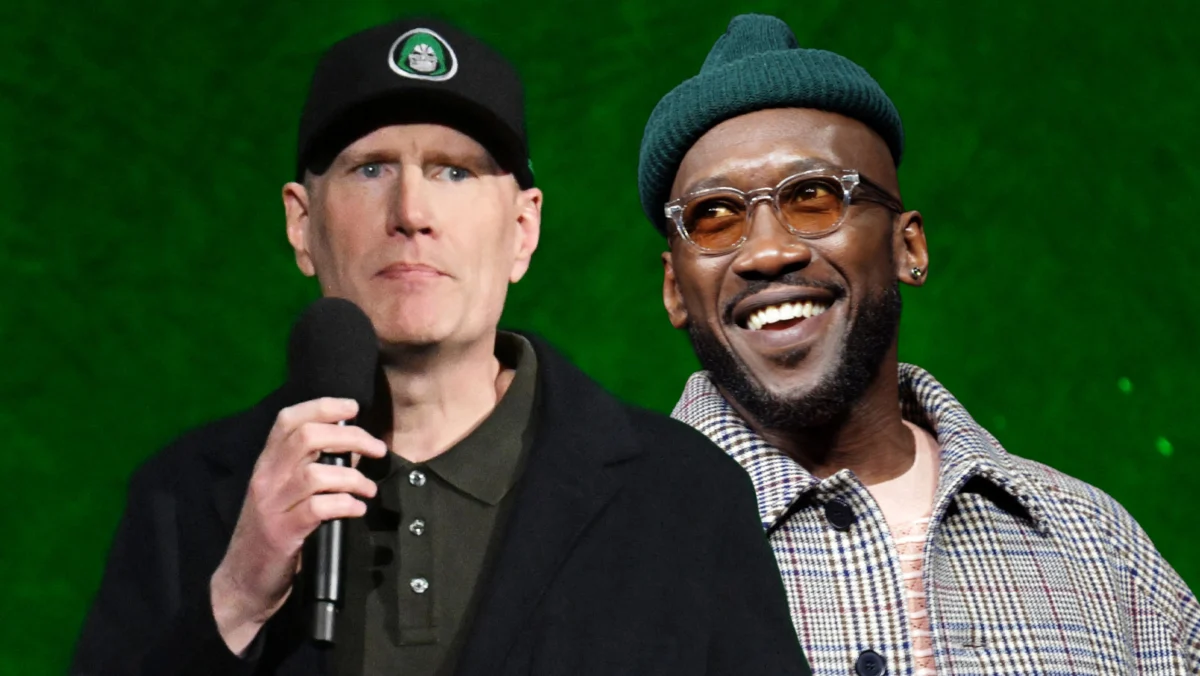
In the high-stakes world of the Marvel Cinematic Universe (MCU), where box-office billions and interconnected narratives are the norm, Kevin Feige is often viewed as the architect of an infallible entertainment machine. However, the long-gestating reboot of Blade, starring two-time Academy Award winner Mahershala Ali, has become a rare and public blemish on the studio’s otherwise prolific record. In a recent and surprisingly vulnerable admission, Feige, the President of Marvel Studios, has opened up about the project’s stagnation, describing his personal sense of disappointment as the film remains trapped in development hell.
Main Facts: A Project in Stasis
The Blade reboot, intended to integrate the iconic vampire hunter into the MCU, has faced a tumultuous journey since its initial announcement over five years ago. Despite the prestige of its lead actor and the popularity of the character, the production has been plagued by a revolving door of directors, multiple script overhauls, and external industry disruptions.
The most recent development in this saga came during Kevin Feige’s promotional tour for Spider-Man: Brand New Day. Appearing on the Happy Sad Confused podcast, Feige offered a raw assessment of the situation. "I am feeling like a gigantic loser and failure that we didn’t get off the ground with Mahershala," Feige admitted. This statement marks a departure from the usually polished corporate rhetoric of Disney-owned subsidiaries, signaling the depth of the creative hurdles the project has faced.
While the film was officially removed from Disney’s 2025 release calendar in late 2024—replaced by the 20th Century Studios’ Predator: Badlands—Feige maintains that the project is not dead. Instead, it is undergoing a fundamental restructuring to ensure it meets the studio’s heightened standards for quality in a post-"superhero fatigue" era.
Chronology: Five Years of False Starts
To understand the weight of Feige’s admission, one must look at the timeline of a project that has spanned half a decade without a single frame of footage being shot.
2019: The Shock Announcement
The journey began in July 2019 at San Diego Comic-Con. In a "one more thing" moment that electrified Hall H, Mahershala Ali joined Feige on stage, donned a Blade baseball cap, and was announced as the new Eric Brooks. It was later revealed that Ali himself had approached Marvel with the idea, a rare instance of a talent-driven pitch at the studio.
2021–2022: Director Shifts and Creative Friction
In 2021, Bassam Tariq (Mogul Mowgli) was hired to direct, with Stacy Osei-Kuffour attached to write. However, just weeks before production was set to begin in late 2022, Tariq exited the project. Reports cited "continued shifts in the production schedule" and creative differences. Shortly after, Yann Demange (Lovecraft Country) took the helm, and Michael Starrbury was brought in to rewrite the script from scratch.
2023: The Strike and Script Overhauls
The 2023 Writers Guild of America (WGA) and SAG-AFTRA strikes further stalled progress. During this hiatus, rumors circulated that the script had undergone as many as four major iterations. Some reports suggested earlier versions of the film focused less on the titular character and more on a female-led narrative, a direction that was allegedly scrapped in favor of a "modern-day" focus on Blade himself.
2024: The Indefinite Delay
In June 2024, Yann Demange exited the project, leaving Blade without a director for the second time. By October 2024, Disney officially pulled the film from its November 7, 2025, release slot. This move effectively placed the film in an indefinite state of "active development" without a firm production start date.
Supporting Data: The Complexity of the Character
The difficulty in bringing Blade to the MCU lies in its tonal requirements and the legacy of the original trilogy. The 1998–2004 Blade films, starring Wesley Snipes, are credited with proving that R-rated Marvel characters could be commercially successful, long before the MCU existed.
Script Iterations
According to Feige, there have been four distinct versions of the Blade script. Industry insiders have noted that the studio struggled to balance the supernatural, horror-centric elements of the character with the broader, more PG-13-friendly MCU. Feige recently clarified that the studio has now "landed on [a] modern day" version, moving away from rumored period-piece concepts that would have set the film in the 1920s or 1970s.
The R-Rating Commitment
Unlike most MCU entries, Marvel has committed to an R-rating for Blade, following the success of Deadpool & Wolverine. This commitment adds a layer of complexity to the production, as the studio must ensure the violence and horror elements feel authentic to the character while still fitting into the overarching Disney brand strategy.
Personnel Turnover
The project has seen a high turnover of writing talent, including Nic Pizzolatto (True Detective) and Michael Green (Logan). The involvement of such high-caliber writers underscores Marvel’s desperation to "get the script right" before committing to a $100 million-plus production budget.
Official Responses: Feige’s Commitment to Quality
Despite the self-described "failure," Kevin Feige’s recent comments emphasize a pivot toward quality over speed—a directive recently echoed by Disney CEO Bob Iger.
"We love the character, we love Mahershala’s version of him," Feige stated in a November 2024 interview. "And rest assured: whenever we change direction with a project, or are still trying to figure out how it fits into our schedule, we let the public know… But I can tell you that the character will be coming to the MCU."
Feige also addressed the decision to pause production following the exits of Tariq and Demange. "We didn’t want to put a leather outfit on [Ali] and have him start killing vampires," Feige explained. "You can start and have a good script and make it a great script through production, but we didn’t feel confident we could do that on Blade. We didn’t want to do that to Mahershala and didn’t want to do that to us."
This sentiment reflects a broader cultural shift within Marvel Studios. After several years of rapid-fire releases on Disney+ and in theaters—some of which received mixed critical receptions—the studio is now more willing to delay projects indefinitely rather than release a product that might damage the brand or the reputation of its lead actors.
Implications: What This Means for the MCU’s Future
The saga of the Blade reboot has significant implications for the future of the Marvel Cinematic Universe and the industry at large.
1. The "Supernatural" Corner of the MCU
Blade was intended to be the cornerstone of a new, darker wing of the MCU, potentially leading to a "Midnight Sons" team-up featuring characters like Moon Knight, Ghost Rider, and Werewolf by Night. The delay of Blade creates a vacuum in this supernatural narrative, leaving the status of these darker storylines in limbo.
2. The Mahershala Ali Factor
Mahershala Ali is 51 years old. Given the physical demands of an action-heavy role like Blade, the window for a multi-film franchise is naturally narrowing. While Ali remains publicly committed to the role, the ongoing delays raise questions about how long a talent of his stature will wait before moving on to other projects. Feige’s personal apology to Ali highlights the studio’s awareness that they are testing the patience of one of Hollywood’s most respected actors.
3. The Wesley Snipes Legacy
The unexpected and highly praised cameo of Wesley Snipes as Blade in 2024’s Deadpool & Wolverine added a new layer of pressure. Snipes’ appearance reminded audiences of how much they loved the original iteration, setting a high bar for Ali’s version to clear. It also sparked fan discussions about whether the MCU should simply continue Snipes’ story via the multiverse rather than attempting a reboot that seems fundamentally stuck.
4. Quality Control as the New Standard
Feige’s admission of "failure" may actually be a strategic sign of strength. By admitting that the studio was not ready, Marvel is attempting to rebuild trust with an audience that has become increasingly wary of "content for content’s sake." The willingness to pull a film from the schedule entirely—rather than rushing a mediocre version to meet a release date—suggests that Marvel is returning to the "slow and steady" approach that defined its early success.
Conclusion
The road to the Blade reboot remains shrouded in shadow. While Kevin Feige’s candid remarks on the Happy Sad Confused podcast offer a glimpse into the internal frustrations at Marvel Studios, they also reaffirm a commitment to the character’s eventual debut. For now, the "Daywalker" remains in the coffin, waiting for the right creative spark to bring him back to life. Whether Feige can turn this "gigantic failure" into a eventual triumph remains one of the most watched narratives in Hollywood. As of late 2024, the hunt for a new director continues, and the script remains under the microscope, with the world watching to see if the MCU can finally draw blood with its most elusive project.