The enigmatic final moments of Alfred Hitchcock’s 1958 masterpiece Vertigo have puzzled, haunted, and inspired film scholars and cinephiles for nearly seven decades. Now, acclaimed documentarian Alexandre O. Philippe is set to dissect this cinematic riddle in an ambitious, star-studded two-part documentary feature titled The Fall.
The project, which features an impressive lineup of "star witnesses"—including Oscar-winning director Guillermo del Toro, horror auteur Ari Aster, and Vertigo’s legendary leading lady Kim Novak—is being presented to prospective international partners at the Fantasia International Film Festival’s Frontières International Co-Production Market in Montreal. Representing a major step forward in the landscape of essayistic film documentaries, The Fall aims to establish itself as the premier cinephile event of 2028, coinciding with the 70th anniversary of Hitchcock’s landmark psychological thriller.
Main Facts: Inside the Production of ‘The Fall’
At its core, The Fall is structured not as a dry, academic lecture, but as a stylized, film-noir-inspired investigation into one of cinema’s most famous and ambiguous deaths. The title refers directly to the climax of Vertigo, in which Judy Barton (played by Kim Novak) plummets to her death from the bell tower of the San Juan Bautista mission.
Rather than showing the physical descent or the impact of her body, Hitchcock famously cuts to a tight, agonizing close-up of Scottie Ferguson (James Stewart) looking down in horror. Over the span of just 57 frames, the audience is left to process the tragedy through Stewart’s shattered expression.
Key Production Partners and Financing
The documentary is being produced by a coalition of seasoned independent production companies spanning the United States and France:
- Medianoche Productions: Led by producer Terri Piñon, the U.S. outfit is spearheading the project. Medianoche previously produced Philippe’s 2025 Venice-premiering documentary Kim Novak’s Vertigo.
- Tell Me Films: The French production company reunites with Medianoche and Philippe following their successful collaboration on the Novak documentary.
- Thunderbug Productions: A French production house joining the alliance to bolster the European co-production framework.
Current Market Status
The production arrives at the Frontières International Co-Production Market (held from July 22 to 25 in Montreal) with significant momentum. The team has already secured a crucial pre-sale with France’s premium television channel Cine+.
With approximately one year of production remaining, Piñon and Philippe are utilizing the Montreal platform to secure:
- An international sales agent to handle worldwide distribution.
- Additional co-production and financing partners to finalize the budget.
- Early commitments from major international film festivals for a staggered rollout.
Chronology of Development and Release
The road to The Fall represents the culmination of Alexandre O. Philippe’s decades-long career analyzing the DNA of landmark cinema. The timeline of the project’s development and its planned trajectory reveals a highly strategic, festival-driven rollout:
[2024] Venice Classics: "Chain Reactions" Wins Best Documentary on Cinema
   │
[2025] Venice Film Festival: Premiere of "Kim Novak's Vertigo"
   │
[July 2026] Frontières Market: "The Fall" Pitched for International Financing
   │
[2026–2027] Active Production & Post-Production (Approx. 1 Year Remaining)
   │
[2028] The 70th Anniversary of "Vertigo": Split Premiere of Parts I and II
Milestone Breakdown
- September 2024: Philippe wins the prestigious Venice Classics Award for Best Documentary on Cinema with Chain Reactions, a deep-dive exploration of the legacy of Tobe Hooper’s The Texas Chain Saw Massacre on its 50th anniversary. This success solidifies his reputation for turning anniversary-focused film analysis into high-profile festival events.
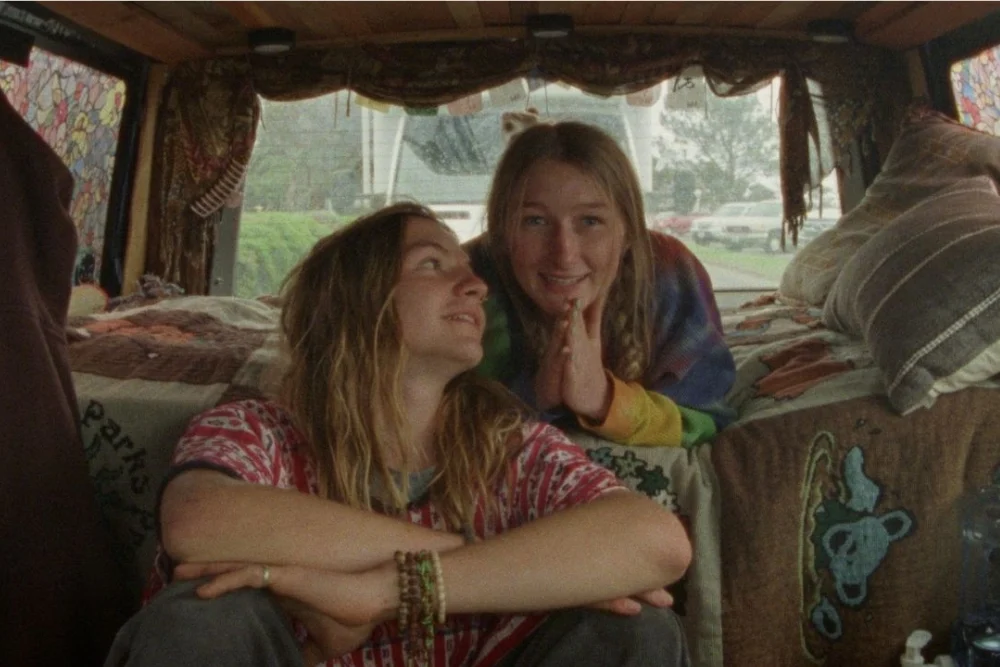
- September 2025: Medianoche and Tell Me Films premiere Kim Novak’s Vertigo at the Venice Film Festival. This project establishes a deep creative shorthand with Kim Novak and lays the conceptual groundwork for The Fall.
- July 22–25, 2026: The Fall is officially introduced to global buyers and co-producers at the Frontières Market in Montreal, capitalizing on the buzz of its predecessor and its high-profile attachment list.
- Late 2027: Anticipated completion of production and post-production, wrapping up a multi-year shooting schedule that spans multiple continents.
- 2028: The global release of The Fall as a two-part cinematic event. The producers plan to host separate, high-profile festival premieres for Part I and Part II, sustaining media attention and audience engagement throughout the 70th-anniversary year of Vertigo.
Supporting Data & Cinematic Context
To understand the scale and necessity of The Fall, one must look at both the historical weight of Alfred Hitchcock’s Vertigo and Alexandre O. Philippe’s unique methodology as a filmmaker.
The Mythos of Vertigo
Originally released in 1958 to mixed reviews and modest box office returns, Vertigo underwent a massive critical re-evaluation over the subsequent decades. In 2012, it famously dethroned Orson Welles’ Citizen Kane at the top of the prestigious Sight & Sound critics’ poll of the greatest films of all time, a position it maintained near the very top in the 2022 poll.
The film’s final sequence is central to its enduring mystique. Judy Barton’s sudden fall—triggered by the ghostly appearance of a nun emerging from the shadows of the bell tower—is abrupt, shocking, and narratively unresolved.
| Cinematic Element | Detail / Significance |
|---|---|
| The Scene | Judy Barton’s fall from the San Juan Bautista bell tower. |
| The Visual Omission | The physical fall and the impact are completely omitted from the screen. |
| The Focus | 57 frames of film dedicated entirely to James Stewart’s (Scottie) face. |
| The Ambiguity | Did Judy jump out of guilt? Was it a tragic accident caused by fear? What does Scottie’s posture of cured vertigo but ultimate grief represent? |
Philippe’s Micro-Analysis Methodology
Alexandre O. Philippe has pioneered a sub-genre of documentary filmmaking that focuses on dissecting singular, iconic moments in cinema history. His previous works demonstrate the commercial and critical viability of this hyper-focused approach:
- 78/52: Hitchcock’s Shower Scene (2017): A feature-length documentary dedicated entirely to the 3-minute, 78-piece-cut shower scene in Psycho. The film proved that audiences would sit through 91 minutes of micro-analysis if the subject matter was sufficiently compelling.
- Memory: The Origins of Alien (2019): An exploration of the cultural, mythological, and artistic roots of Ridley Scott’s masterpiece, focusing heavily on the infamous "chestburster" scene.
- Leap of Faith: William Friedkin on The Exorcist (2019): An intimate, deep-dive interview format exploring the religious and cinematic philosophies behind Friedkin’s classic.
By expanding The Fall into a two-part feature, Philippe is taking his most ambitious step yet, moving beyond a single scene to explore the psychological, philosophical, and emotional gravity of an entire film’s climax.
Official Responses and Statements
The creative vision behind The Fall is defined by a desire to avoid easy answers. Rather than acting as an objective piece of journalism that attempts to "solve" Hitchcock’s intentions, the film is designed to let its contributors project their own artistic truths onto the blank canvas of the 57-frame sequence.
The Director’s Philosophical Approach
Alexandre O. Philippe views The Fall as the pinnacle of his career as a cinematic essayist. He explained his intention to immerse the audience in the film’s central mystery:
"I want to inhabit, rather than solve, the riddle of the fall. Each interview subject offers a different version of the truth. Each version reveals something deeply intimate about the person telling it. It’s the culmination of everything I’ve chased for 20 years: the film I was born to make."
By treating his interviewees as "witnesses" in a noir investigation, Philippe allows modern directors like Guillermo del Toro and Ari Aster to reveal their own creative obsessions through the lens of Hitchcock’s work.
The Producer’s Commercial Strategy
Producer Terri Piñon of Medianoche Productions emphasized the commercial and festival-driven strategy behind the two-part structure. Recognizing the power of anniversaries in the cultural calendar, Piñon aims to turn the documentary into a year-long celebration:
"We’re building The Fall as a two-part event, with separate premieres for Part I and Part II, for Vertigo’s 70th anniversary in 2028 that will be the cinephile event of the year. With the cast we’re securing, the French pre-sale, the co-production structure, and early interest from some of the most prestigious festivals, it’s set up for a spectacular rollout to ride the Vertigo anniversary buzz throughout 2028."
Implications for Film Criticism and the Documentary Market
The development and pitching of The Fall at Frontières carries several broader implications for the film industry, the documentary market, and the preservation of film history.
The Elevation of the "Cine-Essay"
For decades, documentaries about filmmaking were relegated to the "bonus features" section of DVDs and Blu-rays. They were often viewed as promotional ephemera rather than standalone pieces of art.
Filmmakers like Philippe, alongside contemporaries like Mark Cousins (The Story of Film: An Odyssey), have elevated the cine-essay into a prestigious theatrical and festival-tier genre. The Fall’s selection for the Frontières International Co-Production Market—historically a hub for high-concept genre films—proves that documentaries about cinema are now treated with the same commercial and artistic weight as narrative feature films.
Connecting Generations of Filmmakers
By bringing together Kim Novak (representing the classic Hollywood era) with Guillermo del Toro (the master of modern dark fantasy) and Ari Aster (the vanguard of contemporary psychological horror), The Fall bridges the gap between different generations of cinematic storytelling.
- Guillermo del Toro’s involvement suggests an exploration of Vertigo’s gothic romance, its obsession with the dead, and the monstrous nature of obsession itself.
- Ari Aster’s participation points toward an analysis of the film’s crushing psychological dread, its depiction of manipulation, and the paralyzing nature of grief and trauma.
- Kim Novak’s presence provides an irreplaceable, firsthand human element, offering a counterweight to the theoretical analysis of the male directors by grounding the project in her lived experience of portraying Judy/Madeleine under Hitchcock’s notoriously demanding direction.
A Model for Co-Production and Financing
The collaborative structure of The Fall—uniting American independent production with multiple French production houses and securing early premium television pre-sales (Cine+)—serves as a blueprint for funding high-end documentary projects. By utilizing international co-production markets like Frontières, independent filmmakers can bypass traditional studio systems, maintaining creative control over highly specialized, deeply artistic projects while securing global distribution.
As The Fall continues its production journey toward its ambitious 2028 release, it stands as a testament to the enduring, hypnotic power of Alfred Hitchcock’s work, proving that sometimes, 57 frames of film are enough to inspire a lifetime of artistic inquiry.