LOS ANGELES — In the lexicon of Hollywood, "doomsday" is typically a term reserved for studio executives waking up to a string of underperforming weekend box office returns. But for Marvel Studios and its parent company, The Walt Disney Company, the word is currently synonymous with an unprecedented financial windfall.
With more than three months left until its scheduled December 18 release date, the highly anticipated tentpole Avengers: Doomsday has already amassed a staggering $50 million in domestic pre-sales alone. The milestone, announced by Disney senior executive vice president and Chief Financial Officer Hugh Johnston during the annual Goldman Sachs Communacopia + Technology Conference on Wednesday, signals not only the continued dominance of the Marvel Cinematic Universe (MCU) but also a massive paradigm shift in how premium theatrical experiences are consumed.
As industry analysts scramble to recalculate their fourth-quarter projections, Avengers: Doomsday is shaping up to be more than just another superhero sequel; it is positioning itself as a cultural touchstone that could redefine theatrical benchmarks for the post-pandemic era.
Main Facts: The Numbers Behind the Madness
The sheer velocity of the ticket sales for Avengers: Doomsday has caught even the most optimistic box office prognosticators by surprise. Generating $50 million in advance ticket sales in mid-September—for a movie opening in mid-December—places the film in an elite, historically rare tier of cinematic releases.
Equally striking is the consumer preference for premium formats. According to data provided by Disney, over 70% of these early pre-sales are specifically for "Infinity Vision" tickets. Unveiled by Disney earlier this year at CinemaCon, Infinity Vision is a proprietary certification standard for premium large format (PLF) theaters. The studio has heavily marketed the technology as the pinnacle of modern projection and sound engineering, promising moviegoers the "biggest, brightest, and most immersive cinematic experiences" available.
The heavy tilt toward premium formats indicates that modern audiences are increasingly willing to pay a luxury price point, provided the event film justifies the expense. For a runtime and scale as monumental as Avengers: Doomsday, viewers are voting with their wallets, opting out of standard auditoriums in favor of premium immersion.
Chronology: The Road to ‘Doomsday’
To understand the magnitude of the current pre-sale frenzy, it is necessary to trace the turbulent yet strategic journey of the Marvel Cinematic Universe over the last half-decade.
The Aftermath of ‘Endgame’ (2019–2021)
Following the historic cultural phenomenon of Avengers: Endgame in 2019, which concluded the 22-film "Infinity Saga," Marvel Studios faced the unenviable task of starting over. Phase Four and Phase Five of the MCU introduced a sprawling array of new characters, multiverse concepts, and streaming series on Disney+. While titles like Spider-Man: No Way Home and Guardians of the Galaxy Vol. 3 achieved massive commercial success, other entries experienced "superhero fatigue" and faced criticism for a perceived lack of narrative cohesion.
The Course Correction (2022–2024)
Recognizing the shifting tide, Disney and Marvel Studios leadership initiated a deliberate slowdown in production velocity to focus on quality over quantity. Rumors swirled regarding how the studio would course-correct its overarching Multiverse Saga. The answer arrived in a series of strategic announcements designed to recapture the nostalgic fervor of earlier phases.
The Return of the Russos and Robert Downey Jr. (Summer 2024)
The turning point for the current marketing cycle occurred at San Diego Comic-Con, where Marvel dropped a series of seismic announcements. Directors Anthony and Joe Russo—the architectural masterminds behind Avengers: Infinity War and Avengers: Endgame—were officially confirmed to return to the director’s chair.
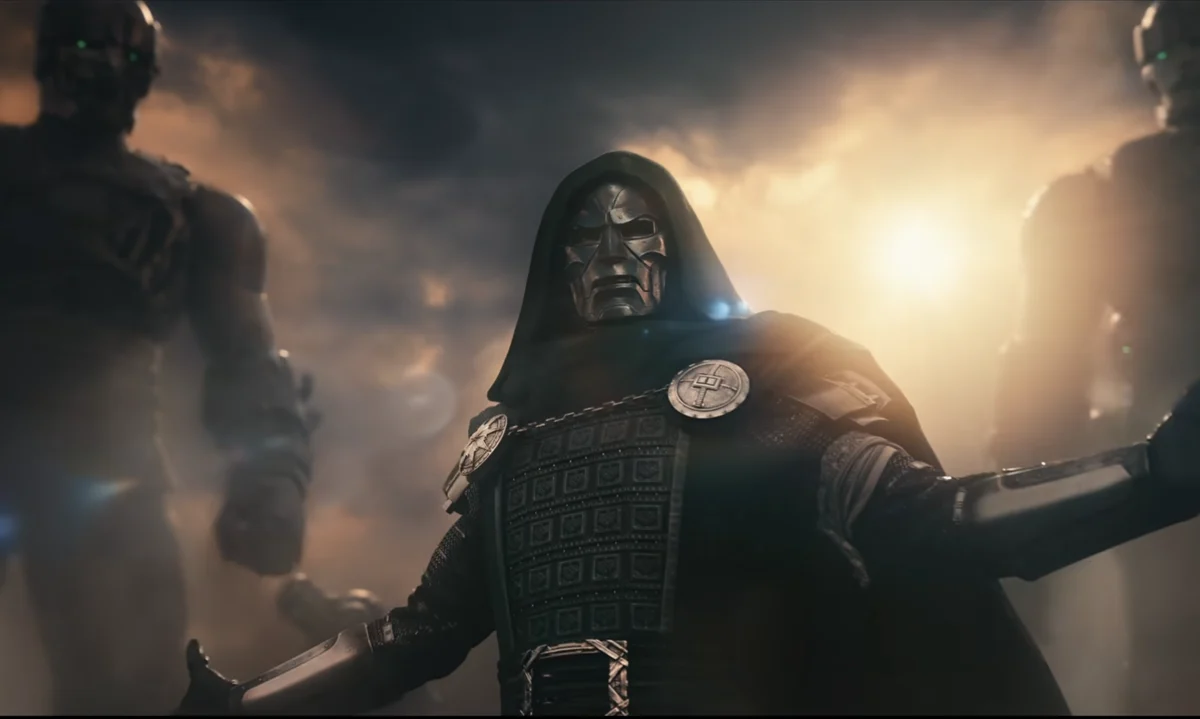
However, the headline that dominated global news cycles was the return of Robert Downey Jr. Having cemented his legacy as Tony Stark/Iron Man—whose character sacrificed his life to defeat Thanos in Endgame—Downey is set to return to the MCU not as a hero, but as the iconic comic book villain Victor Von Doom. This high-profile casting choice instantly re-energized the fanbase, transforming Avengers: Doomsday from a standard franchise installment into a must-see cinematic event.
The CinemaCon Reveal and Pre-Sale Launch (2025)
Disney utilized CinemaCon to debut "Infinity Vision," laying the technological groundwork for the film’s theatrical rollout. When pre-sales officially opened in September, three months ahead of the December premiere, the pent-up demand of millions of fans instantly flooded ticketing platforms, resulting in the historic $50 million milestone announced by CFO Hugh Johnston.
Supporting Data: The Convergence of Universes
The extraordinary pre-sale figures are also a direct result of the film’s unprecedented narrative scope. Avengers: Doomsday is not merely bringing back familiar faces; it is executing the most complex crossover event in cinematic history.
Under the direction of the Russo brothers, the film features a massive ensemble cast that bridges disparate corners of Marvel’s cinematic legacy. Alongside the traditional Avengers, the film unites the newly introduced Fantastic Four, the roster of the Thunderbolts, and members of the original 2000s X-Men film franchises. This convergence of properties—made possible by Disney’s acquisition of 21st Century Fox and the narrative mechanics of the Multiverse—has created a generational touchpoint.
Furthermore, the data surrounding ticket sales reveals shifting demographic trends:
- Generational Appeal: Older moviegoers who grew up watching the original Fox X-Men films in the 2000s are purchasing tickets alongside younger demographics who grew up with the Infinity Saga.
- Format Shift: The 70% adoption rate for Infinity Vision marks the highest advance conversion rate to premium formats in Disney’s distribution history, surpassing previous records held by Avatar: The Way of Water and Avengers: Endgame.
- Geographic Spread: Pre-sales are not concentrated solely in major metropolitan hubs; suburban and rural PLF locations are reporting unprecedented early sell-outs for opening weekend screenings.
Official Responses: Leadership Weighs In
The announcement made by Disney CFO Hugh Johnston at the Goldman Sachs Communacopia + Technology Conference reflects a wave of renewed confidence within the corporate echelons of the Walt Disney Company.
"The consumer appetite for theatrical experiences that feel truly irreplaceable has never been stronger," Johnston noted during his presentation, highlighting the impressive early metrics for Avengers: Doomsday. He emphasized that the company’s investment in proprietary theatrical technologies, such as the Infinity Vision PLF standard, is directly paying dividends by maximizing the revenue potential of major intellectual property.
Marvel Studios President Kevin Feige, speaking at various industry panels leading up to the release, has repeatedly praised the collaborative effort of bringing such a massive narrative puzzle together. "Working with Anthony and Joe again, alongside an ensemble of this magnitude, feels like capturing lightning in a bottle for a second time," Feige said. "Victor Von Doom is arguably the greatest villain in comic book history, and seeing an actor of Robert Downey Jr.’s caliber bring that complexity to life on the biggest screens possible is something we cannot wait for audiences to experience."
Exhibition partners have similarly echoed Disney’s enthusiasm. Major theater chains, including AMC, Regal, and Cinemark, have reported record-breaking server traffic during the initial hours of ticket sales, prompting many locations to add round-the-clock screenings for the opening weekend of December 18 to meet demand.
Implications: What ‘Doomsday’ Means for the Future of Hollywood
The runaway success of Avengers: Doomsday pre-sales carries profound implications for the broader entertainment industry, offering vital insights into the current state and future trajectory of the theatrical business model.
1. The Validation of the "Eventized" Blockbuster
In an era dominated by home streaming services and widespread content availability, the traditional box office has faced an existential crisis. Mid-budget films and standard franchise entries have struggled to pull audiences away from their living rooms. However, Doomsday proves that the theatrical window remains intensely viable for "event" cinema—films that are positioned as cultural imperatives that cannot be spoiled online or easily replicated on a home television.
2. The Dominance of Premium Large Formats (PLF)
The fact that 70% of early buyers opted for Infinity Vision underscores a permanent shift in consumer economics. Moviegoers are increasingly price-sensitive for routine viewings, but they are entirely willing to pay a premium for enhanced experiences—superior sound, larger screens, and brighter projection. This trend encourages studios and theater chains to continue investing heavily in premium infrastructure, shifting the baseline expectation of a night out at the movies.
3. De-risking Through Nostalgia and Innovation
By casting Robert Downey Jr. as Victor Von Doom and merging multiple cinematic eras (MCU, Fox X-Men, Fantastic Four), Marvel has executed a masterclass in risk mitigation. Rather than relying solely on new, unproven iterations, the studio has synthesized legacy nostalgia with fresh storytelling risks. This blueprint will likely be studied by competing studios looking to manage massive budgets in an increasingly volatile media landscape.
4. Setting the Fourth-Quarter Box Office Standard
As Avengers: Doomsday barrels toward its December 18 release date, its early financial triumph practically guarantees a dominant holiday season for the box office at large. Historically, December blockbusters enjoy long, lucrative legs due to holiday vacations and school breaks. With a $50 million head start months before opening credits even roll, Doomsday is well on its way to challenging historic box office milestones.
As production finalizes and the marketing campaign enters its final stretch, the industry will be watching closely. For now, one thing is certain: despite the ominous title, the arrival of Avengers: Doomsday is bringing sunshine, not doom, to the future of the cinematic box office.
More to come…