The expansive Big Bang Theory universe has officially entered a new, multiversal era with the debut of HBO Max’s highly anticipated spin-off, Stuart Fails to Save the Universe. Premiering on July 23, the series wasted no time in establishing its high-stakes, darkly comedic tone, delivering a shocking "legacy" cameo that serves as both a nostalgic treat and a brutal narrative gut-punch for longtime fans of the franchise.
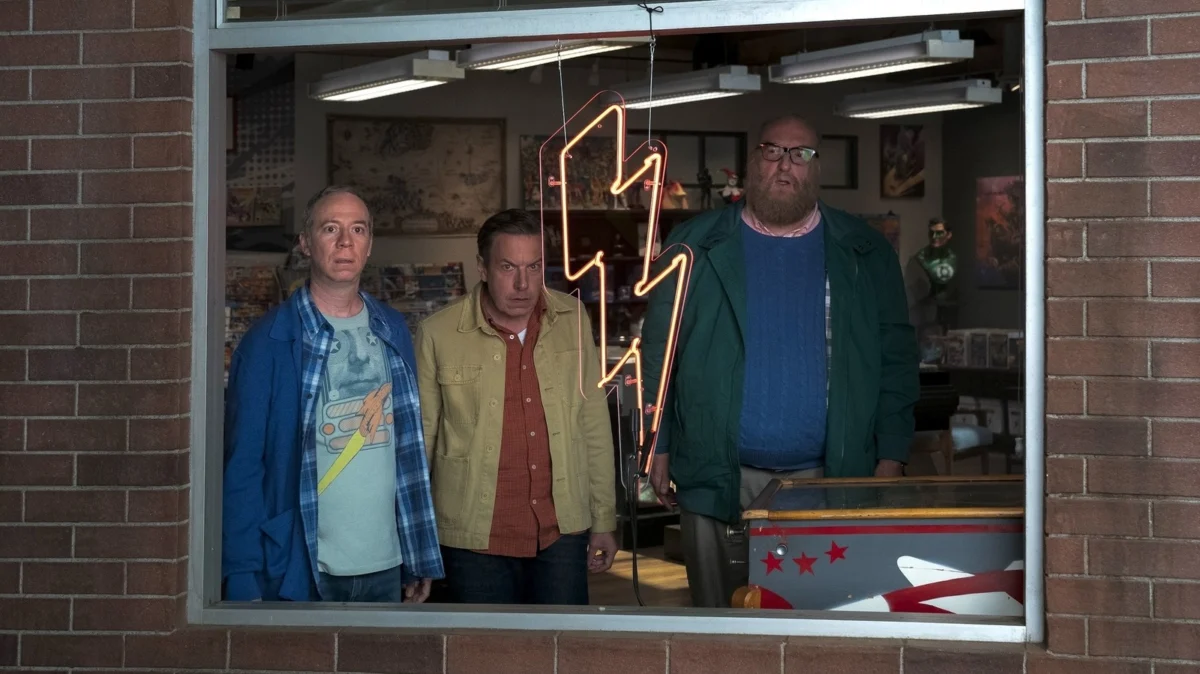
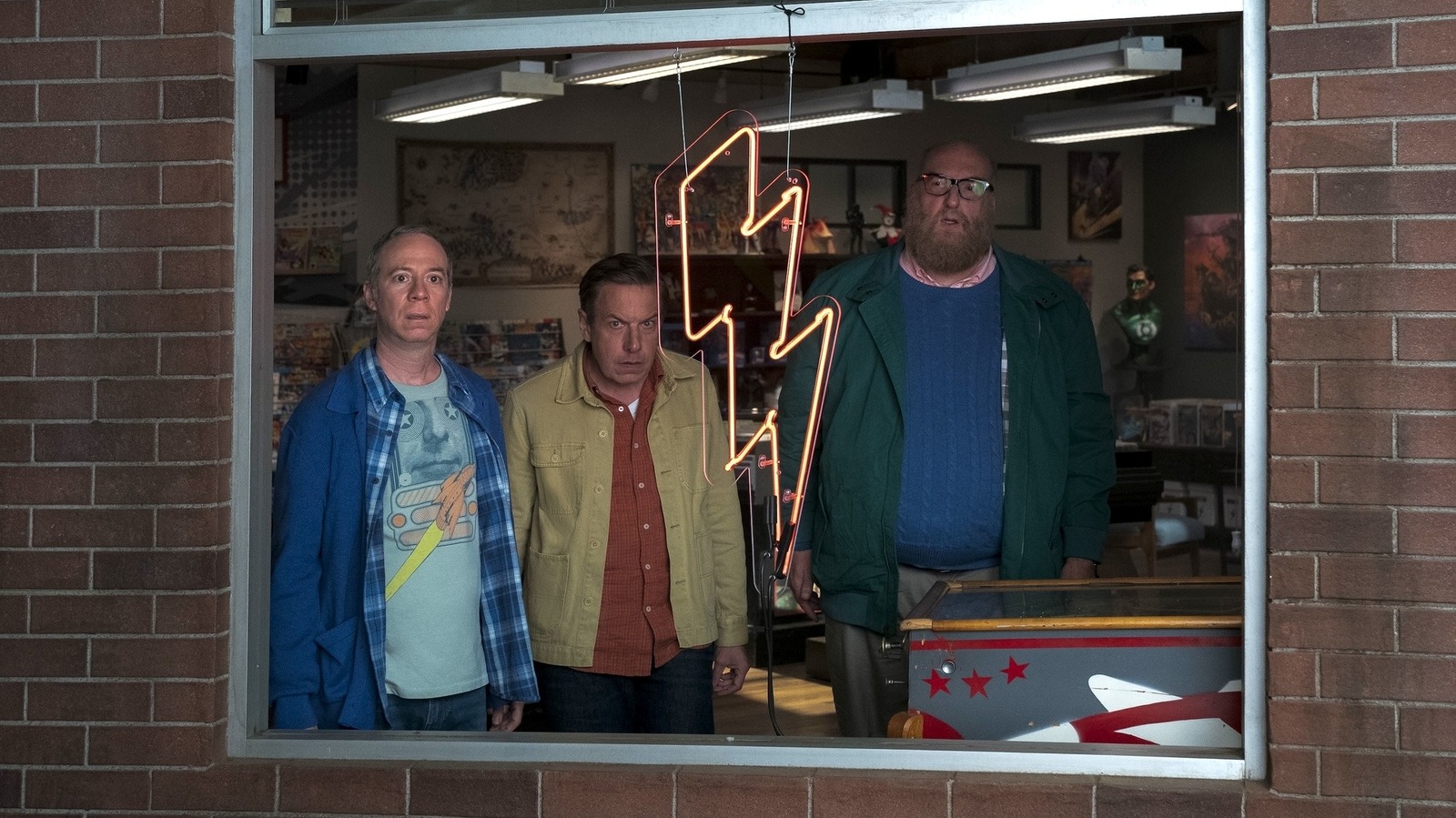
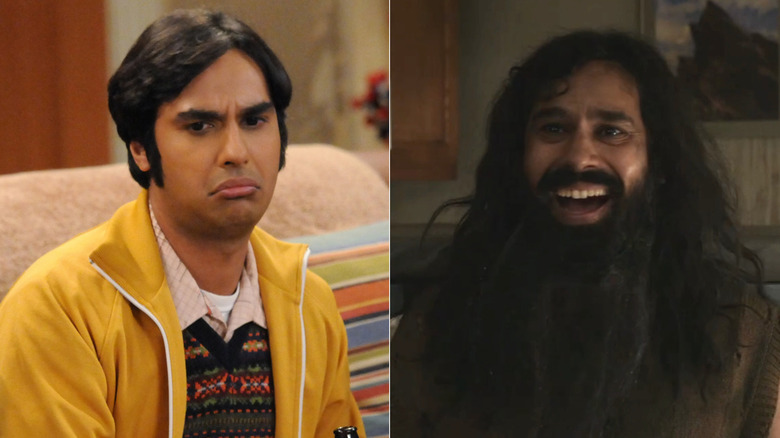
In a sequence that unfolds within the first twelve minutes of the premiere, the show’s protagonist, Stuart Bloom (Kevin Sussman), finds himself navigating a post-apocalyptic landscape alongside his ex-girlfriend, Denise (Lauren Lapkus), and the socially awkward geologist, Bert Kibbler (Brian Posehn). The trio’s journey takes an unexpected turn when they encounter a familiar face: Rajesh Koothrappali (Kunal Nayyar). However, this is not the Raj fans remember from the halls of Caltech; it is a battle-hardened, alternate-universe version of the astrophysicist, and his tenure in the new series is devastatingly short-lived.
A Chronology of the Premiere’s Chaos
The narrative architecture of Stuart Fails to Save the Universe is built upon the premise of fractured realities. Stuart is visited by "Stuart Prime," a version of himself from an untouched timeline who warns that a quantum interference device—originally engineered by Leonard, Sheldon, and Howard—is the key to preventing the total collapse of all parallel dimensions.
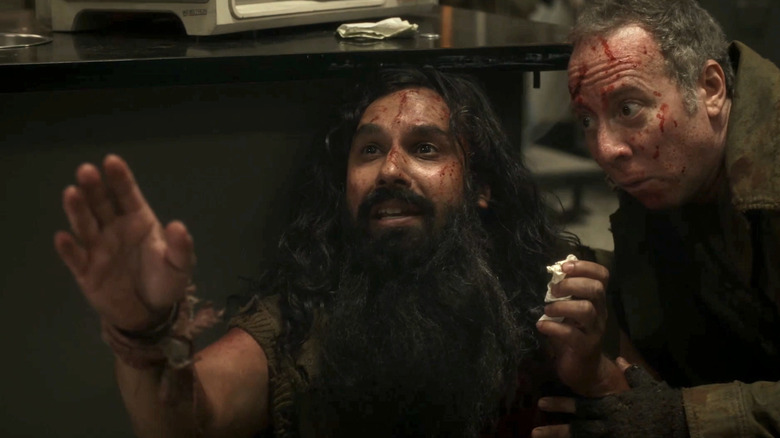
The quest leads Stuart, Denise, and Bert to a ruined version of Caltech, where they discover that Raj has been held captive for years by a despotic version of Barry Kripke (John Ross Bowie). This iteration of Kripke, wielding power with a ruthless authoritarian grip, has kept Raj prisoner to exploit his intellect. Raj, having successfully deciphered the complex mathematics required to stabilize the quantum device, appears to be the group’s salvation.
However, the tone of the series shifts from sci-fi adventure to grim tragedy in a heartbeat. Before Raj can initiate the sequence to save the reality-spanning fabric, the alternate Kripke executes him. The suddenness of the death—occurring moments after the character’s return—underscores the show’s willingness to subvert the comforting, sitcom-adjacent safety net of the original Big Bang Theory. Following the execution, the surviving characters are thrust into yet another dimension, marked by the arrival of neon green-glowing neural implants that suggest a darker, dystopian mystery awaiting them in future episodes.
The Tragic Irony of Raj’s "Happy Ending"
Perhaps the most poignant aspect of this narrative choice is the backstory provided for this version of Raj. In the original Big Bang Theory finale, Raj remained the only member of the core group who did not find a long-term partner, a plot point that sparked significant fan discourse for years.
In Stuart Fails to Save the Universe, the writers opted for a darkly comic, "be careful what you wish for" approach. This alternate Raj had finally achieved his dream of marriage, but the payoff was fleeting. The show reveals that he had arrived at his wedding on an elephant, only for his bride to be consumed by a giant, monstrous moth shortly thereafter.
When discussing the decision to grant Raj this momentary, doomed happiness, executive producer Chuck Lorre remained characteristically pragmatic. "It just seemed funny," Lorre remarked during a recent interview. Co-creator Bill Prady echoed this sentiment, emphasizing that the writers were not necessarily trying to deconstruct the character’s legacy, but rather following the internal logic of a broken universe: "That’s just what happened to him."
Zak Penn added a philosophical layer to the carnage, noting, "He did get his dream. It just ended quickly. But better to have loved and lost." Lorre concluded the thought by paraphrasing the character’s tragic circumstances: "I rode an elephant to my wedding and now I s**t in a bucket."
Why Raj? The Practical Logic of Legacy Cameos
The decision to bring back Kunal Nayyar as the first legacy cast member was driven by structural necessity rather than pure sentimentality. As the creative team explained, the plot required a character capable of performing high-level quantum calculations to repair the device. By positioning Raj as the only one with the answer, the writers essentially "worked backward" from the necessity of his death.
The return of the character was not without its internal friction. John Ross Bowie, who portrays the villainous Kripke, admitted to a degree of professional and personal hesitation when he first read the script. "I was very, very taken aback to read that," Bowie confessed. "And I’m still not 100% comfortable with it, honestly, because it’s Kunal, man! Who shoots Kunal?"
Bowie eventually found a way to justify the act through the lens of the show’s multiversal mechanics. He proposed two interpretations: either the universe in which Raj was killed ceased to exist, rendering the death moot, or, in the context of infinite dimensions, the loss of one version of Raj is merely a "rounding error" in the grand scheme of the multiverse.
Brian Posehn, who plays Bert, offered a more visceral take on the scene. For fans struggling with the sudden loss, Posehn pointed out that the show provides a form of catharsis. "Bert gets to beat the s**t out of him," Posehn noted, referencing the revenge he takes on this version of Kripke. "So, for everybody watching it going, ‘Raj, no!’… you get that satisfaction of watching me just pound him like a bear."
For Kevin Sussman, the experience was a bittersweet reunion. Having spent years as the "lonely heart" of the Big Bang friend group, working alongside Nayyar again brought a sense of closure to their long-standing onscreen dynamic. "Kunal is such a love," Sussman said. "He’s just a ball of joy… when they called action and I saw what he was bringing to it, I was like, ‘Oh, okay. All right. It’s on.’"
The Georgie & Mandy Easter Egg
Beyond the shocking character death, the premiere also served as a bridge between the various branches of the Big Bang franchise. Sharp-eyed viewers caught an unlikely crossover nod to Georgie & Mandy’s First Marriage.
In the opening sequence, as the camera pans across the ruins of the Comic Center of Pasadena, an inflatable balloon man is visible in the background—a relic of a bygone era. While the producers initially claimed the prop was not intentionally scripted, Lorre confirmed its origin: "When we did that, we had just used the inflatable balloon man on Georgie & Mandy, so we had it. It was available."
The prop serves as a subtle link between the two shows, which were in concurrent production, illustrating the shared DNA of the Chuck Lorre Television universe.
Implications for the Season Ahead
The premiere of Stuart Fails to Save the Universe sets a dangerous precedent. By killing off a beloved legacy character in the first episode, the series has signaled to the audience that no one is safe. The introduction of the neon green-glowing chips in the neck of the main cast suggests that the series will focus heavily on mind control and the loss of individual autonomy, themes that contrast sharply with the grounded, character-driven comedy of its predecessor.
As the season progresses, viewers are left to wonder: if an alternate Raj can be dispatched with such callous disregard, what fates await other members of the original cast who might pop up in future dimensions? The show has effectively transitioned from the "nerd-culture comedy" of the late 2000s into a high-stakes, existential science fiction drama.
For the production team, the challenge will be balancing this grim, multiversal warfare with the heart and humor that made the Big Bang franchise a cultural phenomenon. Based on the initial reception and the high-octane premiere, the creative team seems prepared to push the boundaries of what fans expect from this universe, proving that while the show might be about Stuart failing, the series itself is aiming for something much larger—and much more dangerous.