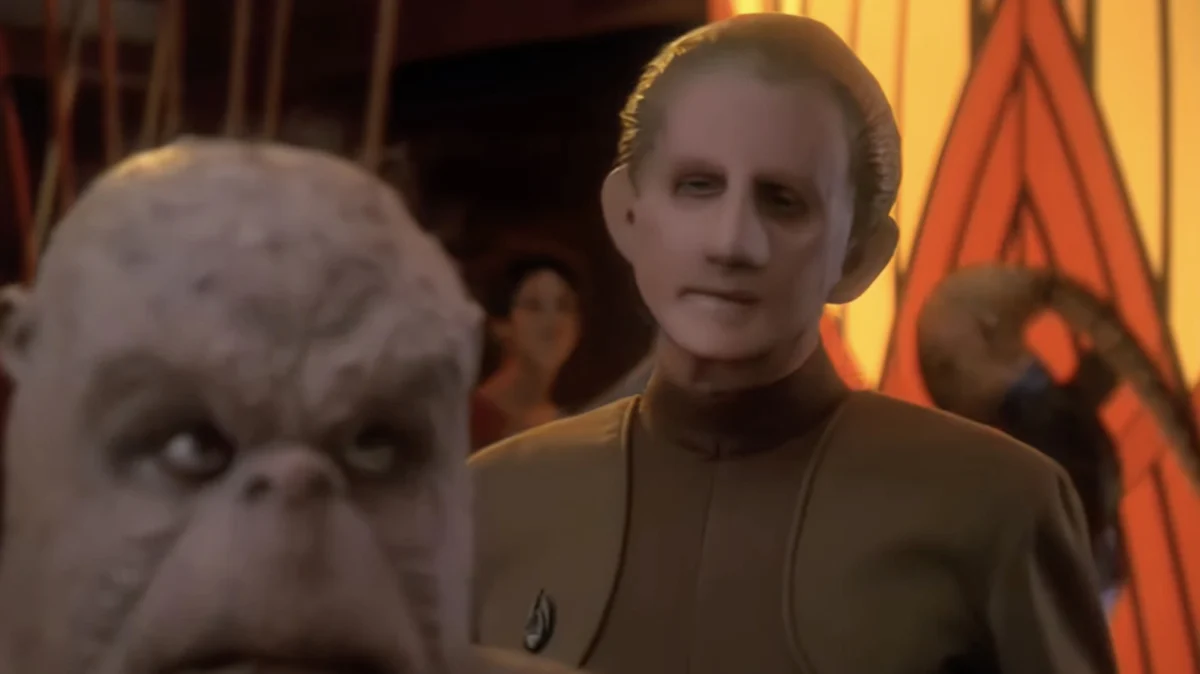
In the pantheon of science fiction television, few characters possess the stoic, melancholic depth of Odo, the shapeshifting Chief of Security on Star Trek: Deep Space Nine. As the station’s arbiter of justice, Odo was defined not by phaser fire or grand proclamations, but by a rigid, basalt-like exterior that concealed a yearning for connection and identity. However, bringing this "Changeling" to life was a monumental gamble for the show’s creative team. The character’s design—a featureless, putty-like face—posed a significant existential threat to the production: could an actor truly emote through a mountain of latex?
The answer, as history would prove, lay not in the makeup, but in the classical training of the late, great René Auberjonois.
The Genesis of a Concern: Can an Actor Act Underneath the Mask?
When Deep Space Nine (DS9) entered development in the early 1990s, the producers were keenly aware that they were pushing the boundaries of what could be achieved with television-budget prosthetics. While Star Trek: The Next Generation had successfully utilized heavy makeup for characters like Worf, Odo was a different challenge entirely. Odo’s face was intended to be an imperfect simulation of humanoid form, requiring a level of ambiguity that risked rendering the character robotic.
The creative team’s apprehension was palpable. In the industry, a "mask" is often viewed as the enemy of nuance. Acting is, at its core, a conversation between the eyes and the audience; to cover that canvas is to remove the primary tool of the trade. The producers feared that Auberjonois, a veteran of stage and screen, would be hamstrung by the very appliance meant to define his character.
The Juilliard Pedigree: Mask Work as a Foundation
The skepticism regarding Odo’s performance was ultimately neutralized by Auberjonois’s own pedagogical background. As he famously recounted in the Star Trek: Deep Space Nine Companion, the transition into the character was far more natural than the writers had anticipated. Auberjonois was not merely an actor; he was an educator who had spent years demystifying the art of performance.
"I’d done a lot of mask work over the years," Auberjonois explained. "In fact, I taught mask at Juilliard."
In the rigorous world of conservatory training, "mask work" is a discipline that strips away the reliance on facial micro-expressions. Students are forced to communicate intent, history, and internal emotional states through the only remaining conduits: posture, the tilt of the head, the tension of the shoulders, and the rhythm of movement.
When Auberjonois stepped into the role of Odo, he didn’t view the prosthetic as a barrier to his performance. He viewed it as a medium. By shifting his focus from his face to his entire silhouette, he transformed Odo from a "guy in a mask" into a figure of profound, singular gravity. As he noted during a 1996 interview at FantastiCon, the mask actually served to "magnify emotions" by forcing the audience to look closer, to interpret the deliberate tilt of his head or the slight stiffening of his spine as a language of its own.
Chronology of an Evolution: From Multi-Piece to Monolith
The technical journey of Odo’s face was one of constant refinement. When the series premiered on January 3, 1993, the makeup application was an ordeal of complexity.
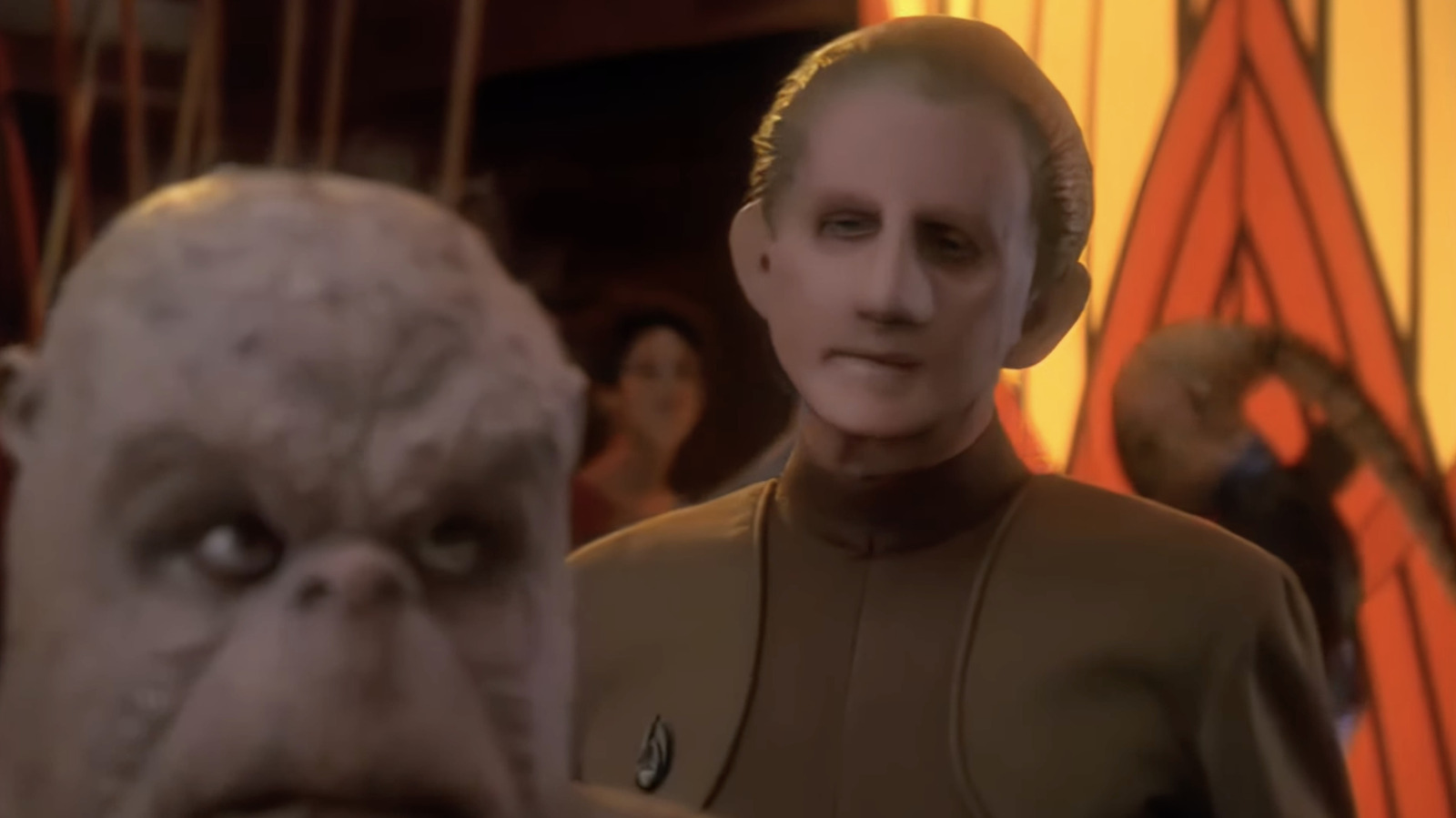
- Early 1993: The initial design relied on multi-piece rubber appliances. The logic was that by breaking the makeup into segments—separate pieces for the chin, cheeks, and brow—Auberjonois would retain the ability to move his skin underneath, allowing for a semblance of human expression.
- The Mid-Season Realization: As the season progressed, the cast and crew realized that the multi-piece approach was not only inefficient but aesthetically counterproductive. The seams were difficult to hide, and the movement often looked unnatural, contradicting the "solid", shifting nature of a Changeling.
- The Transition: Auberjonois himself pushed for a more monolithic approach. Once he demonstrated that he could convey rage, sorrow, and curiosity through the stillness of a full-head rubber mask, the makeup team shifted toward a more streamlined, one-piece design.
This shift was a turning point for the show’s production schedule. Auberjonois, who had endured hours of grueling application, found that the simplified design allowed him to reclaim precious time. He became legendary on set for his humor regarding the process, famously shouting "Three hours!" to anyone who asked about his makeup time—a reference to the initial, arduous application compared to the later, more efficient process.
Supporting Data: The Logistics of Transformation
To understand the scale of Auberjonois’s commitment, one must look at the sheer endurance required. Filming a series like Deep Space Nine often involved 16-hour days, much of which was spent under hot studio lights that threatened to melt or loosen the adhesive of the prosthetics.
| Period | Makeup Complexity | Average Application Time |
|---|---|---|
| Early Season 1 | Multi-piece segmented latex | 4+ hours |
| Late Season 1–7 | One-piece cohesive mask | 2–3 hours |
The physical toll of wearing a synthetic skin for over a decade cannot be overstated. Beyond the discomfort, the mask limited his peripheral vision and muffled his hearing, yet Auberjonois never allowed these technical constraints to manifest in his performance. Instead, he channeled the restriction into Odo’s characterization, creating a protagonist who felt inherently uncomfortable in his own skin—a perfect meta-commentary on the character’s status as an outsider.
Official Perspectives and Creative Impact
The creative team, including executive producers like Ira Steven Behr, eventually realized that their initial fears were based on a misunderstanding of the actor’s craft. They had hired a man who understood that "acting" is not merely about the face; it is about the presence.
Auberjonois’s approach influenced the writing of the show as well. As the writers grew confident in his ability to communicate volumes with a single, silent look, they wrote fewer lines for Odo. They realized that in the case of the Chief of Security, silence was often more powerful than dialogue. This "less is more" philosophy became a cornerstone of the character’s legacy, separating Odo from the more loquacious characters in the Star Trek universe.
The Implications for Science Fiction Acting
The success of Auberjonois as Odo serves as a masterclass for modern actors in the age of CGI and performance capture. While many contemporary actors rely on digital touch-ups or motion-capture dots, Auberjonois’s performance remains a testament to the power of practical, physical acting.
The implications for the genre are clear: the effectiveness of a character is not determined by the sophistication of the visual effects or the flexibility of the prosthetics, but by the actor’s ability to inhabit the constraints of their role. Auberjonois didn’t just wear a mask; he used the mask to reach the audience’s subconscious. By removing the distraction of the face, he forced the viewer to focus on the intent behind the action.
A Lasting Legacy
René Auberjonois passed away in 2019, but Odo remains a permanent fixture of the Star Trek canon. As fans continue to revisit Deep Space Nine—a show that has enjoyed a massive resurgence in popularity on platforms like Paramount+—they are greeted by a performance that has not aged a day.
Whether it is the way he stood at his desk, his rhythmic, slightly awkward gait, or the precise, clipped tone of his delivery, Auberjonois’s Odo remains one of the most compelling portrayals in television history. He proved that even when you are trapped behind a layer of rubber, true talent will always find a way to shine through. He did not merely play an alien; he taught a generation of viewers that even the most "alien" among us are governed by the most human of emotions: the desperate, beautiful need to belong.