In an industry defined by rapid technological shifts, the convergence of broadcast, telecommunications, and over-the-top (OTT) media services, staying informed is no longer a luxury—it is a competitive necessity. Dan Rayburn, a leading voice in the streaming media sector, has released his highly anticipated 2026 industry events calendar. Providing a comprehensive, downloadable resource, this tool serves as a strategic roadmap for vendors, service providers, and media professionals looking to navigate the crowded global landscape of trade shows, conferences, and exhibitions.
Main Facts: A Strategic Tool for Industry Engagement
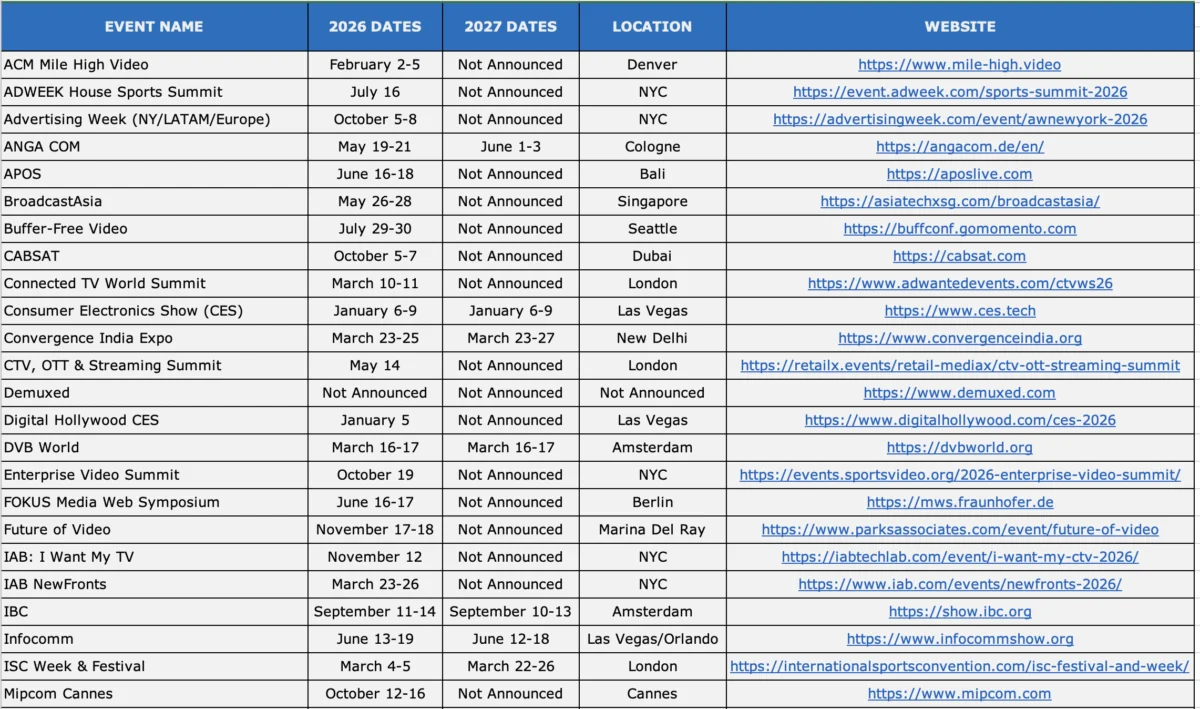
The newly released resource, available as a downloadable Excel sheet, catalogs nearly 50 significant in-person events scheduled for 2026 across the globe. By providing this repository, Rayburn aims to bring clarity to a fragmented events market where professionals often struggle to identify which gatherings provide the highest return on investment (ROI).
The list is not merely a directory; it is a curated selection designed to filter out the "noise" of the vast media event landscape. Rayburn has established strict criteria for inclusion, focusing specifically on events that emphasize streaming technology, business models, and the intersection of broadcast/TV and sports industries. By excluding private functions, vendor-led meetups, and niche gatherings, the list provides a high-level overview of the most impactful venues for professional networking and business development.
Defining the Scope: The Methodology Behind the List
To understand the value of this resource, one must understand the parameters set by its creator. Rayburn emphasizes that "Streaming is a technology, OTT is a business model, and Broadcast is an industry." This distinction is the bedrock of his selection process.
Strategic Exclusions
The list deliberately omits several categories of events to maintain its focus on the core infrastructure and business of professional streaming:
- Vertical-Specific Events: Excluded are events focused on video for retail, e-commerce, security, education, government, and gaming.
- Creator-Centric Events: The list does not include events that focus exclusively on video production, cinematography, or the "creator economy" unless they also cover the technological and business architecture of streaming.
- Closed-Door Gatherings: Private, invite-only, or member-exclusive events are omitted to ensure the list remains accessible to the broader industry.
This curation ensures that professionals looking for high-level industry discussions regarding bitrate management, CDN strategy, ad-insertion tech, and OTT monetization models do not waste time on events better suited for content creators or localized video production workshops.
Chronology: The Evolution of Industry Gathering
Historically, the streaming media event circuit was dominated by a few massive trade shows, such as NAB Show and IBC. However, the last decade has seen a proliferation of smaller, highly targeted conferences. The 2026 calendar reflects this shift.
Early 2026: Setting the Agenda
The year begins with a flurry of activity as companies prepare for the fiscal year ahead. Early-year events are traditionally focused on "state-of-the-market" assessments, where industry leaders discuss the lessons learned from the previous year’s holiday viewing surges.
Mid-Year: Technical Deep Dives
As the industry moves into the summer months, the focus shifts toward technical implementation. These mid-year events are where vendors typically unveil updates to encoding standards, low-latency improvements, and the integration of AI within the delivery chain.
Q3 and Q4: Monetization and Future-Proofing
The latter half of the year is characterized by events focused on business models. As streaming services grapple with subscriber churn and the complexity of hybrid ad-supported models (AVOD/FAST), the final quarter of the year serves as a testing ground for strategies that will define the upcoming year.
Supporting Data: Why Vendor Strategy Matters
For vendors, the choice of where to exhibit or sponsor is a significant financial commitment. The cost of a booth, travel, and logistics can run into the tens of thousands of dollars per event. Rayburn’s decision to offer direct consultations for vendors looking to align their objectives with specific events addresses a critical pain point in the industry: the lack of impartial, expert guidance on event efficacy.
"Especially if you are new to a vendor’s marketing team, reach out to me," Rayburn notes. This service is designed to mitigate the risks associated with "event hopping," where marketing budgets are diluted across too many irrelevant venues. By analyzing a vendor’s specific goals—whether that is lead generation, brand awareness, or strategic partnerships—Rayburn provides a framework for selecting events that offer tangible business outcomes.
Official Perspectives and Industry Engagement
Rayburn maintains an open-door policy regarding the evolution of his list. Acknowledging that the industry is constantly changing, he has utilized LinkedIn as a collaborative platform for feedback. By linking the Excel sheet to a public discussion forum, he invites industry peers to propose additions, ensuring the list remains dynamic.
"If you think an event should be added to the list, please leave it in the comments section," Rayburn stated. This collaborative approach acknowledges that no single expert can track every development in a global industry. The file is left unlocked, allowing users to customize it to their specific geographical or sectoral needs, effectively turning a static document into a living project management tool.
Implications for the Streaming Industry
The release of this list carries several significant implications for the professional media landscape in 2026.
1. The Professionalization of Networking
As the streaming sector matures, the era of attending every event is coming to an end. Companies are becoming more surgical in their approach. By using a curated list, organizations can ensure that their team is present at events where their target demographic—technical decision-makers and C-suite business executives—actually congregate.
2. Standardization of Industry Terminology
By drawing clear lines between "Broadcast," "OTT," and "Streaming," Rayburn is contributing to a more standardized language within the industry. This is crucial for B2B communications, where misaligned expectations regarding the purpose of an event often lead to poor networking outcomes.
3. Democratization of Market Intelligence
By providing this resource for free and keeping it in an editable, open format, Rayburn is democratizing access to market intelligence. Small and mid-sized enterprises (SMEs) that may not have the budget for high-end market research firms can leverage this list to achieve the same level of strategic event planning as larger, multinational corporations.
4. A Barometer for Industry Health
The density of the 2026 event calendar serves as a barometer for the industry’s health. A robust schedule suggests sustained investment in the technology stack, continued expansion of global OTT penetration, and a healthy appetite for face-to-face deal-making, which remains a cornerstone of the media business despite the digital nature of the product itself.
Conclusion: How to Use the Resource
For those seeking to maximize their industry presence in 2026, the steps are clear. First, download the document from the official source. Second, cross-reference the events with your internal business objectives for the year. Third, use the provided contact information to seek guidance if your organization is new to the event circuit or is looking to pivot its marketing strategy.
The streaming media industry is not just about the content being delivered; it is about the network of people building the pipes and the business models that keep the lights on. By organizing the community through this 2026 calendar, Dan Rayburn is helping to ensure that when the industry meets, it does so with purpose, efficiency, and clarity. As the year progresses, the willingness of the industry to update this document will remain a testament to the collaborative spirit that defines the streaming sector.