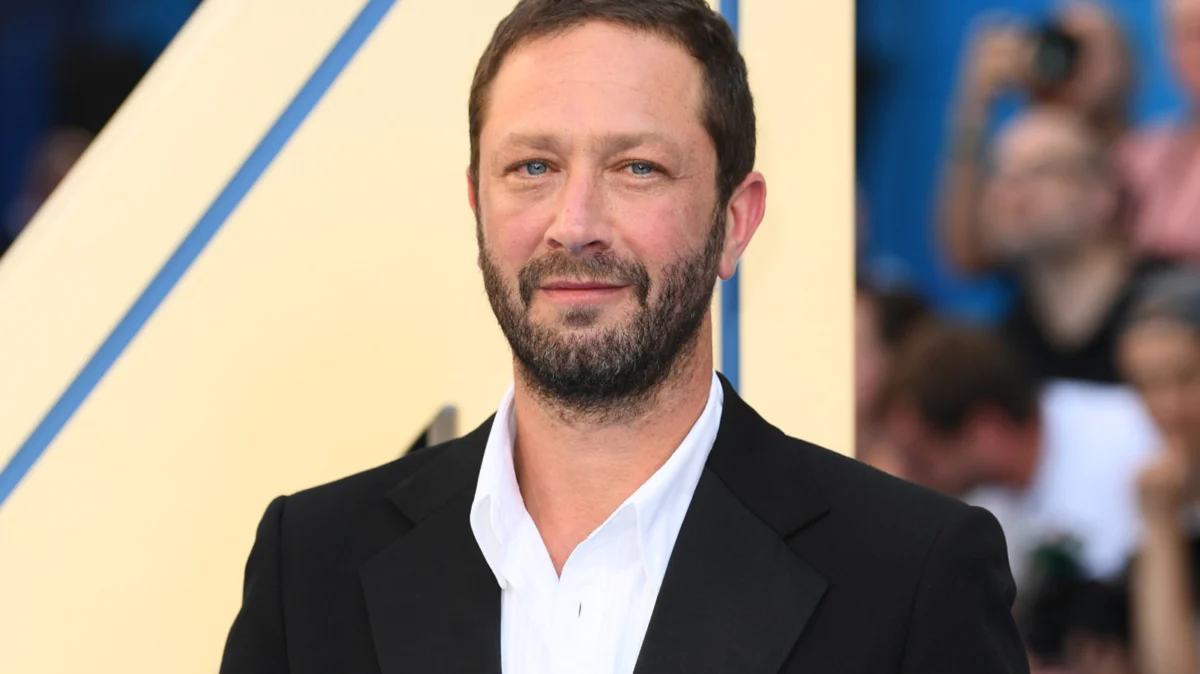
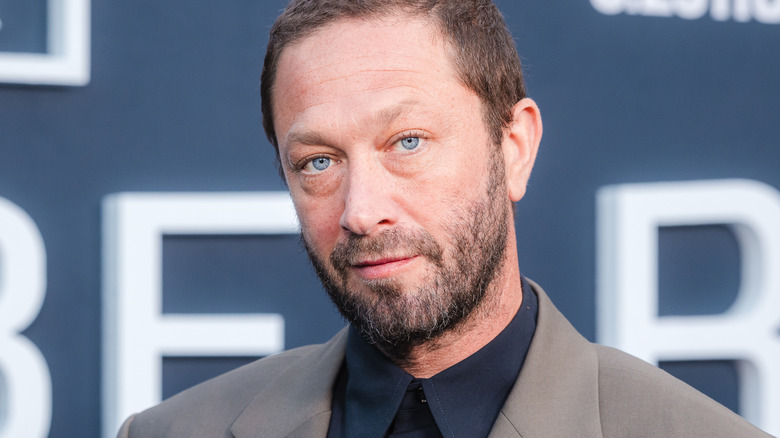
Ebon Moss-Bachrach, the celebrated Emmy-winning actor best known for his magnetic portrayal of Richie Jerimovich in FX’s hit series The Bear, has opened up about the psychological mechanics of sustaining a long-term acting career. In a reflective interview that has since resonated deeply across the entertainment industry, Moss-Bachrach emphasized the vital necessity of becoming a "perennial"—an artist capable of finding, or manufacturing, inspiration even when confronted with subpar material, challenging working conditions, or the pragmatic economic necessities of the profession.
Over a career spanning more than two decades, Moss-Bachrach has transitioned from a respected character actor into a bona fide powerhouse. He has built a remarkably diverse résumé encompassing critically acclaimed television, gritty streaming dramas, and blockbuster cinematic universes. Yet, despite his recent accolades—including two consecutive Primetime Emmy Awards for Outstanding Supporting Actor in a Comedy Series and two Golden Globe nominations—his perspective remains firmly rooted in the unglamorous, day-to-day grind of a working artist.
The core of his philosophy rests on a paradoxical requirement: an actor must periodically fool themselves into believing that every project they undertake possesses inherent value, treating their craft with unwavering service regardless of external limitations.
Chronology and Career Trajectory
To understand the weight of Moss-Bachrach’s words, one must look at the winding path that led him to his current status as an industry fixture.
Early Beginnings and Breakthrough Roles
Moss-Bachrach first emerged on the screen in the early 2000s, landing minor and supporting roles in film and television, including a memorable appearance in Wes Anderson’s The Royal Tenenbaums (2001). For years, he operated as one of those "that guy" actors—recognizable, reliable, and intensely committed, yet flying largely under the mainstream radar.
Throughout the 2010s, he steadily built an impressive television portfolio. He delivered standout performances in HBO’s Girls, TNT’s post-apocalyptic drama The Last Ship, and AMC’s supernatural horror series NOS4A2. Comic book fans took notice when he stepped into the Marvel universe as David Lieberman (Micro) in Netflix’s The Punisher (2017), showcasing his ability to anchor high-stakes genre storytelling with grounded, emotional authenticity.
The Prestige Era and Mainstream Stardom
Moss-Bachrach’s career reached a dramatic inflection point with FX’s The Bear. As Richard "Richie" Jerimovich, a loud, hurting, and ultimately transformative character navigating the chaotic ecosystem of a Chicago sandwich shop turned fine-dining establishment, Moss-Bachrach captured the cultural zeitgeist. The role allowed him to display a staggering emotional range—pivoting effortlessly from defensive bravado to heartbreaking vulnerability.
His work on The Bear brought a wave of prestigious hardware, cementing him as television royalty. Simultaneously, he expanded his footprint into massive sci-fi and superhero franchises. He appeared in the critically lauded Star Wars prequel series Andor and secured a massive role in the Marvel Cinematic Universe as Ben Grimm, AKA The Thing, in The Fantastic Four: First Steps. His trajectory is set to continue with appearances in upcoming blockbuster crossover events like Avengers: Doomsday and Avengers: Secret Wars.
Supporting Data and The Quote in Context
The philosophical bedrock of Moss-Bachrach’s career philosophy surfaced during a candid 2024 interview with The Talks. Reflecting on the evolution of his artistic mindset, the actor addressed the friction between youthful idealism and the pragmatic realities of sustaining a livelihood in the arts.
Addressing how he approaches material that may fall short of artistic perfection, Moss-Bachrach stated:
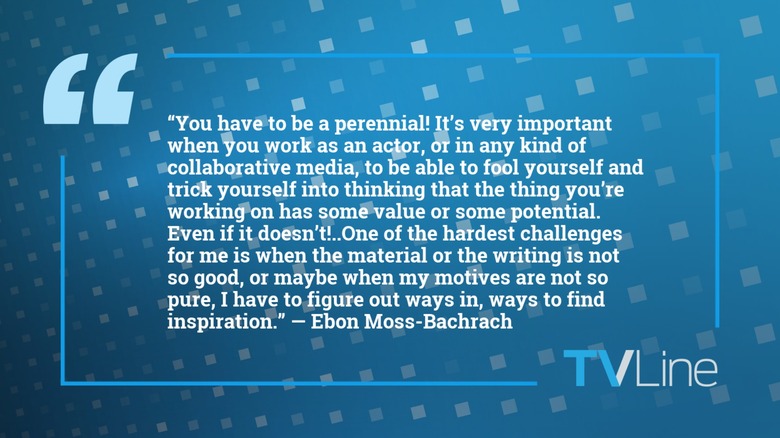
"You have to be a perennial! It’s very important when you work as an actor, or in any kind of collaborative media, to be able to fool yourself and trick yourself into thinking that the thing you’re working on has some value or some potential. Even if it doesn’t! … One of the hardest challenges for me is when the material or the writing is not so good, or maybe when my motives are not so pure, I have to figure out ways in, ways to find inspiration."
He elaborated on the psychological discipline required to honor a project even when initial creative sparks fail to ignite:
"You need to be able to fool yourself for that amount of time that you’re working on it, to be able to show up and honor it and do service to your own work. … I try not to judge the material too harshly."
When discussing the financial motivation that inevitably accompanies any professional career, Moss-Bachrach maintained a self-deprecating and humorous humility. Clarifying that wealth acquisition was never his driving force, he quipped:
"I mean, listen, if I was interested in making a lot of money, I never would have become an actor!"
Instead, what continues to fuel his passion is the sheer textural variety afforded by the mediums of film, television, and theater—allowing him to constantly reinvent himself across different styles of writing and character work.
Official Responses and Industry Perspectives
Moss-Bachrach’s remarks struck a nerve across the entertainment landscape, drawing commentary from peers, critics, and creative directors alike. In an industry notoriously prone to intense burnout, public cynicism, and the pressures of commercialized content creation, his call for "perennial" dedication offers a counter-narrative of quiet resilience.
Industry veterans have frequently pointed out that acting is rarely a continuous stream of masterclass scripts and visionary directors. For every critically lauded prestige drama like The Bear or Andor, actors often navigate developmental misfires, commercial gigs undertaken purely for financial stability, or productions where the writing simply fails to match the ambition of the cast.
By framing these challenges not as artistic compromises, but as tests of professional discipline, Moss-Bachrach reframes how actors view their relationship to the medium. Directors and showrunners who have worked with the actor have often praised his relentless preparation, noting that whether he is playing a gritty comic book vigilante, a Marvel superhero under layers of CGI and motion capture, or a Chicago restaurant manager, he approaches every call sheet with the exact same level of rigorous commitment. This egalitarian approach to the work has earned him a reputation as an actor’s actor—someone who respects the collaborative machinery of filmmaking as much as the individual glory of a standout performance.
Implications for the Creative Industries
Ebon Moss-Bachrach’s reflections carry profound implications, not only for aspiring actors, but for workers across all creative, collaborative, and media-driven fields.
1. Navigating the Myth of Pure Inspiration
In popular culture, artistic creation is frequently romanticized as a lightning-bolt phenomenon—an unbroken chain of pure, unadulterated inspiration. Moss-Bachrach dismantles this myth, acknowledging that professional longevity requires emotional and psychological labor. Artists must actively generate enthusiasm where none naturally exists. This "faking it until you make it" mindset is less about dishonesty and more about professional stewardship; it is an internal contract ensuring that a subpar script or a difficult production cycle does not translate into substandard craftsmanship on screen.
2. The Balancing Act of Art and Commerce
The tension between artistic integrity and economic survival is a defining struggle of the modern creative economy. Moss-Bachrach’s candid admission—that chasing wealth is a fool’s errand for a stage and screen actor—highlights the reality that long-term sustainability relies on loving the medium itself. By embracing the variety of experiences across film, television, and theater, artists can weather the dry spells and industry fluctuations without losing their foundational love for storytelling.
3. Consistency as the Ultimate Talent
Ultimately, Moss-Bachrach’s concept of being a "perennial" champions consistency over fleeting bursts of genius. In a media landscape dominated by fast-paced content generation, quick cancellations, and viral moments, true mastery lies in showing up day after day, honoring the work, and finding humanity in every role—whether it is a career-defining Emmy-winning tour de force or a paycheck gig that simply needs to get done. Through this lens, Ebon Moss-Bachrach proves that his greatest performance isn’t just on screen, but in the enduring discipline he brings to the craft itself.