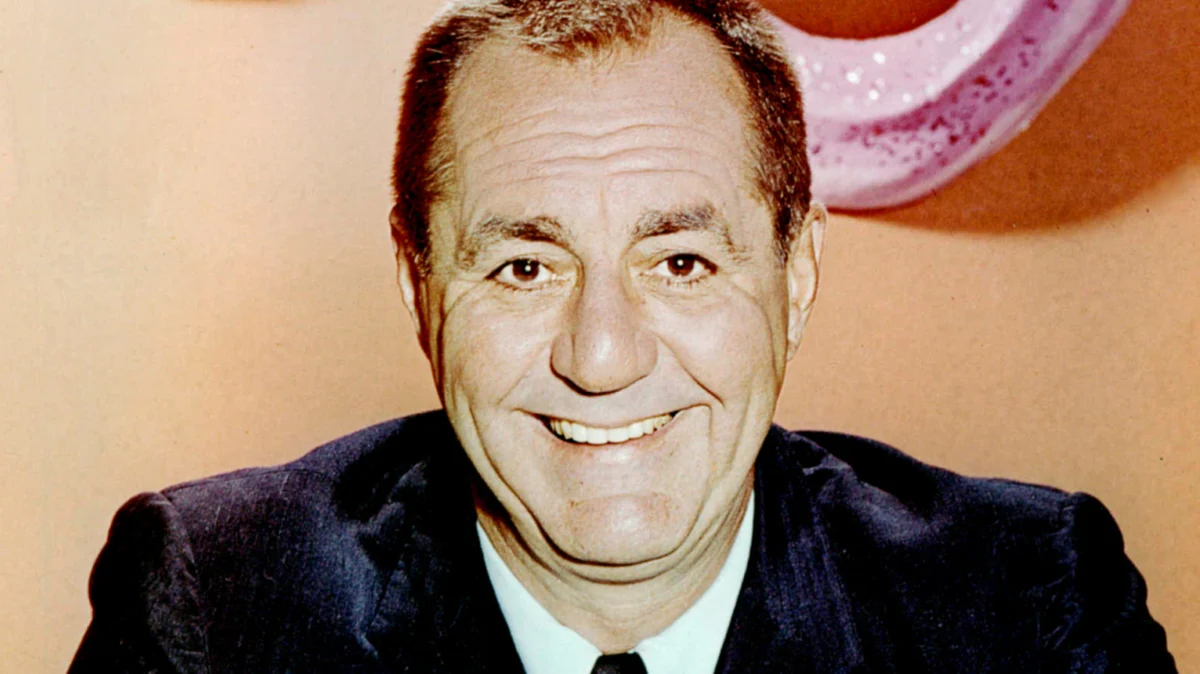
Nearly six decades after Gilligan’s Island wrapped up its iconic, albeit premature, run on CBS, generations of television viewers continue to cherish Jim Backus’s unforgettable portrayal of the delightfully haughty, incredibly wealthy, and perpetually out-of-touch millionaire Thurston Howell III. To this day, Backus’s booming mid-Atlantic accent and upper-crust affectations remain a gold standard of classic television character acting.
Yet, looking past his iconic years stranded on a Pacific atoll or his legendary voice work as the nearsighted cartoon icon Mr. Magoo reveals a significant chapter of television history that has largely faded from the public consciousness. Long before he was trading quips with the Skipper and Mary Ann, Backus was a bona fide primetime leading man.
During the dawn of the golden age of television in the early 1950s, Backus anchored an NBC situation comedy that pulled in massive ratings, commanded a fiercely loyal following, and positioned him at the forefront of the burgeoning medium. That series was I Married Joan, a frantic, physical comedy that paired Backus with legendary vaudeville and radio star Joan Davis. Despite its considerable success at the time, the show occupies a peculiar footnote in entertainment history—largely eclipsed by its direct contemporary, I Love Lucy, and overshadowed by the enduring legacy of Gilligan’s Island.
Main Facts: The Rise and Quiet Eclipse of I Married Joan
To understand the scope of I Married Joan, one must look at the landscape of American television in October 1952. The medium was rapidly expanding into households across the United States, and networks were desperately trying to figure out what formats would captivate audiences night after night.
NBC believed it had struck gold by pairing two distinct comedic forces: Joan Davis, a master of slapstick and crackly-voiced radio delivery who had already proven her box-office appeal in Hollywood films, and Jim Backus, a seasoned dramatic and comedic actor who had transitioned smoothly from radio and film into the nascent medium of television.
The premise of I Married Joan was simple, high-concept, and designed for maximum comedic friction. Davis starred as Joan Stevens, a delightfully dizzy, well-meaning housewife whose impulsive schemes, chaotic energy, and propensity for physical comedy routinely generated headaches for her husband.
Backus played Bradley Stevens, a straight-laced, highly respectable domestic court judge. The dynamic of the show relied heavily on the classic comedic contrast between a sensible, dignified professional and a chaotic, free-spirited partner. Adding a layer of authenticity to the production, Beverly Wills—Davis’s real-life daughter—was cast as Joan’s sister, Beverly.
Despite pulling in impressive viewership numbers and ranking as a top-30 show during its second season (1953–1954), I Married Joan ran for a relatively brief three years, producing 98 episodes before abruptly bowing out in 1955. While Backus effortlessly transitioned into further legendary television and voice-acting roles, the show itself slipped out of syndication and into historical obscurity, leaving modern audiences largely unaware of its existence.
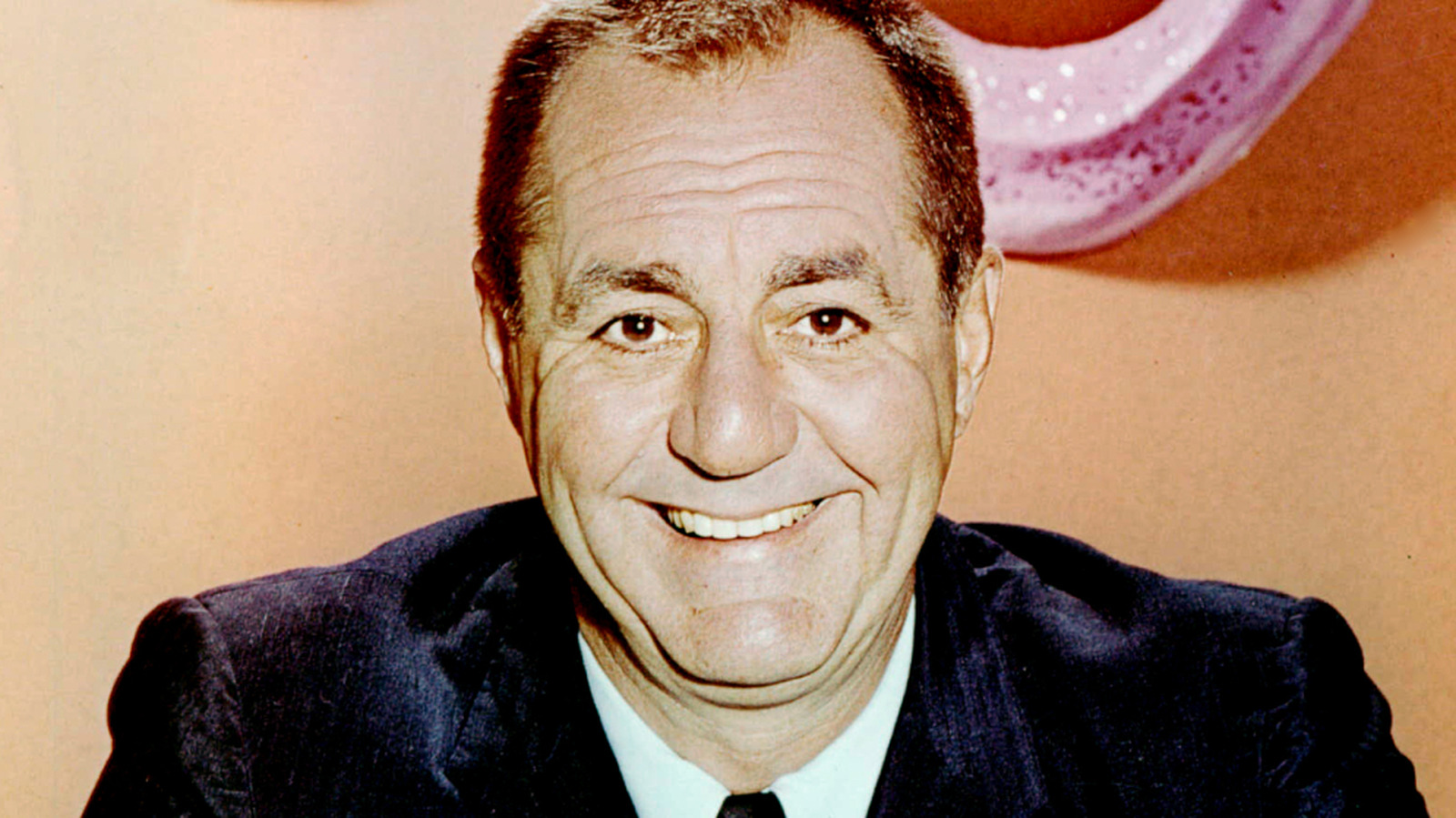
Chronology: A Timeline of Stardom, Success, and Sudden Departure
Tracing the trajectory of I Married Joan reveals a swift ascent, a brief period of cultural prominence, and an unceremonious conclusion driven entirely by behind-the-scenes exhaustion rather than sliding ratings.
Pre-1952: The Path to Primetime
- The Vaudeville and Film Era: Joan Davis hones her craft on the vaudeville circuit, establishing herself as a premier comedienne through rapid-fire delivery and fearless physical comedy. Concurrently, Jim Backus builds a robust resume in Hollywood features and radio dramas, establishing a reputation for playing sophisticated, upper-class characters or sharp-witted authority figures.
- The Birth of Television: As networks rush to populate their weekly schedules with original content, both performers are recognized as prime candidates to anchor a weekly family sitcom.
1952–1955: The Run of I Married Joan
- October 1952: I Married Joan officially premieres on NBC. Airing just a year after CBS launched I Love Lucy, the series immediately captures a wide audience, establishing itself as a staple of early-fifties television programming.
- 1953–1954 Season: The show hits its stride, climbing into the national Nielsen ratings at No. 25. It proves that audiences have an insatiable appetite for domestic comedies centered on chaotic wives and exasperated husbands.
- 1955: Following the conclusion of the show’s third season, production comes to a sudden halt. Joan Davis, physically and mentally exhausted by the grueling demands of headlining a weekly physical comedy series, requests to leave the show. Rather than attempting to recast or retool, NBC and the production team opt to cancel the series.
Post-1955: Diverging Paths
- 1958: Joan Davis attempts a television comeback with a pilot titled Joan of Arkansas, but fails to secure a network pickup.
- 1961: Joan Davis passes away at the age of 53, leaving behind a rich legacy of comedic performance that remains under-appreciated today.
- 1964–1967: Jim Backus achieves immortal television fame starring as Thurston Howell III in CBS’s Gilligan’s Island, cementing his status as a pop-culture icon while concurrently voicing the beloved nearsighted cartoon character, Mr. Magoo.
Supporting Data: Ratings, Comparisons, and Creative Parallels
When analyzing why I Married Joan flourished initially and why it ultimately faded from public memory, several structural and industry-wide factors come into play.
The Shadow of I Love Lucy
It is virtually impossible to discuss I Married Joan without acknowledging its heavyweight competitor: I Love Lucy. Premiering on CBS in October 1951—precisely one year before I Married Joan hit NBC—Lucille Ball and Desi Arnaz’s masterpiece set an impossibly high standard for the sitcom format.
The structural similarities between the two shows were striking. Both featured a frantic, red-haired comedienne prone to elaborate schemes, married to a more grounded, straight-man husband. The nomenclature and episodic plots occasionally mirrored one another—a common practice in early television when networks aggressively chased proven formulas.
Yet, I Love Lucy secured a vastly superior and enduring cultural footprint for several reasons:
- Writing Quality: The scripts by Jess Oppenheimer, Madelyn Pugh, and Bob Carroll Jr. crafted airtight narrative structures that held up remarkably well over decades of syndication.
- Onscreen Chemistry: The genuine romantic and comedic chemistry between Lucille Ball and her real-life husband, Desi Arnaz, provided an emotional anchor that elevated the slapstick. While Backus and Davis shared solid comedic timing, their dynamic was strictly professional.
- Longevity and Syndication: I Love Lucy remained in production for six seasons (180 episodes) and pioneered the rerun syndication model, ensuring that generations of children and adults would discover the show decades after it ended. I Married Joan, by contrast, produced only 98 episodes, making it far less viable for long-term daily syndication packages.
The Perils of the Television "Knock-Off"
The fate of I Married Joan as a thematic cousin to I Love Lucy highlights a broader television trend: the copycat phenomenon. When a network lands a massive hit, competitors rush to replicate its core elements.
Interestingly, this was a trap Jim Backus managed to avoid later in his career. When Gilligan’s Island was abruptly canceled by CBS in 1967, creator Sherwood Schwartz and various networks sought alternative ways to capitalize on the stranded-ensemble formula. This led to creations like Dusty’s Trail (1973), a western sitcom starring Gilligan’s Island lead Bob Denver that essentially transposed the exact character archetypes and premise of Gilligan’s Island into the Wild West. That series was critically dismissed and canceled after a single season. Backus wisely avoided boarding that sinking ship, choosing instead to focus on voice acting and guest appearances.
Official Responses and Industry Perspectives
While formal corporate press releases from NBC in the early 1950s are sparse by modern standards, archival trade publications such as Broadcasting and Variety documented the reception and internal dynamics of I Married Joan closely.
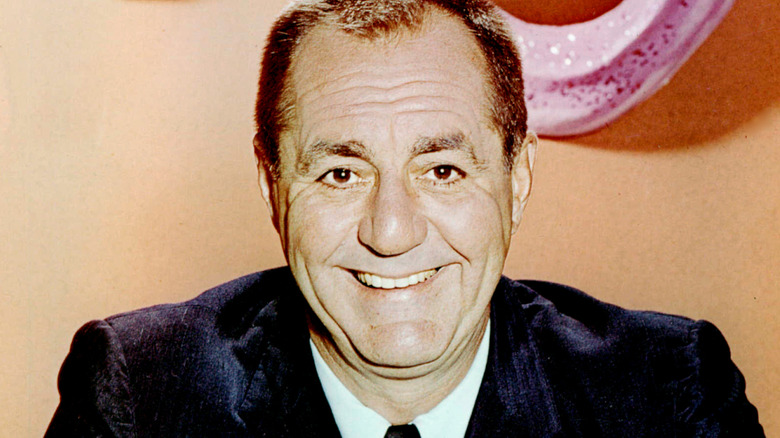
At the time of its launch, network executives praised the casting coup of bringing Joan Davis from radio to television. Davis was viewed as a proven commercial commodity. In a 1953 interview with trade press, industry analysts noted that physical comedy was uniquely suited for the burgeoning medium of television, which required visual stimulation to drive sales of household appliances—the primary sponsors of early-fifties comedies.
Regarding the show’s sudden conclusion in 1955, contemporary industry reports confirmed that the cancellation was not ratings-driven. NBC executives were reportedly eager to continue the series, viewing it as a reliable anchor for their Wednesday night schedule. However, Joan Davis’s absolute exhaustion brought production to a halt. In statements provided to entertainment chroniclers years later, colleagues noted that Davis performed her own rigorous physical stunts—falling down stairs, tumbling into bushes, and executing elaborate pratfalls—taking a severe physical toll over three continuous years of production.
Jim Backus, reflecting on his television career in later interviews, always spoke fondly of his time working with Davis. He credited I Married Joan with giving him his foundational television training, teaching him how to adjust his timing for a multi-camera setup in front of a live studio audience—skills that would prove invaluable a decade later when he stepped onto the set of Gilligan’s Island.
Implications: The Ephemerality of Early Television and Backus’s True Legacy
The story of I Married Joan and Jim Backus’s forgotten leading-man era carries deeper implications regarding how television history is written, preserved, and remembered.
1. The Fragility of Pre-Videotape Media History
The early years of live-to-film and kinescope television production suffered from poor preservation methods. Many shows from the 1950s were treated as disposable entertainment rather than archival art. Because I Married Joan did not secure a robust, multi-decade syndication footprint akin to I Love Lucy or The Honeymooners, it fell into the public domain void, where physical prints degraded and digital streaming services routinely overlook it in favor of more culturally entrenched properties.
2. Redefining Jim Backus
For modern audiences, looking past the monocle and yacht club blazer of Thurston Howell III reveals an actor of remarkable range. Backus was not merely a character actor defined by a single cartoonish voice or a wealthy caricature; he was a versatile utility player who could anchor a network sitcom opposite a high-energy physical comedienne, hold his own in dramatic cinematic features, and transition effortlessly into voice acting.
3. The Evolution of the Sitcom Dynamic
I Married Joan serves as an important, albeit under-studied, stepping stone in the evolution of the domestic sitcom. It bridged the gap between old-school vaudevillian physical comedy—where the female lead was permitted to look foolish, sustain physical injuries for a laugh, and drive the narrative chaos—and the structured domestic stability represented by the husband. Even if it was overshadowed by Lucy Ricardo’s legendary exploits, Joan Stevens and Judge Bradley Stevens laid vital groundwork for the chaotic marital comedies that would populate American television for the next half-century.
Ultimately, while Gilligan’s Island will forever remain the crown jewel of Jim Backus’s television legacy, exploring the forgotten corridors of I Married Joan paints a much richer picture of a versatile performer who helped shape the comedic vocabulary of early American television.