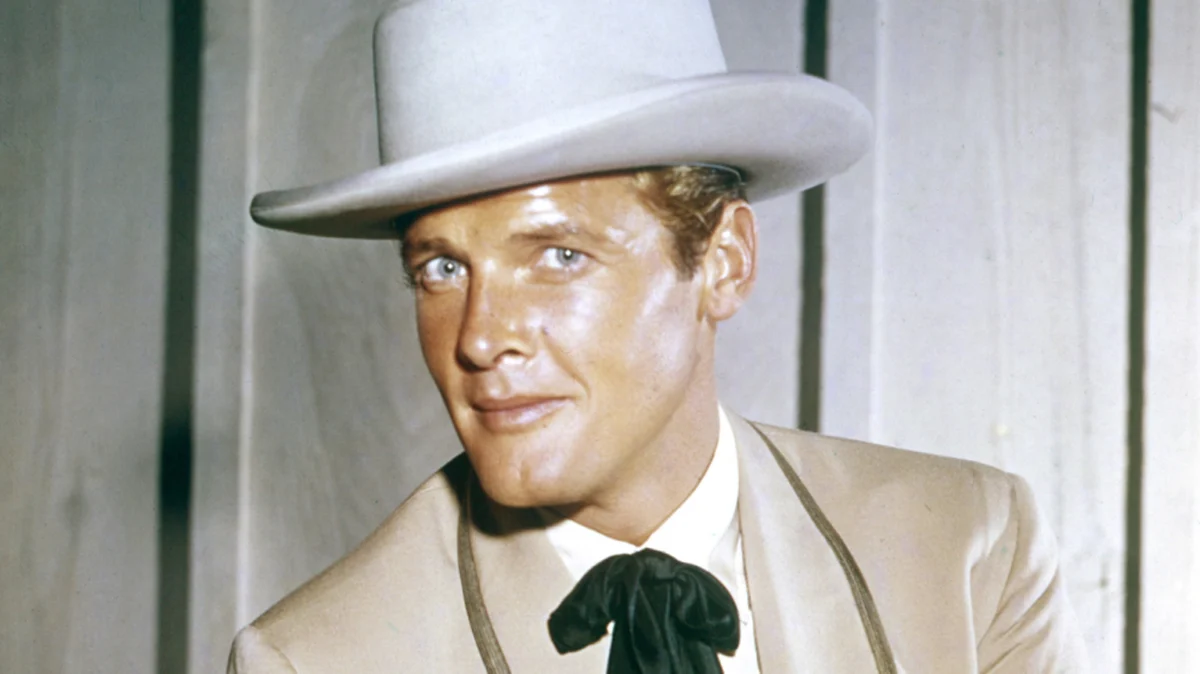
Long before he was shaking martinis, introducing himself to villains, and saving the world as MI6’s most famous secret agent, Sir Roger Moore was busy wrangling cattle, dodging shootouts, and trading witty barbs on the American frontier.
While pop culture immortalized Moore as the quintessential James Bond across seven blockbuster films—and earlier cemented his suave television status in The Saint—his resume boasts a fascinating, albeit brief, detour into the wild-west landscape of 1950s television. During the fourth season of ABC’s wildly popular horse opera Maverick, Moore took on the monumental and daunting task of replacing megastar James Garner as the co-lead of the series.
It was a casting gamble born out of a bitter behind-the-scenes contractual dispute, a testament to recycled television scripts, and a precursor to Moore’s lifelong career pattern of stepping into shoes left behind by other leading men.
Main Facts: The Anatomy of a High-Stakes Replacement
To understand how Roger Moore ended up on the dusty trails of Maverick, one must first examine the seismic shift that occurred behind the scenes of ABC’s hit western. Created by Roy Huggins, Maverick was a breath of fresh air in a genre saturated by stoic, law-abiding sheriffs and humorless gunslingers. Starring James Garner as Bret Maverick and Jack Kelly as his brother Bart, the series subverted traditional western tropes. Bret and Bart were charming, sharp-dressed, fast-talking card sharps who frequently preferred a quick wit or a strategic retreat over a lethal shootout.
However, creative friction and a bitter contract dispute with Warner Bros. led James Garner to abruptly quit the series after three wildly successful seasons. Studio head Jack Warner, desperate to maintain the lucrative franchise and fill the void left by Garner’s departure, needed a star who possessed equal parts charm, comedic timing, and leading-man magnetism.
Warner found his answer in Roger Moore, an actor he deeply admired following Moore’s work headlining the short-lived ABC adventure series The Alaskans.
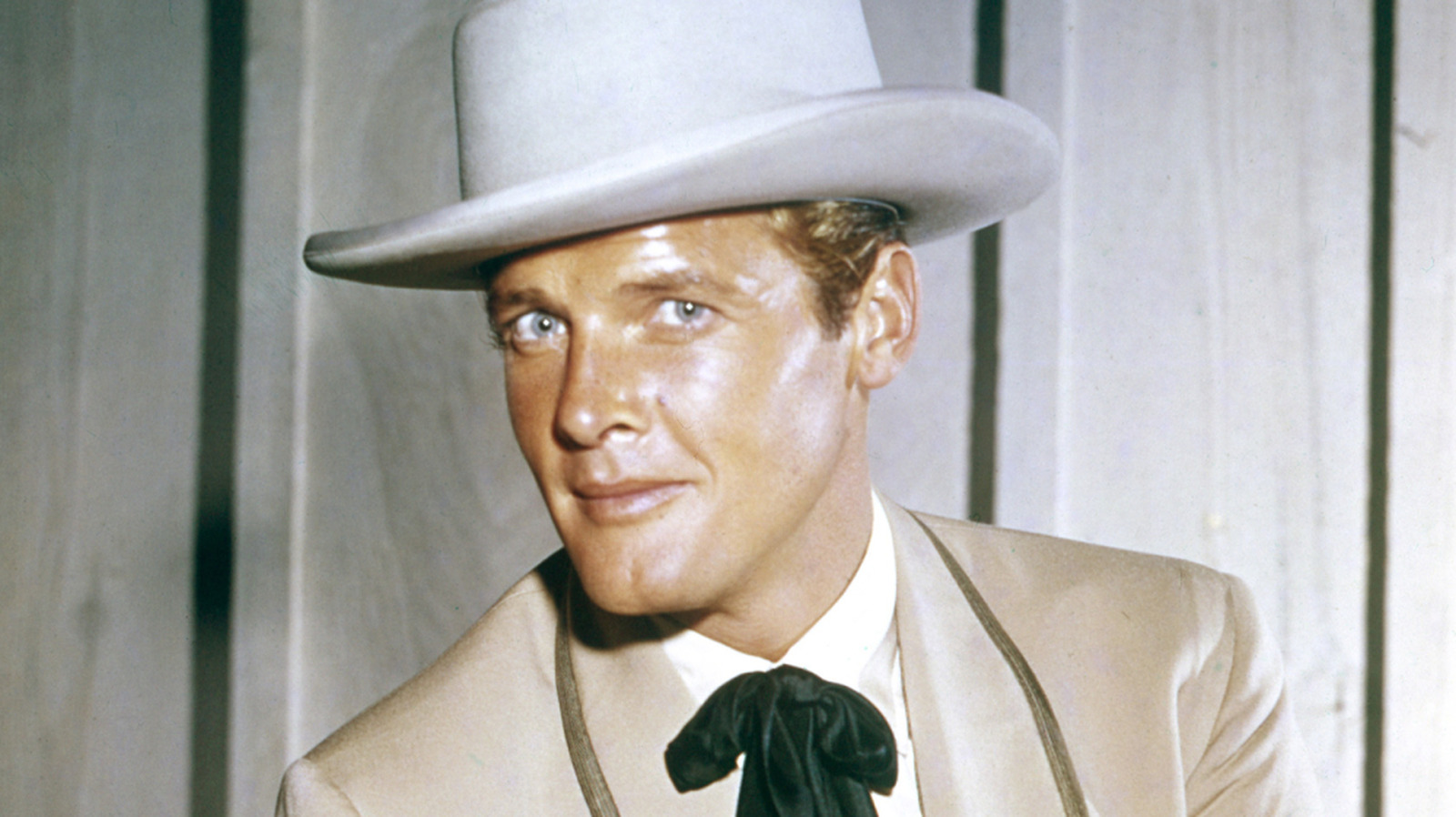
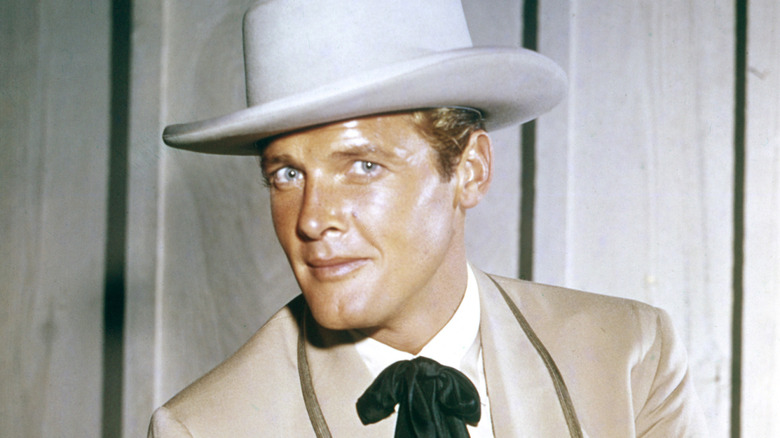
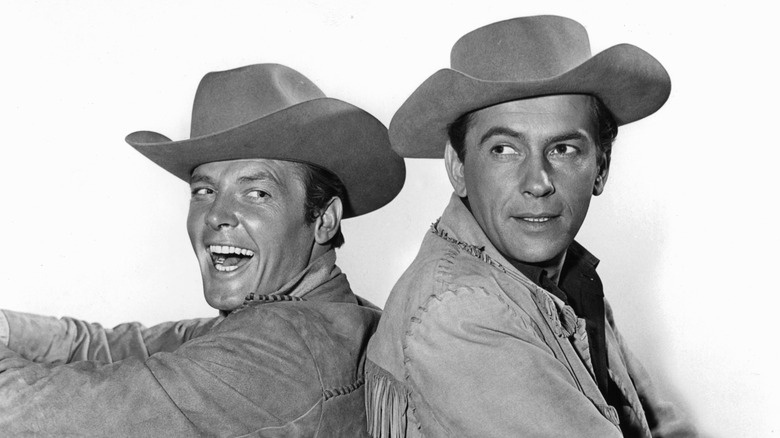
For 15 episodes during Season 4, Moore portrayed Beauregard "Beau" Maverick—a cousin of Bret and Bart, a Civil War veteran, and an expat who had spent formative years living in England. Thrust into an ensemble already anchored by Jack Kelly, Moore faced the immediate, heavy burden of replacing a beloved television icon.
Chronology: From Accidental Guest Star to Contractual Exit
The Setup: Pre-Existing Ties to the Franchise
Moore’s introduction to the Maverick universe did not actually begin in Season 4; his path had crossed with the show’s machinery years prior. In a piece of delightful television irony, Moore guest-starred in Season 2 of Maverick in an episode titled "The Rivals."
Playing John Vandergelt III, Moore shared the screen with both Garner and Kelly in a rare two-brother installment that brought both original Mavericks together. In the episode, Moore’s character goes so far as to hire Bret Maverick to temporarily switch identities—a humorous narrative wink at what would happen years later in reality.
Furthermore, during his time starring in The Alaskans, Moore had already developed an intimate familiarity with the Maverick writing style. Because the two shows shared studio space and creative pipelines, a writers’ strike forced the network to repurpose Maverick scripts for The Alaskans with only minor alterations.
"We were given Maverick scripts where they had just changed the name, some of the time, and my character, Silky Harris, was saying Bret Maverick lines," Moore recalled years later. This script recycling inadvertently prepared Moore for the cadence, tone, and humor required of a Maverick brother.
Season 4: Stepping Into the Saddle
Beau Maverick officially made his debut in the Season 4 premiere, titled "The Bundle from Britain." The writers consciously positioned Beau as a distinct entity rather than a carbon copy of Garner’s Bret. Beau was framed as the "white sheep" of the family—a sharp contrast to his scoundrel cousins—and was even decorated for accidental heroism during the Civil War.
Working alongside Jack Kelly, Moore quickly found his footing, relying on on-set camaraderie to navigate the immense pressure. "Jack and I had a lot of laughs doing it, I must say," Moore remembered. "I also remember Leslie Martinson directing the first episode. He thought we were both completely insane."
The Breaking Point: A Single-Season Stint
Despite his best efforts to carve out a unique identity for Beau Maverick, Moore soon realized that the studio’s behind-the-scenes promises were falling flat. While executives initially assured him that he wouldn’t be handed James Garner’s "sloppy seconds," the scripts continued to feel generic, lacking the bespoke tailoring necessary to showcase Moore’s specific comedic and dramatic strengths.
The final straw came when the studio approached Moore with a pitch for another television project—one he viewed as a mere duplicate of the western series Sugarfoot—requiring him to play an "English stumblebum."
Sensing that his trajectory on the show was stalling and that he was being pigeonholed by studio bureaucracy, Moore made a decisive move. "At that point, I asked to be released from my contract," Moore stated. "As a matter of fact, I think they offered me that show in order to get me to ask for my release."
Moore’s tenure as Beau concluded with the Season 4 episode "Red Dog." Though his character was eventually supplemented by yet another replacement brother—Robert Colbert as Brent Maverick—the revolving door of leading men effectively signaled the beginning of the end for the series. With only Jack Kelly remaining from the original core, ABC ultimately canceled Maverick during a shortened fifth season that consisted of just 13 episodes paired with reruns of Garner’s era.
Supporting Data: Behind-the-Scenes Insights and Metrics
To fully comprehend the significance of Moore’s time on Maverick, it is helpful to look at the production metrics and historical records compiled by television historians:
- Episode Count: Roger Moore appeared in 15 episodes of Maverick during its fourth season (1960–1961).
- The Garner Legacy: James Garner had anchored the series for 75 episodes prior to his exit, establishing an indelible blueprint for the wisecracking frontier gambler that averaged massive ratings for ABC.
- Literary History: Moore’s casting details and behind-the-scenes frustrations were extensively documented in Ed Robertson’s authoritative text, Maverick: Legend of the West.
- The Post-Maverick Rebound: Moore’s departure from the western genre was immediately validated by massive international success. Shortly after hanging up Beau Maverick’s hat, Moore secured the career-defining role of Simon Templar in The Saint, which ran for 118 episodes across 6 seasons from 1962 to 1969, directly bridging his transition into global superstardom and eventual 007 status.
Official Responses and Actor Reflections
Reflecting on his brief yet turbulent tenure in the American West, Moore was characteristically candid and self-effacing. He never harbored delusions about the difficulty of walking into an established hit show in the wake of a departing fan-favorite actor.
"I really didn’t want to do another television series. And I honestly did feel that Jim [Garner] was so popular that anybody coming in would be resented," Moore admitted to author Ed Robertson. "It’s very difficult to follow somebody in an established role."
Moore’s observations underscored the immense psychological pressure placed on television actors in the golden age of network television, where studio mandates frequently superseded creative alignment. Garner’s acrimonious exit over contract disputes had left Warner Bros. scrambling to protect a massive financial asset, making Moore an expedient solution to a systemic studio problem rather than a long-term creative partnership.
Despite the friction, Moore’s professionalism ensured that his brief western chapter remained a beloved footnote for nostalgic television viewers, proving that his undeniable charisma could shine under virtually any genre’s lights.
Implications: A Blueprint for a Legendary Career
Roger Moore’s stint on Maverick holds a fascinating place in television history, serving as a microcosm of his entire professional trajectory. Throughout his career, Moore carved out a distinct niche not necessarily as an original pioneer of roles, but as a master of reinvention who could effortlessly step into established cultural footprints and make them entirely his own.
Just as he inherited the mantle of Beau Maverick from James Garner, Moore would later inherit the mantle of Simon Templar (originally played on radio and in early British adaptations by others, though defined globally by Moore) and, most notably, take over the iconic tuxedo of James Bond from Sean Napier and George Lazenby.
Had Moore not braved the dusty trails of Warner Bros.’ western backlot, weathered the challenges of recycled scripts, and learned how to win over skeptical audiences in the shadow of a departed star, the world might never have witnessed the unflappable, suave diplomacy that he later brought to MI6. Maverick was more than just a 15-episode pit stop for the future 007—it was the proving ground where a charming British actor proved he could hold his own against the best gunslingers in Hollywood.