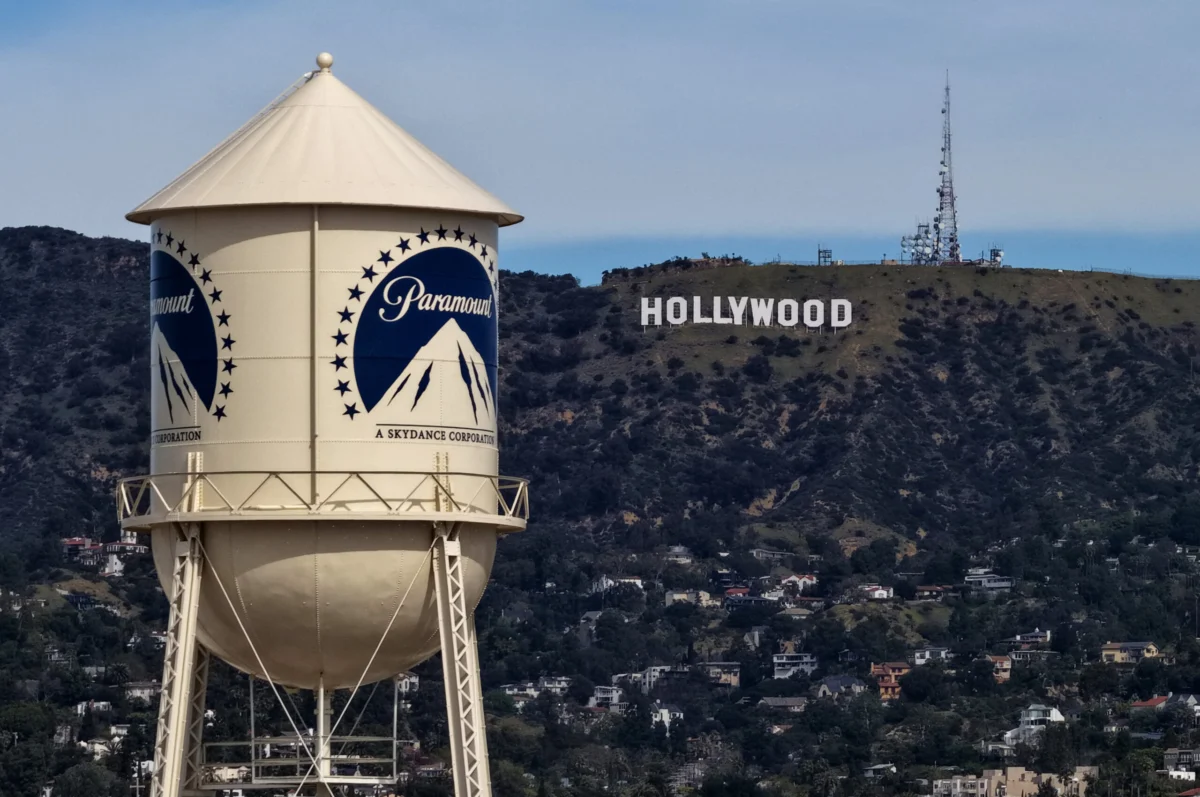
In what has become the most contentious corporate maneuver in the history of modern entertainment, the proposed $111 billion acquisition of Warner Bros. Discovery by Paramount has hit a formidable legal wall. What was once envisioned as a seamless consolidation of Hollywood titans is now a high-stakes courtroom drama, as a coalition of 12 states—led by California—has launched a coordinated offensive to block the transaction. This legal intervention threatens not only the deal’s ambitious July closing timeline but also the long-term financial viability of the merger itself, as the industry watches to see if one of the most transformative shifts in media history will be stifled before it can fully materialize.
The Core Conflict: Antitrust vs. Corporate Ambition
At the heart of the litigation lies a fundamental disagreement over market power and the future of consumer choice. The state coalition, spearheaded by California Attorney General Rob Bonta, argues that the merger represents an unprecedented consolidation of influence that would effectively cripple competition in theatrical distribution and cable licensing. By combining two of the top five studios in Hollywood, the plaintiffs contend that the resulting entity would wield excessive control over the cinematic landscape, inevitably leading to higher ticket prices, a diminished volume of theatrical releases, and a contraction in the creative diversity that defines the film industry.
Paramount, under the stewardship of David Ellison, has staunchly defended the merger as a necessary evolution for a legacy media company navigating an era defined by aggressive streaming competition and shifting audience behaviors. However, the legal reality has grown increasingly complex. With the litigation now in the hands of U.S. District Judge Araceli Martínez-Olguín, the courtroom has become a theater where the future of the Hollywood "Big Five" is being debated in real-time.
A Chronology of the Deal and Its Disruption
The path to this impasse has been marked by a blend of rapid regulatory progress and sudden, unforeseen resistance:
- December 2023: Paramount formalizes its intent, filing the necessary documentation with the U.S. Department of Justice. At this stage, the company expresses confidence that the deal will clear regulatory hurdles, bolstered by the fact that it has already secured greenlights from over a dozen international jurisdictions.
- Early 2024: Despite strong interest from competitors like Netflix during the initial bidding phase, Paramount emerges as the victor, setting a hard target to finalize the acquisition by July 2024.
- July 2024: The coalition of 12 states files a formal lawsuit to block the transaction. This filing immediately throws the July closing date into jeopardy and shifts the focus toward the "ticking fee" liability—a penalty clause requiring Paramount to pay Warner Bros. shareholders millions for every day the merger is delayed beyond the September 30 deadline.
- Mid-July 2024: During a critical hearing, Judge Martínez-Olguín weighs a temporary restraining order (TRO). Paramount’s legal team, led by Jeffrey Kessler, attempts to mitigate the delay, while the states demand a protracted schedule for preliminary injunction proceedings that could stretch into the next calendar year.
Supporting Data and Economic Implications
The scale of this merger is staggering, and the economic arguments presented by the prosecution reflect the sheer magnitude of the proposed entity. James Weingarten, representing the states, provided a sobering statistic during the hearing: for every dollar generated at the global box office, the newly combined company would pocket more than a quarter. This concentration of revenue, the states argue, creates an insurmountable barrier for independent studios and smaller distributors, effectively tilting the playing field toward a duopolistic hegemony.
Furthermore, the legal battle has turned on the 2023 Merger Guidelines, a set of regulatory standards that lowered the threshold for what constitutes a market violation. Paramount’s defense has been aggressive in attacking these guidelines, with Kessler noting, "No court in this country has ever found a presumption at the low level of concentration in the 2023 guidelines they are citing. They are asking you to be the first court in history to do that."
The financial pressure is equally intense. Under the current agreement, failure to close by September 30 triggers a payout of approximately $650 million per quarter, or roughly $6.9 million per day. For Paramount, this is not just a regulatory hurdle—it is a race against a financial clock that could bleed the company of significant liquidity.
Official Responses and Legal Strategy
The legal maneuvering between the two sides has been marked by accusations of negligence and tactical obstruction. Paramount’s counsel has been particularly vocal regarding the timing of the states’ intervention. Jeffrey Kessler underscored that the merger has been public knowledge since January, questioning why the state coalition waited until the final hour to initiate litigation. "They’ve known about the merger since January," Kessler argued. "They could’ve filed papers months ago or six weeks ago."
Conversely, the states maintain that their duty is to protect the public interest, and that the harm caused by the merger is "irreparable." Weingarten pointed to the operational chaos that would ensue if the deal were allowed to proceed: the immediate halting of film productions, the forced integration of competing management teams, and the inevitable layoffs that follow such consolidations. He argued that once these assets are commingled, "the competition that these two companies bring to the marketplace would end immediately."
The Pivot to Behavioral Remedies
Before the lawsuit was filed, both parties engaged in intense settlement discussions. Paramount reportedly offered behavioral remedies, including a commitment to produce a specific quota of 30 films per year, each with a guaranteed 45-day theatrical window. However, Attorney General Bonta and his coalition were unconvinced. In a public statement on KQED, Bonta emphasized that such behavioral remedies are notoriously difficult to enforce and easily circumvented. He indicated that only "structural remedies"—such as the divestiture of entire film studios or specific cable channels—would be sufficient to alleviate the states’ antitrust concerns.
This fundamental gap in negotiation philosophy suggests that the path to a settlement is narrow. If Paramount is unwilling to carve off significant portions of its business, the case will likely proceed to a full-scale preliminary injunction trial, where the risk of the deal collapsing entirely becomes increasingly probable.
Future Implications: The "Unwinding" Dilemma
The significance of the current judicial proceedings cannot be overstated. Courts are historically hesitant to block a merger once it has closed, largely due to the "unwinding" problem—the immense practical difficulty of separating two entities once their staff, intellectual property, and operations have been integrated. By contrast, granting a temporary restraining order or a preliminary injunction is a far more common tool for preserving the status quo.
The precedent set by the FTC’s challenge to the Microsoft-Activision Blizzard merger hangs over the courtroom. In that instance, the court declined to issue a preliminary injunction, effectively allowing the deal to proceed. Paramount is banking on a similar outcome, hoping to convince Judge Martínez-Olguín that the market is sufficiently robust to absorb the merger without violating the principles of competition.
However, if the judge sides with the states, the industry could see a fundamental shift in how mega-deals are structured. The "industry-transforming" nature of this merger, as described by Weingarten, makes it a test case for the Biden administration’s more rigorous approach to antitrust enforcement.
Conclusion: A Precarious Crossroads
As the legal proceedings continue, the tension within Hollywood is palpable. The proposed merger between Paramount and Warner Bros. Discovery is not merely a business transaction; it is a referendum on the concentration of power in the age of digital media. Whether Paramount can successfully navigate the legal gauntlet or will be forced to restructure, pay massive "ticking fees," or abandon the deal altogether, remains the central question of the year.
For now, the industry remains in a state of suspended animation. Investors are wary, creative talent is cautious, and the courts remain the final arbiter of a deal that, should it succeed, will redefine the cinematic and broadcast landscape for decades to come. The decision expected from Judge Martínez-Olguín next Wednesday will serve as the first major indicator of whether this $111 billion gamble will culminate in a new era for Hollywood or serve as a cautionary tale of regulatory overreach and the limits of corporate expansion.