As we move deeper into 2026, the marketing industry is reaching a critical inflection point. For nearly a decade, the success of influencer and creator marketing has been tethered to the "platform metric"—a reliance on views, completion rates, and basic engagement counts provided by social media ecosystems. However, as creator programs evolve from experimental side-projects into cornerstones of global marketing budgets, these metrics are proving increasingly insufficient.
The consensus among industry leaders is clear: standard platform metrics no longer tell the full story. While they remain essential for gauging distribution efficiency, they fail to capture the nuanced, compounding business impact that modern creator ecosystems generate. To thrive in this new era, brands must move beyond superficial scorecards and adopt a layered, intent-based measurement framework.
The Measurement Crisis: Why Old Scorecards Fail
The primary challenge in 2026 is not that current metrics are "wrong," but that they are consistently applied out of context. Teams frequently judge a top-of-funnel awareness video—designed to spark brand discovery—against the same performance KPIs as a shoppable post designed for direct conversion.
When a narrative-driven endorsement is held to the same rigid metrics as a quick product demo, the results are misleading. This "one-size-fits-all" scorecarding forces teams to walk away with incomplete conclusions, often penalizing content that is performing exactly as intended. If an awareness piece doesn’t drive a click-through, it is often labeled a failure, despite it having successfully shifted brand perception or mental availability among a target audience.
The Layered Measurement Stack: A New Framework
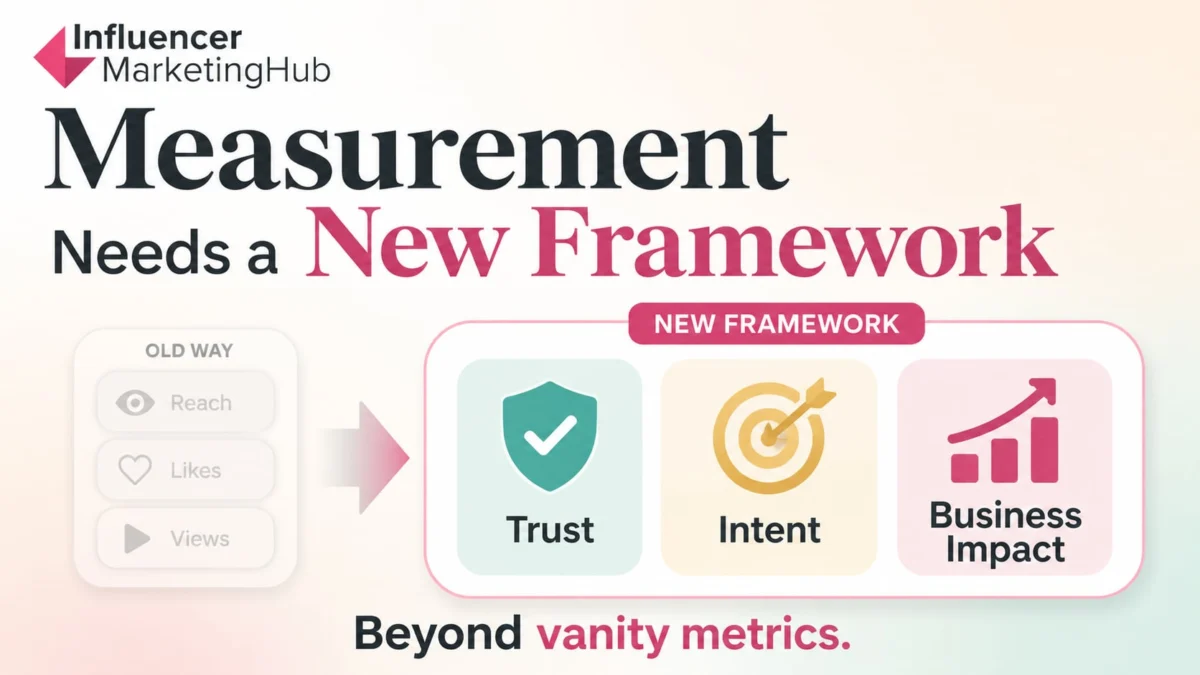
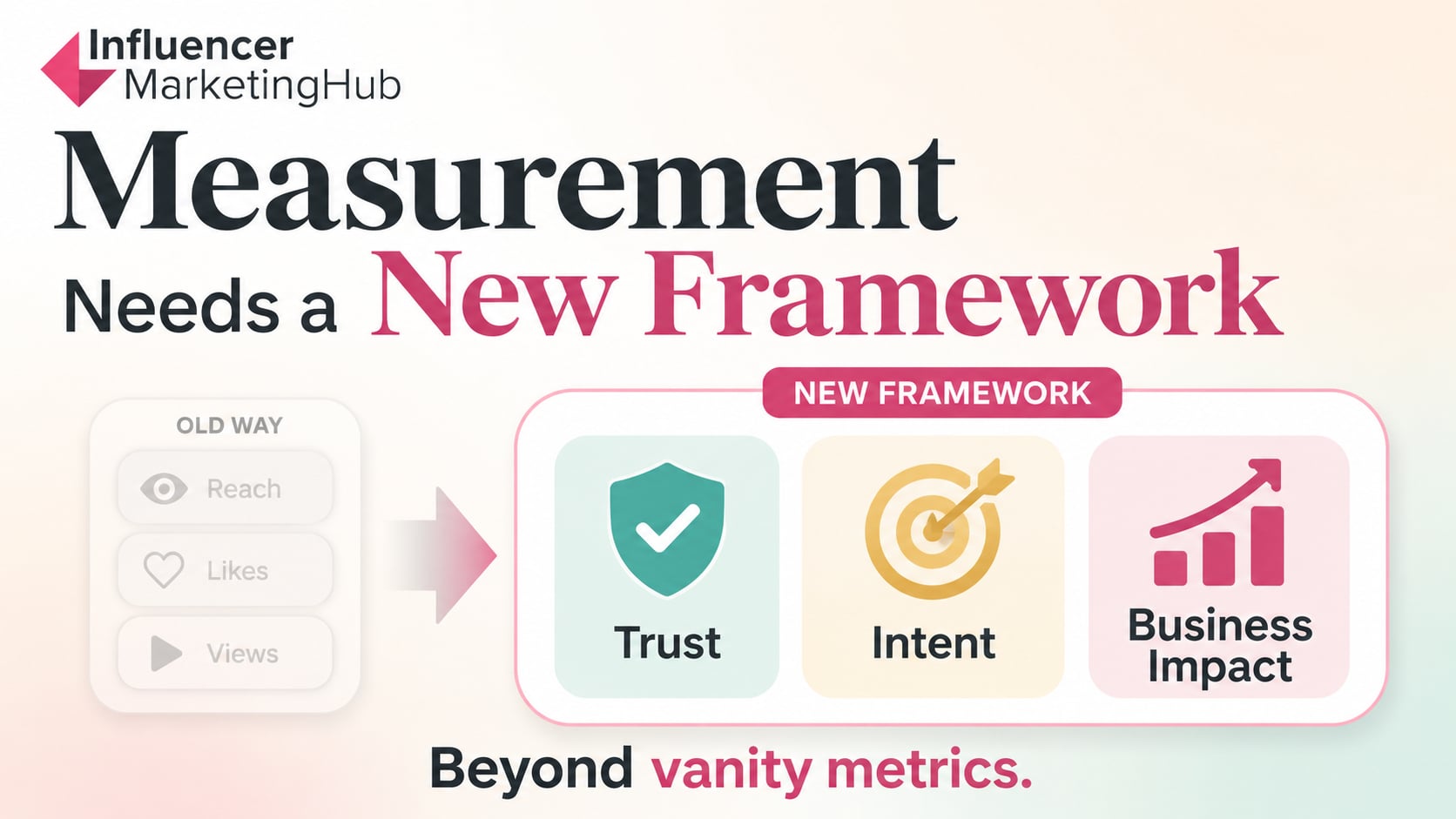
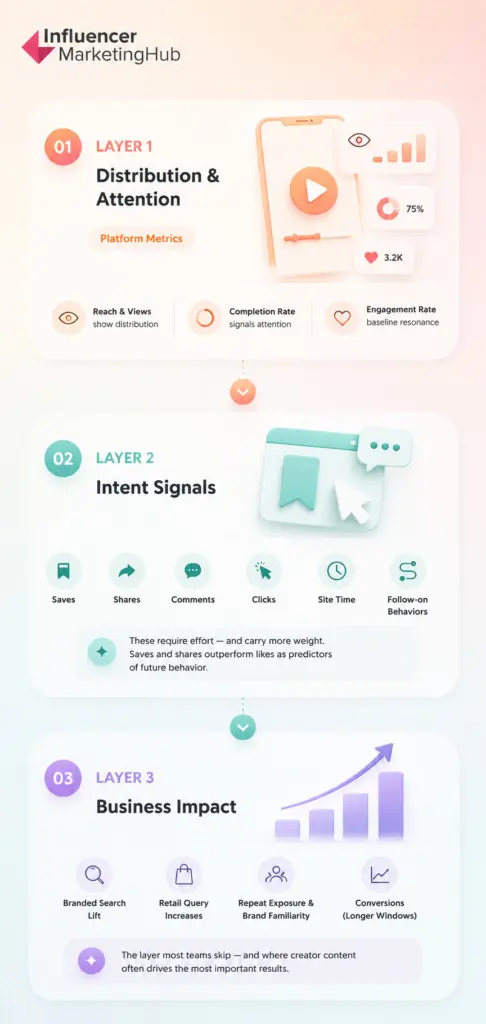
To bridge this gap, top-performing agencies and brands are moving toward a Layered Measurement Stack. This approach does not discard platform data; rather, it contextualizes it by assigning specific metrics to specific business goals.
Layer 1: Distribution and Attention (The Platform Baseline)
This layer answers the fundamental question: Did the content clear the first hurdle?
- Key Metrics: Reach, impressions, and video completion rates.
- Utility: These metrics are the health indicators of your distribution. They tell us how far the content traveled and whether the creative hook was strong enough to capture initial attention. Without this baseline, the higher layers of the funnel remain inaccessible.
Layer 2: Intent Signals (The Engagement Depth)
This layer measures audience investment. It requires more effort from the viewer than a passive "like" and serves as a stronger predictor of future consumer behavior.
- Key Metrics: Saves, shares, sentiment-coded comments, and direct tags.
- Utility: Data from 2026 indicates that saves and shares are significantly more predictive of downstream purchasing intent than traditional likes, particularly for educational or long-form endorsement content.
Layer 3: Business Impact (The Bottom Line)
This is the layer most teams overlook, yet it is where creator content does its most vital work.
- Key Metrics: Attribution modeling, branded search lift, retail store visits, and repeat customer acquisition cost (CAC) reduction.
- Utility: By tracking these metrics, brands can observe how creator content influences the total marketing ecosystem, moving beyond siloed social performance to holistic revenue growth.
Segmentation: Aligning Intent with Outcomes
The failure of the "old" framework is most visible in its inability to account for the diverse roles content plays. Not all creator content is designed to sell a product in the moment.
Some pieces are built to cultivate mental availability. This impact often manifests weeks or months later, appearing through increased branded search volume or familiarity during the customer’s final decision-making process. Other content is built for endorsement behavior, designed to trigger an immediate, high-trust social signal.
When brands penalize awareness-focused content for lacking conversion signals, they disrupt their own long-term growth. The solution is to create custom success criteria that match the intent of the campaign. Awareness should be measured by brand sentiment and recall, while performance content should be held to conversion-based KPIs.
The AI Factor: How Discovery is Changing the Landscape
Perhaps the most significant force accelerating this shift in 2026 is AI-driven discovery. Consumers are increasingly bypassing traditional search engines, instead turning to large language models (LLMs) to solve problems, research products, and define aspirations.
Recent industry data suggests that over 50% of U.S. consumers now utilize AI tools as a primary step in their shopping journey. Crucially, these AI models do not "invent" opinions; they synthesize existing content across the web. This creates two seismic shifts for brands:
- The Rise of Contextual Dominance: To be recommended by an AI, a brand must be present in the high-quality, trusted content ecosystems where creators reside.
- The "Dark" Conversion: Influencer content can now influence a purchase decision even if the user never clicks an affiliate link. A consumer may watch a creator review, perform a branded search on Google, and convert via an app—all while the original platform dashboard reports zero direct conversions.
In this landscape, platform metrics are becoming secondary to the broader "digital footprint" a creator leaves behind.
Building a Strategy for 2026 and Beyond
The teams effectively navigating this transition are those that treat creator content as a business asset rather than a media buy. At Intuition Media Group, we advocate for a philosophy where creator ecosystems are designed for cultural relevance and built for measurable impact.
How to Pivot Your Measurement Strategy:
- Adopt Multi-Touch Attribution (MTA): Look beyond the platform. Use UTM parameters, promo codes, and survey-based "How did you hear about us?" data to map the true journey of the customer.
- Correlate, Don’t Just Count: Analyze the correlation between creator content spikes and organic search volume or direct traffic to your website.
- Focus on Qualitative-Quantitative Hybrids: Combine the hard numbers of engagement with sentiment analysis to understand the "why" behind the performance.
- Educate Stakeholders: Shift the conversation with C-suite executives from "clicks and likes" to "market share and mental availability."
Conclusion: A More Honest Approach
The new measurement framework is not necessarily more complicated than the old one; it is, however, more honest. It acknowledges that the path to purchase in 2026 is non-linear and heavily influenced by the invisible, compounding work of creator content.
As Paula Bruno, founder of Intuition Media Group, notes: "The goal is to move from simply measuring what we can track on a platform to understanding how our creator strategy actually moves the business needle."
By adopting this layered approach, brands can finally align their creator investments with their broader business goals. The era of the single, insufficient scorecard is ending. The era of strategic, intent-based measurement has begun. For brands willing to embrace this complexity, the reward is a deeper, more resilient connection with their audience—and a much clearer picture of their return on investment.
About the Author
Paula Bruno is the founder and CEO of Intuition Media Group. With over 15 years of experience in the creator economy, she has steered campaigns for global giants including P&G, Hyundai, and TikTok, bridging the gap between cultural resonance and business performance.