Main Facts: Continuity at CMS and a Historic Tech Appointment
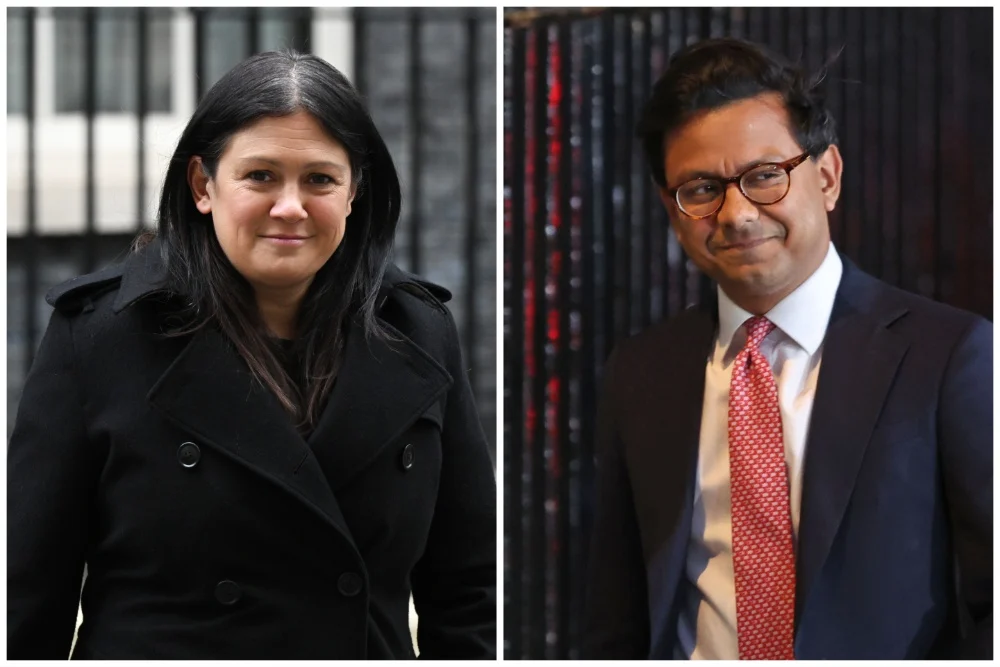
In a decisive move aimed at signaling policy continuity to the United Kingdom’s volatile creative and media sectors, Prime Minister Andy Burnham has retained Lisa Nandy as the Secretary of State for Culture, Media and Sport (CMS) during his administration’s first major cabinet reshuffle.
Nandy, who has held the Wigan parliamentary seat for the Labour Party since 2010, was originally appointed to the culture brief in July 2024 by former Prime Minister Keir Starmer. Her retention by Prime Minister Burnham solidifies her position as one of the longest-serving culture ministers in recent British political history, bringing a period of rare stability to a department that has seen twelve different secretaries of state over the last dozen years.
Alongside Nandy’s retention, the Burnham administration has introduced a structural innovation to the machinery of government: the appointment of Kanishka Narayan as the UK’s first-ever dedicated Minister for Artificial Intelligence. Narayan, the Member of Parliament for the Vale of Glamorgan, will straddle two key departments, holding a joint ministerial post within both the Cabinet Office and the Department for Business, Innovation, Science and Trade (DBIST). Narayan previously served as the Parliamentary Under-Secretary of State in the Department for Science, Innovation and Technology (DSIT), making his elevation a strategic promotion aimed at addressing the rapid commercialization and regulatory challenges of generative AI.
The decision to keep Nandy at the helm of the CMS department comes at a critical juncture for the British creative economy. The Secretary of State is currently overseeing a series of high-stakes regulatory reviews, corporate mergers, and structural reforms that will reshape the UK’s media landscape for decades. These include:
- The ongoing review of the BBC’s Royal Charter and its future public funding mechanisms.
- A potential public-interest intervention in the UK operations of the proposed Paramount and Warner Bros. Discovery merger.
- The regulatory scrutiny of Comcast-owned Sky’s proposed acquisition of public service broadcaster ITV.
- The highly anticipated corporate spin-off and potential sale of ITV Studios, one of Europe’s largest production entities.
Chronology: From Sector Instability to Strategic Realignment
To understand the significance of Nandy’s retention and Narayan’s historic appointment, it is essential to trace the political and economic timeline of the UK’s culture and technology portfolios over the past decade.
[2012–2024] Rapid turnover of 12 Culture Secretaries creates policy volatility.
       │
[July 2024]  Labour wins General Election. Keir Starmer appoints Lisa Nandy as CMS Secretary;
       │     Kanishka Narayan elected MP for Vale of Glamorgan and enters DSIT.
       │
[2024–2025]  UK screen sector suffers post-pandemic inflation, ad-market slumps,
       │     and lingering effects of Hollywood strikes.
       │
[Mid-2026]   Andy Burnham succeeds Starmer as PM; initiates extensive Cabinet Reshuffle.
       │
[Present]    Lisa Nandy retained as Culture Secretary; Kanishka Narayan appointed
             first joint Minister for AI (Cabinet Office / DBIST).
The Revolving Door of CMS (2012–2024)
For over a decade, the Department for Culture, Media and Sport (formerly DCMS) was characterized by extreme leadership turnover. Between 2012 and 2024, twelve different ministers held the post of Secretary of State. This rapid rotation of leadership made it difficult for successive governments to establish long-term strategies for public service broadcasting, digital infrastructure, or creative arts funding.
The July 2024 Transition
Following Labour’s general election victory in July 2024, incoming Prime Minister Keir Starmer appointed Lisa Nandy to lead the CMS. Nandy brought significant political weight to the role, having previously served as the Shadow Cabinet Minister for International Development and Shadow Housing Minister. Concurrently, Kanishka Narayan, a former civil servant and private sector tech adviser, was elected to Parliament representing the Welsh constituency of the Vale of Glamorgan, quickly securing a junior ministerial post at DSIT.
Navigating the Post-Strike Downturn (2024–2026)
Nandy’s first two years in office were defined by crisis management. She assumed control of the department as the UK film and television sectors suffered from the compounding shocks of the 2023 Hollywood writers’ and actors’ strikes, which halted billions of pounds of co-productions. This was exacerbated by double-digit domestic inflation, a severe downturn in the linear television advertising market, and subsequent budget cuts by major domestic broadcasters (BBC, ITV, Channel 4) and international streaming platforms.
The Burnham Reshuffle (Present)
Following a transition in party leadership that saw Andy Burnham assume the office of Prime Minister, speculation mounted that the CMS portfolio would be reassigned as part of a wider administrative reset. However, Burnham’s decision to retain Nandy emphasizes a desire for policy continuity, particularly as several multi-billion-pound media transactions reach their regulatory inflection points.
Supporting Data: A Screen Sector in Flux
The economic backdrop against which Nandy and Narayan will operate is characterized by structural contraction and regulatory consolidation.
The Screen Sector Slump
According to data from the British Film Institute (BFI), the combined spend on film and high-end television (HETV) production in the UK reached £4.23 billion ($5.4 billion) in 2024, representing a significant decline from the record-breaking £6.27 billion recorded in 2022. While inward investment from US studios remains the primary engine of the UK production sector, domestic independent production has struggled, with investment in domestic UK films dropping by nearly 30% over a three-year period.
| Metric | 2022 Peak | 2024/2025 Estimate | Percentage Change |
|---|---|---|---|
| Total Film & HETV Production Spend | £6.27 Billion | £4.23 Billion | -32.5% |
| Domestic Independent Film Spend | £195 Million | £137 Million | -29.7% |
| Linear TV Advertising Revenue | £4.10 Billion | £3.45 Billion | -15.8% |
The Corporate Consolidation Wave
Nandy’s immediate caseload is dominated by two massive market consolidations:
- The Paramount/Warner Bros. Discovery Merger (UK Arm): This mega-merger of US parent companies has profound implications for the UK broadcasting ecosystem, particularly concerning their joint ventures and pay-TV channel distribution. Nandy has formally stated she is "minded to intervene" on public interest grounds, specifically looking at media plurality and the preservation of domestic news provision.
- The Comcast/Sky Acquisition of ITV: In a move that has sent shockwaves through the European media landscape, Comcast-owned Sky has proposed an acquisition of the UK’s premier commercial public service broadcaster, ITV. This transaction, which is still awaiting regulatory clearance from the Competition and Markets Authority (CMA) and Ofcom, represents a fundamental realignment of the UK’s commercial television market. A major component of this deal is the planned spin-off of ITV Studios, the highly profitable production arm of ITV. Analysts estimate the valuation of ITV Studios at £2.5 billion to £3.0 billion, drawing interest from private equity firms and rival global studio groups.
Official Responses: Government and Industry Reactions
Downing Street and Ministerial Statements
A spokesperson for 10 Downing Street defended the decision to maintain Nandy’s tenure, stating:
"The Prime Minister believes that the challenges facing our creative industries require steady, experienced leadership. Over the past two years, Lisa Nandy has demonstrated an exceptional grasp of the complex economic realities facing our public service broadcasters and independent production sectors. Retaining her at CMS ensures that critical regulatory decisions—from the BBC Charter review to major market mergers—will be executed without administrative delay."
Responding to her retention, Lisa Nandy commented:
"I am privileged to continue serving as Secretary of State for Culture, Media and Sport under Prime Minister Burnham. Our creative industries are the engine of British soft power and economic growth. We face a defining moment: we must protect public service broadcasting, foster independent production, and ensure that global corporate consolidations do not compromise the plurality and richness of our domestic media ecosystem."
On his appointment as the first Minister for AI, Kanishka Narayan stated:
"Artificial intelligence is rewriting the rules of business, science, and the creative arts. By bridging the Cabinet Office and the Department for Business, Innovation, Science and Trade, this new role will allow us to build a robust regulatory framework that encourages technological innovation while protecting intellectual property, workers’ rights, and democratic integrity."
Industry Reaction
The decision to retain Nandy was widely welcomed by industry trade bodies. Marcus Ryder, CEO of the Sir Lenny Henry Centre for Media Diversity, remarked:
"Continuity at the CMS department is something the industry has cried out for after years of ministerial musical chairs. Secretary Nandy has shown a willingness to engage with structural inequalities in the media sector, and we welcome the opportunity to continue working with her on securing the long-term future of public service media."
However, representatives from the independent production sector, represented by Pact (the Producers Alliance for Cinema and Television), urged the Secretary of State to act quickly on the ITV Studios sale:
"While we welcome the stability Nandy’s retention brings, the proposed acquisition of ITV by Comcast/Sky and the spin-off of ITV Studios present an existential threat to the independent production ecosystem. We urge the Secretary of State to implement strict regulatory safeguards to ensure that domestic indies are not squeezed out of the commissioning market by vertically integrated global giants."
Implications: The Convergence of Media, Policy, and Artificial Intelligence
The structural layout of Prime Minister Burnham’s new cabinet—specifically the parallel positioning of Lisa Nandy at CMS and Kanishka Narayan at the newly created AI post—points to a strategic recognition of how closely media policy and technological advancement have become intertwined.
The BBC Charter and Funding Crisis
Nandy’s primary domestic challenge remains the future of the BBC. The current Royal Charter is set to expire in 2027, and the debate over the future of the license fee is reaching a critical phase. With high inflation reducing the purchasing power of the flat-rate fee, Nandy must design a funding model that preserves the BBC’s editorial independence and global reach while addressing public concerns over affordability. The continuity of her leadership ensures that the government will not have to restart consultations, keeping the charter renewal process on track.
The AI-Creative Industry Intersection
The appointment of Kanishka Narayan as Minister for AI directly intersects with Nandy’s portfolio. One of the most contentious issues currently facing the creative sector is the unauthorized use of copyrighted creative works—including journalism, television scripts, music, and voice acting—to train large language models (LLMs) and generative AI systems.
┌────────────────────────────────────────────────────────┐
│               THE REGULATORY INTERSECTION              │
└───────────────────────────┬────────────────────────────┘
                            │
            ┌───────────────┴───────────────┐
            ▼                               ▼
┌───────────────────────┐       ┌───────────────────────┐
│      LISA NANDY       │       │   KANISHKA NARAYAN    │
│  Culture Secretary    │       │      AI Minister      │
├───────────────────────┤       ├───────────────────────┤
│ • Protects Creative   │       │ • Drives Tech Growth  │
│   IP & Copyright      │       │ • Fosters AI Research │
│ • Defends Artists &   │       │ • Streamlines Digital │
│   Broadcasters        │       │   Infrastructure      │
└───────────┬───────────┘       └───────────┬───────────┘
            │                               │
            └───────────────┬───────────────┘
                            ▼
┌────────────────────────────────────────────────────────┐
│                  JOINT POLICY TARGET:                  │
│ Balancing AI training data access with robust creative │
│ copyright protection to maintain UK media dominance.   │
└────────────────────────────────────────────────────────┘
With Narayan situated jointly in the Cabinet Office and DBIST, and Nandy defending the economic interests of creators at CMS, the Burnham administration is positioned to draft a comprehensive, cross-departmental regulatory framework. This policy must balance the desire to make the UK a global hub for AI development with the necessity of protecting the intellectual property that underpins the UK’s £125 billion creative economy.
Regulatory Precedents in Media Mergers
Nandy’s decisions regarding the Comcast/Sky-ITV acquisition and the Paramount/Warner Bros. Discovery merger will set legal and economic precedents for decades. If the government allows Comcast to fully integrate ITV’s broadcasting and production assets without significant structural remedies, it could trigger further consolidation across European media markets, reducing the number of independent buyers and potentially lowering the diversity of content available to the British public.
By keeping Nandy in her post, Prime Minister Burnham has ensured that the UK’s regulatory response to these multi-billion-pound deals will be guided by an experienced minister who has already spent two years studying the complex market dynamics of the digital streaming era.