Disney Jr. has officially entered a new era of digital-first content creation with the launch of its latest preschool series, Ozzy Fox. Premiering this week exclusively on YouTube and YouTube Kids, the series represents a landmark collaboration between the global media giant and Animaj, an AI-driven animation studio based in France and the UK. The partnership signals a fundamental shift in how one of the world’s most traditional media conglomerates is integrating cutting-edge technology into its creative pipeline.
The Main Facts: A New Chapter in Preschool Programming
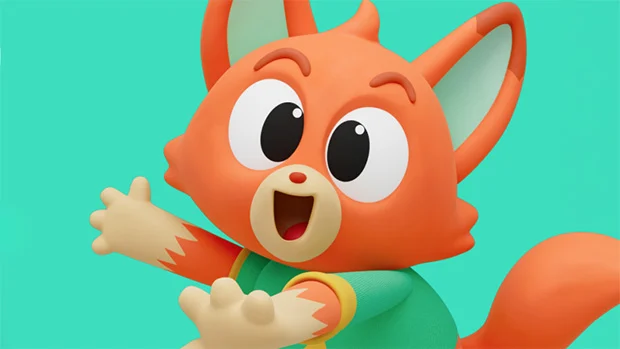
Ozzy Fox centers on the adventures of a five-year-old fox and his younger sister. Through music, imaginative play, and family-oriented storytelling, the show aims to transform mundane, everyday experiences into grand adventures—a hallmark of high-quality preschool content.
The production pedigree behind the series is significant. It is created by Jennifer Oxley, the visionary behind the acclaimed series Peg + Cat, and developed by Guillermo García-Carsí, known for his work on the globally recognized Pocoyo. The series is currently available in a two-episode debut, marking the first time Disney Jr. has opted to launch a new series directly on YouTube rather than through its traditional linear or Disney+ channels.
This move is not merely a distribution strategy; it is a proof-of-concept for the Disney Accelerator program, which selected Animaj last year to explore the intersection of artificial intelligence and high-end animation production. By leveraging Animaj’s proprietary AI-driven pipeline, Disney Jr. is testing the efficacy of digital-first, agile production models designed to meet the demands of a modern, fragmented audience.
Chronology: The Road to Ozzy Fox
The journey toward Ozzy Fox began in the fertile landscape of the 2022 animation boom, though its roots trace back to the strategic acquisition of legacy IP.
- 2022: Former YouTube Kids executive Gregory Dray co-founds Animaj, setting the stage for a studio that combines traditional storytelling expertise with a tech-heavy, digital-first philosophy.
- 2023: Animaj solidifies its position in the children’s market by acquiring Pocoyo from Spanish studio Zinkia Entertainment, signaling its intent to manage and modernize established global franchises.
- Mid-2023: The studio secures a major US$85 million funding round led by HarbourView Equity Partners and Bpifrance, providing the capital necessary to scale its AI-driven production tools.
- Late 2023: The Walt Disney Company selects Animaj for its prestigious Disney Accelerator program, opening the door for direct collaboration with Disney leadership and access to the company’s creative resources.
- Early 2024: Animaj receives an additional US$1 million from Google’s AI Futures Fund, further validating its technological approach.
- July 2026: Ozzy Fox makes its highly anticipated debut on YouTube and YouTube Kids, marking the first tangible output of the Disney-Animaj partnership.
Supporting Data: The Economics of AI Animation
The backing of Animaj by entities such as Google, Bpifrance, and HarbourView Equity Partners underscores a broader market trend: the transition from labor-intensive, traditional animation to automated, high-efficiency production workflows.
Animaj’s business model relies on a proprietary "AI-driven production pipeline." By automating the repetitive aspects of animation—such as asset generation, lighting, and rendering—the studio claims it can produce high-quality content at a fraction of the cost and time of traditional studios. For a company like Disney, which manages vast libraries of intellectual property, the appeal of this model is clear: it allows for the rapid scaling of content, lower overheads, and the ability to test new concepts in front of global audiences before committing to major linear or streaming investments.
Furthermore, the data suggests that YouTube has become the primary battleground for the next generation of preschool viewers. By launching Ozzy Fox on a platform where children already consume the majority of their short-form and serialized content, Disney is effectively using the "YouTube-first" approach as a barometer for market interest, allowing for real-time engagement analytics that inform future seasons and merchandising strategies.
Official Responses and the Ethical Debate
The use of AI in creative industries is currently a subject of intense scrutiny, and Animaj has found itself at the center of this firestorm. The studio has taken a proactive stance in defending its methodology, framing its work not as a replacement for human creativity, but as a defense against lower-quality content.
"We are not looking to replace the artist," representatives for Animaj have stated in previous forums. "We are looking to empower them to compete in a market saturated with low-quality, ‘AI slop’ being produced in unregulated content farms."
Animaj’s leadership argues that by using AI ethically and under the supervision of industry veterans like Oxley and García-Carsí, they are elevating the standard of content available on digital platforms. They posit that the creative spark—the heart of the show—remains human-led, while the AI functions as a force multiplier for productivity. This narrative is crucial, as it aligns with the values of Disney, a brand that has historically been protective of its reputation for quality and storytelling excellence.
However, the debate remains polarized. Critics within the animation industry worry that even "ethical" AI tools might eventually lead to a devaluation of the craft, potentially displacing junior animators and artists whose roles are most easily automated by generative technologies.
Implications for the Future of Animation
The launch of Ozzy Fox serves as a "canary in the coal mine" for the future of the animation industry. Several key implications arise from this partnership:
1. The Death of the "Slow" Pipeline
Traditional animation can take years to move from concept to screen. The success of the Ozzy Fox launch suggests that the future of the medium may lie in a "hybrid" model. Large studios will likely continue to produce "tentpole" projects using traditional, highly bespoke animation techniques, while supplementing their catalogs with AI-assisted series that can be turned around in months rather than years.
2. YouTube as a Development Hub
For decades, television networks were the gatekeepers of children’s programming. Disney’s move to bypass its own linear channels for the premiere of Ozzy Fox proves that YouTube is no longer just a repository for clips; it is a primary development hub. We can expect to see more "digital-first" pilots from major studios, where audience retention data and engagement metrics on YouTube dictate which shows get picked up for long-form series or merchandising deals.
3. The Re-emergence of Franchise Management
Animaj’s acquisition of Pocoyo and its subsequent work on Ozzy Fox highlight a new strategy: the studio as a "franchise engine." Instead of creating single-hit shows, companies like Animaj are focused on acquiring legacy brands and breathing new life into them through AI-enhanced production cycles. This allows for a continuous stream of content that keeps franchises relevant to successive generations of children without the prohibitive costs of traditional revivals.
4. The Industry-Wide AI Arms Race
The investment from Google and the partnership with Disney suggest that AI in animation is moving beyond the experimental phase. Every major studio is currently evaluating its "AI readiness." The competitive landscape of the next five years will be defined by which studios can most successfully integrate these tools without alienating their creative talent or damaging their brand equity.
Conclusion: A Delicate Balance
The debut of Ozzy Fox is more than just the arrival of a new children’s show; it is a trial balloon for a massive shift in the media landscape. By bridging the gap between the storied tradition of Disney storytelling and the raw, efficient power of modern AI, the partnership between Disney Jr. and Animaj represents a pivotal moment in the evolution of entertainment.
As the industry watches the reception of the first episodes, the core question remains: can the "magic" of Disney be replicated through an automated lens? If Ozzy Fox succeeds in capturing the imaginations of children as effectively as its predecessors, the animation industry may find itself at the beginning of a permanent, technology-led transformation. For now, the fox is out of the bag, and the industry is watching closely to see if this blend of silicon and storytelling can define the future of the preschool genre.