September has historically been one of the most volatile and exhilarating months on the global cinematic calendar. This year proved no exception, delivering a relentless wave of high-profile international film festivals that stretched from the canals of Venice to the rugged peaks of Telluride, the bustling metropolitan hub of Toronto, and finally to the coastal charm of Maine for documentary aficionados attending the Camden International Film Festival (CIFF).
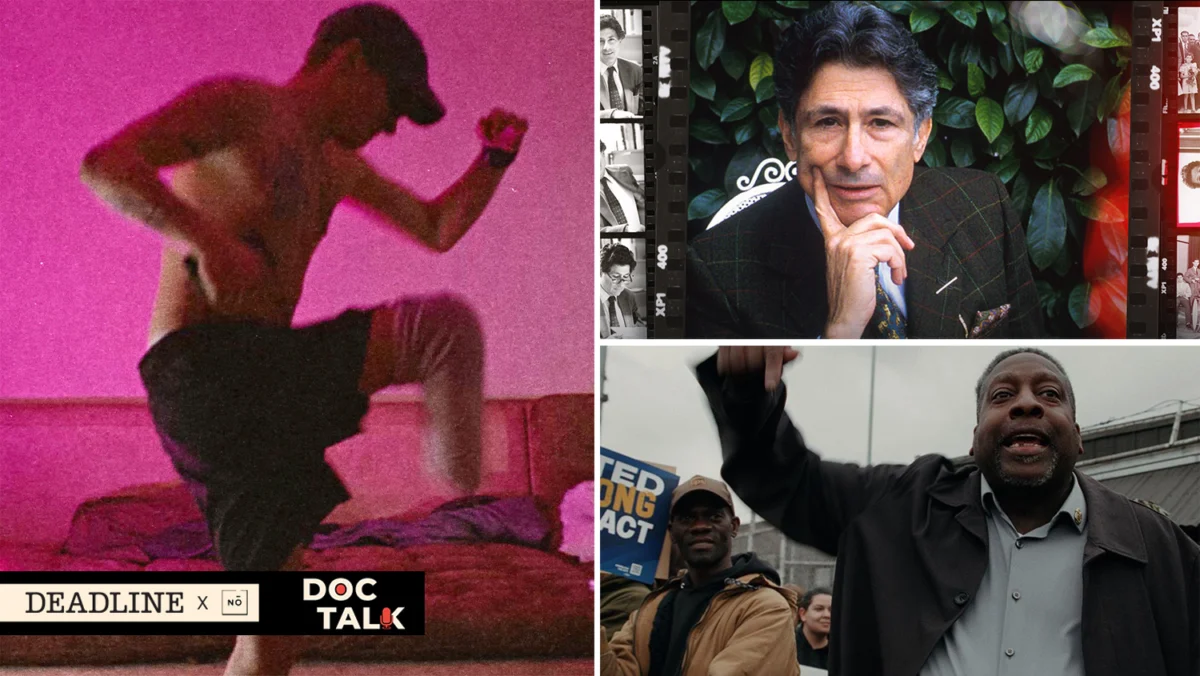
Navigating this whirlwind circuit, Deadline’s Doc Talk podcast team packed their recording gear and hit the ground running to capture the pulse of North America’s premier autumn showcases. Co-hosted by Oscar-winning filmmaker John Ridley (12 Years a Slave, Shirley) and Deadline’s Senior Documentary Editor Matt Carey, the latest episode of the show—produced in partnership with Ridley’s NŌ Studios—delves deep into the heart of contemporary non-fiction storytelling. Featuring exclusive interviews with master auteurs, rising independent talents, and festival executives, the new episode offers an unvarnished look at the triumphs, artistic evolutions, and systemic challenges defining the documentary landscape today.
Main Facts: A Global Circuit Shaped by Urgency and Resilience
The latest Doc Talk installment encapsulates a transitional moment for documentary cinema. Against a backdrop of shifting political tides, shrinking public media subsidies, and an increasingly competitive distribution market, non-fiction filmmakers continue to use their craft to bear witness to profound human struggles.
Key takeaways from the episode include:
- The Endurance of Working-Class Narratives: Two-time Academy Award-winning documentarian Barbara Kopple reflects on her half-century-long dedication to chronicling the American labor movement, tracing a direct line from her landmark 1976 masterwork Harlan County U.S.A. to her latest feature, Union Town.
- Art Amidst Atrocity: Director James Marcus Haney and executive producer Sean Penn bring attention to the psychological toll of the war in Ukraine through Black Sunflowers, exploring the ways young Ukrainians navigate a fractured reality through adrenaline-fueled subcultures.
- Historical Foresight and Mideast Realities: The world premiere of Edward Said: Between Worlds in Toronto shines a renewed light on the late Palestinian-American scholar’s intellectual legacy and his visionary advocacy for a secular, one-state democratic solution.
- The State of the Industry: Points North Institute leaders Elise McCave and Sean Flynn sound the alarm on shrinking public funding streams—particularly under evolving political administrations—while celebrating the grassroots triumphs nurtured by initiatives like the Dianne Weyermann Fellowship.
Chronology: Following the Fall Festival Circuit
The autumn film festival marathon operates as a meticulously timed relay race, where critically acclaimed projects debut on European shores before making their North American and regional splashes.
Venice and Toronto: The International Launchpads
The September festival onslaught effectively kicked off in Italy with the Venice Film Festival, where prestige documentaries compete alongside major fiction features for the prestigious Golden Lion. It was here that Barbara Kopple chose to debut Union Town, setting off a whirlwind international press tour.
From Venice, the circuit immediately transitioned stateside and northward. In Colorado, the exclusive Telluride Film Festival offered an intimate, high-altitude sanctuary for cinephiles and industry insiders. Simultaneously, the Toronto International Film Festival (TIFF) unspooled a massive slate of world premieres, serving as the ultimate commercial and critical litmus test for the fall season. It was in Toronto that James Marcus Haney’s Black Sunflowers and Maiken Baird’s Edward Said: Between Worlds made their highly anticipated global bows.
Camden: The Documentary Haven
As the frenzy in Toronto began to settle, the focus shifted entirely to the coast of Maine for the 21st annual Camden International Film Festival. Known as a vital incubator for the form, CIFF provided a specialized, community-driven space for non-fiction artists. For Kopple, Camden served as the stage for the film’s crucial U.S. premiere, anchoring her festival journey in a community deeply appreciative of independent storytelling.
Supporting Data and Creative Deep Dives: Behind the Projects
The Doc Talk episode unpacks the creative motivations and harrowing realities behind three major documentary features making waves on the 2025 circuit.
Barbara Kopple and Union Town
Five decades after taking home her first Oscar for Harlan County U.S.A.—the definitive chronicle of a bitter coal miners’ strike in Kentucky—Barbara Kopple remains as relentless as ever. In conversation with the Doc Talk team, Kopple discussed why stories about working-class Americans remain her enduring obsession.
"When you look at the dignity of labor, the fight for fair wages, and the structural inequities that working people face day in and day out, those are stories that demand to be told with absolute honesty," Kopple shared during her festival run.
Having premiered Union Town in Venice, hopped the Atlantic for its Canadian debut in Toronto, and finally brought it to the shores of Maine for its U.S. premiere, Kopple embodies the tireless stamina required to champion independent labor documentaries in the modern era.
James Marcus Haney, Sean Penn, and Black Sunflowers
Among the most visually striking and emotionally jarring entries at TIFF is Black Sunflowers, directed by James Marcus Haney and executive produced by Hollywood heavyweight Sean Penn. The documentary trains its lens on a demographic rarely highlighted in standard wartime reporting: young Ukrainian women whose lives have been upended by Russian aggression.
Rather than focusing solely on the frontline combat or geopolitical strategy, Haney’s film investigates the psychological aftermath of living without a foreseeable future. The documentary explores how youth, robbed of traditional milestones like education, stable careers, and homeownership, turn toward adrenaline-fueled coping mechanisms—ranging from illegal street racing to underground parties—as a desperate assertion of life amidst destruction.
Edward Said: Between Worlds
Another major talking point out of Toronto was the world premiere of Edward Said: Between Worlds. The feature-length documentary offers a comprehensive examination of the life and legacy of Edward Said, the influential Palestinian-American scholar, literary theorist, and political activist who reshaped post-colonial studies from his academic base at Columbia University.
Director Maiken Baird, producer Sarah Mowaswes, and consulting producer Najla Said (the late scholar’s daughter) joined the Doc Talk podcast to dissect Said’s profound impact. The film revisits Said’s late-in-life evolution, highlighting his tireless advocacy for a one-state solution—a visionary model proposing that Israelis and Palestinians could ultimately share a single, secular, democratic state characterized by equal rights and mutual coexistence. In an era marked by deep polarization in the Middle East, the film serves as both a historical retrospective and an urgent philosophical challenge.
Official Responses and Industry Insights: The State of CIFF and Public Media
Beyond individual films, the Doc Talk episode confronts the macro-economic and political pressures currently squeezing the documentary community. In Camden, Ridley and Carey sat down with the leadership team of the Points North Institute (PNI)—the nonprofit organization that produces CIFF—including Executive Director Elise McCave and Artistic Director Sean Flynn.
The Funding Crisis
McCave and Flynn addressed the mounting challenges facing the documentary field head-on. With the loss of vital public media funding exacerbated by political shifts during the second Trump administration, independent filmmakers and regional film institutions face unprecedented financial precarity.
"We are seeing a systemic contraction of institutional support right when we need it most," PNI leadership noted during their discussion. Public media has historically acted as a crucial safety net for risk-taking, investigative, and artistically daring non-fiction projects that commercial streamers routinely bypass. The erosion of these subsidies threatens to silence vital regional and marginalized voices.
Celebrating Grassroots Resilience
Despite these headwinds, PNI leadership emphasized reasons for optimism, pointing to the burgeoning success of independent success stories. A prime example highlighted on the podcast is To Hold a Mountain, a critically acclaimed documentary that triumphed at the Sundance Film Festival. The film’s trajectory was significantly buoyed by support from the Points North Institute’s Dianne Weyermann Fellowship—a prestigious program named in honor of the late Participant Media executive, who served as a passionate, lifelong champion of independent social-impact documentaries.
Implications: Navigating the Future of Non-Fiction Storytelling
The convergence of historical retrospectives like Kopple’s labor deep-dives, urgent wartime dispatches like Haney’s Black Sunflowers, and intellectual portraits like Edward Said: Between Worlds highlights the unmatched cultural utility of documentary film. These projects do not merely record history; they actively interrogate it, offering audiences a mirror to humanity’s most persistent struggles and highest aspirations.
However, the warnings issued by festival directors at Camden signal that the ecosystem producing these vital works is under severe strain. As traditional funding pillars crumble and the marketplace becomes increasingly consolidated around algorithm-driven content, the survival of independent non-fiction filmmaking relies heavily on grassroots incubators, targeted fellowships, and resilient nonprofit organizations like the Points North Institute.
For industry professionals, cinephiles, and aspiring filmmakers looking to understand where the medium is heading, the latest episode of Doc Talk serves as an indispensable roadmap.
To listen to the full episode featuring interviews with Barbara Kopple, James Marcus Haney, Maiken Baird, Elise McCave, and Sean Flynn, tune in above or stream the show on major podcast platforms, including Spotify, iHeart, and Apple Podcasts.