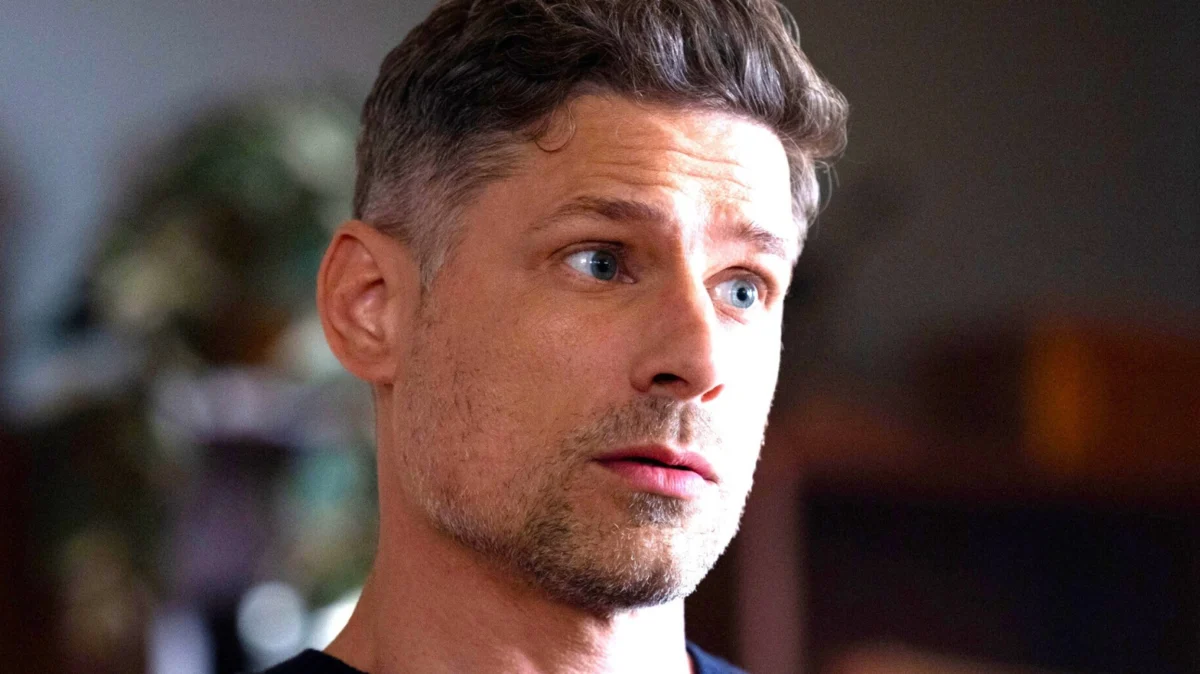
In the vast landscape of contemporary television, few actors have managed to bridge the gap between gritty post-apocalyptic drama and high-octane horror as effectively as Austin Abrams. While audiences currently recognize him for his high-stakes survival role in the 2026 Resident Evil adaptation, his journey into the heart of genre television began long before he was fending off Umbrella Corporation’s bio-weapons. Nearly a decade ago, Abrams cut his teeth on the most influential zombie franchise of the 21st century: AMC’s The Walking Dead. His tenure on the series as the volatile Ron Anderson serves as a fascinating case study in how early-career villainy can lay the groundwork for a long-standing Hollywood career.
Main Facts: The Intersection of Two Iconic Franchises
The connection between The Walking Dead and Resident Evil is more than just a shared affinity for the undead; it is a shared pedigree of talent. Austin Abrams, who now portrays a desperate, plucky courier navigating the nightmare of a viral outbreak in the 2026 Resident Evil series, first caught the public’s eye as a troubled teenager in the Alexandria Safe Zone.
The narrative arc of Ron Anderson in The Walking Dead remains one of the most divisive and memorable subplots of the series’ middle era. Spanning Seasons 5 and 6, Abrams’ performance captured the nuance of a child grappling with the loss of societal norms, the death of an abusive father, and the overwhelming resentment he harbored toward the show’s protagonist, Rick Grimes. While Resident Evil places Abrams in the role of a survivor attempting to maintain his morality, his time on The Walking Dead required him to embody the very antagonist forces that threaten a group’s cohesion from within.
Chronology: From Alexandria to the Brink of Collapse
To understand the trajectory of Austin Abrams, one must look at the timeline of his progression through the zombie subgenre.
The Alexandria Years (2014–2016)
Abrams joined the cast of The Walking Dead when the series was at the peak of its cultural dominance. His character, Ron, was introduced as a resident of the Alexandria Safe Zone. Initially appearing as a typical suburban teenager, Ron’s character quickly spiraled following the death of his father, Pete. The trauma, compounded by the presence of Rick Grimes—who represented both a protector and a usurper of his family’s previous social standing—turned Ron into a powder keg of teenage angst and genuine malice.
The culmination of this arc occurred in the landmark Season 6, Episode 9, titled "No Way Out." As the walls of Alexandria fell to a massive walker herd, Ron’s fractured mental state reached a breaking point. Following the death of his mother, Jessie, and his brother, Sam, Ron turned his weapon on Rick. The ensuing confrontation resulted in a permanent shift in the show’s visual landscape: a shot fired by a dying Ron struck Carl Grimes, costing the young protagonist his right eye.

The Resident Evil Era (2026–Present)
Fast forward ten years, and Abrams has shed the antagonistic skin of Ron Anderson for the more heroic, if equally beleaguered, protagonist of the new Resident Evil television series. The transition marks a maturation in his acting style. While Ron was driven by reactive emotion and trauma, his current character in Resident Evil is defined by grit and the tactical intelligence required to survive in a world where the monsters are not just human, but biological abominations.
Supporting Data: Fan Reception and Cultural Impact
The impact of a character like Ron Anderson is best measured by the longevity of the audience’s resentment. In the age of social media, character actions are often conflated with actor performance, a phenomenon Abrams has experienced firsthand.
The "Carl’s Eye" Legacy
Even years after his exit from the series, Abrams remains a lightning rod for The Walking Dead fans who have never forgiven him for the injury dealt to Carl Grimes. In interviews, Abrams has acknowledged the "hate" he occasionally receives from dedicated fans.
"I did have someone over there tell me that their boyfriend hated me for shooting Carl’s eye out," Abrams shared in a 2026 interview with USA Today. "But that’s like a once a year thing, I think. Yeah, I’m happy about that though. I’m like, you know, my character got to leave a mark."
This sentiment is echoed across digital forums such as Reddit, where long-time viewers still debate the necessity of Ron’s villainous arc. One user recently confessed to harboring a grudge against the "new Resident Evil actor," only to realize the source of their irritation was rooted in their attachment to the characters of The Walking Dead.
Commercial Success
Despite the residual friction with some segments of the fandom, Abrams’ career has thrived. The 2026 Resident Evil debut saw the highest opening weekend for the franchise in its history, signaling that audiences have moved past their "Ron Anderson" grievances to embrace Abrams as a leading man. The data suggests that his ability to portray complex, often unlikable characters has provided him with the range necessary to anchor a massive, high-budget production.

Official Responses and Actor Reflections
Austin Abrams has remained remarkably grounded regarding his transition from the "annoying kid" of Alexandria to the star of a global horror franchise. Rather than distancing himself from his past, he embraces the idea that a villainous role is, in many ways, a testament to the effectiveness of his performance.
In various industry roundtables, Abrams has emphasized that the writers of The Walking Dead provided him with a character who was a product of his environment. "Ron wasn’t born a villain," he has noted. "He was a boy who lost everything and didn’t have the tools to process that grief." This psychological grounding is something he has reportedly brought to his current role in Resident Evil, ensuring that even in the face of zombies and bio-terror, his character remains human and relatable.
Implications: The "Genre Actor" Pipeline
The career path of Austin Abrams highlights an interesting trend in Hollywood: the "Genre Actor Pipeline." Actors who spend their formative years on shows like The Walking Dead are often uniquely prepared for the rigors of modern franchise television. The experience of working with high-concept prosthetics, intense stunt choreography, and long-form narrative arcs provides a training ground that few other genres can offer.
The Value of Early Villainy
Abrams’ success also illustrates that playing a villain is often the most effective way for a young actor to demonstrate range. By playing a character as reviled as Ron Anderson, Abrams proved he could hold the screen against heavyweights like Andrew Lincoln and Danai Gurira. This "baptism by fire" is what has allowed him to step into the Resident Evil universe with the confidence of a veteran.
Looking Toward the Future
As Resident Evil continues to expand its narrative scope, the role of Abrams will likely become even more pivotal. His ability to elicit strong reactions from an audience—whether it be the frustration felt by Walking Dead fans or the admiration of Resident Evil viewers—suggests he is not just a participant in these universes, but a foundational element of them.
Ultimately, the story of Austin Abrams is one of evolution. He has successfully moved from the shadows of Alexandria to the front lines of a global, viral catastrophe. For fans who still harbor a grudge over the fate of Carl Grimes, it serves as a reminder: the best actors are the ones who make you feel something, even if that something is pure, unadulterated annoyance. As for Abrams, he seems content to let his body of work speak for itself, proving that in the world of television, the villains of yesterday often become the heroes of tomorrow.