For many marketers, the promise of generative AI has been undercut by the reality of the output. We have all seen the polished, high-fidelity demo reels—cinematic clips that look like million-dollar ad campaigns, generated in seconds. Yet, when the average marketing team attempts to replicate this, the results are often flat, inconsistent, or visually uncanny.
The gap between a viral AI demo and a functional marketing asset isn’t just about the software; it’s about the methodology. According to AI educator and content strategist Jerrod Lew, the biggest misconception in the industry is the belief that AI is a "single-button" solution. To produce professional-grade work, marketers must move away from ad-hoc prompting and toward structured, scalable workflows.
The Reality of AI Creative: Why "One-Click" Fails
The polished clips showcased in AI tool launch videos are rarely the product of a novice hitting "generate." They are the result of hours of iterative work by professionals with film backgrounds, creative teams, and a singular, well-defined vision.
AI tools, much like professional software suites such as Adobe Premiere Pro or After Effects, are not autonomous creators; they are force multipliers for human intent. Without a clear understanding of the brand story, target audience, and desired outcome, AI will simply output noise. However, for those who possess a clear creative vision but lack traditional technical mastery, these tools are transformative. They democratize production, allowing a solitary marketer to turn a written script or a basic product concept into high-quality visual content from a laptop.
Chronology of an AI Workflow
To move beyond inconsistent, "hallucinated" imagery, marketers must adopt a systematic, multi-stage production process. The following framework, refined by Lew, outlines how to transition from concept to final asset.
Phase 1: Establishing the Brand Foundation
Before interacting with any generative model, you must ground the AI in your brand’s reality. AI models are "blank slates" that will default to generic, often "soulless" aesthetics if not properly constrained.

Marketers should begin by consolidating existing assets—logos, color palettes, typography, and website screenshots—into a formal design system. For brands that lack a cohesive visual identity, tools like CoreDesigner can synthesize existing, scattered materials into a unified style guide. By providing the AI with a "north star" of what your brand looks like, you ensure that every image generated thereafter remains on-brand.
Phase 2: Building Reference Assets
Consistency is the primary challenge in AI video. To achieve it, you must treat your AI tools like a film crew. This requires two types of reference assets:
- Product Reference Sheets: Instead of relying on the AI to "invent" your product, create a composite image sheet. By uploading several angles of your product into tools like ChatGPT Images (2.0), you create a "master reference" that the model uses to maintain consistency across every subsequent scene.
- Human Character Sheets: Generating consistent human faces is the "holy grail" of AI video. Marketers should capture high-resolution photos of their subjects from multiple angles—front, profile, and back—and across a range of emotional expressions. These references prevent the "stretching" or distortion that occurs when a model is forced to guess what a human expression looks like.
Phase 3: The Storyboarding Pivot
One of the most critical inefficiencies in modern AI marketing is jumping straight to video. Video generation is computationally expensive and slow. Instead, marketers should use a "Storyboard First" approach. By generating 100 images to test composition, lighting, and pacing, you can finalize your creative direction at a fraction of the cost. Once the images are perfected, they serve as the "seeds" for the video model, ensuring the final animation is exactly what you planned.
Supporting Tools and Ecosystems
The AI landscape changes weekly, making it dangerous to tether a budget to a single subscription. The most successful marketers are leveraging "Platform Aggregators" to maintain agility.
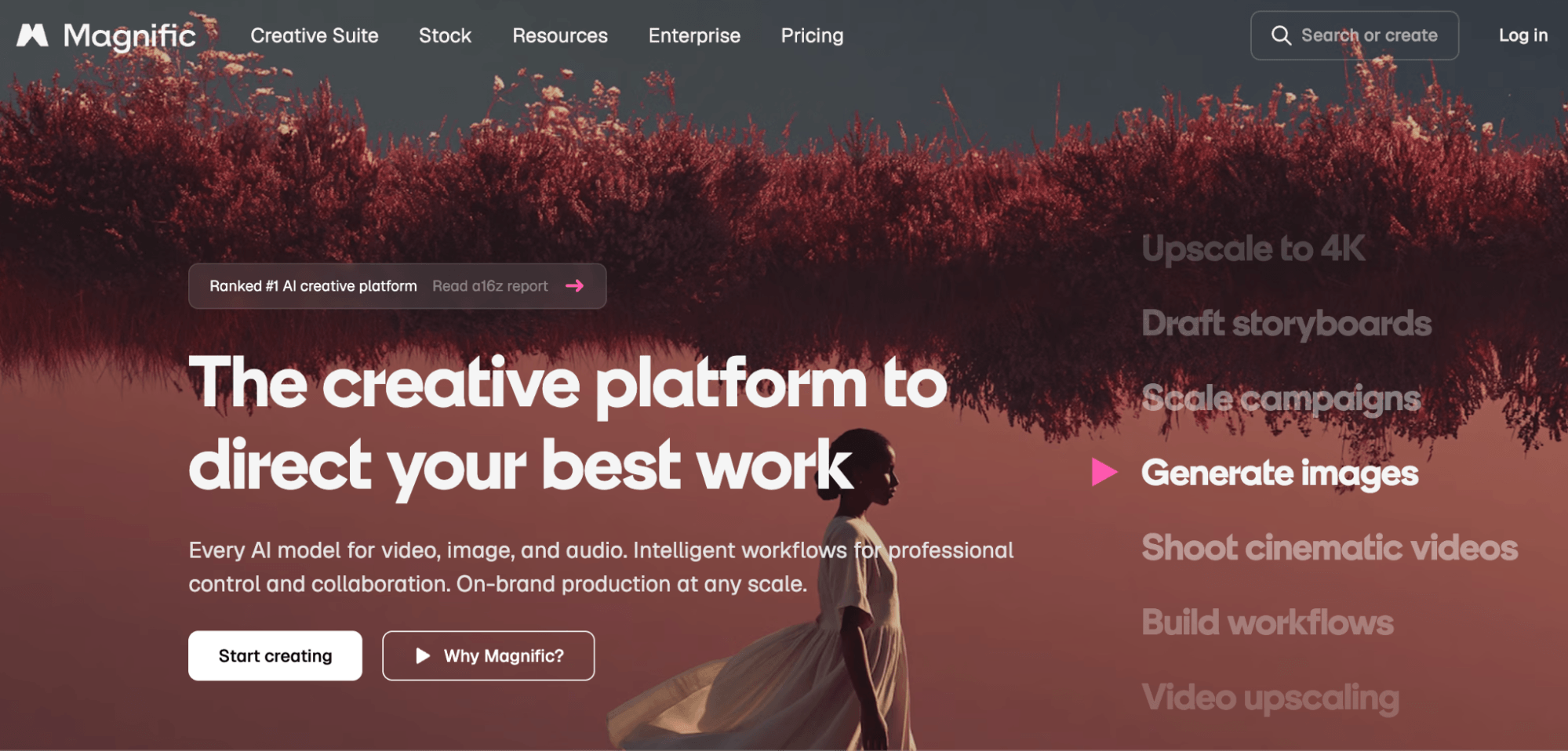
- Magnific: This platform serves as a central hub, aggregating various image and video models under a single interface. Its "Spaces" feature allows for node-based workflow automation, where users can chain image generation, text-prompting, and audio-syncing into a bulk production pipeline.
- Google Omni Flash & Flow: Recently refreshed at Google I/O, the Flow environment is now project-based, allowing for the organization of brand guidelines and character references. Omni Flash stands out as a powerful video-editing model capable of performing "targeted edits"—removing specific objects or altering styles within an existing video without requiring a full re-render.
- Seedance 2.0: Currently ranking as a top-tier video model, Seedance 2.0 excels by accepting text, images, and audio as simultaneous inputs, allowing for the generation of audio-synced, production-ready video clips.
- Kling 3.0: Widely recognized for its ability to generate realistic human movement from reference photos, Kling remains the gold standard for maintaining character consistency across 1080p and 4K exports.
Official Perspectives: The Role of the Creative Director
Industry experts, including those featured on the AI Explored podcast, emphasize that the role of the marketer is shifting from "doer" to "creative director."
When using advanced models like Omni Flash, the interaction is no longer about fine-tuning technical parameters; it is about providing plain-language instructions to an intelligent agent. The AI acts as the technician, while the marketer provides the strategic oversight. This shift is not about replacing human creativity but about removing the technical barriers that previously prevented marketers from executing complex visual stories.
Implications for the Future of Marketing
The integration of AI into marketing workflows has profound implications for brand scalability.
- Iterative Speed: The ability to run 30+ variations of a YouTube thumbnail or an ad campaign simultaneously—and then identify the top-performing assets—allows for a level of A/B testing that was previously impossible.
- Cost Efficiency: By utilizing reference sheets and node-based workflows, teams can reduce the need for external production agencies for routine content, reserving budget for truly high-stakes creative projects.
- The "Human" Premium: As AI content becomes ubiquitous, the value of the "human element"—the unique story, the authentic voice, and the strategic brand vision—will increase. AI is a tool to articulate that vision, not a replacement for it.
Conclusion
Building a powerful AI image and video workflow is not a technical endeavor; it is a strategic one. It requires the discipline to establish a brand foundation, the patience to curate reference assets, and the foresight to use AI as a tool for rapid iteration rather than a magic wand. By moving away from the "one-button" myth and embracing a professionalized, system-based approach, marketers can finally bridge the gap between demo-reel potential and real-world results.
As Jerrod Lew notes, the goal is not to have the AI do the work for you, but to provide the structure that allows the AI to amplify your brand’s unique message at scale. Whether you are building YouTube thumbnails or long-form video advertisements, the principles remain the same: define the vision, prepare your references, and let the tools handle the heavy lifting.