The entertainment landscape is mourning a titan. Sir Patrick Stewart, the classically trained Shakespearean actor whose gravitas and intellect redefined science fiction television, passed away earlier this week at the age of 86. For generations of viewers, Stewart was not merely an actor; he was the embodiment of leadership, empathy, and moral fortitude as Captain Jean-Luc Picard of the USS Enterprise-D.
As the global community reflects on his monumental contributions to the arts, the "Star Trek" fandom—known as "Trekkies"—is perhaps feeling the void most acutely. While the franchise has seen many captains, Stewart’s tenure, spanning seven seasons of Star Trek: The Next Generation (TNG), four feature films, and the recent Paramount+ series Star Trek: Picard, remains the gold standard for character-driven storytelling in space.
A Legacy of Authority and Elegance
When Stewart was cast as Jean-Luc Picard in 1987, the announcement was met with skepticism. Audiences were still deeply attached to William Shatner’s Captain James T. Kirk, whose swashbuckling, action-oriented leadership style had become the template for the series. Critics wondered if a Shakespearean stage veteran could handle the rigors of a syndicated sci-fi show.

Stewart silenced those doubts with a single scene. He brought a profound sense of wisdom and understated elegance to the captain’s chair. His voice—a rich, booming baritone—commanded respect without ever needing to shout. Under his stewardship, Picard became a diplomat first and a warrior second, a man who preferred a well-reasoned argument to a phaser fight. Over the decades, Stewart not only validated the character but elevated the entire genre, proving that science fiction could serve as a vehicle for profound philosophical inquiry.
Chronology of a Career: The Evolution of Picard
Stewart’s portrayal of Picard was not static; it was a decades-long evolution. In the early seasons of TNG, Picard was a rigid, sometimes distant administrator. As the series progressed, Stewart softened the edges, revealing a man who cherished his crew as family while grappling with the loneliness of command.
By the time he reprised the role in Star Trek: Picard, Stewart was interested in exploring the twilight of a hero’s life. He allowed fans to see a more vulnerable, aged, and regretful version of the man we had spent years admiring. This final chapter cemented his legacy as an actor who was never afraid to deconstruct his most iconic work to find new, human truths.

Ranking the Definitive Performances: The Top 5
In honor of his passing, we look back at the five episodes that best showcase the range, depth, and sheer acting power of Sir Patrick Stewart.
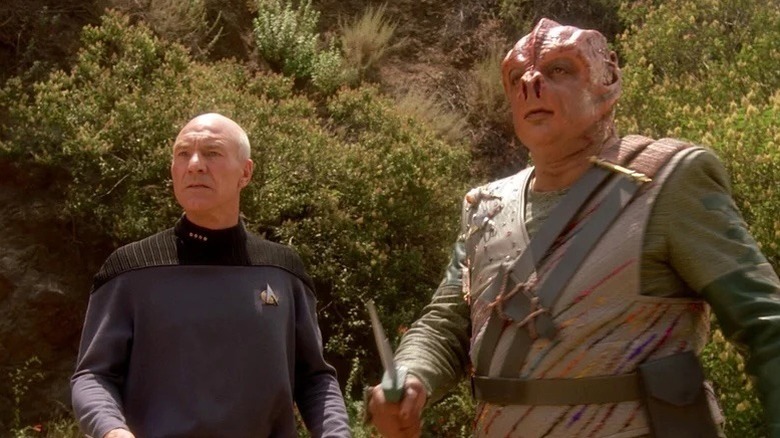
5. "Darmok" (Season 5, Episode 2)
In "Darmok," the Enterprise encounters the Tamarians, a race whose language is built entirely on metaphor and historical allegory. Stranded on a planet with a Tamarian captain, Picard is forced into a survival situation where communication is impossible. The episode is a masterclass in non-verbal acting. Stewart portrays a man pushed to the brink of frustration, eventually finding the breakthrough by reciting the Epic of Gilgamesh. It was a beautiful tribute to the power of storytelling—a theme that resonated throughout Stewart’s own life.
4. "Chain of Command" (Season 6, Episodes 10 & 11)
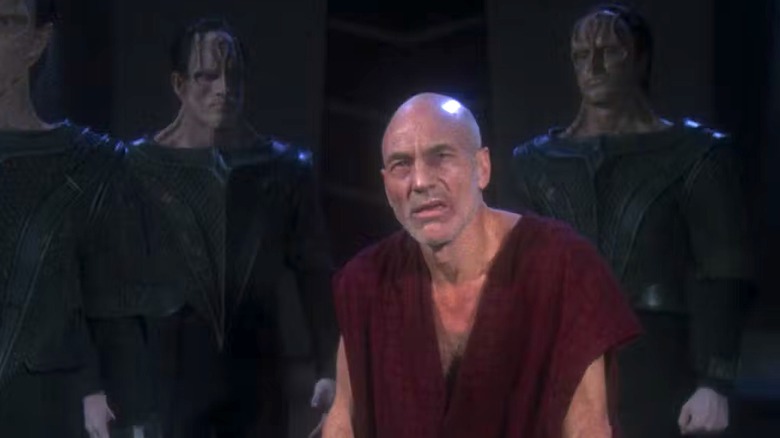
Perhaps the most physically and emotionally grueling performance of his career, "Chain of Command" sees Picard captured and tortured by the Cardassians. Tasked with breaking Picard’s will, a cold interrogator tries to force him to admit to seeing five lights when there are only four. Stewart’s performance is harrowing; he conveys a broken, starved, yet mentally invincible man. The scene where he shouts, "There are four lights!" remains one of the most powerful moments in television history, representing the absolute integrity of the human spirit.
3. "I, Borg" (Season 5, Episode 23)
The trauma of Picard’s assimilation into the Borg collective—chronicled in the iconic "The Best of Both Worlds"—lingered throughout the series. In "I, Borg," the crew rescues a lone drone, Hugh. While the crew treats him with curiosity, Picard sees only the monster that destroyed his life. Stewart’s performance here is complex; he allows the viewer to see the seething rage and PTSD lurking behind the Captain’s mask. His eventual transition from vengeance to empathy was a critical moment for the character’s development.
2. "All Good Things…" (Season 7, Episodes 23 & 24)
As the series finale, this episode was a bittersweet goodbye. Playing three versions of Picard across different timelines, Stewart navigated the complexity of a man meeting his younger self and his future, aging self. The final scene, in which Picard finally joins his senior staff for a game of poker—a simple gesture he had avoided for years—is a masterclass in subtlety. His wistful delivery of the line, "I should have done this a long time ago," served as a poignant farewell to the audience.
1. "The Inner Light" (Season 5, Episode 25)
At the pinnacle of his Star Trek work sits "The Inner Light." In this episode, Picard is struck by a probe and lives an entire lifetime on a dying planet in the span of what, to the crew, is only 25 minutes. Stewart is tasked with aging forty years, falling in love, raising a family, and facing the extinction of a culture. He doesn’t play Picard here; he plays Kamin, a simple, kind, and eventually heartbroken man. The final shot of Picard, alone in his quarters, playing a flute he learned to play in a dream, is the definitive image of his tenure. It was a profound exploration of memory, loss, and the beauty of a life lived.
Official Responses and Industry Impact
The industry response to Stewart’s death has been universal in its praise. Paramount+ released a statement calling Stewart "a guiding light of the franchise and a cornerstone of the television landscape." Co-stars from The Next Generation have shared touching tributes, with many noting that Stewart’s discipline on set set the tone for the entire production.
"He was the standard," remarked one former writer for the series. "You didn’t just write lines for Patrick Stewart; you wrote music. You knew that whatever you put on the page, he would elevate it to something Shakespearean."
Implications for the Future of Science Fiction
Sir Patrick Stewart’s passing leaves a massive void, but it also serves as a catalyst for a re-evaluation of the role of the "Lead" in genre television. He proved that audiences do not require constant explosions to stay engaged; they require a character they can trust, a leader who questions his own morality, and a voice that speaks truth to power.
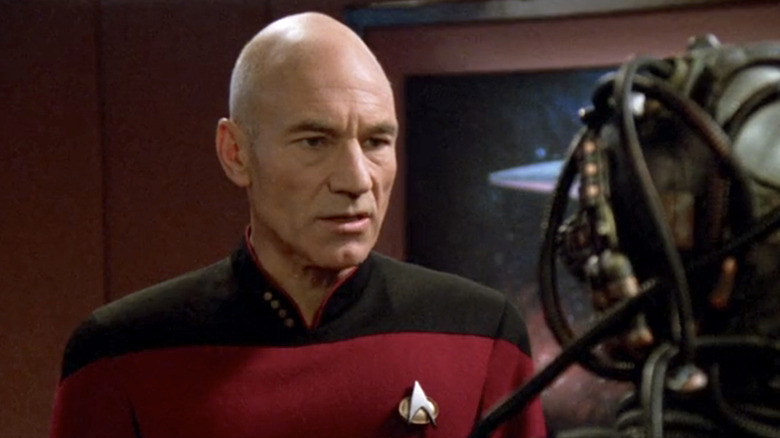
As the Star Trek franchise moves forward, the "Picard standard" will remain the benchmark. Whether in the form of future spinoffs or the preservation of his legacy on streaming platforms, the work of Sir Patrick Stewart will continue to inspire new generations of actors and writers.
He taught us that the final frontier isn’t just about the stars in the sky—it’s about the depth of the human heart. While he may have left the bridge, his legacy is firmly entrenched in the fabric of popular culture. We, the viewers, are the beneficiaries of his forty years of memories, and for that, we remain forever grateful.
What are your favorite memories of Sir Patrick Stewart’s Jean-Luc Picard? Share your thoughts in the comments section below.