WASHINGTON — Artificial intelligence (AI) has rapidly transformed from a niche computer science concept into a dominant global force, steering everything from labor markets to geopolitical strategies. However, a comprehensive new study reveals that humanity’s familiarity with this technology is deeply fractured. According to an extensive international survey conducted by the Pew Research Center, while a majority of adults across dozens of countries possess at least passing awareness of AI, the depth of that knowledge varies wildly depending on geographic wealth, age, education level, and gender.
The findings are derived from a massive polling effort capturing the views of 42,151 adults across 36 countries between February 8 and May 13, 2026. Augmented by specialized domestic polling in the United States, the research provides one of the most granular pictures to date of how the global public perceives the dawn of the AI era—and who is being left behind in the conversation.
Main Facts: The Great Global Disconnect
The Pew Research Center study highlights a central paradox of the digital age: while AI tools like generative chatbots and automated decision-making systems are deployed globally via borderless cloud infrastructure, human awareness of these tools is strictly tethered to socioeconomic realities.
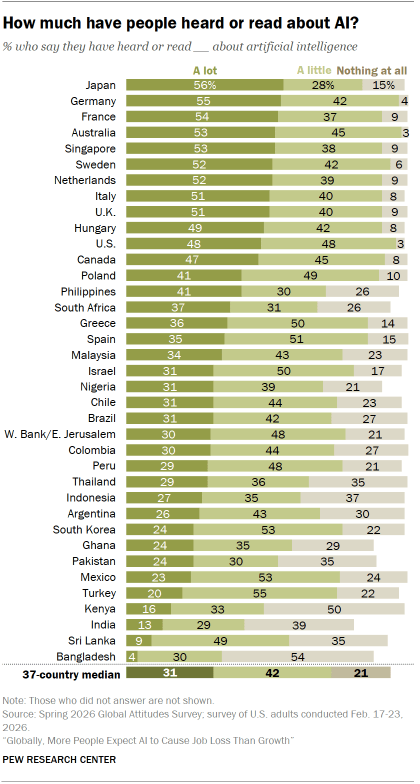
At the highest end of the spectrum, nations with advanced technological infrastructure and high gross domestic products (GDP) per capita report robust familiarity with AI. More than half of all adults in countries like Japan and Germany report having heard or read a lot about artificial intelligence. Conversely, in developing economies such as Sri Lanka and Bangladesh, that figure plummets to roughly one in ten—or significantly lower.
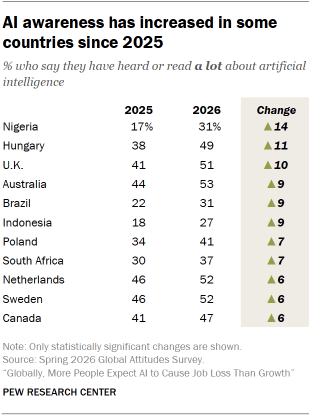
This disparity is not merely a snapshot of current conditions; it represents an accelerating trend. In 11 of the 25 nations where comparative longitudinal data was available from the previous year, public awareness surged. Nigeria saw a remarkable 14-percentage-point jump in the share of citizens reporting deep familiarity with AI, followed closely by Hungary (+11 points) and the United Kingdom (+10 points). In the United States, public awareness has nearly doubled since the Pew Research Center first began tracking the metric in 2022.
Yet, despite this upward trajectory, stark internal divides persist within nearly every society surveyed. Demographics such as age, formal education, household income, and gender create profound canyons in who understands the technology shaping the future of work and society.
Chronology: Tracing the Rise of Global AI Consciousness
To understand the current landscape of AI awareness, it is necessary to examine how public perception has evolved over recent years, transitioning from academic curiosity to mainstream ubiquity.
- Late 2022: Following the public release of breakthrough generative AI models, the Pew Research Center initiates baseline tracking in the United States to measure how American adults perceive chatbots, smart devices, and automated systems. At this stage, deep familiarity with AI remains largely confined to tech enthusiasts, industry insiders, and academic circles.
- 2023–2024: As commercial AI products flood consumer markets—integrating into search engines, creative software, and workplace productivity suites—public discourse intensifies. International polling begins to capture a fractured global response, prompting broader comparative studies across high- and middle-income countries.
- 2025: The Pew Research Center conducts a 25-country international survey, establishing a baseline for global AI awareness. The data reveals that while urban centers in wealthy nations are saturated with AI news, rural and developing regions remain largely detached from the conversation.
- February – May 2026: Expanding its scope to 42,151 respondents across 36 countries, researchers execute the most comprehensive global survey on AI views to date. Fieldwork captures shifting dynamics, registering significant jumps in awareness across diverse regions, from the UK and Hungary to emerging markets like Nigeria.
- February and June 2026: In the United States, two major waves of the American Trends Panel (surveying 5,119 adults in February and 3,488 in June) confirm that American familiarity with AI continues its sharp upward trajectory, led predominantly by younger demographics.
- September 2026: The Pew Research Center officially publishes its consolidated global findings, releasing comprehensive data sets detailing how age, education, gender, and national wealth dictate humanity’s relationship with artificial intelligence.
Supporting Data: Wealth, Age, Education, and Gender Divides
The empirical data gathered across the 36 surveyed nations provides undeniable proof that systemic inequalities translate directly into technological literacy.
1. The GDP Correlation
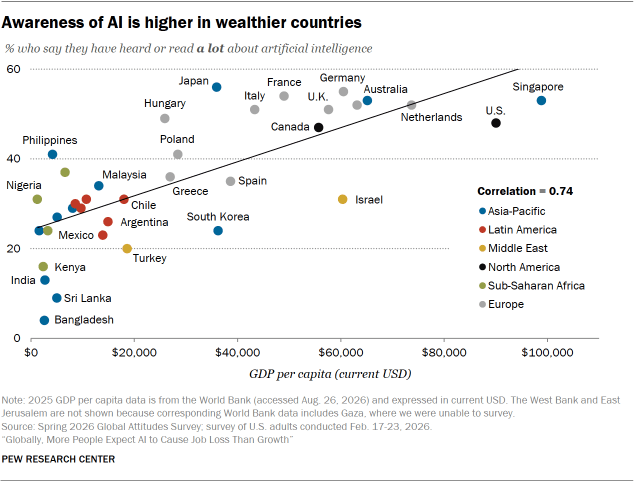
National wealth serves as one of the strongest predictors of AI awareness. The dot plots and comparative metrics from the study highlight a linear relationship between a country’s GDP per capita and the proportion of its citizens who are well-informed about AI.
- Singapore: Boasting a GDP per capita approaching $100,000, Singapore records 53% of adults who have heard or read a lot about AI.
- Bangladesh: With a GDP per capita hovering around $2,600, only 4% of adults report a similar depth of awareness.
. 2. The Generational Chasm
Age is perhaps the most uniform divider identified in the study. In nearly every country surveyed, younger adults dramatically outpace older generations in their self-reported familiarity with AI.
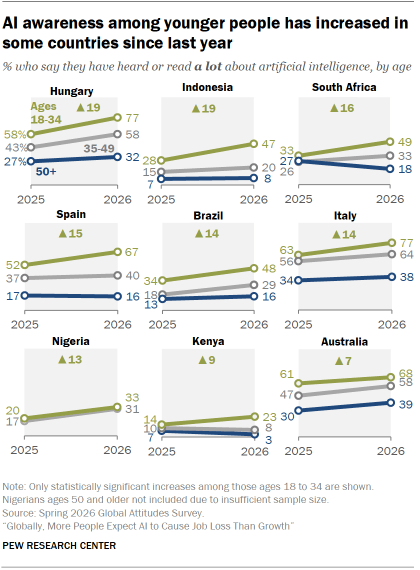
- In nations such as Chile, Greece, the Philippines, South Korea, and Spain, a distinct majority of adults under the age of 35 report hearing a lot about AI.
- By contrast, among adults aged 50 and older in those same countries, that figure drops to roughly one in five or lower.
- This age gap is widening. In Hungary and Indonesia, awareness among young people spiked by 19 percentage points over the previous year, while rates among those 50 and older remained completely stagnant, exacerbating the generational divide. A nearly identical trend has played out in the United States since 2022.
3. Education and Household Income
Formal education and personal wealth act as internal accelerators for technological literacy.
- Education: Across all 36 countries, individuals with higher levels of formal education are consistently more likely to report deep familiarity with AI than those with less education.
- Household Income: Financial security breeds exposure. Higher-income earners are twice as likely as lower-income earners to report substantial knowledge of AI in multiple nations. For example, in Spain, 50% of higher-income adults have heard a lot about AI compared to just 25% of lower-income adults. A matching 53% versus 26% split occurs in the Philippines.
4. The Gender Gap
While less universal than the age or income divides, gender discrepancies remain noticeable. In approximately half of the surveyed countries, men are statistically more likely than women to report having heard a lot about artificial intelligence. Furthermore, in several regions, women are disproportionately more likely to state that they know nothing at all about the technology, pointing to potential disparities in tech-sector outreach and educational pipeline accessibility.
Official Responses and Expert Analysis
The release of the Pew Research Center data has triggered widespread discussion among international policymakers, sociologists, and technology ethicists. Governments and multilateral organizations are increasingly forced to confront what experts are beginning to term the "AI Literacy Gap."
Speaking on the implications of the study, labor economists and international development experts have emphasized that awareness is the foundational prerequisite for adaptation. "You cannot regulate, utilize, or protect yourself against a technology you do not understand," noted one digital policy analyst reviewing the global data. "When we see developing nations or older demographics lagging far behind in baseline awareness, we are looking at the embryonic stages of a much larger economic and societal disadvantage."
Education ministers in several European and Asian countries have responded to similar internal data by proposing curriculum overhauls aimed at democratizing AI literacy. In countries where the youth-versus-elderly awareness gap is most pronounced, civil society groups have launched grassroots digital literacy campaigns targeting senior citizens and rural workers, attempting to bridge the chasm before automated labor shifts take permanent effect.
Meanwhile, representatives from technology sector coalitions have acknowledged the findings, noting that developers must do more to ensure that AI tools and educational resources transcend language barriers, income brackets, and regional economic divides.
Implications: What the Global AI Divide Means for the Future
The ramifications of Pew Research Center’s 2026 findings stretch far beyond simple trivia about who reads the news. They signal profound challenges for the future of global equity, labor markets, and democratic governance.
Economic Disruption and Job Displacement
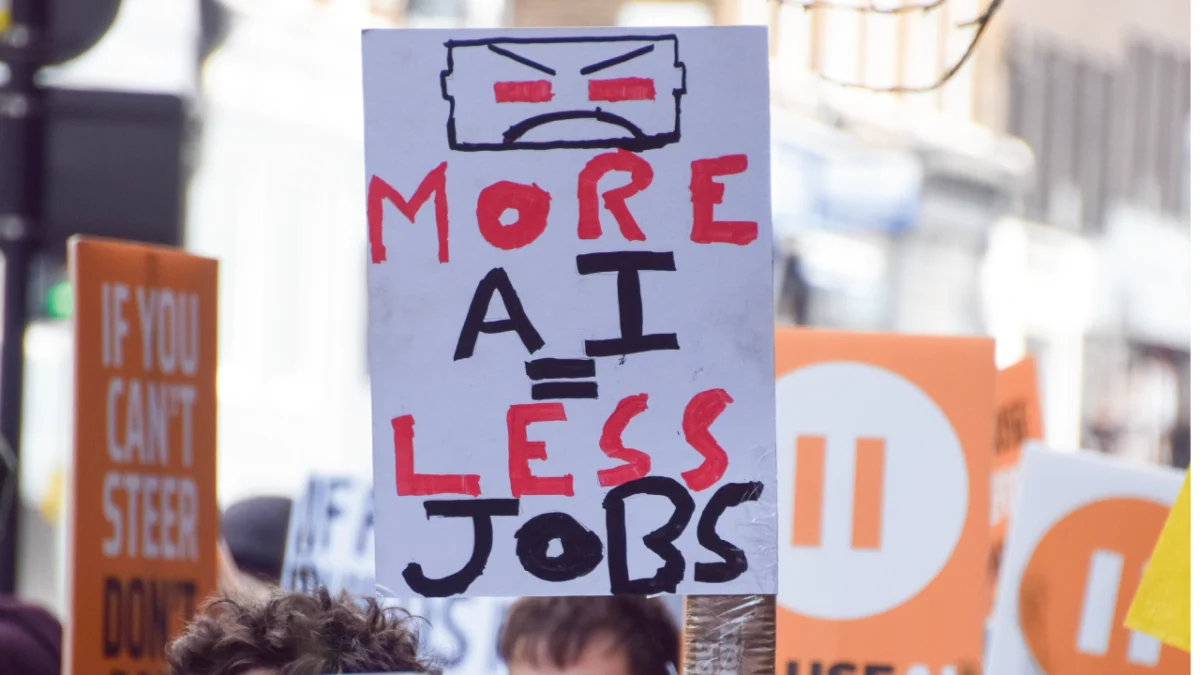
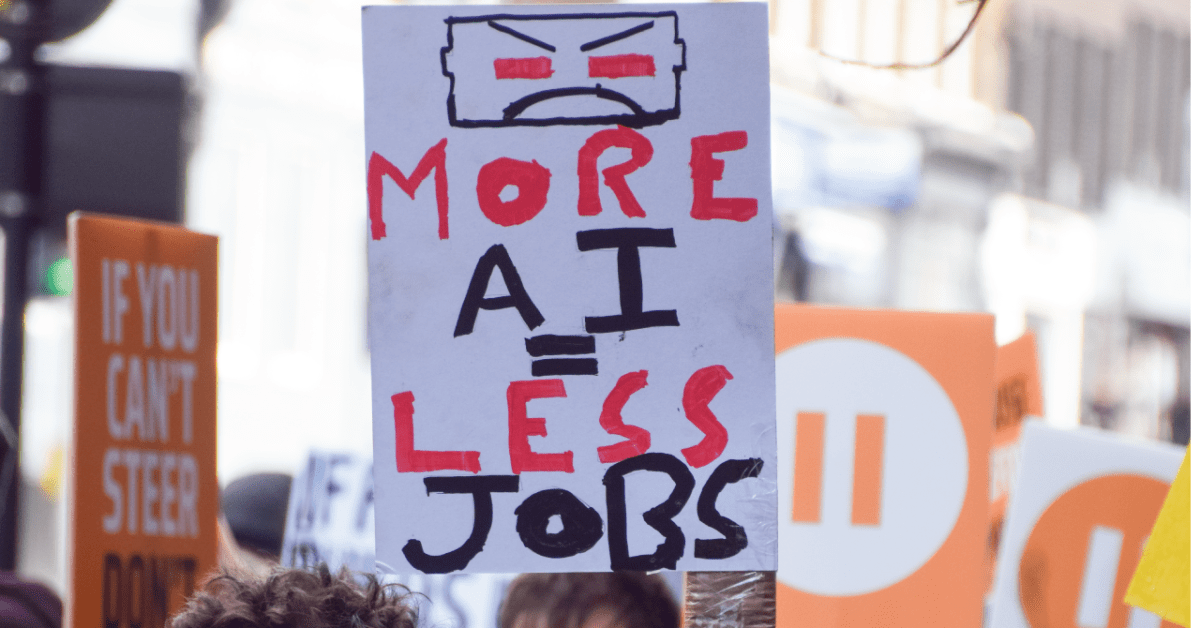
Separate analyses tied to this global study indicate that anxiety regarding AI-driven job loss is pervasive, particularly in high-income countries. However, if awareness is heavily concentrated among the wealthy, the young, and the highly educated, lower-income and older workers may find themselves blindsided by workforce transformations. Without adequate preparation or baseline understanding of how automated systems impact their specific industries, vulnerable populations risk bearing the brunt of economic restructuring without the tools to pivot.
The Widening Digital Divide
Historically, the digital divide was measured by access to hardware—such as computers, smartphones, and reliable broadband internet. The 2026 data suggests that a new cognitive digital divide is forming: the gap between those who understand the conceptual mechanics and societal implications of artificial intelligence and those who remain oblivious to its reach. As AI systems begin to govern credit scoring, healthcare diagnostics, legal frameworks, and informational landscapes, a public that is largely unaware of these mechanisms cannot effectively advocate for its own interests.
Policy and Governance Challenges
For policymakers aiming to establish guardrails around algorithmic bias, data privacy, and intellectual property, public awareness is a critical metric. In democracies, regulatory momentum relies heavily on public pressure and voter understanding. If major segments of the population—particularly older voters or those in developing economies—feel alienated from the technological lexicon, creating equitable, globally cohesive safety standards becomes nearly impossible.
Ultimately, the Pew Research Center’s comprehensive mapping of global AI views serves as both a warning and a roadmap. As artificial intelligence continues its relentless integration into the fabric of daily life, closing the awareness gap between the wealthy and the marginalized, the young and the old, will be one of the defining socioeconomic challenges of the mid-21st century.