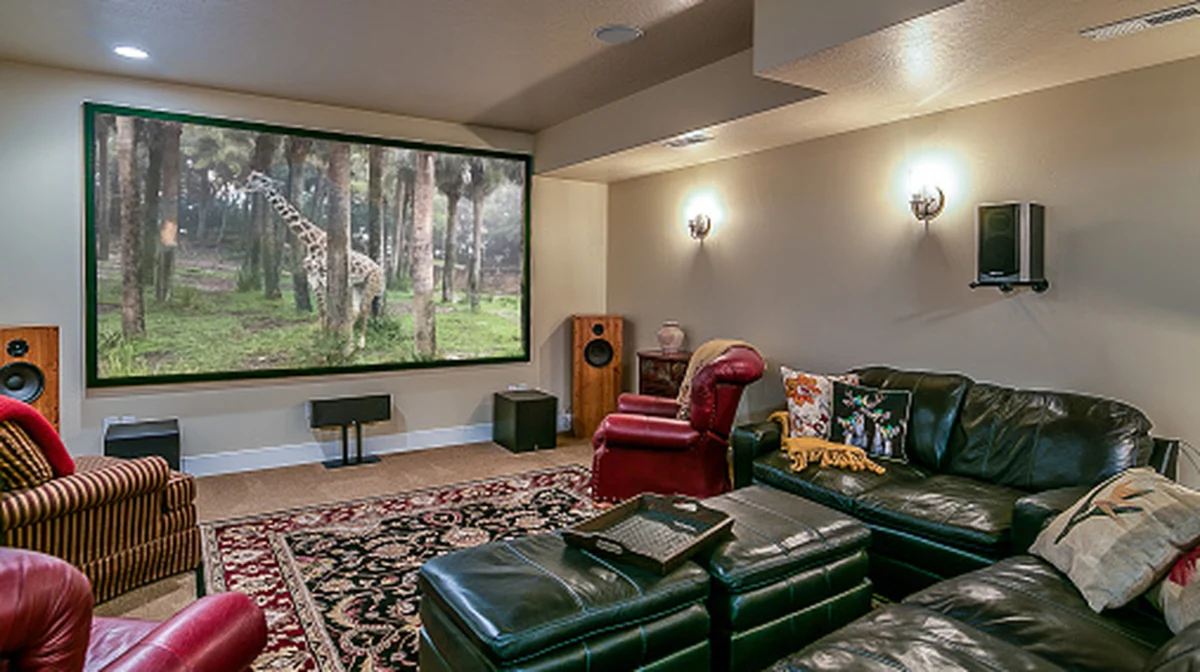
Building a home theater system is often viewed as a pursuit of hardware: the largest TV, the most powerful amplifier, or the most aesthetically pleasing speakers. Yet, even the most expensive audio equipment can sound underwhelming if the physics of the room are ignored. One of the most common pitfalls in home audio setup is the incorrect vertical positioning of speakers. As the old adage in acoustics goes, "The room is the most important component of your audio system."
Understanding the relationship between speaker height, sound dispersion, and your seating position is the difference between a muddy, confused soundstage and a crystalline, immersive cinematic experience.
The Physics of Directionality: Why Height Matters
To understand why speaker height is critical, one must first understand how sound waves behave. High-frequency sounds—the crisp snap of a snare drum, the sibilance in human dialogue, or the shimmering detail of a violin—are highly directional. Unlike low-frequency bass waves, which are omnidirectional and wrap around furniture, high-frequency sounds behave more like a beam of light.
When your primary front, left, and center channel speakers are mounted too high, they fire over your head. While you will still hear the sound, you are missing the "on-axis" performance. The tweeter, which handles these high frequencies, is designed to be aimed directly at the listener’s ear level. When the speaker is elevated, you are listening to "off-axis" sound, which is inherently muted, less detailed, and lacks the intended imaging. This results in dialogue that sounds "distant" or "hollow," as the clarity of the consonants is lost to the ceiling and upper walls before reaching your ears.
Chronology of an Audio Setup: From Unboxing to Calibration
Setting up an audio system is not a linear process; it is an iterative cycle of placement, testing, and adjustment.
- Room Analysis: Before unboxing, assess the room. Is it a perfect rectangle, or does it have alcoves? Identify the primary listening position (the "sweet spot").
- Rough Positioning: Place your front-stage speakers according to the standard equilateral triangle formation.
- Height Calibration: Ensure the tweeters of your front and center channels are aligned with your seated ear level. If your center channel is housed in a media console beneath the television, do not leave it flat if it is firing at your shins; tilt it upward toward the listener.
- The 38 Percent Rule: Once speakers are level, calculate the seating distance. Position your primary seat at 38 percent of the room’s total length (measured from the front wall) to mitigate standing waves.
- Refinement: Play familiar high-fidelity content. Listen specifically for the "presence" of the dialogue. If it feels detached, adjust the toe-in (the angle toward the center) and verify the height once more.
Role-Based Placement: A Nuanced Approach
Not all speakers are created equal, and their roles dictate their optimal placement.
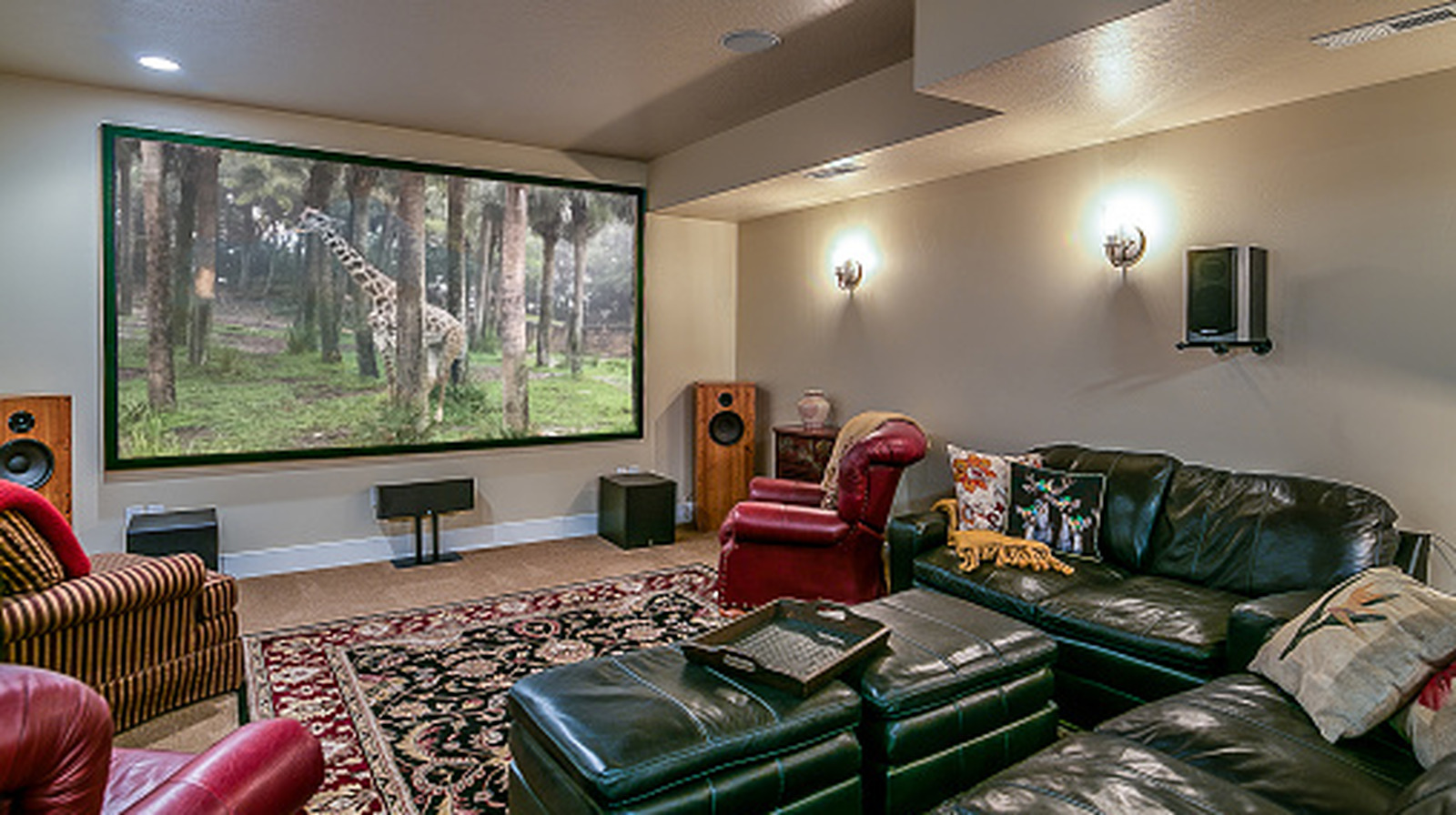
Front and Center Channels
These are the anchors of your system. They handle the vast majority of the dialogue and primary musical action. Because they must recreate a "phantom center" (the illusion that sound is coming from the screen rather than the speakers), they must be matched in height. If your center channel is significantly lower than your left and right speakers, the sound will appear to "dip" as objects move across the screen.
Surround Speakers: The Flexibility Factor
Unlike the front stage, surround speakers—which handle ambient sound and rear-channel effects—are more forgiving. They can be placed 2 to 3 feet above seated ear level. This elevation helps diffuse the sound, preventing a single speaker from drawing too much attention to itself. However, there is a ceiling to this: mount them too high, and they will compete with your overhead (Atmos) speakers, leading to a blurred, vertical smear of sound.
The Subwoofer Exception
The subwoofer is the rebel of the audio world. Because it produces long, low-frequency waves, it is effectively invisible to the "height rule." You can place it on the floor, tucked behind a sofa, or in a corner (though corner placement can cause a significant "boom" due to room gain). The most important factor for a subwoofer is not height, but its location relative to room modes—the standing waves that can make bass sound "muddy" or completely silent in certain spots.
The 38 Percent and 83 Percent Rules: Mathematical Foundations
For those who want to move beyond "trial and error," acoustic engineering provides two vital heuristics: the 38 Percent Rule and the 83 Percent Rule.
The 38 Percent Rule: This rule dictates the optimal listening position. In a rectangular room, the primary listening seat should be placed at approximately 38 percent of the room’s length away from the front wall. This specific percentage is chosen because it avoids the most severe bass peaks and nulls caused by room resonance. Sitting exactly in the center of a room is often the worst possible location, as the bass response will likely be thin or hollow.
The 83 Percent Rule: Once the listening seat is established, the 83 percent rule helps determine the spread of the front speakers. The distance between the left and right speakers should be roughly 83 percent of the distance from the listener to the midpoint between the speakers. This ensures a wide, expansive soundstage that doesn’t collapse into a narrow, monophonic strip.
Implications for the Modern Home Theater
The implication of these rules is clear: home theater is an architectural commitment. Following these guidelines often requires compromises in room aesthetics. It might mean mounting a TV slightly higher than a fireplace mantle, or choosing a shorter, more specialized media console to keep the center channel at the correct height.
However, the payoff is substantial. When speakers are correctly aligned, the "veil" is lifted from the audio. You will notice subtle background details—the rustle of a jacket, the specific echo of a room in a movie scene, the breath before a singer starts a note—that were previously masked by poor dispersion.
Expert Consensus and Future Trends
Audio engineers and acoustic designers largely agree that while digital room correction software (like Dirac Live or Audyssey) can compensate for some placement errors, it cannot fix the fundamental physics of off-axis listening. Software can equalize frequency response, but it cannot restore the timing and directional accuracy of a speaker that is physically misaligned.
As we move toward more advanced object-based audio formats like Dolby Atmos and DTS:X, the importance of physical placement is only increasing. These systems rely on precise, discrete sound locations. If your base layer of speakers (the front, center, and surrounds) is incorrectly positioned, the overhead effects will never integrate properly, leaving you with a fragmented, unconvincing sound field.
Conclusion: Achieving Sonic Perfection
There is no "perfect" room, but there is an "optimized" room. By prioritizing ear-level placement for high-frequency drivers, adhering to the 38 percent rule for seating, and respecting the different roles of your surround and bass components, you can elevate your home theater from a collection of electronics into a genuine acoustic environment.
Do not be afraid to move your furniture, experiment with speaker stands, or even mount speakers on the wall to achieve the correct height. The physics of sound are unforgiving, but the rewards for those who respect them are immense: a clearer, deeper, and more emotionally resonant listening experience that brings the magic of the cinema directly into your living room.