In an era defined by volatile communication environments, the intersection of institutional power, corporate transparency, and consumer behavior has reached a fever pitch. This week’s PR landscape offers a masterclass in how organizations—whether they are government bodies or multinational corporations—navigate the fragile terrain of public perception. From the constitutional tug-of-war between the White House and the press to DoorDash’s unprecedented admission of fault, and the shifting economic realities of the holiday shopping season, these stories underscore a singular truth: in the digital age, credibility is the most precious, and most easily squandered, asset.
I. The White House Press Access Crisis: A Constitutional Standoff
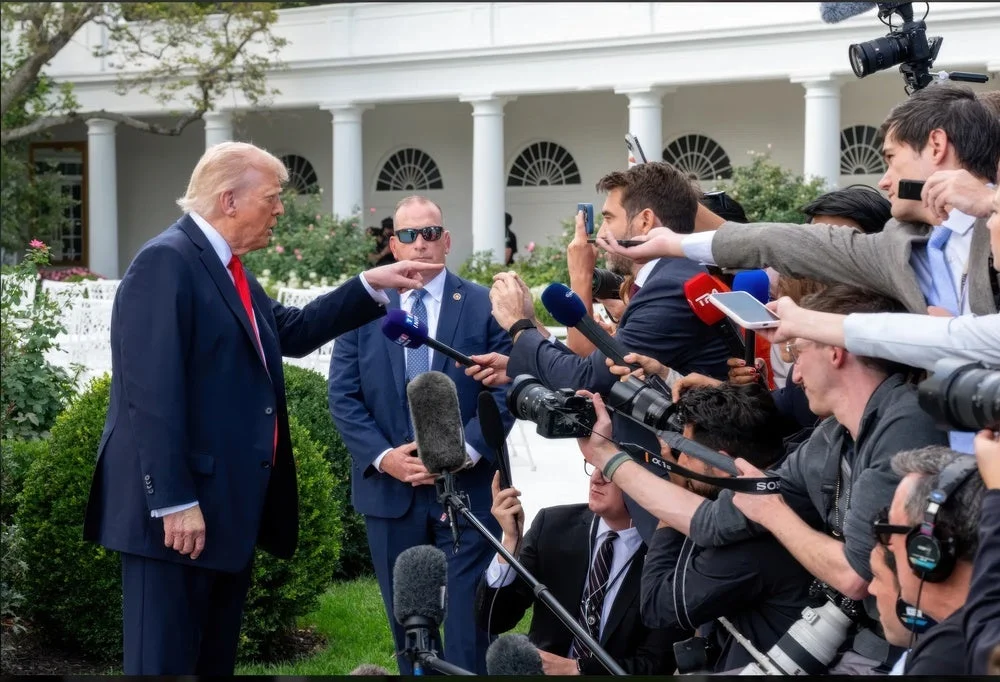
The ongoing tension between the Trump administration and the White House press corps has escalated into a direct challenge to the First Amendment. This week, the conflict reached a boiling point, forcing a federal court to intervene in the basic mechanics of media access.
The Chronology of Conflict
On September 18, the administration revoked the credentials of three major news organizations: CNN, MS NOW, and Politico. The official justification cited a vague breach of "professionalism and decorum," a charge the administration has utilized to gatekeep information access.
The retaliation was swift. The affected outlets filed suit, leading U.S. District Judge Timothy Kelly—a Trump appointee—to issue a ruling on September 24. Judge Kelly declared the ban likely unconstitutional, noting that the administration had violated due process by failing to provide the journalists with notice or an opportunity to respond before their physical access was revoked.
However, the legal victory was initially ignored. On the morning of September 25, reporters arriving at the White House found themselves blocked, with some Secret Service agents confiscating their hard passes. This act of non-compliance triggered an emergency hearing. By midday, under the shadow of further judicial sanction, the White House began to restore access, allowing reporters to return to the grounds.
Implications for Media Credentialing
This incident is not an isolated skirmish; it is part of a broader, systemic campaign against traditional media. Earlier in 2026, the White House barred the Associated Press from briefings due to the outlet’s refusal to adopt state-mandated terminology, such as the phrase "Gulf of America."
For PR professionals and organizations that manage credentialing, this sets a dangerous precedent. The court’s core logic—that an institution cannot selectively deny access to "disfavored" journalists once a forum has been opened—is a standard that applies to any organization. When an entity manages a public or semi-public credentialing process, arbitrary exclusions based on editorial stance or "decorum" invite legal and reputational ruin.
As Parry Headrick, founder and chief evangelist at Crackle, notes: "Shutting out the press gives the impression, whether true or not, that there’s something to hide. That does two things: it erodes trust and inspires intrepid reporters to dig even harder. As always, sunlight is the best disinfectant."
II. DoorDash’s $131.5 Million Settlement: A Lesson in Radical Transparency
While the White House struggled with the optics of exclusion, DoorDash took a radically different approach to its own crisis. Following a $131.5 million settlement with New York City over the miscalculation of driver pay, the company took a step that many legal teams would fear: they publicly admitted, "We screwed up."
A Departure from "Legalese"
In a corporate landscape where settlements are typically accompanied by bland, defensive statements void of accountability, DoorDash’s announcement was a jarring anomaly. The company explicitly detailed the technical failures—ranging from banking errors to geofencing bugs—that led to the underpayment of 264,000 "Dashers."
By quantifying the impact—noting that 65% of affected drivers were shorted by a dollar or less—the company shifted the narrative from "corporate negligence" to "technical error and remediation." It is a textbook example of the principle that consumers value honesty over perfection. Research from the Resonant Advisory Group suggests that 79% of consumers are more likely to trust a company that discloses its own failings before they are brought to light by regulators.
The Challenge of Rebuilding Trust
However, as Michelle Bonner, VP of Public Relations at Adams & Knight, points out, a well-worded statement is merely the beginning. "The biggest mistake companies make is assuming a reputation problem is just a communications problem," she says. "Sometimes the communications are fine, but the business’s behavior is the problem. No brand gets to simply declare, ‘Trust us again.’ The stakeholders decide that for you."
For DoorDash, the audience that matters most is not the customer, but the labor force. The company must now prove that its compliance program is robust enough to prevent a recurrence. While convenience may keep customers ordering, the erosion of goodwill among the workforce creates a "reputational debt" that will make the company more vulnerable during its next inevitable crisis.
III. Holiday Spending and the Social Media Shift
Beyond the political and legal headlines, a major shift is occurring in the consumer landscape. Sprout Social’s Q3 2026 Pulse Survey reveals that the holiday season is undergoing a transformation driven by economic anxiety and social media integration.
Supporting Data: The New Consumer Mindset
The survey paints a clear picture: 56% of shoppers plan to reduce their overall holiday spending this year, largely driven by concerns over tariffs and inflationary pressure. Nearly 7 in 10 consumers are actively monitoring price increases, leading to a "pre-holiday" shopping rush as consumers look to beat potential tariff-related hikes.
Key findings from the Sprout Social study highlight a fundamental change in the shopping journey:
- Social-First Discovery: Consumers are increasingly using social platforms for the entire purchase lifecycle, from product research to final checkout.
- The Utility Demand: Shoppers are prioritizing brands that offer genuine utility—such as clear demonstrations, discount transparency, and rapid customer service—over brands that rely on traditional, high-gloss advertising.
- Creator Influence: The role of the creator has overtaken the role of the brand influencer; consumers are looking for peer-level education rather than scripted promotional content.
Communication Takeaways
For brands, the message is clear: the window to capture the holiday consumer has opened earlier and narrowed in its requirements. As Scott Morris, CMO at Sprout Social, explains, "In a tighter economic climate, every purchase carries more weight. Brands must refine their messaging to be thoughtful and grounded."
The most successful campaigns this season will be those that align their social presence with their customer care teams. When a consumer uses social media for their entire journey, a slow response to a question or a lack of clarity in a promotion becomes an immediate deterrent. Brands that treat their social channels as a service-first utility will likely see higher ROI than those still relying on the interruptive ad models of the past.
IV. The Synthesis: Reputation in a Volatile World
The common thread connecting these three disparate stories—the White House, DoorDash, and holiday retail—is the collapse of the "spin" era. We have entered a period where the gap between an organization’s stated values and its observed actions is monitored, recorded, and critiqued in real-time.
Whether an organization is a government institution or a global logistics firm, the rules of engagement have fundamentally changed:
- Transparency is a Requirement, Not a Choice: As demonstrated by the White House’s failed attempt to bypass judicial oversight, institutions that attempt to hide behind "professionalism" or opaque rules only invite deeper scrutiny.
- Accountability Must Be Operational: DoorDash’s "we screwed up" approach works only if the operational issues are truly resolved. Communication can prime the pump for trust, but only operational integrity can fill the well.
- Utility Wins in Economic Uncertainty: With consumers tightening their budgets, brands that provide genuine, measurable value—whether through clear communication, responsive customer service, or educational content—will outlast those that rely on vanity metrics and traditional promotional blitzes.
As we look toward the remainder of the year, one thing remains certain: the public is no longer a passive audience. They are active observers who demand that their institutions and their brands act with the same level of integrity that they expect from their peers. In this environment, the only sustainable strategy is one built on the consistent, demonstrable alignment of words and actions. Anything less is merely a temporary delay of an inevitable reputational reckoning.