Television history is rich with complex narratives, moral ambiguity, and characters whose heartbreaking demises test our very resolve to keep watching. From tragic shipwrecks to sudden, shocking executions, the medium has long mastered the art of breaking our hearts.
However, there is an entirely different kind of catharsis reserved for a rare breed of television storytelling: the righteous, long-awaited downfall of a universally reviled villain.
For a villain’s death to truly resonate and trigger widespread celebration, more is required than mere cruelty. The character must be deliberately written and brilliantly portrayed to be as loathsome, formidable, and inescapable as possible. They must force the audience into a state of visceral investment, desperately yearning for the hero—or pure karma—to finally put an end to their reign of terror.
Executing a villainous exit that satisfies millions of viewers is a monumental narrative feat. Below, we examine five of the most unforgettable, crowd-cheering character deaths in modern television history, exploring how they were built, executed, and celebrated.
1. The Governor: The Walking Dead (AMC)
Main Facts & Context
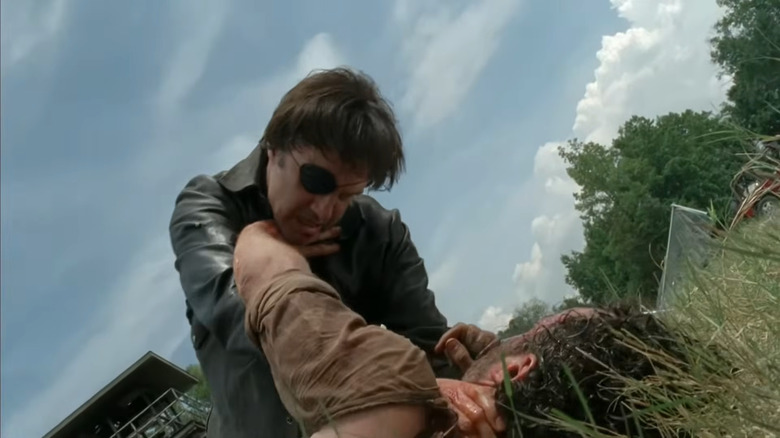
Nearly a decade after The Walking Dead aired its explosive Season 4 midseason finale, "Too Far Gone," actor David Morrissey could still vividly recall the shock of reading the script. Introduced early in Season 3, Philip Blake—better known as "The Governor" of Woodbury—was established as a charming yet deeply sociopathic dictator.
In Season 4, the series attempted a brief, forced faux-redemption arc for the Governor before violently pulling the rug out from under the audience. Driven entirely by pride, selfishness, and a pathological hatred for Rick Grimes, the Governor tore down the prison sanctuary—the most stable home the group had established. The climax of his reign of terror culminated in a brutal act: he publicly beheaded the beloved, moral compass of the group, Hershel Greene, right in front of his grieving daughter, Maggie.
Chronology of the Downfall
- Season 3: The Governor is introduced as a seemingly benevolent leader hiding a dark, psychopathic core (including keeping zombified family members captive).
- Season 4 (Early): A brief attempt at redemption fails, and the Governor reverts to his old habits, gathering a new army to siege the prison.
- The Climax: Armed with a tank and a sword, the Governor attacks the prison, captures Michonne and Hershel, and executes Hershel in cold blood.
- The Payoff: In the chaotic battle that ensues, the Governor is fatally impaled by Michonne using the very katana that killed Hershel, before a walker finishes him off.
Official Responses & Implications
Reflecting on the role at Fandemic Tour Atlanta in 2022, Morrissey admitted his initial fear upon learning of his character’s fate. "I was like, ‘Oh no, I’m never going to be able to walk down the street again. This is going to kill me,’" he recalled.
His fears were well-founded; the Governor had become the most intensely hated antagonist in the show’s early run. When Michonne finally skewered him, it provided a masterclass in narrative payoff, proving that no matter how secure a tyrant feels, absolute cruelty eventually invites absolute destruction.
2. Ralph Cifaretto: The Sopranos (HBO)
Main Facts & Context
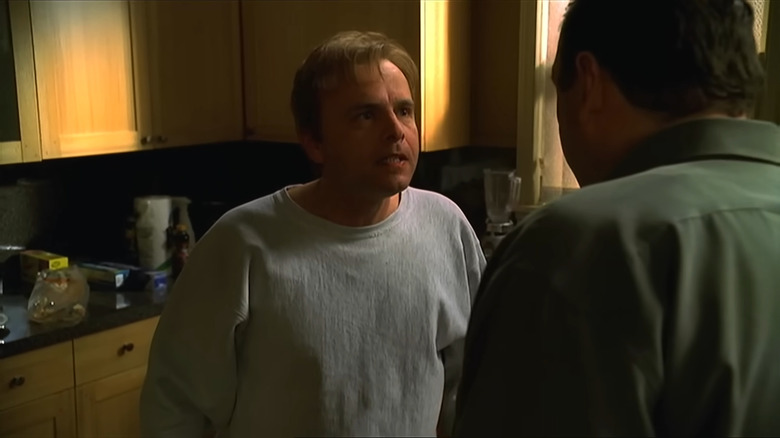
The Sopranos specialized in lowlifes, sociopaths, and morally bankrupt mobsters, yet Ralph Cifaretto managed to stand out as perhaps the most insufferable and disgusting character in the series. Introduced in Season 3, Joe Pantoliano’s abrasive capo was a loose cannon defined by his lack of respect, dangerous smart-mouth, and absolute disregard for human life.
From making costly, cruel jokes about a rival capo’s overweight wife to tacitly encouraging Jackie Jr.’s disastrous mob aspirations, Ralph’s cruelty peaked when he brutally murdered a young, pregnant dancer at the Bada Bing simply out of petty rage.
Chronology of the Downfall
- Season 3: Ralph enters the DiMeo crime family, immediately grating on Tony Soprano and alienating his peers.
- Season 4, "Whoever Did This": Ralph faces a crisis when his young son is severely injured in a freak bow-and-arrow accident. Simultaneously, Pie-O-My, a racehorse co-owned by Ralph and Tony, dies in a suspicious stable fire.
- The Confrontation: Tony visits Ralph to question him about the horse’s death and whether Ralph burned it alive for the insurance money to pay medical bills.
- The Climax: A heated argument escalates into a frenzied, brutal physical fight in Ralph’s kitchen, ending with Tony beating and strangling him to death.
Supporting Data & Implications
Ralph’s death remains one of the most ambiguously motivated moments in prestige television. Even the actor and the creator, David Chase, famously disagreed on whether Ralph actually set the fire that killed the horse.
For Pantoliano, the character’s toxicity left no lingering affection. Despite winning an Emmy for the role, the actor bluntly told The Hollywood Reporter in 2020: "F*** him." Ralph’s demise served as a grim reminder that even within the criminal underworld, there are lines that, when crossed with impunity, will provoke swift and merciless elimination from those at the top.
3. Todd Alquist: Breaking Bad (AMC)
Main Facts & Context
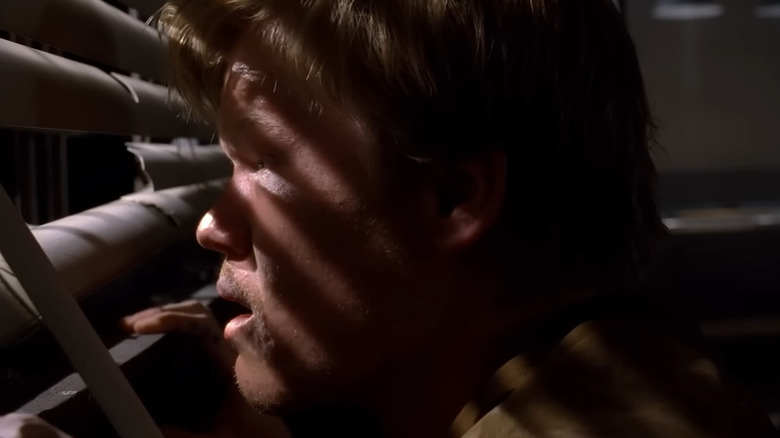
While Walter White’s descent into Heisenberg forms the spine of Breaking Bad, Todd Alquist—portrayed brilliantly by Jesse Plemons—represents a chillingly casual brand of absolute evil. During Season 5’s initial airing, viewers were somewhat divided on Todd. Because Jesse Plemons projected a strangely polite, almost naive demeanor, some fans initially wrote him off as a dim-witted criminal simply following orders from more powerful men like Walt and Jack Welker.
However, as the narrative unfolded—culminating in his cold-blooded murder of an innocent child during a train heist and his psychological torture of Jesse Pinkman—the true horror of Todd’s character came to light.
Chronology of the Downfall
- Season 5 (Part 1): Todd is introduced as a seemingly unassuming pest control worker who tags along on the meth-cooking train heist, culminating in the shocking murder of a young boy.
- Season 5 (Part 2): Todd and his uncle’s white supremacist gang enslave Jesse Pinkman, forcing him to cook, while Todd torments him and murders Andrea Cantillo to keep Jesse in line.
- The Series Finale ("Felina"): Walt returns to the Neo-Nazi compound to exact his final revenge, utilizing a remote-controlled trunk turret to decimate the gang.
- The Climax: In a deliberate narrative choice by creator Vince Gilligan, Todd is spared by the machine gun gunfire so that a broken, traumatized Jesse can exact personal vengeance by strangling him to death with his own chains.
Implications
Todd’s unsettling interactions with Lydia Rodarte-Quayle and his total lack of empathy cemented his status as a psychopath wearing the skin of a polite neighbor. When Jesse finally choked the life out of him in the series finale, it offered viewers a rare moment of pure, unadulterated justice for one of television’s most quietly terrifying monsters.
4. Kilgrave: Jessica Jones (Netflix/Marvel)
Main Facts & Context
Long before the Marvel Cinematic Universe fully leaned into cosmic warlords and multiverse variants, Netflix’s Jessica Jones delivered a grounded, deeply psychological nightmare in the form of Kilgrave, played with terrifying charisma by David Tennant. Kilgrave was not a conqueror with grand political designs; he was a petty, vindictive abuser gifted with the ability to control the minds and actions of anyone who heard his voice.
His obsessive fixation on Jessica Jones—whom he had previously subjected to systematic physical and psychological abuse—turned the first season of the show into a masterclass in tension, trauma recovery, and resistance.
Chronology of the Downfall
- Season 1 (The Build-Up): Throughout the season, Kilgrave remains frustratingly steps ahead of Jessica, using his mind-control powers to orchestrate horrific scenarios while believing he is "earning" Jessica’s genuine affection.
- The Thematic Weight: Media outlets widely praised the series for using Kilgrave as an allegory for the real-world mechanics of sexual assault, gaslighting, and domestic coercion, heightening the audience’s visceral hatred for him.
- The Final Confrontation: Kilgrave lures Jessica into a trap, believing that an upgrade to his powers has restored his complete dominance over her.
- The Climax: Feigning submission until she is close enough, Jessica exploits his overconfidence, grabs him by the neck, and snaps it—ending his reign of terror once and for all.
Official Responses & Support
The psychological realism embedded in Kilgrave’s defeat made it one of the most cathartic moments in superhero television history. For viewers who saw the character as a direct representation of real-world abusers, his death was not just a plot resolution, but a powerful reclamation of agency.
(Note: Resources for victims of sexual assault, such as RAINN’s National Helpline, were widely shared alongside the series’ promotional cycle, emphasizing the heavy thematic resonance of the storyline.)
5. Joffrey Baratheon: Game of Thrones (HBO)
Main Facts & Context
Joffrey Baratheon is the undisputed gold standard for television villains—the very blueprint that inspires articles about crowd-pleasing demises. Throughout the cultural phenomenon that was Game of Thrones, Jack Gleeson’s portrayal of the young, psychopathic king earned him a reputation as arguably the most hated character in the history of serialized fiction.
Ruthless, entitled, cowardly, and irredeemably cruel, Joffrey had no redeeming qualities. His arc served as a brutal, cynical commentary on the unjust nature of absolute power, especially as he sat upon the Iron Throne and ordered the execution of the noble Ned Stark.
Chronology of the Downfall
- Seasons 1–3: Joffrey commits countless atrocities, including torturing Sansa Stark, executing innocents on a whim, and reveling in cruelty, outliving many honorable characters.
- The Royal Wedding ("The Lion and the Rose"): Joffrey marries Margaery Tyrell, spending his wedding reception publicly humiliating his uncle, the fan-favorite Tyrion Lannister.
- The Climax: Immediately after drinking from his chalice, Joffrey begins coughing violently, his face turning purple as he suffocates and dies in agony from poison administered by Olenna Tyrell.
Supporting Data & Implications
The broadcast of "The Lion and the Rose" sparked global jubilation. According to The Washington Post, YouTube was instantly flooded with hundreds of ecstatic fan reaction videos. A decade later, the episode remains the ninth-highest-rated episode of Game of Thrones on IMDb and is universally regarded as a creative high point for the series.
Joffrey’s death proved that while television writers love to break our hearts with tragic losses, giving the audience a meticulously earned, poison-laced dose of instant karma is sometimes the greatest gift a showrunner can offer.