Key Takeaways
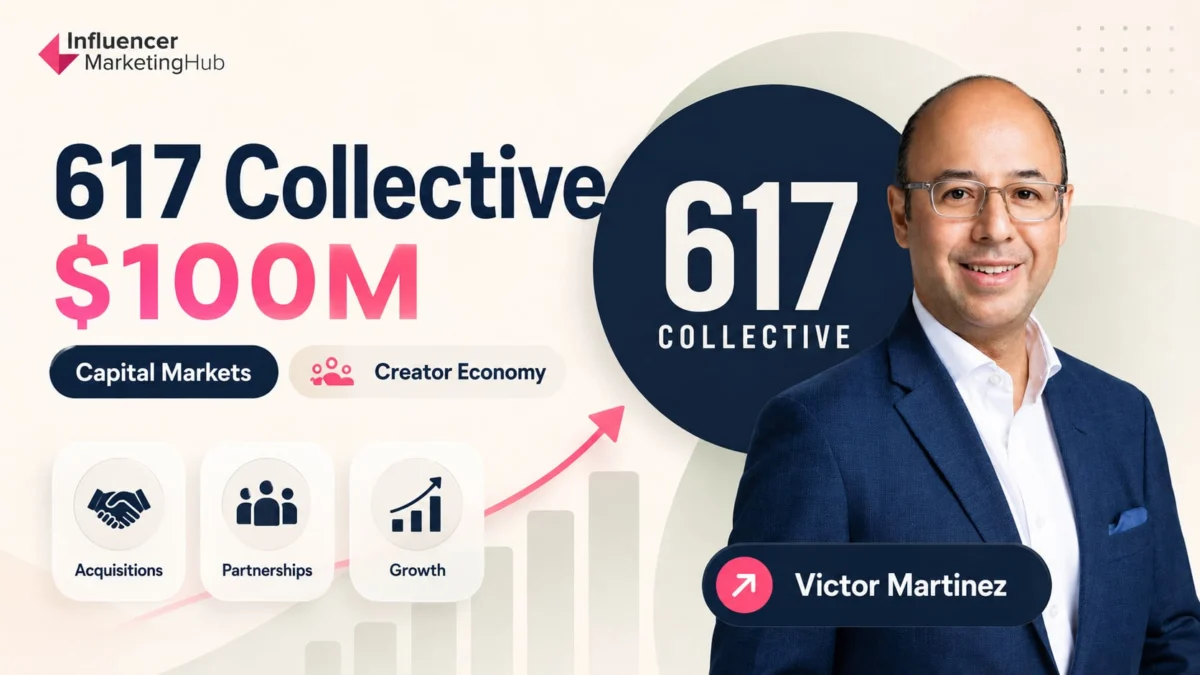
- Strategic Hiring: 617 Collective has appointed former Citi and JPMorgan executive Victor Martinez as Partner and Head of Capital Markets to spearhead an ambitious $100 million acquisition strategy.
- Challenging the Roll-Up: The firm is positioning itself as a "partner-holdco" that provides institutional-grade capital and infrastructure without the operational centralization typical of traditional agency roll-ups.
- The Scale Gap: With the creator economy projected to reach nearly $500 billion by 2027, 617 Collective is betting that agency founders are increasingly looking for growth capital that preserves, rather than erodes, their unique brand cultures.
- The Institutionalization Paradox: The firm faces the challenge of maintaining its "founder-friendly" identity while simultaneously building the complex financial and operational systems necessary to compete with global giants like Omnicom and Publicis.
A Banker’s Bet on the Creator Economy
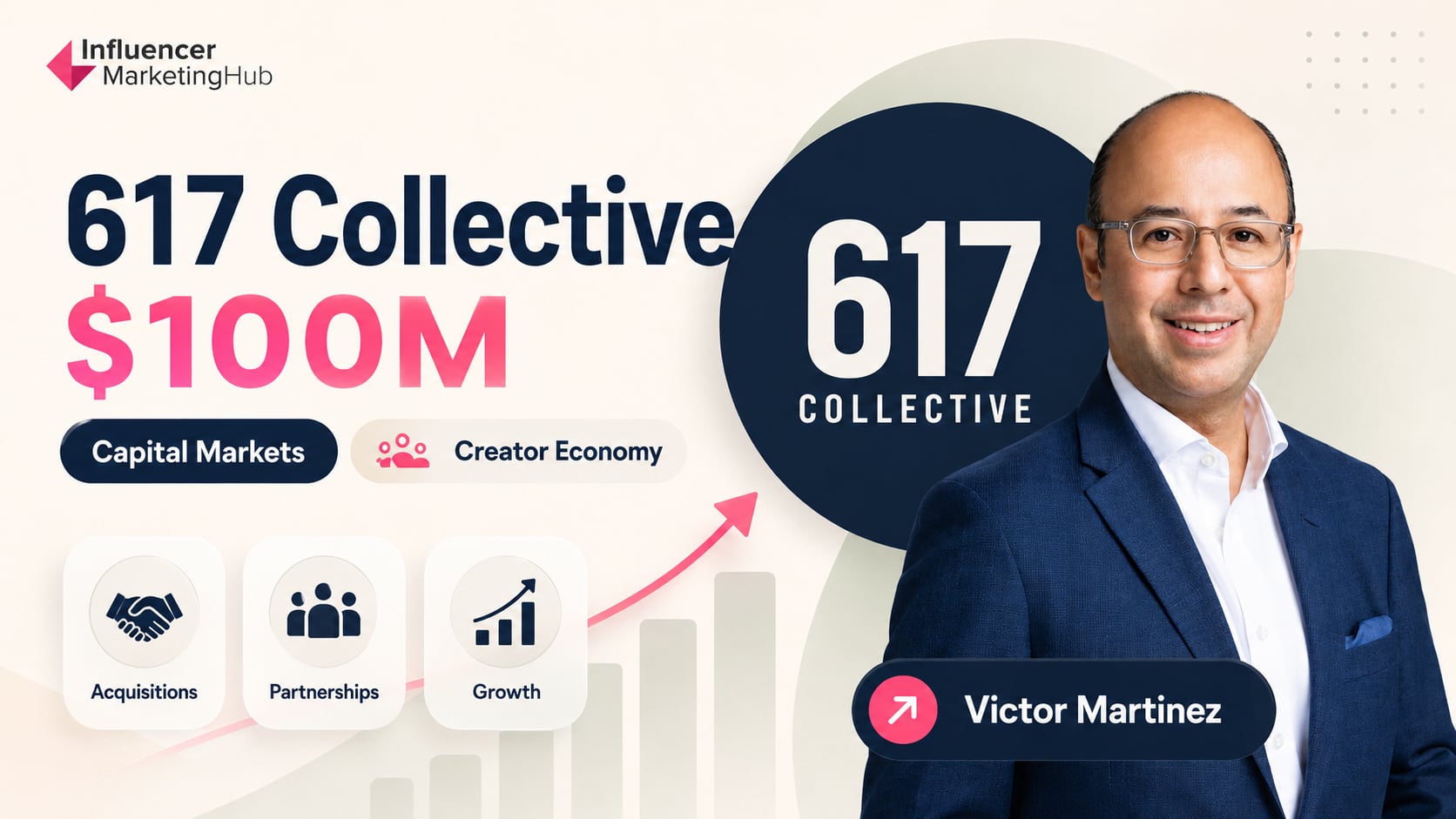
In a move that signals a significant maturation of the creator-economy acquisition landscape, 617 Collective LLC has appointed Victor Martinez—a veteran of Citi and JPMorgan—as Partner and Head of Capital Markets. For a firm that only announced its first acquisition five months ago, the appointment is a bold declaration of intent. Martinez, who spent over two decades navigating the complex waters of capital formation, public-market positioning, and financing for major technology and media firms, has been tasked with a clear mandate: build the financial architecture required to deploy $100 million into the agency space this year.
This is not merely an executive hiring announcement; it is a tactical pivot. 617 Collective is attempting to bridge the divide between the boutique, founder-led creative world and the high-stakes, institutionalized world of Wall Street finance. By bringing in a veteran of the bulge-bracket banks, the firm is signaling that its ambitions extend far beyond its initial experimental deals, aiming instead to become a dominant force in the rapidly consolidating world of marketing services.
Chronology: From Launch to Institutionalization
To understand the significance of this hire, one must look at the rapid evolution of 617 Collective’s short history.
- August 2025: 617 Collective officially launches as a holding company backed by private investors and family offices. Its initial thesis centers on acquiring Northeast-based agencies with revenues between $1 million and $5 million, specifically those with deep ties to Gen Z and millennial demographics.
- January 2026: The firm makes its first major move, acquiring Nominee Design, an Oklahoma-based creative studio. This acquisition signals a willingness to look beyond its initial geographic footprint. Simultaneously, the company appoints Cynthia Monroy, a seasoned CPA and former CFO of Band of Insiders, as Managing Partner to oversee operational integration.
- April 2026: 617 Collective expands into the U.S. Hispanic and Latin American markets by acquiring Zanahoria Azul, an influencer talent management agency.
- Mid-2026 (Present): The firm announces the appointment of Victor Martinez. This marks the transition from a "deal-by-deal" startup phase to a "capital-deployment" institutional phase, with $100 million earmarked for further expansion.
The appointment of Martinez, arriving just six months after Monroy, completes a leadership structure that now balances operational management with sophisticated deal-making capabilities. It effectively serves as a "coming out party" for the firm’s ambition to play in the big leagues.
Supporting Data: The Fragmentation of the Creator Economy
The rationale behind 617 Collective’s aggressive expansion is rooted in the explosive growth of the creator economy. While estimates vary, the consensus is that the sector is compounding at an annual rate exceeding 20%. Influencer Marketing Hub, for instance, projects the addressable market could swell to $480 billion by 2027.
Despite this massive growth, the sector remains notoriously fragmented. Thousands of small-to-mid-sized agencies currently dominate the landscape, many of which are seeking an exit or a strategic partner to help them scale. This structural fragmentation has naturally led to a surge in M&A activity. According to Quartermast Advisors’ 2026 report, creator-economy transactions saw a 17.4% uptick in 2025.
However, the competition for these agencies is fierce. The market is increasingly being defined by the consolidation efforts of giants. In November 2025, the merger between Omnicom and Interpublic Group created a $25 billion revenue behemoth, setting a high watermark for the industry. Other players like Publicis Groupe have spent the last two years systematically acquiring creator-economy assets, including the $500 million purchase of Influential. In such an environment, an independent firm cannot survive on "conviction" alone; it requires the lender relationships and financial engineering capabilities that allow it to outmaneuver better-capitalized competitors.
The "Partner-Holdco" vs. The Traditional Roll-Up
617 Collective’s central marketing narrative is built on the premise that it is the "anti-roll-up." In a traditional roll-up, agencies are acquired, their back-office functions are stripped away and centralized, and their distinct cultures are often folded into a larger, homogenized corporate brand. The goal is efficiency, but the side effect is often the loss of the creative spark that made the agency valuable in the first place.
617 Collective proposes a different model: the "partner-holdco." Under this structure, acquired agencies retain their original leadership, culture, and client relationships. Instead of forced integration, the firm provides "shared infrastructure"—capital, strategic support, and back-office resources—while allowing the agency to remain autonomous.
Cynthia Monroy, in her role as Managing Partner, has consistently emphasized this distinction. When the Nominee Design deal closed, she framed it as a preservation of agency DNA. With the hiring of Martinez, she has framed the firm’s development as "the continued institutionalization of 617 Collective." This language is telling; it suggests that the firm is comfortable with the duality of its strategy—maintaining a founder-friendly, decentralized culture while simultaneously building a rigid, institutionalized financial machine.
Implications: Can the Model Scale?
The fundamental question facing 617 Collective is whether its founder-friendly promise can survive the reality of scaling to a $100 million portfolio.
Critics, including voices from firms like Ebiquity, have noted that as holding companies aggregate influencer and creator agencies, they inevitably run into the "conflict-of-interest" trap. If a single parent company owns multiple agencies in the same niche, they face risks regarding data-sharing, competitive conflicts, and the eventual erosion of the independence that clients value.
Furthermore, there is the risk of "functional consolidation." Even if 617 Collective claims to leave agencies independent, the presence of a centralized capital-markets office and a shared CFO eventually necessitates a certain level of standardized reporting and operational control. As the firm grows, the pressure to optimize performance across the portfolio may force it to adopt the very roll-up behaviors it currently critiques.
For the founders being courted by 617 Collective, the appeal is clear: they gain the resources to compete for larger contracts and the financial safety net of a larger organization without losing their seat at the table. For the industry at large, 617 Collective represents a litmus test for the "permanent capital" model. If it succeeds, it could provide a new blueprint for agency ownership that avoids the "buy-to-flip" mentality of private equity. If it falters, it may simply serve as another cautionary tale about the difficulty of maintaining a boutique culture within an institutional framework.
As 2026 continues to see a wave of consolidation, all eyes will be on 617 Collective. With $100 million ready to be deployed, the firm is no longer a spectator in the creator economy—it is now a primary participant, and the market is watching to see if it can balance the demands of Wall Street with the creative autonomy of the founders it serves.