The Venice International Film Festival’s Critics’ Week (Settimana Internazionale della Critica) has officially announced the lineup for its upcoming edition. This year’s selection features a diverse array of global perspectives, highlighting emerging filmmakers who are pushing the boundaries of contemporary cinema. Dedicated exclusively to debut feature films from around the world, the sidebar presents a curated selection of seven competition titles and two out-of-competition special events.
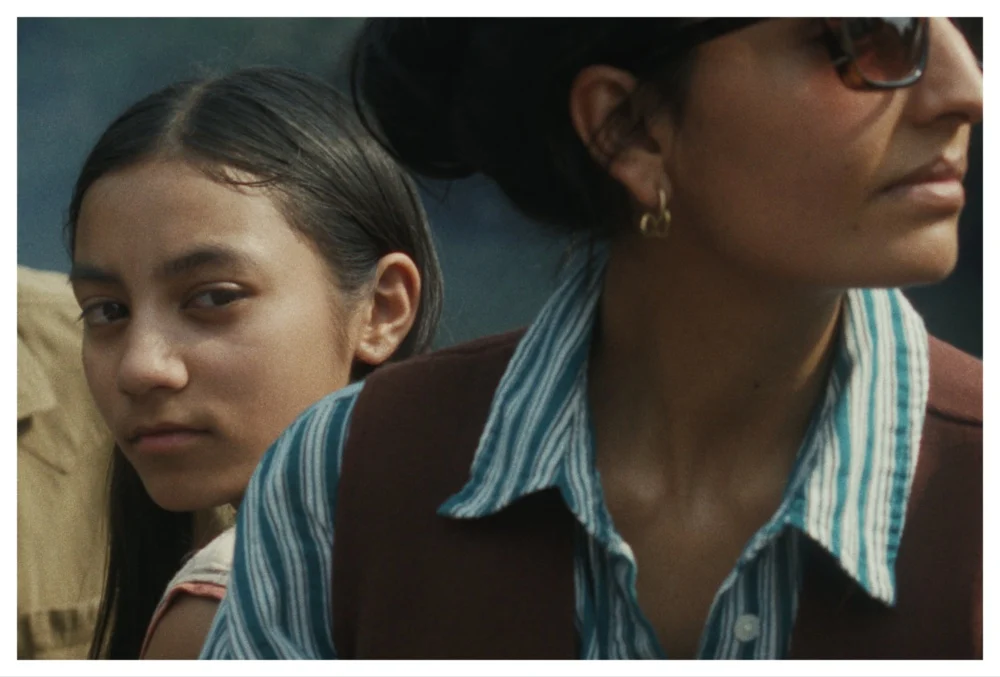
Among the highly anticipated selections is Our Share of Sand, the debut feature from London-based Chilean-Indian director Shalini Adnani. The film, which follows a young girl’s journey to reconnect with her estranged father in rural India, stands alongside a politically charged, technologically innovative selection that spans Latin America, North Africa, Europe, and Asia. From hybrid documentaries utilizing artificial intelligence to existential noirs and rap musicals, the lineup reflects a global cinema landscape that remains fiercely independent and formally audacious.
Chronology and Festival Context
The upcoming edition of the Venice Film Festival is scheduled to run from September 2 to September 12. As one of the oldest and most prestigious film festivals in the world, Venice serves as a critical launching pad for both established auteurs and emerging voices. The Critics’ Week sidebar, organized independently by the National Union of Italian Film Critics (Sindacato Nazionale Critici Cinematografici Italiani – SNCCI), operates in parallel with the festival’s main selection.
The timeline for the festival’s announcements and event schedule is structured as follows:
- Pre-Festival Selection Phase: Curators and programmers review hundreds of submissions from first-time directors globally to select the final nine feature-length films.
- Lineup Announcement: The Critics’ Week lineup is officially revealed to the public, establishing the competitive field for the prestigious Lion of the Future award.
- Official Selection Announcement: The main lineup of the Venice Film Festival is scheduled to be announced on Thursday, completing the broader festival program.
- Festival Run (September 2–12): The selected films will receive their world premieres in Venice, screened for international press, industry professionals, and public audiences.
- Awards Ceremony: At the conclusion of the festival, an international jury will award the Lion of the Future (Luigi De Laurentiis Award for a Debut Film), alongside the specific prizes designated by the Critics’ Week juries.
Supporting Data: The Lineup in Detail
The selection for this edition consists of seven world premieres in the competition section and two Italian productions screening out of competition as the opening and closing films. Below is an analytical breakdown of the selected titles, their creative teams, and their narrative focuses.
Competition Lineup
Our Share of Sand (India, United Kingdom, Greece)
- Director: Shalini Adnani
- Logline: A 12-year-old girl named Maya returns to rural India to reconnect with her estranged father.
- Thematic Focus: Identity, diaspora, and familial reconciliation. Adnani, a Chilean-Indian filmmaker based in London, uses a multicultural lens to explore the emotional landscape of displacement and returning to one’s roots.
The End of Times (El Fin de los Tiempos) (Colombia)
- Directors: Bibiana Rojas Gómez and Juan David Cárdenas
- Logline: A hybrid fiction-documentary that investigates the historical scars of colonialism and capitalism in Colombia.
- Thematic Focus: The film is notable for its integration of artificial intelligence within its narrative structure, using digital tools to interrogate historical archives and explore how economic exploitation has shaped modern Colombia.
Meteorite (Meteorito) (Colombia)
- Director: Sebastián Múnera
- Logline: A drama centered on the controversial plans to construct a commercial amusement park on the grounds of Hacienda Nápoles, the former estate of notorious drug lord Pablo Escobar.
- Thematic Focus: Memory, commercialization of trauma, and the complex legacy of the Colombian conflict. Múnera examines how history is repackaged for public consumption and entertainment.
Before the War (Prima Della Guerra) (France, Italy)
- Director: Tommaso Usberti
- Logline: Set in Northern Italy, the drama follows Guido, a young man raised within a xenophobic and racist social milieu, who undergoes a profound personal shift after falling in love with Sonia, a Kosovar immigrant.
- Thematic Focus: Radicalization, migration, and the possibility of empathy in highly polarized environments. Usberti, an Italian filmmaker based in Paris, offers a critical look at contemporary European identity politics.
The H@llow Man (Tunisia)
- Director: Kamel Laaridhi
- Logline: A dystopian drama set in the year 2059 in Tunisia, where citizens are implanted with a biochip designed to regulate human memory and suppress emotional responses.
- Thematic Focus: Technological authoritarianism, loss of human agency, and the survival of memory under surveillance capitalism. Laaridhi uses science fiction to comment on modern political control.
Zoom In, Zoom Out (China)
- Director: Dong Jie
- Logline: A young video game designer embarks on a physical journey to find his missing roommate, Gao, guided only by a series of cryptic clues hidden within an online video game.
- Thematic Focus: The blurring lines between virtual reality and physical existence, youth alienation, and the search for connection in a hyper-digitalized society.
London (Brazil)
- Directors: Victor Di Marco and Márcio Picoli
- Logline: A dramatic exploration of a moral and physical dilemma faced by a disabled young adult.
- Thematic Focus: Accessibility, bodily autonomy, and the societal pressures placed on disabled individuals in contemporary Brazil.
Out of Competition Lineup
Opening Film: Giaffa the Great (Il Grande Giaffa) (Italy)
- Director: Marco Santi
- Logline: An existential noir that sets the atmospheric tone for the sidebar’s opening.
- Thematic Focus: Moral ambiguity, urban decay, and the psychological weight of guilt.
Closing Film: Rider (Italy)
- Directors: Roan Johnson and Davide Pavanello (known professionally as "Dade")
- Logline: An Italian rap musical following a gig-economy food delivery driver in Milan who is invited to spend the night at a luxurious suburban villa after delivering a massive sushi order.
- Thematic Focus: Class divide, the exploitation of gig workers, and youth culture, elevated by a contemporary hip-hop soundtrack produced by Dade.
Official Responses and Curatorial Vision
The selection committee’s choices reflect a deliberate effort to address the structural and existential questions currently facing the global film industry. Beatrice Fiorentino, the General Delegate of Venice Critics’ Week, released an official statement detailing the curatorial philosophy behind this year’s lineup:
"Whilst the industry at large is grappling with its crises, these works are proof that cinema never stopped asserting its own cruciality. This cinema is fierce and independent, daring and vibrant, resolute in its reminder that our collective imagination can, and indeed must, continue to be rewritten."
Fiorentino’s remarks highlight a critical tension in contemporary cinema. While independent filmmakers face diminishing funding, shifting distribution models, and the rise of streaming-dominated landscapes, the creative output remains highly resilient. The inclusion of films that utilize emerging technologies like AI, or confront pressing geopolitical issues like migration and the legacy of colonialism, demonstrates that first-time directors are utilizing the medium to engage directly with contemporary global crises.
Implications for the Global Film Industry
The lineup announced for Venice Critics’ Week carries significant implications for the broader cinematic landscape, particularly regarding representation, technological integration, and the financial trajectory of independent filmmakers.
The Lion of the Future and Financial Viability
All seven competition entries in the Critics’ Week will compete alongside debut films from the festival’s official selection (including the Competition and Orizzonti sections) for the Luigi De Laurentiis Award for a Debut Film. Commonly known as the Lion of the Future, the prize carries a cash award of $100,000, split equally between the director and the producer.
For first-time directors, winning or even being nominated for this award can dramatically alter their career trajectories. The financial injection provides crucial stability for independent production companies, while the critical exposure ensures international distribution opportunities in key markets.
The Rise of AI and Hybrid Formats
The inclusion of Colombia’s The End of Times highlights a growing trend in independent cinema: the use of artificial intelligence as a creative and thematic tool rather than merely a commercial shortcut. By employing AI to examine colonialism and historical archives, directors Bibiana Rojas Gómez and Juan David Cárdenas are positioning technology as a medium for historical interrogation. This stands in stark contrast to mainstream industry anxieties regarding AI’s potential to replace human labor, suggesting instead a collaborative, avant-garde future for digital tools in documentary filmmaking.
Reclaiming Historical Narratives in Latin American Cinema
With two Colombian titles (The End of Times and Meteorite) and one Brazilian title (London), South American cinema has a exceptionally strong presence in this year’s lineup. Crucially, both Colombian films engage in a process of reclaiming historical narratives from foreign or sensationalized interpretations.
Meteorite directly addresses the commercialization of Pablo Escobar’s legacy, challenging the "narco-tourism" industry that has historically commodified Colombian trauma. By addressing these themes from an internal perspective, these filmmakers are shifting the geopolitical gaze of independent cinema, offering nuanced critiques of local history and global capitalism.
Genre Innovation and the Gig Economy in Europe
The European selections, particularly the Italian titles, demonstrate a shift away from traditional social realism toward genre hybridity. Roan Johnson and Davide Pavanello’s Rider uses the framework of a rap musical to explore the precarious nature of gig-economy labor. By focusing on a food delivery driver in Milan, the film addresses modern labor exploitation through a stylized, youth-centric format.
Similarly, Tommaso Usberti’s Before the War uses a romantic drama structure to dissect the rise of far-right, anti-immigrant sentiment in Northern Italy. These films suggest that European independent cinema is increasingly looking to genre frameworks—whether musicals, noirs, or thrillers—to communicate urgent socio-political critiques to a broader audience.