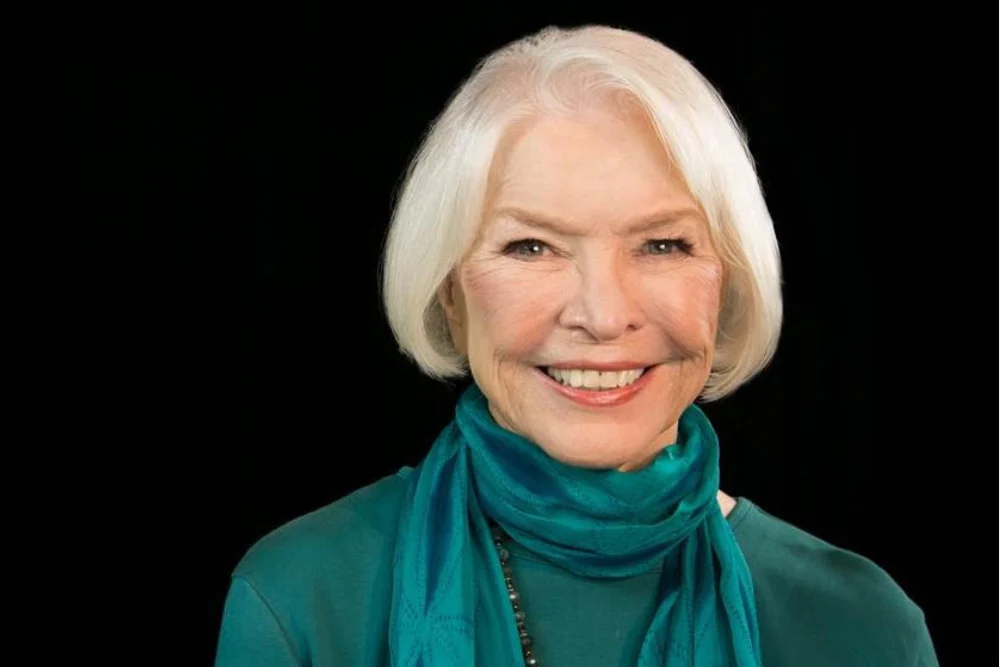
The Venice International Film Festival has announced that legendary American actress Ellen Burstyn will be honored with the prestigious Golden Lion for Lifetime Achievement at its upcoming 83rd edition. The festival, which remains the world’s oldest and one of its most prestigious cinematic events, is scheduled to run from September 2 to September 12.
The decision, proposed by the festival’s artistic director Alberto Barbera and approved by the Board of Directors of the Biennale di Venezia, celebrates a career that has spanned more than six decades. Burstyn, an EGOT-nominated performer who holds the rare "Triple Crown of Acting" (an Oscar, an Emmy, and a Tony), has long been regarded as one of the most formidable and emotionally authentic actors of her generation. Her career has not only mirrored the evolution of modern American cinema but has actively shaped it, particularly through her pioneering work during the New Hollywood movement of the 1970s.
Main Facts: A Landmark Honor in the Canal City
The Golden Lion for Lifetime Achievement is reserved for individuals who have made monumental contributions to the art of cinema. By presenting this honor to Ellen Burstyn, the Venice Film Festival cements her status among the pantheon of global cinematic icons.
The award ceremony will take place during the festival’s official lineup and will be paired with a highly anticipated special screening of Flesh Impact, a new short film directed by Maggie Gyllenhaal. The short film serves as a dual celebration: it honors Burstyn’s unparalleled contribution to the acting craft while marking the centenary of the birth of Marilyn Monroe.
Key Details of the Announcement:
- Honoree: Ellen Burstyn
- Award: Golden Lion for Lifetime Achievement (Leone d’Oro alla carriera)
- Event: 83rd Venice International Film Festival
- Dates: September 2–12
- Special Screening: Flesh Impact, directed by Maggie Gyllenhaal, starring Ellen Burstyn, Dakota Johnson, Peter Sarsgaard, and Sepideh Moafi.
Chronology: The Evolution of a Cinematic Icon
To understand the magnitude of Burstyn’s Lifetime Achievement Award, one must trace her journey through the shifting landscapes of American theater, television, and film. Her path to becoming an industry titan was marked by determination, artistic rigor, and an uncompromising commitment to psychological realism.
[1950s-1960s] Early career in theater, television, and Broadway under the name Ellen McRae.
      │
[1971] Breakout role in Peter Bogdanovich's "The Last Picture Show" (First Oscar Nomination).
      │
[1973] Global stardom with William Friedkin's "The Exorcist" (Second Oscar Nomination).
      │
[1974] Wins Best Actress Oscar for Martin Scorsese's "Alice Doesn't Live Here Anymore".
      │
[1975] Wins Tony Award for "Same Time, Next Year" on Broadway.
      │
[1970s-1980s] Collaboration with global auteurs (Alain Resnais, Paul Schrader, Bob Rafelson).
      │
[2000] Critical triumph and Oscar nomination for Darren Aronofsky's "Requiem for a Dream".
      │
[2008-2013] Wins Primetime Emmy Awards, completing the Triple Crown of Acting.
      │
[Present] Continued artistic activity, including "Flesh Impact" and "Place to Be".
The New Hollywood Breakthrough (1971–1974)
After working for years in television and theater under various stage names, Burstyn found her breakthrough in the early 1970s, a period when American cinema was undergoing a radical, director-driven revolution.
In 1971, she starred as Lois Farrow in Peter Bogdanovich’s elegiac masterpiece The Last Picture Show. Her portrayal of a disillusioned, middle-aged woman in a dying Texas town earned her her first Academy Award nomination for Best Supporting Actress and established her as a premier dramatic talent.
Just two years later, Burstyn transitioned from indie realism to global blockbuster horror. In William Friedkin’s The Exorcist (1973), she played Chris MacNeil, a desperate mother fighting to save her possessed daughter. The film became a cultural phenomenon, and Burstyn’s raw, terrified, yet fiercely protective performance earned her a second Oscar nomination, this time for Best Actress.
The Peak of Creative Agency: Alice Doesn’t Live Here Anymore (1974)
Burstyn’s crowning achievement of the decade came in 1974 with Alice Doesn’t Live Here Anymore. Dissatisfied with the passive roles historically offered to women in Hollywood, Burstyn actively sought out a project that would depict a woman reclaiming her identity, independence, and livelihood. She acquired the script, convinced a young Martin Scorsese to direct, and starred as Alice Hyatt, a widowed mother traveling across the American Southwest to pursue her dreams of becoming a singer.
The film was a critical and commercial triumph, acting as a cinematic manifesto for the feminist movement of the 1970s. Burstyn’s performance won her the Academy Award for Best Actress. Rather than resting on her laurels, she used her leverage to champion complex female narratives and took on leadership roles within the industry, eventually becoming the first female president of the Actors’ Equity Association (1982–1985).
Global Auteurs and Late-Career Resurgence (1975–Present)
Throughout the late 20th century, Burstyn deliberately chose challenging, non-commercial projects, working with some of the era’s most visionary directors:
- Alain Resnais in Providence (1977), an avant-garde exploration of memory and aging.
- Paul Schrader in Hardcore (1979), a gritty look into the underbelly of the adult film industry.
- Bob Rafelson in The King of Marvin Gardens (1972), alongside Jack Nicholson.
- Paul Mazursky in Alex in Wonderland (1970) and the Oscar-winning Harry and Tonto (1974).
In 2000, Burstyn experienced a monumental career resurgence with Darren Aronofsky’s psychological drama Requiem for a Dream. Her portrayal of Sara Goldfarb, a lonely widow who descends into a devastating amphetamine addiction, is widely considered one of the most harrowing and brilliant performances in film history. The role earned her a fifth Academy Award nomination and introduced her legendary intensity to a new generation of cinephiles.
In the 21st century, Burstyn has remained a vital force, appearing in Christopher Nolan’s sci-fi epic Interstellar (2014) and continuing to work across independent film, prestige television, and live theater.
Supporting Data: The Craft, the Accolades, and Flesh Impact
To contextualize Ellen Burstyn’s impact on the industry, it is useful to look at the statistical and collaborative milestones that define her career, as well as the details of the project that will frame her upcoming honor in Venice.
The Triple Crown of Acting
Burstyn is one of an elite group of performers to have achieved the "Triple Crown of Acting," representing the highest honors in American film, theater, and television:
| Award | Category | Project | Year |
|---|---|---|---|
| Academy Award (Oscar) | Best Actress | Alice Doesn’t Live Here Anymore | 1974 |
| Tony Award | Best Actress in a Play | Same Time, Next Year | 1975 |
| Primetime Emmy Award | Outstanding Guest Actress | Law & Order: Special Victims Unit | 2008 |
| Primetime Emmy Award | Outstanding Supporting Actress | Political Animals | 2013 |
Beyond these wins, she has received six Academy Award nominations, demonstrating her enduring excellence across five different decades (1970s, 1980s, 2000s).
The Actors Studio Connection
Burstyn’s approach to acting is deeply rooted in the Method, having studied under the legendary Lee Strasberg. Her commitment to the craft led her to become an integral part of the Actors Studio, the famous professional association for actors, directors, and playwrights in New York City. Alongside Al Pacino and Harvey Keitel, Burstyn serves as a co-president of the Studio, dedicating her time to mentoring future generations of performers in the discipline of emotional truth and psychological realism.
Flesh Impact: A Centenary Tribute to Marilyn Monroe
The screening accompanying Burstyn’s Golden Lion presentation is Maggie Gyllenhaal’s short film Flesh Impact. The project is rich with thematic depth and historical resonance:
- The Concept: The title Flesh Impact is derived from a historical description of Marilyn Monroe’s unique photographic and cinematic aura—the idea that she possessed such a luminous, tangible presence on screen that audiences felt they could physically reach out and touch her.
- The Narrative: The film explores the legacy of Monroe on the centenary of her birth. Dakota Johnson stars as Monroe at the absolute peak of her mid-century fame, embodying the public’s idealized perception of the star.
- Burstyn’s Role: Burstyn portrays an older, alternative-universe version of Monroe—a woman who survived the pressures of Hollywood and aged with dignity, offering a poignant look at the life and artistic evolution that the real-world Monroe was tragically denied.
- Supporting Cast: The short also features acclaimed actors Peter Sarsgaard and Sepideh Moafi, creating a powerhouse ensemble for Gyllenhaal’s directorial vision.
Official Responses: Tribute to a Master
The announcement of Burstyn’s Golden Lion has drawn warm praise from the festival’s leadership and an enthusiastic response from the actress herself.
Alberto Barbera’s Tribute
Venice Film Festival Artistic Director Alberto Barbera spoke extensively about the qualities that make Burstyn an indispensable figure in cinema history:
"Ellen Burstyn is an actress of rare intensity and truth. Over her magnificent career, she has brought depth and complexity to unforgettable female characters, embodying the contradictions and transformations in the contemporary woman."
Barbera went on to highlight her historical significance in pioneering new forms of female representation on screen:
"Revealed in Peter Bogdanovich’s The Last Picture Show, which portrayed the twilight of small-town America, and elevated to global stardom by the success of William Friedkin’s The Exorcist, Burstyn won the Oscar for best actress for Martin Scorsese’s Alice Doesn’t Live Here Anymore, the film manifesto about women reclaiming their identity and their freedom.
She made fragility and methodical discipline the tools of an approach to acting grounded in emotional truth, attentiveness, and generosity toward one’s characters. Her artistry, which could illuminate pain and everyday resilience with dignity, irony, and courage, remains an absolute model of authenticity in performance and civic engagement within the craft of acting."
Ellen Burstyn’s Statement
Upon receiving news of the honor, Burstyn expressed her delight and deep gratitude, highlighting her long-standing affection for the city of Venice:
"Wow! I not only get to travel to one of my top most favorite cities in the whole world, I get to return home carrying a Golden Lion in my arms! The Lifetime Achievement Award from the Venice Film Festival! I feel so honored—so happy—so filled with gratitude! Wow indeed!"
Implications: A Living Legacy and the Road Ahead
The presentation of the Golden Lion to Ellen Burstyn carries several broader implications for the film industry, the representation of veteran actresses, and the upcoming festival season.
Honoring the Matriarchs of Cinema
In an industry that has historically struggled with ageism, particularly toward women, the celebration of Ellen Burstyn’s active career is a powerful statement. At over 90 years old, Burstyn remains a sought-after, working actress who refuses to retire. By honoring her, the Venice Film Festival highlights the invaluable contributions of veteran female performers who continue to bring unparalleled depth, wisdom, and technical mastery to contemporary cinema.
Anticipation for Place to Be
The Venice tribute also serves as a springboard for Burstyn’s next major feature film project, Place to Be. Directed by acclaimed Hungarian filmmaker Kornél Mundruczó (best known for Pieces of a Woman), the film will see Burstyn star alongside Oscar-winner Taika Waititi. The collaboration promises to showcase her continued willingness to take on bold, auteur-driven projects well into the seventh decade of her career.
The 83rd Venice Film Festival’s Cultural Footprint
As the Venice International Film Festival prepares for its September run, the addition of Ellen Burstyn to its honors list guarantees a moment of high emotional and historical significance. Combined with the premiere of Maggie Gyllenhaal’s Flesh Impact and the celebration of Marilyn Monroe’s centenary, the festival continues to bridge the gap between classical Hollywood history and modern cinematic innovation. For cinephiles and industry professionals alike, Burstyn’s walk across the stage at the Palazzo del Cinema will stand as a highlight of the international film calendar, celebrating a lifetime spent in pursuit of artistic truth.