For many eCommerce brand owners, the Facebook Ads Manager dashboard is a source of constant frustration. They see clicks, they see traffic, but they don’t see the one thing that actually keeps the doors open: consistent, scalable profit. As the digital advertising landscape becomes increasingly dominated by algorithmic automation, many marketers find themselves paralyzed between two extremes: over-engineering their campaigns into oblivion or relinquishing all control to Meta’s AI, hoping for the best.
Sam Piliero, a seasoned digital strategist, suggests that the secret to explosive growth lies not in chasing fleeting trends, but in a structured, four-stage framework known as the "M4 Method." This proprietary system—built on account structure, creative strategy, analytical deep dives, and deliberate scaling—has been credited with helping businesses scale from modest monthly spends to the $50 million-plus revenue tier.
The Two Primary Roadblocks to eCommerce Growth
According to Piliero, most advertisers are held back by two fundamental misunderstandings.
1. The Trap of Efficiency Metrics
The first hurdle is an unhealthy obsession with efficiency metrics like Return on Ad Spend (ROAS) and Cost Per Acquisition (CPA). While these metrics serve as useful guardrails, they are not the end goal. Piliero argues that businesses must pivot their focus toward "contribution margin"—the actual profit that hits the bank account.
Chasing a high 10x ROAS can often be a vanity metric that severely limits growth. If a brand maintains a healthy 10–20% profit margin, a 2.2 ROAS may actually be the "sweet spot" that allows for aggressive spending, rapid customer acquisition, and the compounding benefits of lifetime value (LTV) and word-of-mouth marketing. By obsessing over the efficiency of every dollar, brands often sacrifice the massive scale required to dominate their market.
2. The Illusion of Control
The second roadblock is the misconception regarding how much a human should intervene in the account. Many marketers manually micromanage dozens of campaigns, creating a chaotic environment where ads cannibalize one another. Others do the opposite, leaving everything to the algorithm without providing the necessary creative signals. The M4 Method identifies a deliberate "middle path" where the advertiser provides the structure and the creative, and the algorithm handles the delivery.

Chronology of the M4 Method: A Four-Stage Framework
The M4 Method is a modular system. While stages may overlap, they are designed to build upon one another, ensuring that the foundation is solid before the engine is revved.
Stage 1: Account Structure (The Foundation)
Great creative will fail in a disorganized house. Piliero advocates for a clean, logical architecture that prevents budget leakage.
- Prospecting Campaign: The heart of the account is a single Campaign Budget Optimization (CBO) campaign. Within this, the advertiser creates "packs"—distinct ad sets for different creative batches. The CBO automatically allocates budget to the top performers.
- Retention Campaign: By separating existing customers from new prospects, brands gain absolute clarity on where their spend is going.
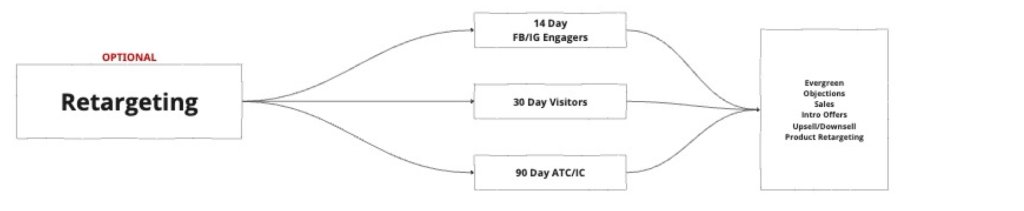
- Optional Support: Retargeting campaigns for those who engaged but didn’t purchase, and dedicated "scaling campaigns" for top-tier creative, round out the structure.
Stage 2: Creative Strategy (The Engine)
Since the arrival of Meta’s Andromeda algorithm, targeting is no longer defined by manual inputs but by the content itself. "What your ad says determines who it reaches," Piliero explains.
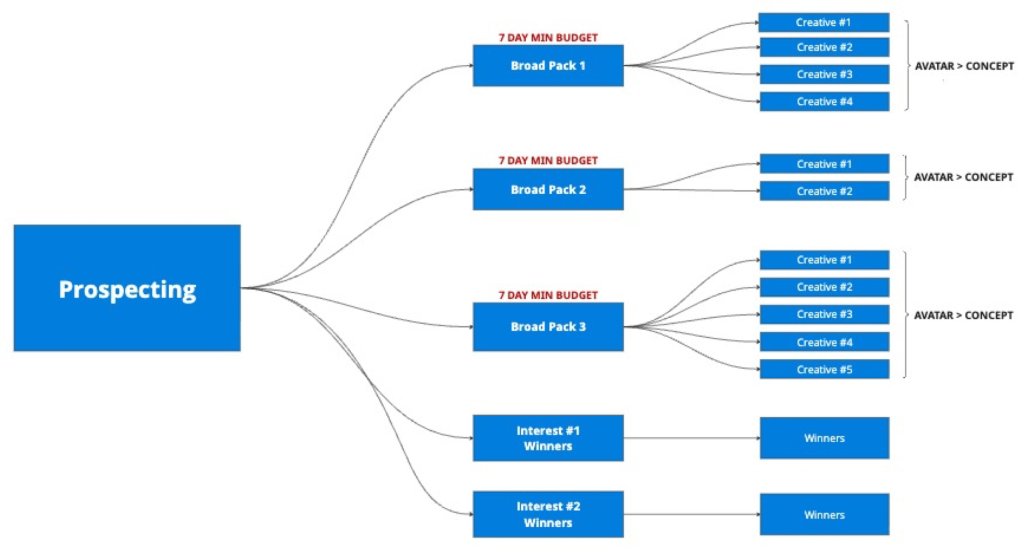
To succeed, ads must be "problem-solution specific." Generic ads reach everyone and satisfy no one. By identifying a specific customer avatar—such as a construction worker suffering from back pain—and positioning a product as the exact solution, the creative naturally filters for the most qualified prospects.
The strategy for success here is "manufacturing hits." Advertisers should utilize the Facebook Ads Library and tools like MagicBrief to identify long-running competitor ads, then iterate on those concepts. Semi-professional User-Generated Content (UGC) remains the gold standard, as it feels native to the user experience and builds trust.
Stage 3: Deep Dive Analysis (The Intelligence)
Most advertisers fall into the trap of spending the same amount every day. However, consumer behavior is rarely consistent across the week. By analyzing 90 to 180 days of non-promotional data, businesses can uncover specific patterns—such as pet owners purchasing on weekends or gift-givers planning on Mondays.

Piliero’s team uses a "signal threshold" of a 20–30% performance difference between segments to identify opportunities. The goal is to skew budgets toward high-performing days, even if it slightly lowers the ROAS on those specific days, because the total volume of profitable acquisitions increases significantly.
Stage 4: Scaling (The Growth)
Scaling should never be a guess; it should be a calculated move executed only when the previous three stages are firing on all cylinders.
- Vertical Scaling: Increasing the budget on existing campaigns by 10–30% increments every two to three days to avoid triggering the "learning phase."
- Horizontal Scaling: Launching temporary, separate campaigns for specific events like flash sales or product launches to keep the primary account clean.
- Twin Engine Scaling: The most powerful technique, which involves taking high-performing creative "hits," creating variations, and injecting them back into the primary prospecting campaign while simultaneously increasing the overall budget.
Supporting Data: Why This Approach Works
The results seen by brands utilizing the M4 Method are compelling. Among "The Moonlighters" (a group of brands implementing this framework), five companies transitioned from under $30,000 in monthly ad spend to over $50 million in annual revenue within a single year. These results underscore that when a brand commits to a rigorous creative testing cycle and prioritizes lifetime value over short-term ROAS, the algorithm rewards that consistency with scale.
Official Perspectives: The "King Goal"
Piliero emphasizes that every business must identify its "King Goal"—the single, non-negotiable metric that defines success. Whether it is CAC (Customer Acquisition Cost), ROAS, or LTV, having a north star prevents the common mistake of overreacting to "proxy metrics" like CPMs or click-through rates. If the King Goal is being met, the advertiser should ignore the noise and focus on maintaining the momentum.
Implications for the Future of eCommerce
The transition from manual targeting to algorithmic delivery represents a fundamental shift in digital marketing. Advertisers are no longer "media buyers" in the traditional sense; they are now "creative directors" who must feed the algorithm high-quality, problem-solving content.
For brands with supply chain limitations, the implications are different. In these cases, the M4 Method is still valuable for its deep-dive analytics, but the strategy shifts from mass acquisition to maximizing efficiency on a controlled volume of orders.
Ultimately, the M4 Method serves as a blueprint for sustainability. By balancing human intuition with machine learning, business owners can move away from the "panic-pause-restart" cycle of ad management and toward a predictable, scalable system that prioritizes long-term growth over the next click. In an era where AI can do much of the heavy lifting, the most successful brands will be those that master the art of the creative message and the discipline of the account structure.