By Liz Skalka
Main Facts: The Fall of a Rust Belt Legacy
On Labor Day, a defiant group of current and former journalists from The Blade marched through the heart of Toledo, Ohio, carrying handwritten signs that read “Quality Work Deserves Fair Pay” and “Union Town, Union Newspaper.” They wore shirts bearing the typewriter-stamped slogan, The Blade Works Because We Do.
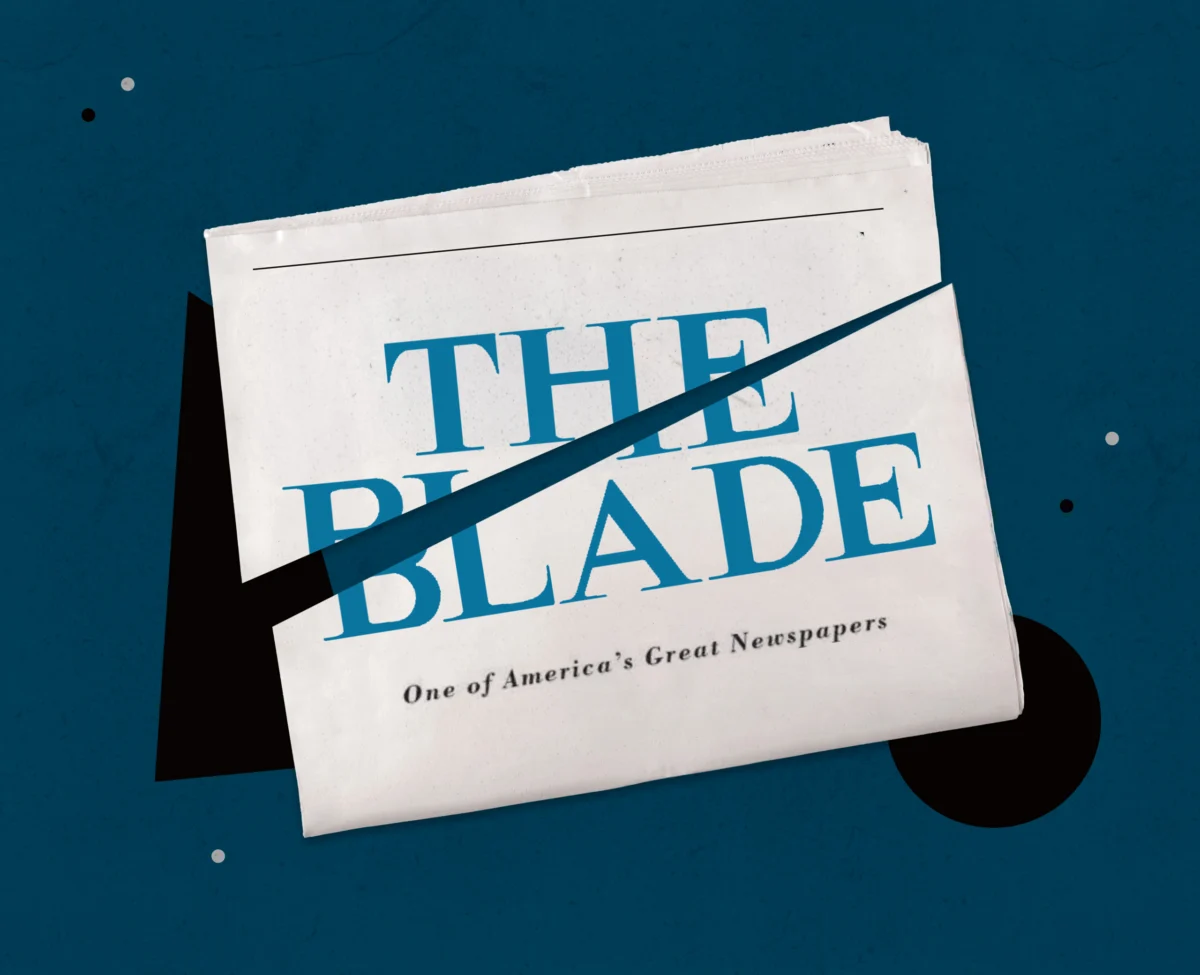
Less than 24 hours later, their worst fears were confirmed. Block Communications Inc. (BCI), the paper’s century-old parent company, sent an email announcing that The Blade would cease publication on December 31.
"The financial losses The Blade has endured for years are simply not sustainable," the company’s chief operating officer wrote to the Toledo NewsGuild. BCI stated it was exploring a potential sale of the paper’s assets, though no prospective buyers have publicly emerged.
If Toledo loses its historic newspaper, it will instantly become one of the largest metropolitan areas in the United States without a major print or digital daily news outlet. The impending closure threatens to extinguish a nearly 200-year-old journalistic institution that once employed 145 newsroom staffers, won a Pulitzer Prize, and served as an aggressive watchdog for northwest Ohio. Instead of a triumphant centurial celebration under family ownership, the paper faces an unceremonious death, leaving its remaining 75 bargaining-unit employees—reporters, photographers, ad sales representatives, and circulation workers—scrambling for their futures.
Chronology: A Slow-Motion Collapse
The demise of The Blade did not happen overnight. It was the culmination of decades of frozen wages, deteriorating working conditions, aggressive union-busting tactics, and a widening chasm between the paper’s ownership and its rank-and-file workers.
- The Early 2000s: This was the golden era for The Blade. The newsroom boasted 145 journalists and won a Pulitzer Prize in 2004 for investigative reporting exposing Vietnam War atrocities. The following year, the paper broke a major political corruption scandal that ultimately led to the criminal conviction of Ohio Governor Bob Taft. Longtime guild members, however, note that this period also marked the beginning of the end for competitive compensation: across-the-board contractual salary increases effectively stopped in the early 2000s.
- February 2019: Amid escalating cost-cutting measures, BCI eliminated a majority of print delivery days. Around the same time, tensions boiled over when Pittsburgh Post-Gazette journalists witnessed BCI co-owner John Block in the newsroom—allegedly intoxicated—yelling at his 12-year-old daughter and physically assaulting a sign that read "Shame on the Blocks!" Allan Block later attributed the outburst to industry-wide financial frustrations.
- March 2024: The physical infrastructure of The Blade began to crumble. Staff were abruptly forced to vacate their historic downtown headquarters due to severe maintenance failures, which included a leaky ceiling, missing tiles, and even a bat captured flying loose through the newsroom. Management never publicly explained the abrupt closure, forcing reporters to work from home and conduct labor negotiations out of local Toledo Public Library branches.
- May 2024: BCI sold its roster of television stations to Gray Media for $80 million, retaining Buckeye Broadband while maintaining that its print properties were financial drains. Meanwhile, the Block brothers—CEO Allan and publisher John—resolved an internal family lawsuit regarding disputes over potential corporate sell-offs.
- July–August 2024: Contract negotiations resumed between BCI and the Toledo NewsGuild, operating under a contract that had been expired for nearly a decade. Management proposed a controversial two-year contract that would strip away seniority protections and permit the outsourcing of guild labor to artificial intelligence or management. On August 28, union members overwhelmingly rejected the offer in a 45–26 vote, bracing for retaliation.
- September 2024: Workers marched in the Toledo Labor Day parade. The following morning, BCI announced the December 31 closure date.
Supporting Data: The Anatomy of a Newsroom Decline
To understand The Blade, one must understand its unique corporate lineage. Founded in 1900 by German immigrant Paul Block as an advertising firm, BCI grew into a sprawling regional media empire. For the past century, it remained proudly family-owned, governed by the Block twins: Allan, who serves as CEO, and John, who serves as editor-in-chief, publisher, and vice-chair of the BCI board.
Despite operating as a private company holding lucrative assets like Buckeye Broadband—a dominant cable and internet provider in northwest Ohio—BCI maintained that the newspaper itself was a financial black hole. Yet, former employees argue that the paper’s financial struggles were exacerbated—if not outright manufactured—by management’s hostility toward labor and refusal to adapt constructively to the digital age.
Consider the contraction of the newsroom’s scope:
- Staffing levels: Dropped from 145 full-time journalists in the mid-2000s to a bargaining unit of just 75 employees (including non-newsroom staff) at the time of closure.
- Compensation: Across-the-board pay raises had been frozen for more than twenty years for veteran union members.
- Specialized beats: The Blade was once famous for its deep commitment to eccentric and essential local beats. It employed a full-time animal-welfare reporter (mandated by John Block to track a daily "dog log" of shelter euthanasias), a dedicated obituary writer, a full-time librarian, and a robust team of eight staff photographers.
When talks broke down in late summer, management made it clear that drastic cuts were coming regardless of union votes, planning to lay off roughly one-third of the remaining bargaining unit before pulling the plug entirely.
Official Responses and Institutional Silence
Corporate accountability has been glaringly absent from BCI’s handling of the shutdown. When asked directly if the company had fielded any acquisition interest from outside buyers, CEO Allan Block was curt.
"I’m not at liberty to talk about that now," Allan told reporters during a brief phone call. "Maybe in the future, but it’s still an ongoing situation, and it should be reported after the conclusion," he added, before abruptly hanging up. BCI representatives did not respond to subsequent requests for comment regarding the stalled contract negotiations or the impending layoffs.
Other regional players have made it clear they will not ride to the rescue. The Venetoulis Institute—which owns the Baltimore Banner and acquired the Pittsburgh Post-Gazette from BCI in the spring—indicated through CEO Bob Cohn that it had no intention of absorbing The Blade.
"We are diligently focused on meeting the needs of readers in Maryland and Western Pennsylvania through our journalism in the Baltimore Banner and the Pittsburgh Post-Gazette," Cohn said in a statement.
Meanwhile, employee reactions range from grim resignation to profound bitterness. Alex Bracken, a general-assignment reporter who joined the paper in 2023 after watching another small Indiana newspaper he worked for shut down, reflected on the systemic failure of media ownership.
"You know, you get the email from management, and it’s like, ‘Oh, wow.’ I kind of sat there for a second. Then you start digging into details and it becomes real," Bracken said. He noted that BCI had more than enough time to figure out a viable digital transition. "This ultimately is a business decision that’s a consequence of the management of the company, not necessarily the individual reporters that are going to be stuck with the consequences."
Tom Henry, The Blade’s veteran environmental writer of thirty-three years, echoed a similar sentiment to the paper’s long history: "I’m not going to say it was inevitable, but it didn’t happen overnight, or for any single reason."
Implications: The Death of Local Accountability in the Rust Belt
The impending blackout of The Blade carries profound implications for the civic health of Toledo and the broader landscape of American local journalism. Without a dedicated daily watchdog, local government corruption, municipal spending, environmental hazards along Lake Erie, and community human-interest stories will go largely unmonitored.
For decades, The Blade served as the civic glue of Lucas County. Its investigative teams exposed wrongdoing that rattled state capitals and brought national prestige to a mid-sized Rust Belt city. Now, as reporters pack up their desks—many having already relocated or abandoned the industry entirely—the region joins a growing map of American "news deserts."
The collapse also highlights a darker trend in modern media economics: family-owned dynasties prioritizing real estate, cable monopolies, or political agendas over the civic responsibility of local reporting. Former Toledo NewsGuild president Nolan Rosenkrans perhaps summarized it best:
"No trends in the industry or localized loss of revenue justified the way that the company has treated their staff since Allan Block took over," Rosenkrans said. "It was a marked departure from how the company previously took care of staff."
As the clock ticks down to December 31, the final edition of The Toledo Blade draws near. For the journalists who marched on Labor Day wearing typewriters on their chests, the slogan The Blade Works Because We Do remains undeniably true—even if the people running the company refused to let it survive.