In the annals of reality television history, few events have promised as much and delivered as little as the Discovery Channel’s December 2014 special, "Eaten Alive." Marketed with the sensationalist flair of a creature-feature horror flick, the program centered on a singular, audacious premise: wildlife expert Paul Rosolie would intentionally allow himself to be swallowed whole by a giant green anaconda.
What followed was a masterclass in media manipulation, an ethical firestorm, and a case study in the perils of reality television’s descent into spectacle. While the broadcast achieved massive commercial success, it left a permanent stain on the credibility of science-based programming and ignited a fierce debate regarding the exploitation of wildlife for the sake of viewership.
The Genesis of a Media Circus
The promotional campaign for "Eaten Alive" was nothing short of a media blitz. Discovery Channel utilized trailers that framed the event as a life-or-death encounter, featuring high-tension music and dramatic close-ups of anacondas. The core promise was visceral: a man vs. nature showdown that would push the limits of biological exploration.
However, from the moment the project was announced, the scientific community and animal welfare organizations were deeply skeptical. PETA (People for the Ethical Treatment of Animals) was among the most vocal critics, arguing that the stunt was inherently cruel. Their stance was clear: anacondas are apex predators, not props to be manipulated for entertainment. They argued that forcing a snake to engage in a defensive strike—or potentially harming it during the ingestion process—constituted animal abuse.
Despite these protests, Discovery Channel and Rosolie remained steadfast. They insisted that the project was a noble endeavor designed to bring attention to the plight of the Amazon rainforest and the preservation of its most misunderstood inhabitants. The narrative was clear: the goal was not to harm the snake, but to study the physics of constriction and the biological behavior of the serpent in a controlled, albeit terrifying, environment.
Chronology of a Failed Ambition
The actual broadcast of "Eaten Alive" was a two-hour ordeal that prioritized narrative pacing over genuine scientific discovery. For the first 90 minutes, viewers were subjected to a slow-burn trek through the dense, remote sections of the Amazon. Rosolie, an experienced naturalist, navigated the terrain with a team of researchers, searching for a specimen large enough to pose a legitimate challenge.
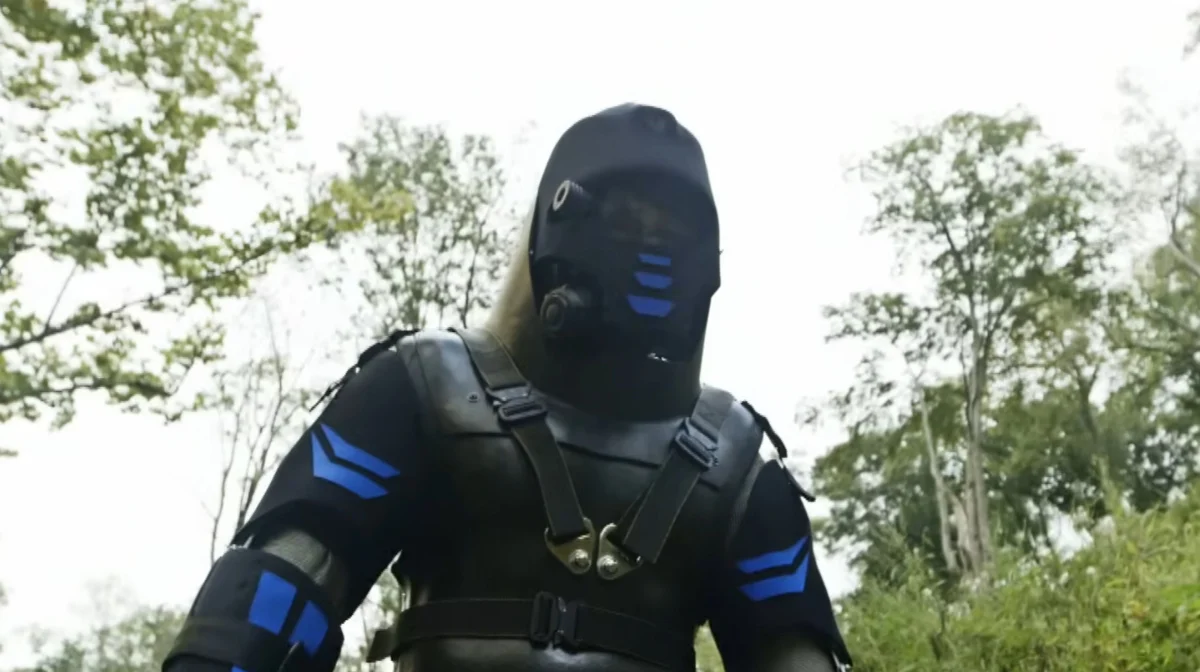
The setup was elaborate. Rosolie was encased in a custom-built, carbon-fiber suit designed to protect him from the extreme pressure of the snake’s constriction. To encourage the snake to view him as prey, the suit was doused in pig’s blood.
When the moment of contact finally arrived, the reality of the situation clashed violently with the marketing promise. As the massive anaconda approached, it initially displayed no interest in the human "prey." It was only after Rosolie actively provoked the animal, forcing it into a defensive posture, that the strike occurred.
The climax of the special was as brief as it was underwhelming. The anaconda constricted around Rosolie, its jaws momentarily encircling his helmet. However, as the pressure mounted, the reality of the danger set in. Rosolie, fearing that his arm was about to snap under the force of the constriction, aborted the attempt. The "swallowing" never happened. The camera cut away, the team intervened, and the experiment—the singular reason for the show’s existence—collapsed in real-time.
The Aftermath: Defending the Indefensible
Following the broadcast, the backlash on social media was immediate and vitriolic. Viewers felt cheated, accusing Discovery Channel of "false advertising." The term "bait-and-switch" became the standard descriptor for the experience.
Paul Rosolie, for his part, found himself on the defensive. In interviews following the special, he attempted to clarify the intent behind his actions. "The snake did not want to eat me, at first. She wasn’t interested," Rosolie admitted to Entertainment Weekly. "But once I showed myself as a predator and she got spooked, then she defended herself. She nailed me right in the face and the last thing I saw was her mouth wide open before everything went black. And then she wrapped me and I felt the suit cracking and my arms ripping out of their sockets. It was absolutely terrifying."
In an appearance on PIX11 News, Rosolie attempted to distance himself from the accusations of deception. "I did dozens of interviews before the show and I never said I got eaten," he argued. "I said we were going to try but you know, we gave it the best shot we could. We certainly got close."
Yet, these defenses did little to mitigate the public’s perception. The gap between the marketing—which featured images of a human being consumed—and the reality of a frightened snake defensive-striking a man in a suit was too wide to ignore.
Supporting Data and Ratings Success
While critics lambasted the show, the cold, hard data of the Nielsen ratings told a different story. In the business of television, "controversy sells," and "Eaten Alive" was a commercial windfall.
According to reports from Deadline, the special pulled in 4.1 million viewers. This made it the network’s highest-rated nature telecast since the 2010 hit "Life," and the top-performing telecast of 2014 for the key demographic of men aged 18 to 34.
For Discovery, the numbers validated the strategy of high-concept, high-risk programming. The "media circus" had succeeded in capturing a massive audience, even if it meant sacrificing the network’s long-term reputation for academic and scientific integrity. The data proved that, regardless of the quality of the content, the mere promise of a spectacle was enough to drive massive engagement in an increasingly fragmented media landscape.
The Ethical Implications for Reality Television
The "Eaten Alive" controversy served as a watershed moment for nature-based reality television. It raised fundamental questions about the responsibility of broadcasters to their subjects, both human and animal.
1. The Erosion of Scientific Credibility
Discovery Channel built its brand on the bedrock of education. By prioritizing sensationalism over scientific rigor, the network invited the critique that it was drifting away from its core mission. When a "science" special is framed as a horror movie, the barrier between objective reality and manufactured drama becomes porous, leading to a loss of trust among viewers who seek accurate information about the natural world.
2. Animal Welfare and Exploitation
The criticism from groups like PETA brought to light the moral ambiguity of "interaction" stunts. Does a naturalist have the right to stress an animal for the purpose of a television stunt? Modern conservationists argue that the best way to observe animals is through non-invasive research, not by forcing an apex predator into a position of fear. The stunt proved that the snake was not "hunting" the human, but rather defending itself, turning the entire premise of the show on its head—the human was the aggressor, not the serpent.
3. The "Spectacle" Economy
The success of "Eaten Alive" in terms of viewership highlights a troubling trend in modern media: the triumph of the hook over the content. When networks realize that a sensational headline can generate millions of viewers, there is little incentive to invest in slower, more nuanced, and genuinely educational content. This "spectacle economy" risks turning nature into a series of punchlines and stunts rather than a complex web of life to be understood and respected.
Conclusion: A Legacy of "What Could Have Been"
"Eaten Alive" remains a footnote in television history that continues to be cited whenever the topic of reality show ethics arises. It serves as a stark reminder of the limitations of human ego when pitted against the natural world.
The tragedy of the special is not that Rosolie failed to get eaten; it is that the potential for a genuine, respectful look at the life and behavior of the anaconda was discarded in favor of a cheap, adrenaline-fueled gimmick. The snake, an animal of immense power and beauty, was relegated to a side character in a human-centric drama that never achieved the profundity it claimed to seek.
Ultimately, the special proved that while Discovery Channel could successfully manufacture a media circus, they could not manufacture the truth. In their pursuit of the sensational, they lost sight of the awe-inspiring reality of nature itself—a reality that, quite frankly, never needed a carbon-fiber suit or a pig-blood-soaked costume to be fascinating. For the audience, the lasting lesson was perhaps the most important one: when a documentary promises to be "unbelievable," it is usually best to take that claim at face value.