LOS ANGELES — Speaking at the annual Goldman Sachs Communacopia media conference, IMAX Chief Executive Officer Rich Gelfond painted a remarkably bullish picture for the premium cinematic format. Driven by unprecedented global demand, blockbuster partnerships with visionary auteurs, and a rapidly expanding slate of alternative content, IMAX has already cleared a staggering $600 million in global box office receipts for the current quarter—a milestone made even more impressive by the fact that the period still has weeks remaining.
For comparison, Gelfond noted that the company’s previous historic high for an entire quarter hovered in the mid-$300 million range, a record set during the third quarter of 2023. Calling the current financial and cultural momentum "really just the beginning," the CEO laid out an ambitious roadmap that extends far beyond traditional Hollywood tentpoles, touching on everything from exclusive streaming partnerships and live music events to aggressive expansions into high-demand consumer merchandise.
Main Facts
The core of IMAX’s current dominance lies in its unique value proposition: delivering premium, immersive cinematic experiences on a fraction of the world’s total screen count.
- Box Office Milestones: IMAX global box office receipts have surpassed $600 million for the current quarter, obliterating previous company records.
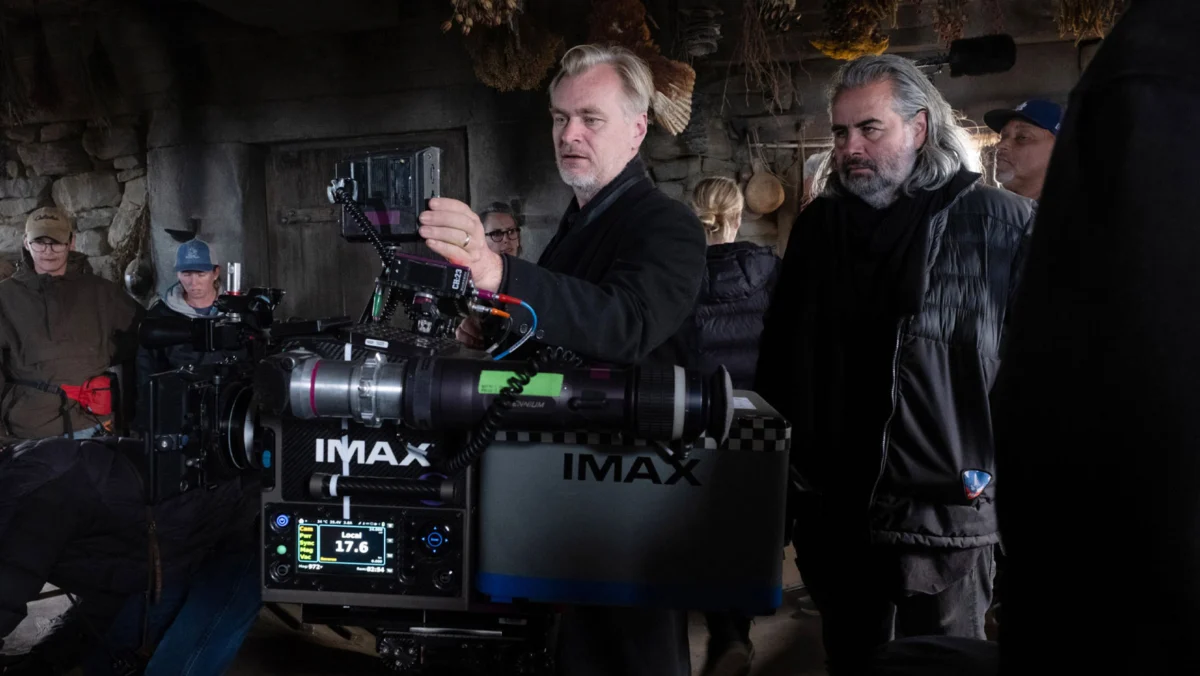
- The Odyssey Phenomenon: Universal and Christopher Nolan’s The Odyssey has emerged as a historic commercial juggernaut for the company. Gelfond revealed that the film is knocking on the door of half a billion dollars in IMAX-specific ticket sales alone—shattering the company’s all-time single-film record previously held by the initial run of James Cameron’s Avatar ($230 million).
- Financial Model & Revenue Splits: IMAX typically retains roughly 18 cents on every dollar generated at the box office, sharing the remainder with theater exhibitors and studio partners depending on the exact terms of the distribution agreement.
- Diversified Programming: Beyond traditional studio releases, IMAX has aggressively diversified its slate, incorporating live sports, music concerts (including an upcoming Oasis event), and localized regional-language cinema. Last year alone, the company distributed 120 unique pieces of content.
Chronology and Future Slate
IMAX’s growth trajectory is heavily supported by a meticulously planned release calendar that stretches well into the late 2020s.
Late 2024 to 2025: Immediate Pipeline
- Fall 2024: Sony’s Resident Evil is tracking exceptionally well among core demographics, alongside ongoing dominance from current blockbuster engagements.
- November 25, 2025: Netflix’s The Further Mis-Adventures of Cliff Booth, directed by David Fincher and starring Brad Pitt, will receive an exclusive two-week theatrical window in IMAX venues.
2026 to 2028: Long-Term Horizon
- Early 2027: Greta Gerwig’s highly anticipated literary adaptation Narnia: The Musician’s Nephew debuts globally in IMAX.
- March 2027: Amazon MGM’s The Thomas Crown Affair, directed by and starring Michael B. Jordan, is slated for a major spring release.
- 2028 and Beyond: Sony’s ambitious rollout of four interconnected Beatles biographical films will hit IMAX screens, alongside Joseph Kosinski’s high-octane period action feature Miami Vice ’85.
Supporting Data and Financial Health
The financial machinery driving IMAX extends well beyond the ticket booth. The company’s pivot in business models—moving away from a purely licensing-based structure to a collaborative joint-venture model—has allowed IMAX to directly fund installations, take a larger percentage of box office receipts, and accelerate capital returns.
Furthermore, consumer enthusiasm is bleeding over into retail. Gelfond highlighted a recent pilot test involving exclusive IMAX-branded popcorn buckets. Designed as collectible fandom items, an initial run of 2,500 units completely sold out within 90 minutes. Subsequent restocks similarly vanished as the company struggled to match consumer demand.
"When you look at our plans for 2027, we’re going to lean into merchandising," Gelfond stated, noting that building direct-to-consumer loyalty through physical goods represents a lucrative untapped vertical for the brand.
Advance ticket sales are also breaking historical trends. Discussing Denis Villeneuve’s upcoming Dune: Part Three, Gelfond pointed out that tickets went on sale roughly three months ahead of the film’s scheduled debut. "If you stopped today," he remarked, "it would be one of the highest pre-sales in our 60-year history."
Official Responses and Industry Relations
Addressing potential industry anxieties—such as theater chain consolidation and the shifting balance of power between traditional studios and streaming giants—Gelfond expressed supreme confidence in IMAX’s enduring market position.
The Power of Auteurs
Gelfond emphasized that IMAX’s primary allegiance is to filmmakers rather than specific corporate structures. "We’ve built this business over 60 years and we have the relationships… Those relationships with the filmmakers are not going anywhere," he said. By working directly with visionary directors who demand large-format framing, IMAX has insulated itself against broader industry volatility.
Moving Beyond the Superhero Monoculture
In a candid assessment of the contemporary cinematic landscape, Gelfond noted that traditional superhero films may have reached a saturation point regarding format exclusivity.
"As much as I still believe in superhero movies… I don’t think there’s anything so unique about [them] that says, ‘Wow, I’ve got to see this in IMAX.’ And, to some extent, we’ve seen over the last few years that some of that has run its course."
Instead, the long-term corporate objective is to cultivate a brand identity where audiences ask, "What’s playing at the IMAX theater?" rather than simply chasing individual intellectual properties.
Studios and Streamers Convergence
The friction between theatrical windows and streaming platforms has largely dissolved in the face of shared financial incentives. Studios now recognize that an IMAX run elevates a film’s global box office profile, while streaming services are learning that theatrical prestige boosts digital viewership metrics. Gelfond pointed to successful hybrid plays like Apple’s F1 (directed by Joseph Kosinski) and Amazon MGM’s Hail Mary (from Phil Lord and Christopher Miller) as proof of this symbiotic ecosystem.
Regarding potential studio mergers, Gelfond praised Warner Bros. as an exemplary partner and addressed ongoing consolidation rumors involving Paramount:
"We’ve talked many times to David Ellison and Paramount where if [the merger] does happen, they’re going to certainly ramp up their IMAX productions. We have a terrific relationship with [Paramount]. We’ve done the Mission Impossible movies, Top Gun: Maverick."
Implications
The staggering $600-plus million quarterly revenue milestone signals a structural maturation for IMAX. No longer viewed merely as an auxiliary premium option for a handful of summer tentpoles, the brand is successfully redefining itself as an independent cultural curator.
By aggressively diversifying its programming—blending auteur-driven science fiction, prestige streaming windows, archival music events, and sports—IMAX is actively training a new generation of cinemagoers to value the format above the platform. Coupled with aggressive expansions into direct-to-consumer merchandise and a fortified capital-sharing joint-venture model with global exhibitors, IMAX is positioning itself not just to survive the modern media landscape’s turbulence, but to dictate its rhythm.