GLOBAL — How often do you think about the Roman Empire? For millions of internet users, the viral meme sparked a self-reflection on a cultural obsession with antiquity. For television executives and historical enthusiasts alike, however, the fascination is a perennial state of being. Yet, despite the enduring global appetite for tales of centurions, senators, and Caesars, prestige television set in ancient Rome remains surprisingly rare.
Due to the astronomical financial and logistical burdens required to authentically reconstruct the ancient Mediterranean world—evidenced by blockbusters like Ben-Hur and Gladiator II consuming historic budgets—bringing the Roman epoch to the screen is a monumental gamble. Nevertheless, creators across generations have consistently mined this historical tapestry, balancing strict academic fidelity with unbridled theatrical spectacle.
This comprehensive review examines the 10 finest television series dedicated to the Roman Empire, analyzing their historical frameworks, production values, and enduring cultural impact.
1. Main Facts: The Economic and Logistical Hurdles of Roman Epics
The scarcity of television productions centered on ancient Rome is not a reflection of low audience demand, but rather a testament to the severe production barriers inherent to the genre. Recreating the architecture, costumery, military hardware, and socioeconomic ecosystem of a civilization that dominated the Mediterranean for centuries requires resources on par with major fantasy and science-fiction franchises.
Showrunners navigating this landscape generally fall into two distinct camps:
- The Purists: Productions that prioritize strict historical documentation, linguistic authenticity (such as incorporating Latin), and political nuance.
- The Stylists: Series that utilize the ancient world as a grand backdrop for pulp fiction, graphic novel aesthetics, camp, and hyper-stylized violence.
Despite these differing approaches, the following ten series represent the apex of Roman television, offering modern audiences a compelling lens through which to view a society that continues to shape contemporary politics, law, and culture.
2. Chronological Breakdown: From the Republic to the Fall
To understand how television has mapped the Roman epoch, it is helpful to examine these essential series in chronological order of the historical periods they depict—ranging from the twilight of the Republic to the early imperial intrigues and provincial invasions.
Spartacus (Starz)
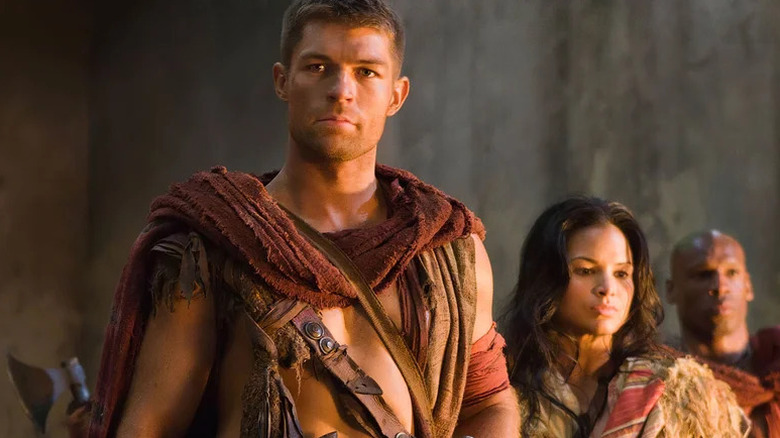
Set during the height of the Roman Republic, this Starz heavy-hitter follows a Thracian warrior (played first by Andy Whitfield and later by Liam McIntyre) forced into gladiatorial combat under the brutal ownership of Batiatus (John Hannah) and Lucretia (Lucy Lawless). Driven by the death of his wife, Spartacus orchestrates a legendary slave rebellion.
- Approach: Produced by Sam Raimi, the series adopts a graphic novel aesthetic, trading absolute historical realism for stylized violence, heightened melodrama, and uninhibited sexuality. Beneath the gore, however, lies a sharp, emotionally grounded narrative centered on the human cost of systemic oppression.
Rome (HBO)
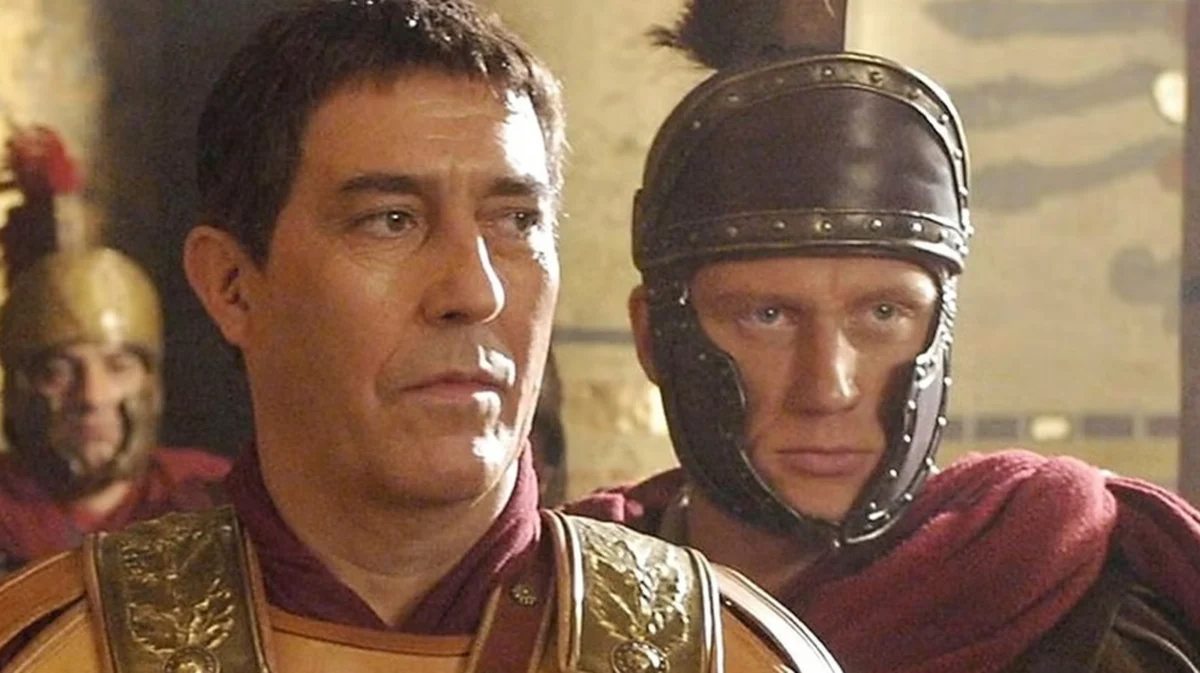
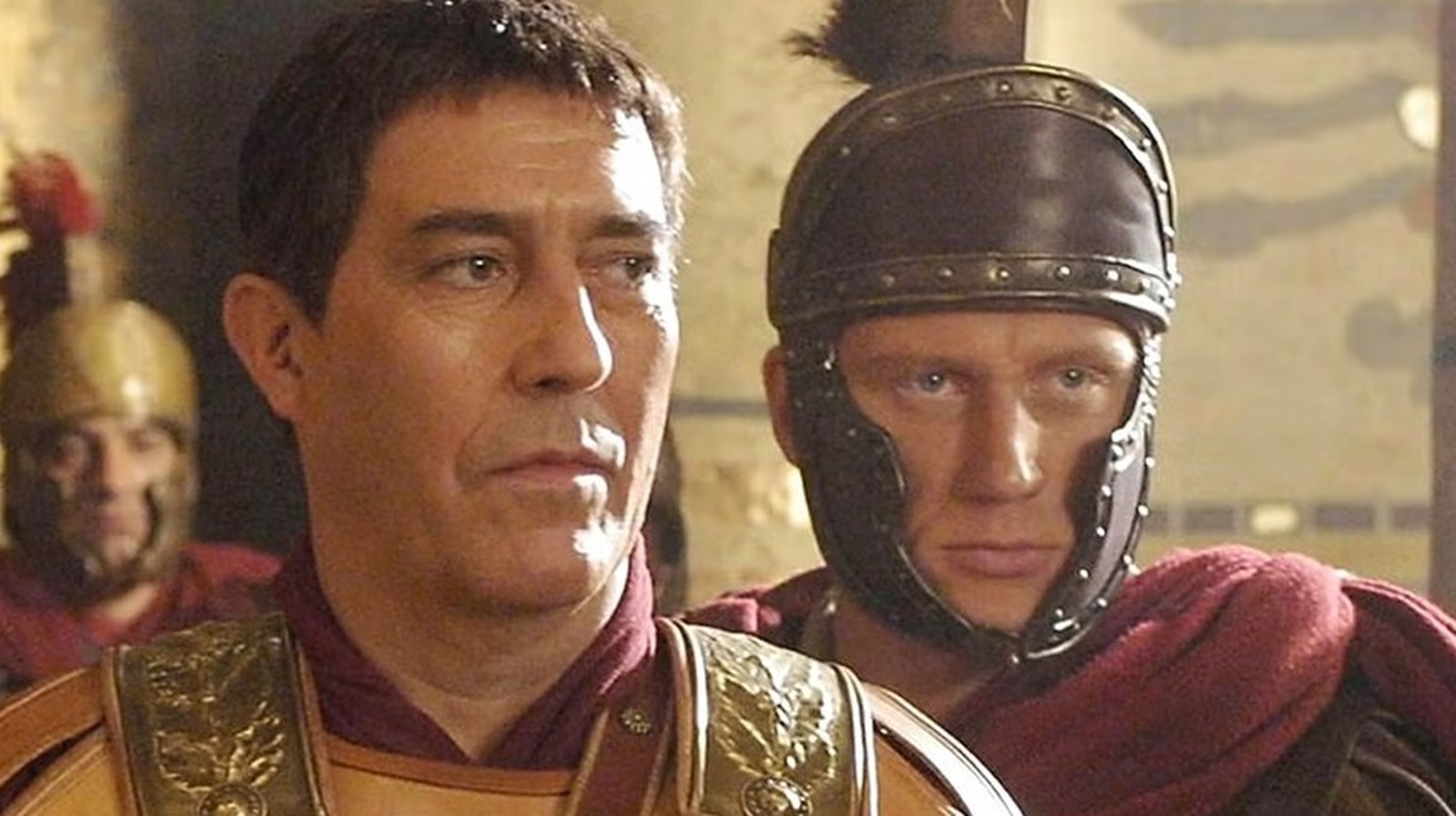
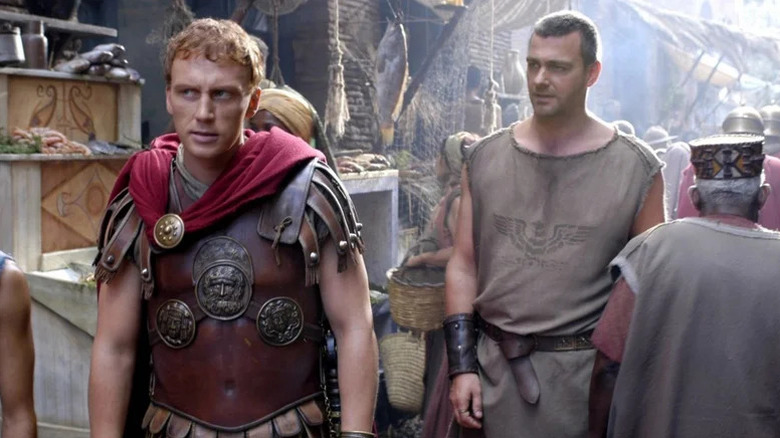
Ajoint venture between HBO and the BBC that aired from 2005 to 2007, Rome chronicles the violent, tectonic shift from the Roman Republic to the autocratic Roman Empire under Julius Caesar (Ciaran Hinds).
- Approach: Rather than exclusively tracking the patrician class, the narrative unfolds primarily through the perspective of two ordinary Roman soldiers, Titus Pullo (Ray Stevenson) and Lucius Vorenus (Kevin McKidd). Operating with a massive $100 million per-season budget, the series set a new benchmark for historical television production design, ultimately paving the way for the success of Game of Thrones.
I, Claudius (BBC)
Widely regarded as the gold standard of historical television, this 1976 BBC miniseries is narrated by an elderly Emperor Claudius (Derek Jacobi) and tracks the murderous reigns of Augustus (Brian Blessed), Tiberius (George Baker), and Caligula (John Hurt).
- Approach: Filmed almost entirely on modest soundstages with minimal battle scenes, I, Claudius relies exclusively on Shakespearean-level writing, theatrical direction, and masterclass performances from a cast that includes Patrick Stewart and Siân Phillips. It effectively invented prestige television decades before the term existed.
The Caesars (ITV)
Premiering eight years before I, Claudius, this 1968 ITV production covered similar historical ground under the pen of screenwriter Philip Mackie.
- Approach: Emphasizing factual rigor over theatricality, The Caesars traces the consolidation of absolute power from Augustus (Roland Culver) through Tiberius (André Morell), Caligula (Ralph Bates), and Claudius (Freddie Jones). While lacking grand cinematic sets, its quiet character studies and stellar performances anchor a powerful black-and-white epic.
Domina (Sky TV)
Shifting the imperial perspective to the women who maneuvered behind the throne, Domina re-examines the life of Livia Drusilla.

- Approach: Beginning with her youth as Nadia Parkes and tracing her maturity under the portrayal of Kasia Smutniak, the series follows her marriages to Tiberius Claudius Nero and later Augustus (Matthew McNulty). It transforms familiar political tropes into an engaging, female-led thriller highlighting the brutal survival mechanisms required in the early Empire.
Barbarians (Netflix)
Focusing on the friction points along the imperial frontiers, Netflix’s Barbarians leads directly into the historic Battle of Teutoburg Forest in 9 E.D.
- Approach: The series centers on Arminius (Laurence Rupp), a Germanic tribal leader raised by Romans who ultimately turns against his adoptive empire. With Roman characters speaking ancient Latin and meticulous attention paid to archaeological records of military equipment, the series strikes a strong balance between historical accuracy and pulse-pounding battle sequences.
Britannia (Prime Video)
Set in 43 A.D. during the second Roman invasion of Britain, this Prime Video series treats history as a psychedelic playground.
- Approach: General Aulus Plautius (David Morrissey) encounters defiant Celts, hallucinogen-using druids, and fierce tribal leaders like Princess Kerra (Kelly Reilly) and Queen Antedia (Zoë Wanamaker). Unapologetically campy and scored to classic rock tracks like Donovan’s "Hurdy Gurdy Man," Britannia prioritizes pure, unadulterated entertainment over historical textbook accuracy.
Attila (USA Network / TV Movie)
Following the decline of the Western Roman Empire, this 2001 miniseries stars Gerard Butler as the legendary Hunnic leader.
- Approach: Tracing Attila’s rise to power alongside his complex geopolitical chess match with the calculating Roman general Flavius Aetius (Powers Boothe), the production leans heavily into romantic subplots and melodrama. Nevertheless, dynamic cinematography, thunderous acting (including Tim Curry), and grand scale make it a notable entry in the genre.
Masada (ABC)
Premiering in 1981 at the height of the historical miniseries craze, Masada adapts Ernest Gann’s novel The Antagonists.
- Approach: Set in 70 A.D., the narrative dramatizes the Jewish rebellion against Roman occupation in Judea. Featuring a commanding performance by Peter O’Toole as Roman General Lucius Flavius Silva and Peter Strauss as rebel leader Eleazar Ben Yair, the $22 million desert-shot epic paints a harrowing, balanced portrait of two men bound by duty and ideological conviction.
Plebs (ITV)
Proving that ancient Rome could successfully host situational comedy, ITV’s Plebs applies modern sitcom tropes to the ancient lower classes.
- Approach: Created by Sam Leifer and Tom Basden, the show follows two mundane Roman suburbanites, Marcus (Tom Rosenthal) and Stylax (Joel Fry), alongside their lazy slave Grumio (Ryan Sampson). Interweaving scatological humor, modern slang, and anachronistic soundtracks with genuine classic degrees held by its creators, Plebs remains the most unique and irreverent take on Roman life.
3. Supporting Data: Production Scales and Cultural Footprint
To contextualize the evolution of these productions, industry analysts often point to the stark contrast in budgets and distribution models across the decades:
| Title | Network / Platform | Primary Era Depicted | Production Style / Focus |
|---|---|---|---|
| I, Claudius | BBC / PBS | Early Julio-Claudian Dynasty | Soundstage-bound, theatrical, character-driven |
| Rome | HBO / BBC | Fall of Republic / Rise of Empire | Cinematic realism, high budget, socio-economic scope |
| Spartacus | Starz | Third Servile War (Republic) | Graphic-novel aesthetic, hyper-stylized violence |
| Barbarians | Netflix | Germanic Campaigns (Early Empire) | Linguistic authenticity, tactical warfare |
| Plebs | ITV | Suburbia of Ancient Rome | Anachronistic sitcom, lowbrow humor |
While older productions like I, Claudius and The Caesars relied heavily on the theatrical tradition of the British stage, modern streaming platforms like Netflix, Prime Video, and HBO have pivoted toward high-definition immersion, computer-generated set extensions, and archaeological accuracy regarding military hardware.
4. Official Responses and Critical Reception
Television critics and historical consultants have long debated the fine line between dramatic license and academic integrity in historical fiction.
When Rome premiered on HBO, classical historians widely praised its commitment to capturing the grime, architectural vibrancy, and brutal political maneuvering of the late Republic, even while acknowledging fictionalized composite characters like Pullo and Vorenus. Similarly, academic advisors for Netflix’s Barbarians commended the production team for enforcing the use of Latin among Roman legions, arguing that linguistic realism deepens audience immersion.
Conversely, campier entries like Britannia and Spartacus have faced playful scrutiny from historians for historical liberties—such as mixing Roman military campaigns with druidic sorcery or applying modern counter-culture aesthetics to antiquity. However, cultural critics maintain that these stylized deviations serve a vital purpose: they lower the barrier to entry for younger generations, transforming dusty textbook figures into vibrant, breathing antiheroes.
5. Implications: Why Ancient Rome Endures in Modern Media
The enduring popularity of these ten television series points to a broader psychological and cultural reality. As scholars frequently note, modern democratic societies see mirrored reflections of their own political anxieties within the governance, corruption, military overreach, and social stratification of the Roman Empire.
As long as viewers grapple with questions of imperialism, institutional decay, political polarization, and the pursuit of individual freedom against oppressive states, screenwriters will continue to look to the Tiber River for inspiration. Whether through the gritty realism of Rome, the theatrical brilliance of I, Claudius, or the comedic absurdity of Plebs, the Roman Empire will continue to command television screens for generations to come.