Main Facts
Long before he was tasked with dodging terrifying biological weapons and navigating post-apocalyptic nightmares as a plucky courier in Sony Pictures’ blockbuster Resident Evil, actor Austin Abrams was already cutting his teeth in the genre television landscape. Nearly a decade prior to his modern sci-fi action hero turns, Abrams made a lasting, albeit infamous, impression on television’s ultimate zombie phenomenon: AMC’s juggernaut adaptation of The Walking Dead.
Appearing during the pivotal fifth and sixth seasons of the landmark series, Abrams stepped into the shoes of Ron Anderson, a resident of the seemingly utopian Alexandria Safe Zone. What began as a standard teenage subplot—complete with high school-style rivalries and suburban awkwardness—quickly deteriorated into a dark character study. Fueled by a toxic mix of profound family trauma, the brutal domestic abuse and subsequent death of his father, and a bitter romantic feud with Carl Grimes (Chandler Riggs), Ron transformed from an innocent neighbor into a volatile antagonist.
Ron’s tragic, reckless arc culminated in one of the most infamous episodes in The Walking Dead history: Season 6, Episode 9, titled "No Way Out." During a desperate, blood-soaked attempt to navigate a massive walker herd, Ron’s fragile psyche completely shatters following the gruesome deaths of his mother and brother. Turning his pent-up fury and pent-up resentment away from the undead and directly toward Rick Grimes (Andrew Lincoln), Ron raises a firearm to execute the group’s leader.
While franchise stalwart Michonne (Danai Gurira) intervened just in time—thrusting her katana through Ron’s chest to save Rick—she could not prevent the catastrophic final act of his rebellion. As Ron slumped toward his demise, his finger convulsed on the trigger, firing a stray bullet directly into Carl Grimes’ face. The incident cost Carl his right eye, altering the character’s physical appearance and psychological journey for the remainder of his tenure on the show.
Today, as Abrams celebrates massive box office milestones with the release of the record-shattering Resident Evil, the legacy of his villainous breakout role continues to follow him. Die-hard fans of The Walking Dead have famously long memories, ensuring that Abrams’ youthful descent into villainy remains an unforgettable milestone in modern horror-television history.
Chronology of a Genre Evolution
To understand Austin Abrams’ place in horror and zombie iconography, it is essential to trace the timeline of his career, which bridges the golden age of prestige cable television with high-octane cinematic adaptations.
The AMC Era: Entering the Walls of Alexandria (2015–2016)
When Abrams first stepped onto the set of The Walking Dead in 2015, the series was at the absolute peak of its cultural dominance. Introduced in Season 5, Episode 12 ("Remember"), the character of Ron Anderson initially appeared as an ordinary teenager welcoming Rick Grimes’ battered group into the sheltered, suburban confines of Alexandria.
However, the chronology of Ron’s downfall was meticulously paced. Underneath the veneer of safety, the cracks in the Anderson household were deep. Viewers quickly learned of the domestic tyranny inflicted by Ron’s father, Pete Anderson, whom Rick ultimately executed to protect the community. This event set off a chain reaction. Abrams portrayed a young man caught between a distorted view of protection and raw, unadulterated grief.
By Season 6, the timeline accelerated into chaos. The collapse of Alexandria’s outer walls forced the community into a perilous silent march through a massive walker horde, disguised in zombie gore. It was here that Ron’s internal resentment boiled over. The tragic sequence in "No Way Out" sealed Ron’s fate and permanently marked the physical trajectory of Chandler Riggs’ Carl Grimes, cementing Abrams as the catalyst for one of the series’ most devastating permanent injuries.
The Interim Years: Dramatic Shifts and Indie Darlings
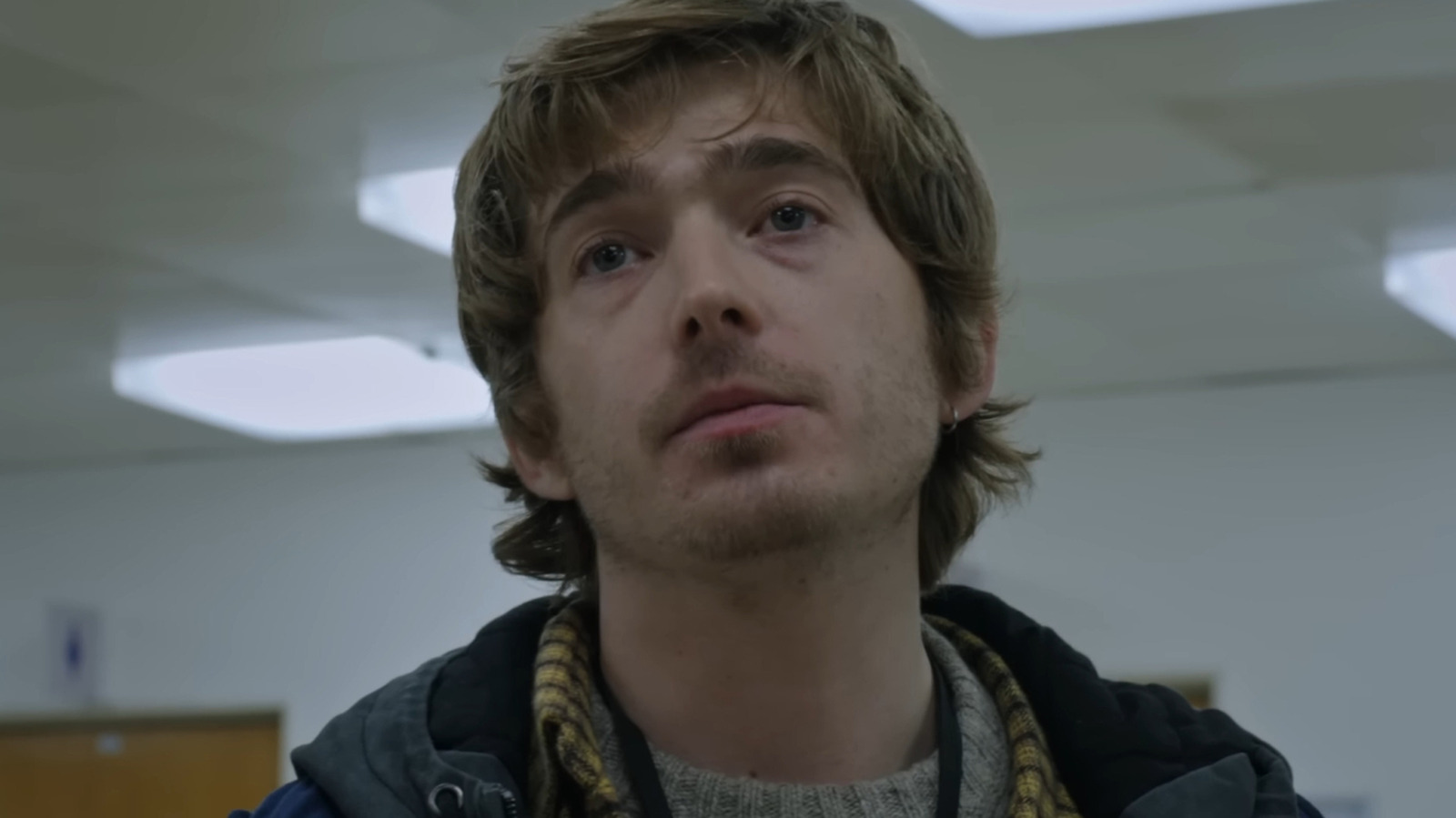
Following his departure from The Walking Dead, Abrams deliberately steered away from typecasting, building a critically acclaimed film and television resume. He took on diverse roles in prestige television and indie cinema, including HBO’s Euphoria as Ethan Lewis, Amazon’s Chemical Hearts, and dark comedy roles that showcased his versatility far beyond the horror landscape. This expansive career trajectory allowed him to hone his craft, transforming from a promising teen actor into a commanding leading man capable of anchoring major studio properties.
The Sci-Fi Cinematic Leap: Resident Evil (2026)
Roughly ten years after his fateful gunshot in Alexandria, Abrams returned to the zombie and creature-feature space on an entirely different scale. Starring as a determined courier battling terrifying biological monstrosities in Sony Pictures’ Resident Evil (2026), Abrams transitioned from the indie-dramatic space back into the heart-pounding world of survival horror. The film made history by securing the largest opening weekend for the storied video game adaptation franchise, instantly revitalizing the IP and placing Abrams firmly at the center of a new global blockbuster phenomenon.
Supporting Data and Fan Reception
The staying power of Abrams’ performance as Ron Anderson is backed by both pop culture metrics and persistent fan engagement. The Walking Dead, during its prime broadcasting years, routinely drew audiences exceeding 10 to 15 million live viewers per episode, ensuring that seminal moments like the mid-season premiere of Season 6 were viewed by a massive global audience.
When Ron shot out Carl Grimes’ eye, the moment instantly ranked among the most shocking comic-to-screen adaptations in television history. Because Carl was a foundational, legacy character who had grown up alongside the audience since Season 1, the fandom’s reaction was immediate and visceral.
Years later, the internet still holds onto the grudge. In a 2026 interview with USA Today, Abrams reflected candidly on the lingering impact of his Walking Dead character:
"I did have someone over there tell me that their boyfriend hated me for shooting Carl’s eye out. But that’s like a once-a-year thing, I think. Yeah, I’m happy about that though. I’m like, you know, my character got to leave a mark."
Social media platforms like Reddit frequently serve as cauldrons for this specific brand of nostalgic fan animosity. Discussing the juxtaposition of seeing Abrams lead a major cinematic franchise, a fan on the platform’s r/TWD community recently wrote:
"Couldn’t quite put my finger on why I felt hate for the new ‘Resident Evil’ actor… Then I remembered who he is. The reason Carl lost an eye, and the reason a lot of people almost died multiple times. That kid was super annoying haha."
Despite the occasional good-natured hostility from passionate horror fans, the sheer volume of engagement highlights the effectiveness of Abrams’ performance. Playing a character explicitly written to frustrate the audience is a difficult tightrope walk for any young actor, yet Abrams executed it so well that viewers still vividly remember the bitter rivalry a decade later.
Official Responses and Industry Impact
The intersection of Abrams’ past work on The Walking Dead and his present-day box office dominance with Resident Evil has generated considerable press coverage within the entertainment industry. Studio executives and interviewers alike have been quick to point out the poetic irony of an actor returning to the zombie genre a decade after playing the character who inflicted one of TV history’s most infamous accidental mutilations.
Industry analysts have noted that actors who successfully transition from prestige cable villains to mainstream sci-fi/action protagonists often enjoy greater longevity in Hollywood. Abrams’ ability to laugh off the lingering fan resentment—acknowledging that he is "happy" his character "got to leave a mark"—demonstrates a media-savvy maturity that endears him further to both fandoms.
Furthermore, Sony Pictures’ strategic casting of Abrams in Resident Evil capitalized heavily on his established cult-following and dramatic credentials. By selecting an actor with genre history, the production signaled to horror aficionados that the film would respect the gritty, high-stakes tone traditionally associated with premier apocalyptic entertainment.
Implications for the Horror Genre and Abrams’ Career
Austin Abrams’ career arc—from a tragic, traumatized suburban antagonist in The Walking Dead to a resilient courier fighting bio-weapons in Resident Evil—offers fascinating implications for the modern evolution of the horror and zombie genres.
1. The Longevity of Genre Nostalgia
In the era of prestige streaming and endless franchise reboots, an actor’s past genre work never truly disappears. Platforms like Reddit, TikTok, and specialized entertainment sites ensure that classic television moments are perpetually recycled for new generations of viewers. Abrams’ experience proves that playing a deeply flawed, frustrating antagonist can forge a permanent bond with a fandom, transforming an actor into a permanent piece of television folklore.
2. Redefining the "Action Hero" Archetype
Abrams represents a departure from the traditional, hyper-muscular action heroes of the 1980s and 90s. Much like his nuanced, fragile portrayal of Ron Anderson—whose villainy stemmed from vulnerability, isolation, and domestic abuse rather than pure evil—his work in Resident Evil relies on a grounded, everyman sense of survival. This evolution mirrors a broader industry trend where audiences increasingly prefer relatable, emotionally complex protagonists who feel genuinely endangered by their environments.
3. Box Office Validation
With Resident Evil launching to record-breaking numbers in September 2026, Abrams has successfully proven his viability as a bankable cinematic lead. The seamless transition from television villain to franchise savior cements his status as a versatile talent capable of navigating both intimate character dramas and multi-million-dollar spectacle. Whether fans are rewatching his tragic downfall in Alexandria or cheering for his survival against Umbrella Corporation monstrosities, Austin Abrams has firmly established himself as an enduring icon of modern zombie fiction.