
By C21 Reporters | September 15, 2026
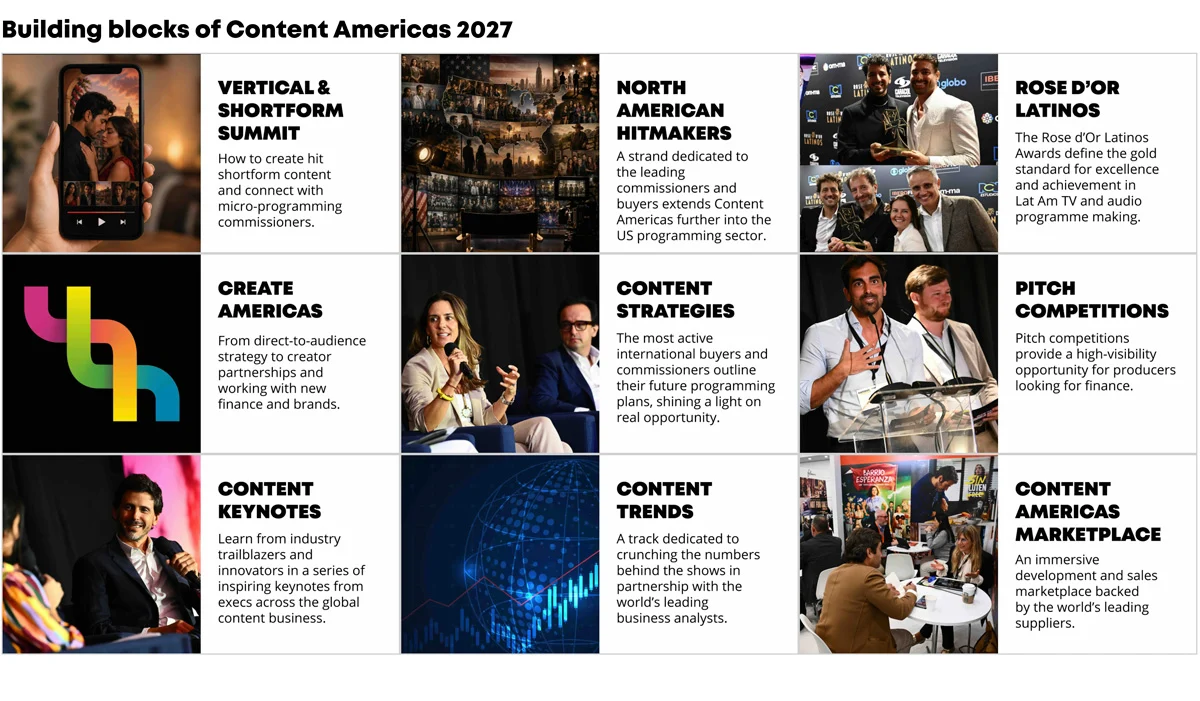
As the media landscape undergoes a seismic shift toward mobile-first consumption, the television industry is bracing for a fundamental transformation. With audiences increasingly gravitating toward premium, bite-sized narratives on their smartphones, the traditional broadcast model is being challenged by the rapid rise of vertical and shortform content. To address this pivotal transition, Content London has confirmed a heavyweight panel of industry leaders to headline the third annual Vertical Programming & Microdrama Summit, scheduled for this year’s event from November 30 to December 3.
Main Facts: The New Guard of Digital Storytelling
Content London, the industry’s premier global gathering, will serve as the incubator for the next phase of digital evolution. The upcoming Vertical Programming & Microdrama Summit will feature insights from three prominent European executives: Marianne Lévy-Leblond (Arte France), Lotte Vermeir (Play Media), and Laura Mae Harding (ZDF).

The session aims to dissect the driving forces behind the European investment boom in vertical content. As mobile screens become the primary window through which younger demographics experience storytelling, the panel will explore how traditional broadcasters can pivot their production models to meet this demand without sacrificing the quality that has historically defined their brands. The discussion will specifically focus on:
- Strategy Integration: How vertical content fits into broader, multi-platform content roadmaps.
- Commissioning Shifts: What commissioners are actually looking for when greenlighting mobile-first projects.
- Business Models: Navigating the path to profitability in a landscape dominated by micro-durations.
Chronology: The Rise of the Micro-Narrative
The journey toward vertical dominance did not happen overnight. To understand the significance of this summit, one must trace the timeline of the industry’s pivot toward the vertical format.
- Early 2020s: The TikTok Catalyst. The explosive growth of short-form platforms forced legacy media to acknowledge that "appointment viewing" was no longer the sole arbiter of success.
- 2024: The Pilot Phase. Broadcasters began testing the waters with "snackable" spin-offs of established hits, primarily as marketing tools rather than standalone products.
- 2025: The Investment Spike. Data from the previous year indicated that audiences were willing to engage with high-production-value drama series designed specifically for the 9:16 vertical aspect ratio.
- Late 2026: The Strategic Integration. As we stand in September 2026, the conversation has moved from "Is this a fad?" to "How do we scale this for a global audience?"
Supporting Data: Why Vertical is Non-Negotiable
The urgency behind this summit is backed by shifting consumption metrics. Industry analysts have noted that the "mobile-first" consumer is no longer a niche demographic; they are the majority.
Research presented in the lead-up to Content London indicates that the average daily time spent on mobile devices for entertainment purposes has eclipsed linear television viewing for audiences aged 18–34. Furthermore, the completion rates for high-quality, vertically shot micro-dramas are significantly higher than traditional long-form content repurposed for mobile.
For broadcasters like Arte, ZDF, and Play Media, the challenge is twofold: maintaining the public service remit of providing high-quality educational and cultural content, while simultaneously optimizing that content for an environment characterized by rapid-fire scrolling and reduced attention spans.
Profiles in Leadership: The Panelists
Marianne Lévy-Leblond (Arte France)
As Head of Digital Content at Arte France, Lévy-Leblond has been at the forefront of digital-first experimentation. Her portfolio includes a diverse range of projects that blur the lines between traditional broadcast and interactive media. From Twitch-based talk shows like Jour de Play to the immersive, multi-platform Looking for Fael, her work demonstrates a commitment to meeting audiences where they live—on their devices. Her presence at the summit will provide crucial insights into how public broadcasters can maintain creative integrity while experimenting with gaming and social platforms.

Lotte Vermeir (Play Media)
Lotte Vermeir brings a wealth of experience in audience research and digital transformation. Having spent over 16 years at Belgium’s VRT, she is uniquely positioned to speak on the structural changes required to launch successful shortform initiatives. Her current work on "Play Shorts" is considered a blueprint for regional broadcasters looking to build a localized vertical ecosystem that can compete with global streaming giants.
Laura Mae Harding (ZDF)
Harding represents the German powerhouse ZDF, with a focus on international co-productions. Her role as a commissioning editor for ZDFneo—the channel’s younger-skewing arm—makes her a vital voice on how to adapt traditional drama-making for a shorter, punchier format. Her perspective on international partnerships will be essential for producers wondering how to finance and distribute vertical content across borders.
Official Responses and Strategic Implications
The industry response to this shift has been mixed, ranging from cautious optimism to aggressive expansion.
"We are at a tipping point," says a spokesperson for Content London. "The vertical screen is no longer just a companion; it is a primary destination. Broadcasters who fail to adapt their storytelling to the vertical format risk losing an entire generation of viewers. The panel this December isn’t just about trends; it’s about survival and innovation."
The Implications for Producers and Commissioners
For independent producers, the implications are profound. The shift toward vertical drama necessitates a new visual language. Cinematography, editing, and narrative pacing must all be recalibrated for the smartphone. During the summit, the panel will address the "production gap"—the difficulty in finding crews and writers who are as comfortable with 9:16 storytelling as they are with 16:9 cinematic production.
Furthermore, the discussion will delve into the economics of the format. Can a shortform, vertical drama command the same premium advertising rates as a standard television series? If not, what does the business model look like? Is it subscription-based, ad-supported, or a hybrid model involving brand partnerships and cross-platform synergy?

The Future of Content London
As Content London approaches, the anticipation is building. The event remains a crucial touchpoint for the industry, offering a rare opportunity for networking and high-level strategy. With the SEPTEMBER EARLYBIRD DISCOUNT RATE of £1199, attendees are encouraged to register before the price increases, saving £200 on the standard rate.
The inclusion of the Vertical Programming & Microdrama Summit signals that the event is not merely looking back at the year in television, but is actively shaping the future of the medium. As more speakers are announced in the coming weeks, the industry waits to see who else will join this crucial conversation on the future of the screen.
Registering for the Future
The summit is expected to be one of the most attended sessions at this year’s conference. For producers, broadcasters, and digital strategists, the insights shared by Lévy-Leblond, Vermeir, and Harding will be essential for anyone looking to navigate the vertical frontier.

To learn more about the event and secure your place at the table, click here to visit the official Content London registration page.
In a world where content is king, the format is becoming the kingdom. The question for every creator and commissioner this winter will be: are you ready to go vertical?
Content London takes place from November 30 to December 3, 2026. Stay tuned for further announcements regarding the full speaker lineup and event programming.