For decades, the audio landscape was governed by a simple, immutable rule: if you wanted serious sound, you needed a tangled nest of copper wires. High-fidelity audio was the domain of heavy amplifiers, massive passive speakers, and thick, expensive cabling. However, the rise of Bluetooth and Wi-Fi streaming has fundamentally altered this hierarchy. Today, the debate is no longer just about "convenience versus quality," but rather a nuanced assessment of signal paths, component modularity, and environmental integration.
To determine whether your next system should be tethered or untethered, one must look beyond the marketing jargon and examine the underlying physics and engineering of modern sound reproduction.
Main Facts: The Anatomy of Audio Connections
The primary misconception in the audio world is that a physical wire acts as a "magic bullet" for sonic performance. In reality, the connection type is merely one link in a chain that includes the source material, the Digital-to-Analog Converter (DAC), the amplification stage, the speaker drivers, and the acoustic properties of the listening room.
The Wired Paradigm
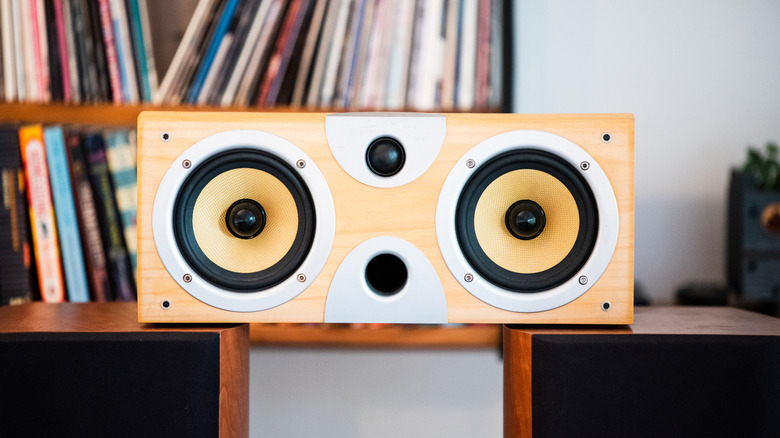
Wired systems typically fall into two categories: Passive and Active.

- Passive speakers require an external amplifier to drive the signal. This offers the audiophile a high degree of modularity; you can swap out an aging amplifier for a newer model with better processing without discarding the speakers.
- Active (Powered) speakers contain their own built-in amplification. While they require fewer components, they are generally less upgradeable.
The Wireless Paradigm
Wireless speakers are defined by their transmission method—Bluetooth or Wi-Fi—but they are rarely truly "cordless." Even the most advanced wireless home speakers require a power source, usually a wall outlet.
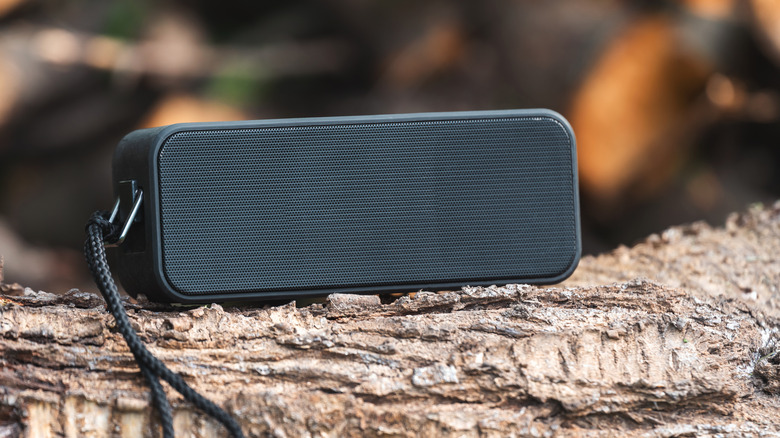
- Bluetooth: Operates via direct point-to-point connection between a source (like a smartphone) and the speaker. It is the gold standard for portability but traditionally struggles with bandwidth limitations and latency.
- Wi-Fi: Utilizes the home network to transmit audio data. This allows for higher bitrates, multi-room synchronization, and significantly greater range, though it introduces a dependency on your router’s stability.
Chronology: The Evolution of Audio Transmission
The journey from the phonograph to modern high-resolution streaming has been a march toward efficiency and accessibility.
- The Analog Era (1950s–1990s): Audio was strictly wired. High-fidelity was achieved through high-quality copper and specialized analog connections. The limitations were physical—the distance between the amplifier and the speaker was strictly dictated by the length of the wire.
- The Digital Revolution (2000s): The emergence of the MP3 and later streaming services necessitated new ways to move audio data. Wired connections remained the benchmark, but early digital wireless attempts began to surface, often plagued by interference and dropouts.
- The Bluetooth Boom (2010s): Bluetooth became the standard for convenience. Early iterations were criticized for "lossy" compression, which stripped away audio data to accommodate the limited bandwidth of the wireless link.
- The High-Res Wireless Present (2020s–Present): With the introduction of high-bandwidth codecs like LDAC and Qualcomm’s aptX Lossless, the "wireless equals bad" argument has lost its technical footing. Simultaneously, Wi-Fi multi-room systems have reached a level of sophistication where they can handle lossless FLAC and ALAC files with ease.
Supporting Data: Why Latency and Bandwidth Matter
The conflict between wired and wireless is often a battle of data throughput and synchronization.
The Latency Problem
Latency is the time delay between the source sending the signal and the speaker producing the sound. In a wired setup, latency is negligible—effectively zero. In Bluetooth systems, this delay is inherent to the compression and decompression process.

- Impact on Gaming: In competitive gaming, a 100ms delay can be the difference between life and death.
- Impact on Video: Most modern operating systems compensate for audio lag by delaying the video feed to match the audio, but this is a software-based "band-aid" that doesn’t fix the root cause.
The Bandwidth Ceiling
Wireless transmission is limited by the "pipe" through which the audio travels. Standard Bluetooth "Classic" often relies on SBC or AAC codecs, which compress audio aggressively. However, the data confirms that this is changing. AptX Lossless technology now allows for CD-quality (16-bit/44.1kHz) audio transmission over Bluetooth, bridging the gap between the convenience of a smartphone and the expectations of a high-fidelity enthusiast.
Official Perspectives: Industry Standards and Future-Proofing
Industry experts from organizations like the Bluetooth Special Interest Group (SIG) emphasize the shift toward LE Audio (Low Energy Audio). LE Audio introduces the LC3 codec, which is designed to be more efficient than its predecessors, providing higher audio quality at lower data rates.
Conversely, high-end audio manufacturers—such as KEF, Bowers & Wilkins, and Sonos—have pivoted their engineering focus. They are increasingly treating wireless not as a compromise, but as a feature. Many of these manufacturers now integrate DSP (Digital Signal Processing) into their active wireless speakers, allowing them to optimize the frequency response in real-time, an feat that is much more difficult to achieve with traditional passive wired systems.
Implications: Making the Right Choice for Your Space
Deciding between wired and wireless is ultimately an exercise in identifying your personal lifestyle constraints.
The Case for Wired
If you are building a permanent, high-end home theater or a dedicated stereo listening room, wired remains the superior choice.
- Modularity: You can upgrade your amplifier, your DAC, or your speakers independently over a period of years.
- Reliability: You are immune to network congestion, firmware update failures, or "device-not-found" errors that plague smart speakers.
- Performance: For critical listening of uncompressed high-resolution audio, a wired chain remains the gold standard for signal integrity.
The Case for Wireless
If you value aesthetics, multi-room flexibility, or portability, wireless is the clear winner.
- Multi-Room Integration: Using platforms like Sonos, HEOS, or AirPlay 2, you can create a seamless soundscape across your entire home. This is virtually impossible to achieve with a traditional wired setup without massive structural modifications to your home.
- Portability: A portable Bluetooth speaker allows you to bring your music from the living room to the patio without moving a single cable.
- Space-Saving: In modern urban apartments, the lack of an external amplifier and speaker wire clutter is a massive design advantage.
The Verdict: It’s Not Either/Or
The most sophisticated setups today often utilize a hybrid approach. Many audiophiles now use a high-quality wired system for their primary listening room, while employing a high-end wireless system (like a Wi-Fi-enabled multi-room setup) for secondary areas of the house.
When selecting your next speaker, move away from the binary "wired vs. wireless" mindset. Instead, ask yourself three questions:
- Do I plan to upgrade my components individually over time? (If yes, go wired).
- Is my music primarily for background listening in multiple rooms? (If yes, go Wi-Fi wireless).
- Does my listening involve high-stakes gaming or video production where latency is unacceptable? (If yes, stay wired).
By prioritizing your specific use case over outdated assumptions, you can curate an audio experience that fits your life perfectly, ensuring that your music sounds exactly how you want it to, whether it arrives via a high-end copper cable or a high-bandwidth wireless signal.