By Alyssa Mercante
September 16, 2026
Main Facts
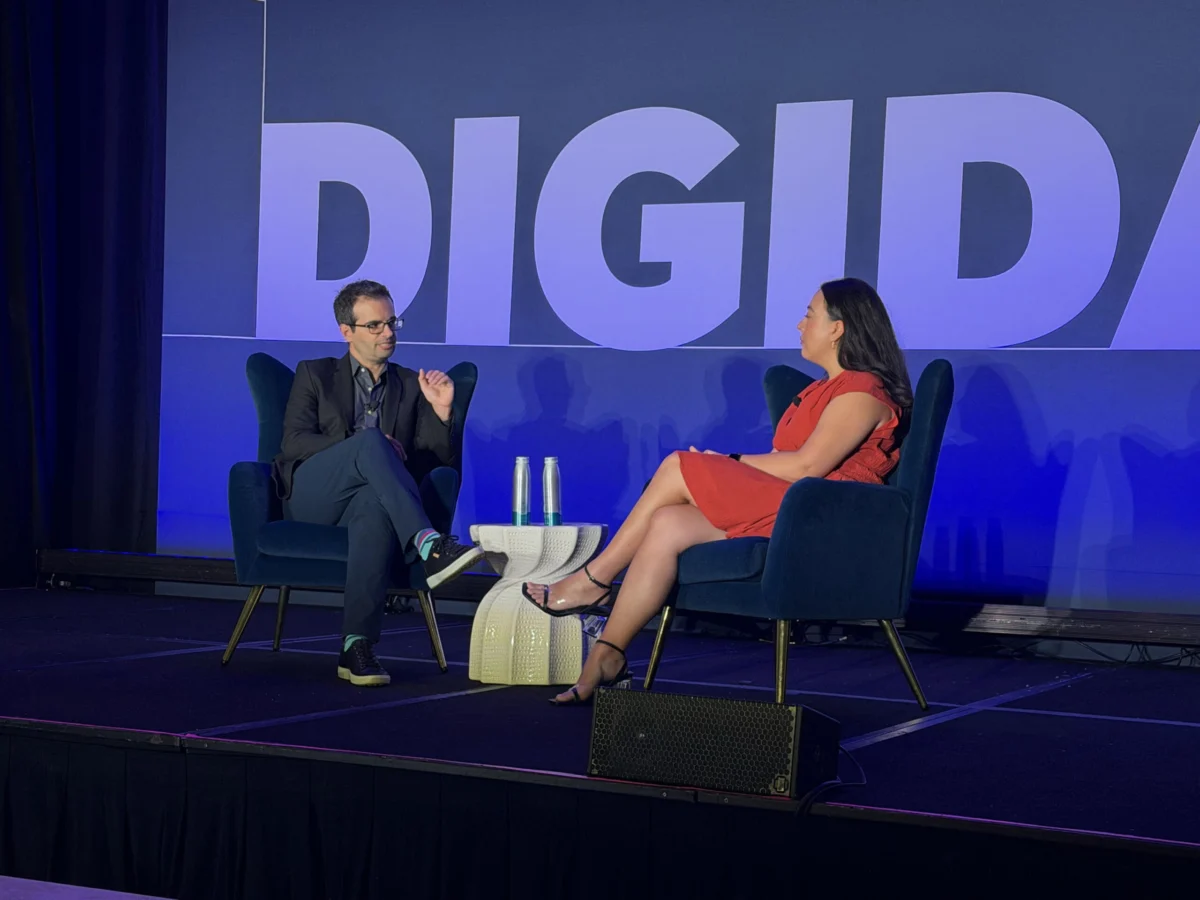
The Interactive Advertising Bureau (IAB) hosted its inaugural Creatorfronts in New York City, bringing together heavyweights from Meta, YouTube, Agentio, and various brand boardrooms to diagnose a persistent friction point in modern marketing: why a booming $44 billion creator economy continues to hit a glass ceiling when attempting to unlock major corporate budgets.
While the cultural dominance of creators is no longer up for debate, the financial and operational plumbing supporting it remains fractured. Chief Financial Officers (CFOs) and corporate controllers are routinely hitting the brakes on multi-million-dollar creator campaigns due to a lack of standardization across the supply chain. Specifically, brands are struggling with inconsistent metrics regarding what constitutes a "view," vague performance measurements, arbitrary pricing structures, and complex rights-management issues.
To map out these roadblocks, the IAB used the event to launch the Trusted Creator Brand Deal Initiative, a comprehensive survey designed to pinpoint precisely where deals are breaking down between brands, agencies, and creators. While the event featured familiar sizzle reels and declarations that creators are "the future of Hollywood," the underlying tone was grounded in corporate realism: without standardized infrastructure, the creator economy risks outgrowing its own improvised foundations.
Chronology of the Shift: From Wild West to Boardroom
The Rise of Improvised Marketing (2015–2023)
For nearly a decade, the creator economy operated on a model of rapid improvisation. Brands treated influencer marketing as an experimental, top-of-funnel tactic. Deals were struck via direct messages, pricing was dictated by follower counts rather than engagement or conversion metrics, and legal agreements were often cobbled together on ad-hoc contracts. Because budgets were relatively modest—often siphoned from digital "test and learn" pools—CFOs largely looked the other way.
The Scaling Crisis (2024–2025)
As the creator economy swelled into a $44 billion colossus, the cracks in this informal infrastructure began to widen. Brands started funneling tens and hundreds of millions of dollars into creator partnerships, attempting to scale them like traditional digital or television buys. However, the lack of uniform measurement tools led to massive data discrepancies. A "view" on one platform meant something entirely different on another, and performance tracking remained murky at best.
The Institutional Reckoning: The IAB Creatorfronts (September 2026)
Marking a definitive turning point, the IAB convened the first-ever Creatorfronts in New York City. Moving past the celebratory panels that defined early industry events, this gathering was explicitly designed for enterprise operators—the procurement officers, legal teams, and CFOs who hold the keys to enterprise marketing treasuries. The debut of the Trusted Creator Brand Deal Initiative signaled that the industry is officially transitioning from a decentralized cottage industry into a structured, institutionalized asset class.
Supporting Data and Market Dynamics
The friction holding back broader enterprise investment is rooted in measurable operational inefficiencies. Industry stakeholders at the Creatorfronts highlighted several stark realities:
- The $44 Billion Scale Paradox: As the market pushes past the $44 billion threshold, improvisation is no longer sustainable. Systems built for small-scale campaigns are buckling under enterprise-level demands.
- The CFO Blind Spot: According to IAB leadership, several board-level enterprise members admitted they still cannot accurately calculate the true, holistic cost of their creator marketing initiatives when factoring in hidden production, legal, and rights-management expenses.
- Proving Action Over Vibes: Meta presented hard data during the conference highlighting that its creator commerce initiatives reduced cost-per-action (CPA) by 19%, directly addressing the CFO demand to translate creator "attention" into quantifiable financial "action."
- The Production Disconnect: Brands routinely spend exorbitant sums on traditional agency production studios without internal pushback, yet face intense internal scrutiny when allocating similar budgets to creators—despite creators frequently serving as higher-performing production houses for paid media channels.
Official Responses and Industry Perspectives
Industry leaders on stage and behind the scenes made it clear that while regulation is not the goal, structural standardization is mandatory.
James Douglas, IAB VP of Experience Center:
"It’s not hard to point and see where we could fix and improve and create better standards, better visibility, better ways of working… Improvisation is easy when a market is small. But at $44 billion, it’s going to break, and it’s not going to be fair and equitable and truly opportunistic for everyone."
Douglas emphasized that the newly launched Trusted Creator Brand Deal Initiative survey will serve as the diagnostic tool to set Q4 priorities and guide upcoming committees focused on resolving buyability, pricing, and measurement discrepancies.
Ankur Goyal, CMO of Ultra Pouches:
"The first thing we have to separate to get started with creators, is thinking of creators not just as a channel but a tactic or a strategy within channels… creators became our creative production house for so many of our paid channels already. Think about how much you’re spending on creative production fees… no one blinks an eye at paying a bunch of money for a studio. But they blink an eye for a creator."
Goyal urged brands to stop treating creators as a standalone experiment and instead integrate them directly into broader paid-media strategies, starting with micro- and mid-tier creators before scaling up to mega-influencers.
Karin Tracy, Group Lead of Retail and Ecommerce at Meta:
"This is the part all your CFOs care about," Tracy noted while presenting bottom-line performance data, stressing that creator commerce must demonstrate hard ROI to clear enterprise finance hurdles.
Legal and platform experts at the event also underscored that while legal protections for publishers, AI use guardrails, and licensing frameworks are maturing, the lack of pricing consistency remains a persistent anchor dragging down deal velocity.
Implications for the Future of Enterprise Marketing
The inaugural IAB Creatorfronts signal a maturing industry entering a period of painful but necessary professionalization. Several long-term implications emerge from this pivot:
1. The Death of the "Vibe Check" Budget
As CFOs demand rigorous accountability, marketing teams will no longer be able to justify creator spend based purely on soft metrics like impressions or cultural relevance. Future creator contracts will be tied inextricably to multi-touch attribution models, cost-per-acquisition metrics, and standardized viewability definitions.
2. Creators as Enterprise Creative Agencies
The narrative is shifting rapidly. Creators are shedding their identities solely as digital celebrities and are being formally codified as agile, high-converting production studios. Brands that learn to harness creator-led content across paid, owned, and earned channels—rather than isolating creator spend in a separate silo—will capture a distinct operational advantage.
3. Consolidation and Standardization
The rollout of the IAB’s Trusted Creator Brand Deal Initiative points toward a future of centralized industry standards. Just as programmatic advertising required standardized viewability metrics and brand-safety protocols to unlock trillions of dollars, the creator economy must build standardized pricing transparency and measurement frameworks.
Until those pipes are laid, the multi-billion-dollar floodgates will remain partially closed. But as the discussions in New York made clear, the industry is finally building the bridge to let the enterprise capital through.