Apple has officially signaled a paradigm shift in how it approaches personal wellness. For years, the Apple Health app has functioned primarily as a secure, centralized digital vault—a repository for the torrent of data flowing from the Apple Watch and third-party medical devices. However, with the release of the iOS 27.2 developer beta, Apple has finally unveiled a long-awaited redesign that transforms the application from a passive data warehouse into an active, intelligent health consultant.
This strategic pivot brings Apple into direct, high-stakes competition with specialized wellness platforms like Oura, Whoop, and Google’s Fitbit ecosystem. By integrating advanced metrics such as "Health Age" and dynamic expert commentary, Apple is no longer just tracking your steps; it is attempting to interpret the narrative of your longevity.
The New Frontier: Core Features and Functionality
The redesigned Health app represents the most significant overhaul to Apple’s wellness architecture since the launch of the HealthKit framework. The update is anchored by two primary navigation pillars: the Insights tab and the Longevity tab.
The Insights Tab: Data in Context
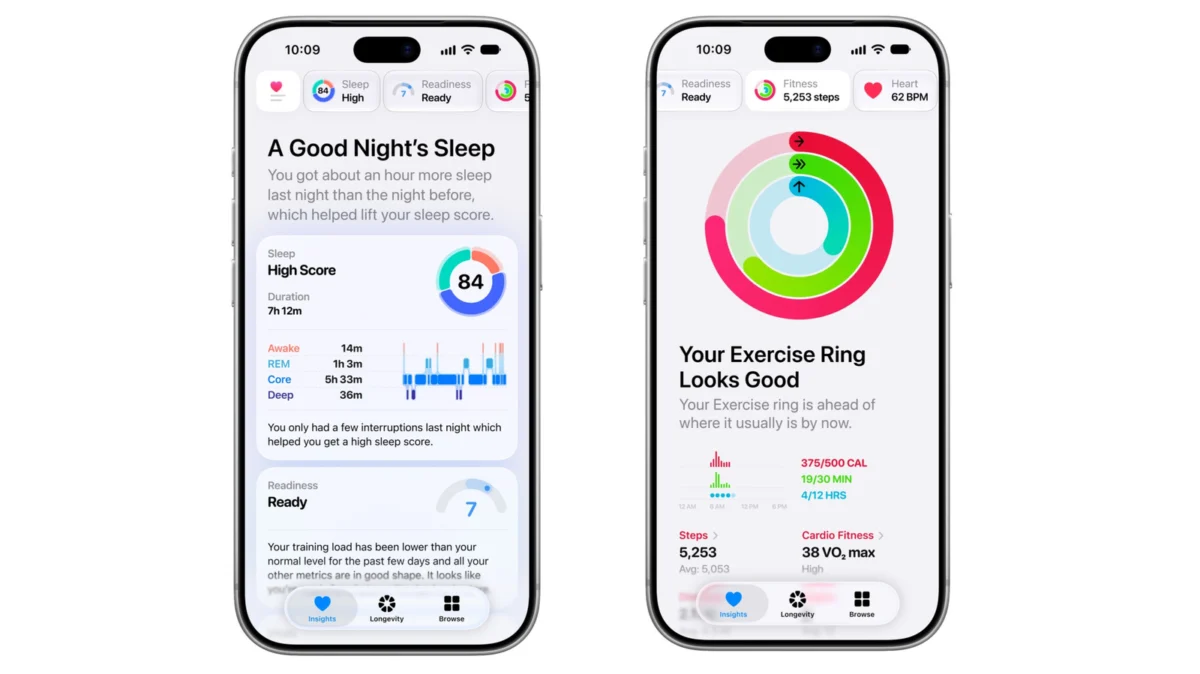
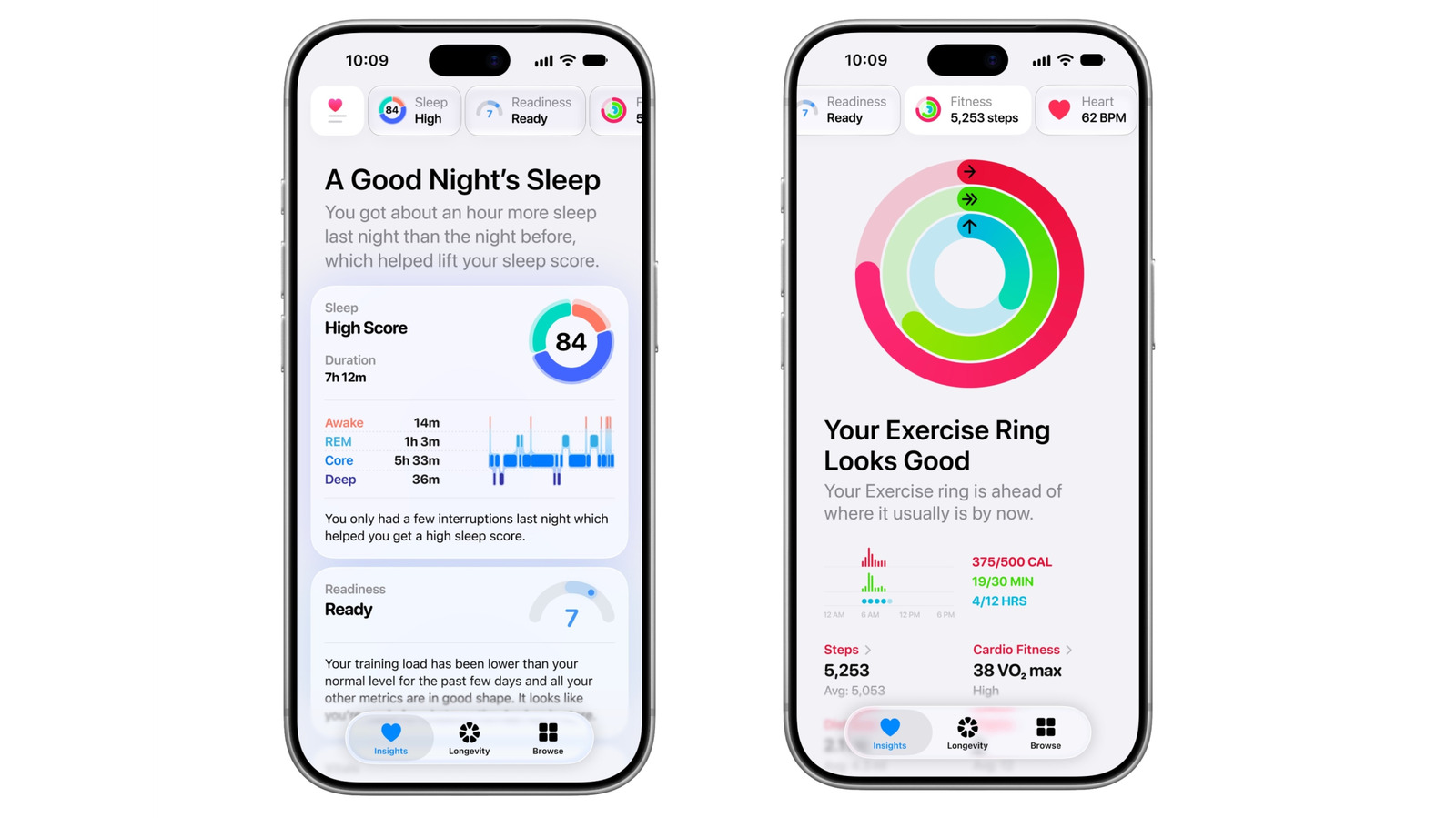
Previously, users had to manually navigate through various sub-menus to understand their trends. The new Insights tab serves as a curated dashboard, providing a bird’s-eye view of daily metrics. It aggregates data across sleep, cardiovascular fitness, and activity levels.
Notably, this tab is now bolstered by "Readiness" metrics, a feature exclusive to the Apple Watch Series 12 and the Ultra 4. By synthesizing heart rate variability (HRV), sleep quality, and recent activity intensity, the app now provides a readiness score—a feature that has long been the "killer app" for platforms like Whoop.
The Longevity Tab: A Holistic View
The most ambitious addition is the Longevity tab. Here, Apple introduces "Health Age," an analytical score that estimates how an individual’s physiological functions align with their chronological age. This is achieved by cross-referencing biometric data with population-wide health benchmarks.
Beyond Health Age, the app now includes movement assessments. These tools measure functional fitness metrics, such as flexibility, balance, and core strength. To add a layer of human expertise, Apple has introduced dynamic, expert-led commentary. When the system detects a specific trend in a user’s data—such as a persistent decline in sleep efficiency or a plateau in cardiovascular recovery—it triggers relevant video and written guidance from qualified health professionals.
A Chronological Progression: From Passive Tracking to Predictive Health
The road to this redesign has been a decade-long endeavor, marking Apple’s gradual ascent from a consumer electronics company to a formidable player in the medical technology sector.
- 2014: Apple launches HealthKit, establishing the foundation for third-party developers to sync health data with the iPhone.
- 2015: The release of the original Apple Watch initiates the mass collection of heart rate data, though the Health app remains a simple list of statistics.
- 2020-2022: Apple introduces advanced sensors, including SpO2 monitoring and ECG, shifting the focus toward clinical-grade data collection.
- September 2026: At its annual fall event, Apple announces the "Intelligence-driven" Health app overhaul, promising to utilize Apple Intelligence to synthesize raw data into actionable insights.
- Late 2026 (Current Status): iOS 27.2 developer beta introduces the redesigned interface, marking the transition from passive tracking to personalized wellness coaching.
Supporting Data: Why the Shift Matters
The shift in Apple’s strategy is a response to a changing market. According to recent industry reports, the wearable technology market is moving away from simple activity tracking and toward "recovery-focused" wellness. Consumers are increasingly fatigued by raw data points like "10,000 steps" and are instead prioritizing metrics that explain their energy levels, stress response, and long-term health trajectory.
The Competitive Landscape
- Whoop: Known for its screenless band and intense focus on strain and recovery, Whoop has dominated the athletic performance niche. Apple’s new readiness scores directly challenge this business model.
- Oura: By focusing on sleep staging and temperature trends to predict illness, Oura has carved out a massive segment of the "wellness-conscious" market. Apple’s new Health Age and readiness features mirror the value proposition that has driven Oura’s growth.
- Google/Fitbit: With the integration of Google’s AI, the Fitbit ecosystem has become highly adept at providing "Daily Readiness" scores. Apple’s move is essentially a defensive and offensive maneuver to ensure that the Apple Watch remains the preferred device for health-conscious users who might otherwise migrate to the Google ecosystem.
Official Perspectives and Expert Commentary
While Apple has remained characteristically tight-lipped regarding the specific algorithms powering the "Health Age" metric, the company’s recent press releases suggest a heavy reliance on secure, on-device machine learning.
"Our goal has always been to provide users with the most accurate, private, and actionable information about their health," an Apple spokesperson stated during the initial announcement. "By leveraging the power of our latest silicon and Apple Intelligence, we are moving beyond just showing users their data. We are helping them understand what that data means for their life tomorrow, next year, and for the years to come."
Independent health analysts have praised the move, noting that Apple’s primary advantage—its massive installed base—could democratize high-level health insights. However, some critics express concern regarding the "medicalization" of daily life. Dr. Elena Rodriguez, a digital health consultant, notes: "The risk is that these scores become a source of anxiety rather than empowerment. If an app tells you that your ‘Health Age’ is five years older than your actual age, it can be a jarring experience. The success of this redesign will depend entirely on how Apple frames this information—whether it’s presented as a rigid diagnosis or a flexible starting point for improvement."
Future Implications: The Road Ahead
The current beta is only the beginning. Apple has hinted at several upcoming features that will further complicate the landscape for its competitors.
Personalized Summaries and Lab Integration
In future beta releases, Apple plans to introduce deeper personalization for the Insights tab. This will allow the app to tailor its language and recommendations based on the user’s specific goals—whether that be marathon training, stress reduction, or general longevity. Perhaps most disruptive is the planned integration with diagnostic labs, such as Quest. This would allow users to order tests directly through the Health app and have the results automatically imported into their health profile, bridging the gap between wearable data and clinical blood work.
Privacy as a Differentiator
Unlike its competitors, Apple has consistently marketed privacy as a core feature of its health platform. All processing for the new Health app occurs on-device, meaning that sensitive data—such as movement assessments or readiness scores—never reaches Apple’s servers. In an era where data breaches are common and the commercialization of health data is a growing concern, this privacy-first approach remains Apple’s strongest competitive advantage.
The "Longevity" Market
The term "Longevity" is currently a buzzword in Silicon Valley, and Apple’s decision to name an entire tab after it is no coincidence. By aligning itself with the bio-hacking and wellness-optimization movement, Apple is positioning the Apple Watch not just as a piece of technology, but as an essential tool for life extension.
As the iOS 27.2 beta continues to evolve, the industry will be watching closely to see if Apple can truly deliver on the promise of an intelligent health partner. If successful, the days of the Health app being a "dumping ground" for raw data are officially over. The future of the Apple Watch is one of proactive, personalized, and expert-backed guidance, aimed at helping users live not just longer, but better.
While a public release date remains TBD—with the company simply stating "later this year"—the trajectory is clear: Apple is turning the iPhone and Apple Watch into the most advanced health-monitoring system ever placed in the hands of the general public. Whether this leads to a healthier society or merely a more data-obsessed one remains to be seen, but the shift in strategy is, without question, the most significant change in the company’s history of health innovation.