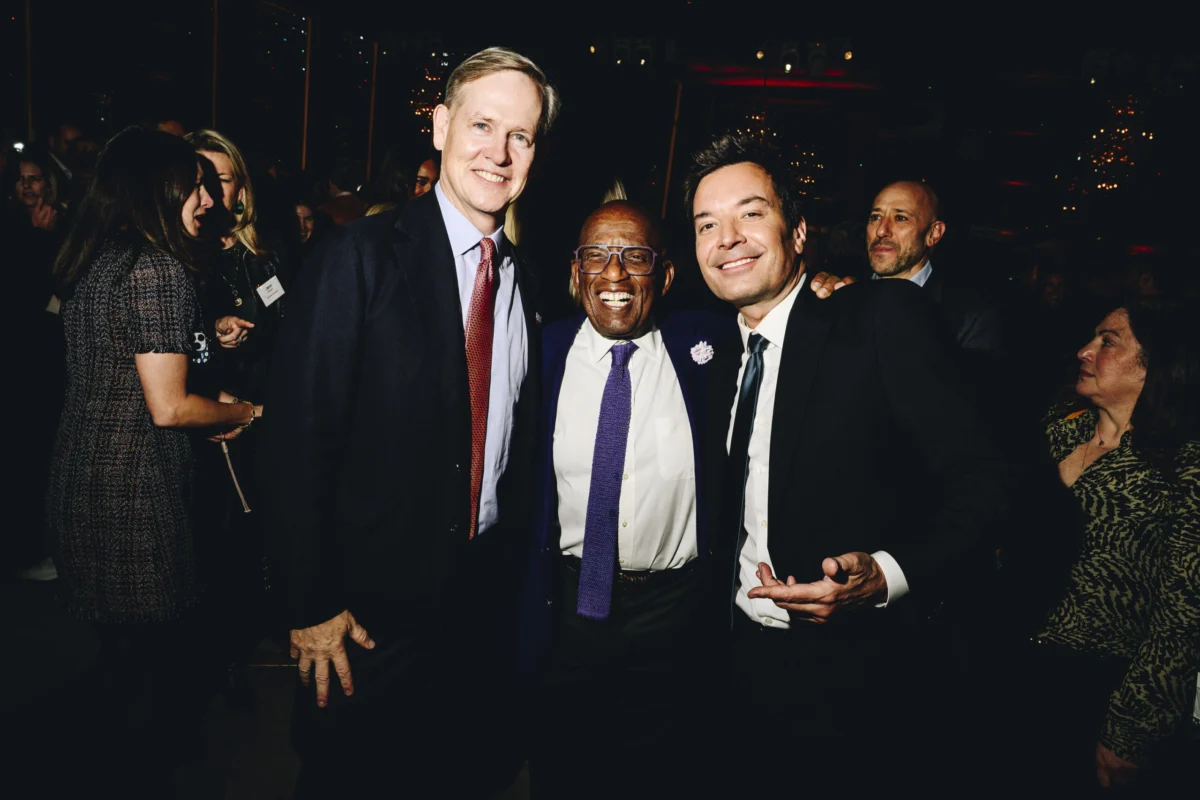
NEW YORK — Perched 65 floors above midtown Manhattan in the iconic Rainbow Room at 30 Rockefeller Plaza, television royalty, network executives, and cultural icons gathered this week to toast a monumental milestone: a century of broadcasting excellence.
The National Broadcasting Corporation (NBC), the network that famously brought the country its first coast-to-coast radio broadcast, marked its 100th anniversary with an exclusive, high-profile cocktail party. The event served as a glittering reunion for some of the biggest names in modern television, blending a retrospective look at a century of American entertainment with a forward-looking celebration of the network’s digital and streaming evolution.
Main Facts: The Centennial Kickoff
The centennial celebration brought together a robust cross-section of NBCUniversal talent, production masterminds, and corporate leadership. Attendees mingled over specialized cocktails, gourmet pasta stations, and sushi spreads inside the luxury Art Deco ballroom at 30 Rock—the historic home of the network.
Among the notable celebrities spotted in the ballroom were comedy titans Amy Poehler, Tracy Morgan, and Rachel Dratch; late-night fixtures Jimmy Fallon; broadcast mainstays Hoda Kotb and Al Roker; and media personality Andy Cohen.

Adding a uniquely authentic touch to the festivities was Wally Feresten—affectionately known industry-wide as "Cue Card Wally." Having worked behind the scenes on Saturday Night Live since 1990 and Late Night With Seth Meyers since 2014, Feresten spent the evening penning customized, humorous cue cards for party guests, celebrating the unsung heroes who keep live television running.
High-ranking corporate leadership was out in full force to honor the legacy. Comcast Co-CEO Mike Cavanagh led the executive contingent, joined by a powerhouse roster of NBCUniversal executives including Frances Berwick, Cesar Conde, and Pearlena Igbokwe.
The high-society cocktail reception is merely the opening salvo in a multi-platform rollout of centennial programming. The celebrations will culminate in a major live primetime special airing on NBC on December 10, promising a nostalgia-fueled evening of musical performances, comedic tributes, and surprise cast reunions spanning the network’s storied history.
Chronology: From Radio Waves to the Streaming Age
To truly understand the weight of NBC’s centennial, one must look back at a timeline that essentially mirrors the birth and evolution of modern American mass media.

- 1926 (The Genesis): Founded by the Radio Corporation of America (RCA)—then led by David Sarnoff—NBC launched on November 15, 1926. It made history with the country’s first nationwide radio network broadcast, connecting listeners across state lines and uniting a fragmented nation through audio storytelling, news, and music.
- The 1930s and 1940s (The Golden Age of Radio): As living rooms across America became anchored by large wooden radio consoles, NBC dominated the airwaves with comedy, suspense dramas, and vital wartime reporting, establishing the framework for modern network broadcasting.
- 1939–1950s (The Television Pioneer): True to its innovative spirit, NBC was an early pioneer in television technology. The network famously broadcast the opening of the 1939 New York World’s Fair via television. By the 1950s, the transition from experimental broadcasts to a commercial schedule was complete, and NBC introduced its iconic "Peacock" logo in 1956 to highlight the dawn of color television.
- The Late 20th Century (The Titans of Entertainment): Decades of groundbreaking programming followed. In 1975, Lorne Michaels launched Saturday Night Live, forever altering late-night comedy. The 1980s and 1990s cemented NBC’s dominance in sitcoms and dramas, giving rise to cultural phenomena like Cheers, The Cosby Show, Seinfeld, Friends, and ER, which regularly drew tens of millions of viewers per episode.
- The 21st Century (The Digital Shift): As the internet and on-demand viewing began to disrupt traditional linear television, NBC adapted. The network expanded its footprint through cable networks (like MSNBC, Bravo, and USA) and eventually entered the streaming wars with the launch of Peacock, ensuring its library and original content remained accessible to digital-first audiences.
Supporting Data: A Legacy in Numbers
- 100: Years of continuous operation since the network’s founding in November 1926.
- 65: The floor in 30 Rockefeller Plaza—the Rainbow Room—where network executives and stars gathered to toast the centennial.
- 1990: The year Wally Feresten began his historic tenure writing cue cards for Saturday Night Live.
- December 10: The scheduled date for NBC’s upcoming live, star-studded primetime anniversary special, which will feature historic cast reunions and musical performances.
- 3: Major eras of home entertainment successfully navigated by the network: Radio, Linear Television (Black & White to Color), and Digital Streaming.
Official Responses: Reflections from the Top Brass
Addressing the gathered crowd of talent, producers, and executives in the Rainbow Room, Comcast Co-CEO Mike Cavanagh delivered a passionate toast reflecting on the company’s past, present, and future.
"NBC has played a part in shaping American culture and society for 100 years. It’s an unbelievable legacy when you think about it," Cavanagh stated, raising his glass to the assembled icons.
Highlighting the rapid technological evolution the network has weathered, Cavanagh noted, "We’ve gone from radio to television, black and white to color, broadcast to streaming. All these technologies have changed. How we program has changed, and how we reach consumers and audiences is completely different than it once was."
However, Cavanagh was quick to pivot from technology to the human element that has driven the network’s success for a century.

"What hasn’t changed is the strength of the people who make up our company, and their courage and willingness to take big swings," he continued. "And that is a defining characteristic of NBC, and why I’m so proud to be a part of it. We look forward to an incredible next century."
Pearlena Igbokwe, Chairman of Universal Studio Group, and other key executives echoed these sentiments throughout the evening, emphasizing that the network’s longevity is a direct result of its willingness to empower creators to take bold, artistic risks—a philosophy that has yielded some of the most influential television programs in history.
Implications: What a Century of NBC Means for the Future of Media
As NBC steps across the threshold of its second century, the network’s centennial celebration offers broader implications for the future of the entire media and entertainment landscape.
1. The Enduring Power of the Broadcast Legacy
In an era dominated by fragmented digital content, algorithm-driven feeds, and decentralized creator economies, NBC’s milestone proves the enduring value of a unified cultural touchstone. While viewing habits have undeniably fractured, massive live television events—such as the upcoming December 10 primetime special—demonstrate that traditional media brands still possess a unique, unmatched ability to gather a massive, collective audience in real-time.

2. Adaptation as a Survival Mechanism
NBC’s history is a masterclass in corporate adaptability. Organizations that fail to pivot quickly become relics; yet NBC successfully transitioned from radio waves to analog television, embraced color broadcasting, mastered the cable boom, and ultimately built its own digital streaming ecosystem (Peacock). For modern media conglomerates facing unprecedented disruption from artificial intelligence, social video platforms, and shifting consumer subscriptions, the NBC playbook underscores the necessity of continuous, fearless reinvention.
3. The Human Element in an Automated Age
Perhaps the most symbolic moment of the Manhattan gala was the presence of Wally Feresten, hand-writing customized cue cards for stars like Jimmy Fallon and Amy Poehler. In an entertainment industry increasingly obsessed with digital automation, algorithmic content generation, and virtual production, the celebration served as a subtle reminder that the heart of television remains fundamentally human. It is the writers, the actors, the technicians, and the spontaneous live moments that forge emotional connections with viewers—a truth that has held fast for 100 years, and one that NBC hopes will carry it successfully through the next century.