

Finland — Back in May, members of the PC Gaming Show team traveled deep into the Nordic design hubs of Finland to sit down with the visionary creative minds at Remedy Entertainment. The objective: extract every possible detail regarding Control Resonant, the highly anticipated action-role-playing game (ARPG) sequel to 2019’s mind-warping hit, Control.
Following a brief teaser snippet broadcast during the June PC Gaming Show, Remedy and the press team have officially declassified the full, in-depth developer documentary. The footage reveals a project that not only expands the metaphysical boundaries of the Federal Bureau of Control (FBC) universe, but fundamentally redefines how open-world progression, environmental storytelling, and rhythmic sound design intersect in modern gaming.
With the game slated for release on September 24, players are preparing to step out of the sterile, brutalist corridors of the Oldest House and into an altered, deeply surreal iteration of Manhattan, New York.
Main Facts: A New Protagonist, a Bizarre Manhattan, and the Patterning
Control Resonant shifts its narrative focus away from Jesse Faden, the newly-appointed FBC Director, putting players instead in the shoes of her troubled brother, Dylan Faden. For the majority of the original 2019 game, Dylan was locked away in a high-security containment cell, crippled by dangerously volatile psychic abilities and heavy possession by the parasitic entity known as the Hiss.
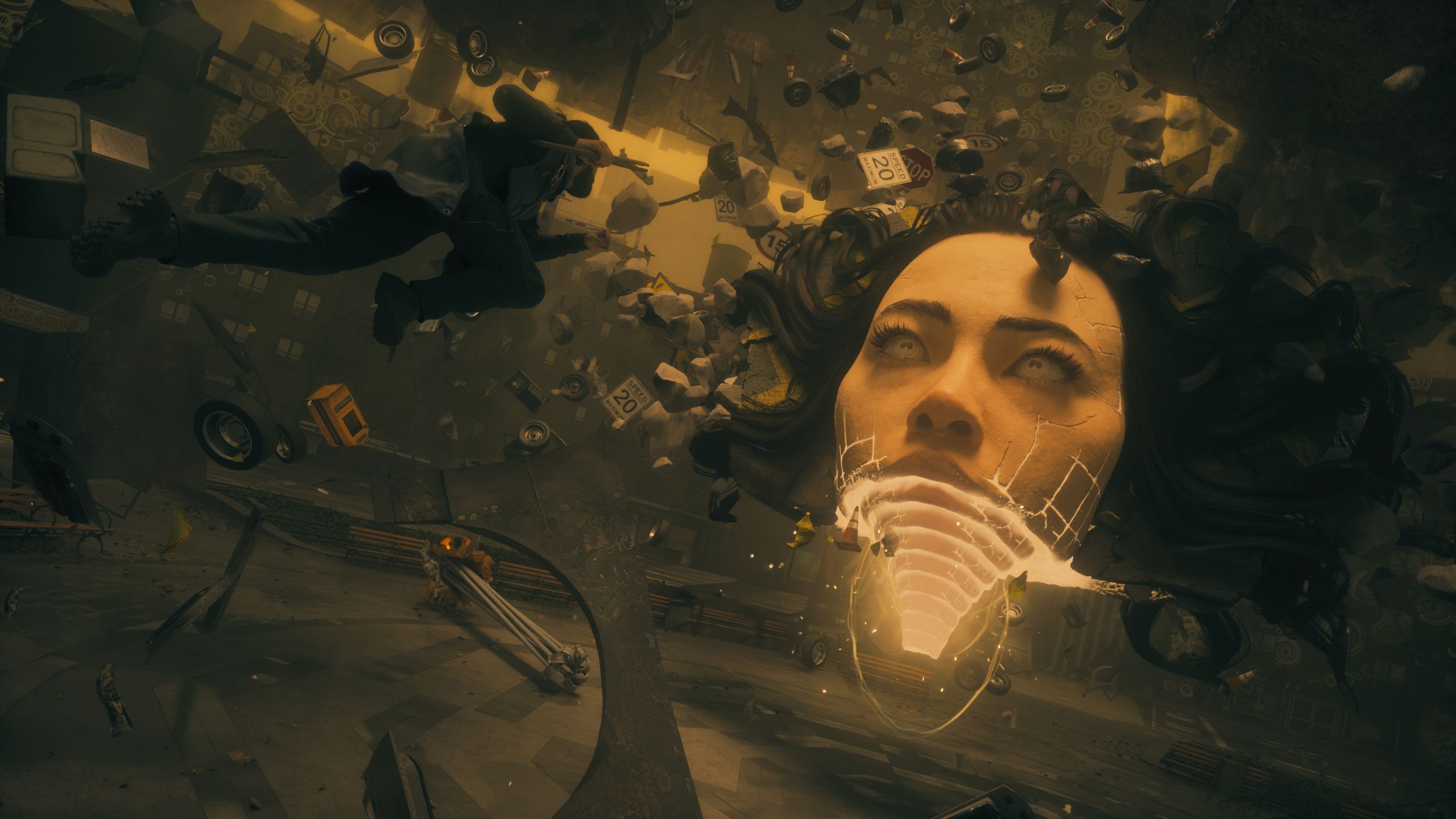
When Resonant begins, Dylan awakens from a prolonged coma to a horrifying reality: the Hiss have broken containment, escaping the Oldest House and flooding into the streets of Manhattan. Compounding this urban nightmare is an entirely new, deeply unsettling existential threat known as The Patterning.
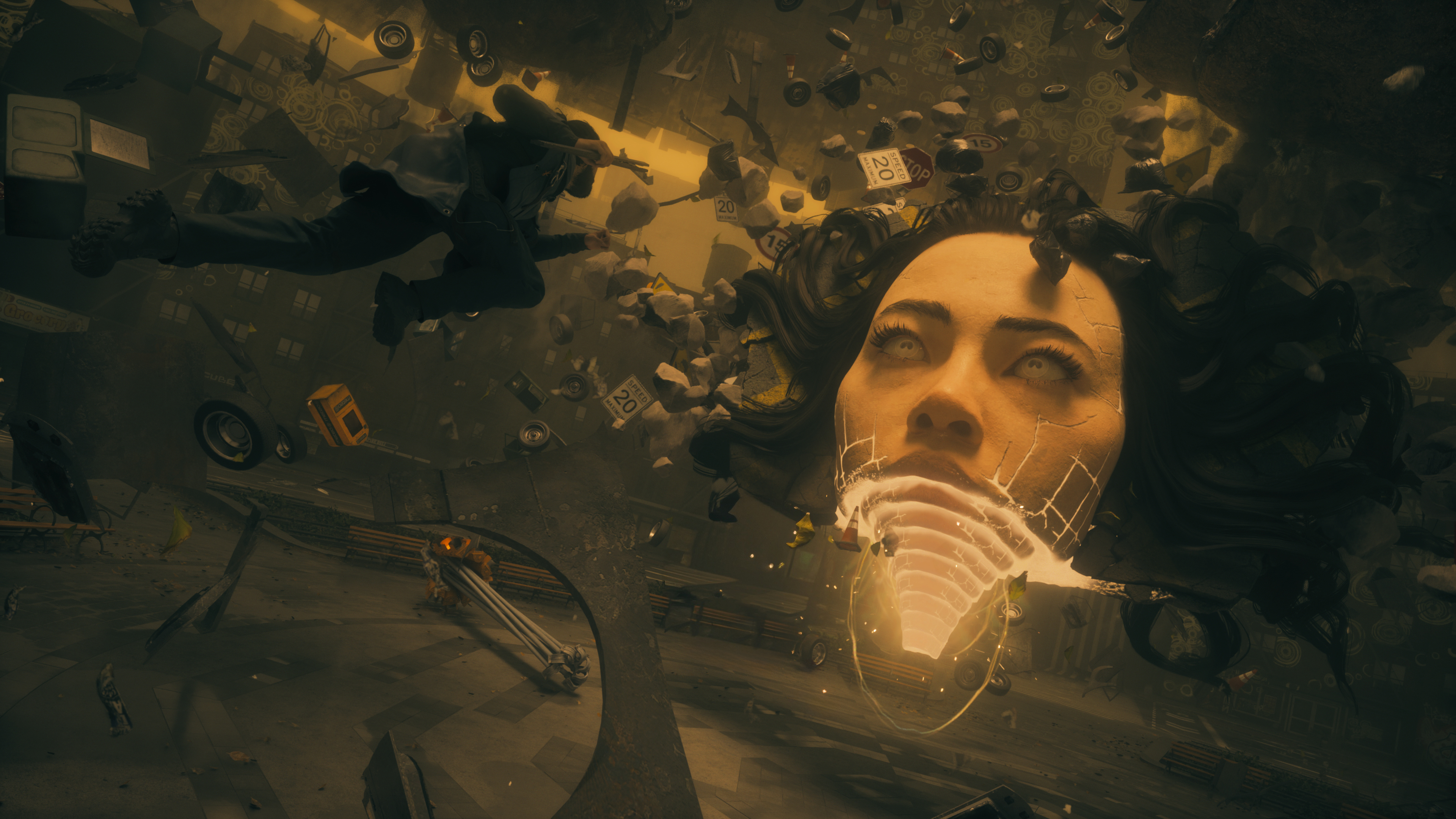
Unlike the invasive psychic resonance of the Hiss, the Patterning is an otherworldly, mathematical corruption rewriting the very fabric of reality across the island. It twists ordinary citizens into grotesque, warped boss encounters and bends the laws of physics, turning New York into a living, breathing M.C. Escher painting where gravity, light, and time no longer function by standard earthly rules.
Chronology: From the Oldest House Outbreak to the Streets of New York
To understand how Control Resonant arrived at its current state, one must look at the timeline of Remedy’s ambitious expansion of its interconnected universe:
- 2019: Remedy releases Control, introducing players to the mysterious Federal Bureau of Control, the brutalist headquarters known as the Oldest House, and the fate of the Faden siblings, Jesse and Dylan.
- May: The PC Gaming Show editorial team flies to Finland to conduct exhaustive, exclusive on-site interviews with Remedy’s core development team regarding the sequel’s production.
- June: A short, tantalizing teaser snippet of the developer interviews drops during the June PC Gaming Show, sparking intense fan speculation over the game’s shift to an ARPG structure and its surreal visual identity.
- September 20: Ahead of launch, the upcoming PC Gaming Show Tokyo Direct is scheduled to air further showcases and industry highlights.
- September 24: Control Resonant officially launches globally on PC via Steam, bringing its non-linear boss hunts and mathematical soundscapes to players worldwide.
Supporting Data and Design Philosophy: Defying Industry Norms
One of the most striking revelations from the developer interviews is Remedy’s intentional avoidance of contemporary video game trends. While many modern AAA studios look laterally at their competitors for market validation, Remedy chose an entirely different intellectual pool for Control Resonant.
Visual Inspiration: Escher and Avant-Garde Cinema
Art director Elmeri Raitanen noted that the team deliberately turned away from other video games to prevent falling into the trap of homogenization.
"There’s this tendency of people not taking risks, and games start to resemble each other quite a lot," Raitanen explained.
Instead, the team looked to the mind-bending mathematical lithographs of M.C. Escher, alongside avant-garde and psychological films like Ben Wheatley’s A Field in England and Satoshi Kon’s anime psychological thriller Paprika. This translates directly into gameplay mechanics: Dylan possesses the ability to manipulate gravity, walking fluidly across walls and ceilings—though in a world where the architecture itself is folding inward, distinguishing a wall from a ceiling becomes part of the psychological challenge.
Open-World ARPG Progression and Unpredictable Bosses
Unlike the metroidvania-style, tightly controlled progression of the original Control, Resonant adopts a more open-world ARPG framework, particularly when handling its "Resonants"—humans who have been severely warped by the Patterning into monstrous boss encounters.
Lead level designer Anne-Marie Grönroos detailed how these encounters break traditional video game loops. While the game may require players to defeat a specific quota of Resonants to progress, the map features significantly more bosses than are strictly mandatory. Furthermore, players are not locked into a linear path for acquiring abilities.
Because players can tackle these bosses in varying orders, the abilities Dylan absorbs along the way will differ wildly from playthrough to playthrough. The developers recounted an early playtester who failed to unlock the gravity-shifting ability until deep into the late-game—a variability that promises to foster deeply creative and chaotic "challenge runs" once the game is in the hands of the public.
Official Responses and Creative Insights
Remedy’s leadership has emphasized that Resonant is not just a direct continuation of a plotline, but an expansion of a living, breathing world.
Expanding the Universe Beyond a Single Family
Creative director Mikael Kasurinen addressed fan concerns regarding whether the Control universe risks becoming overly insular, ala Star Wars, by focusing exclusively on the Faden family bloodline. Kasurinen stated that his vision for the franchise is rooted in the design principles of tabletop pen-and-paper roleplaying games. The goal is to build a universe bound by robust, strange internal rules while offering players different perspectives, stories, and characters across subsequent entries.
The Architecture of Sound: Fibonacci Beats and Sine Waves
Sound design plays a foundational role in conveying Dylan’s psychological state. Composer Petri Alanko revealed an extraordinary methodology behind the game’s audio engineering, particularly for a specific boss encounter: a graceful, elegant Resonant who was a professional dancer in Manhattan when the Patterning struck.
Remedy worked alongside real-world professional dancers to capture her movements accurately, while Alanko built the accompanying fight music using kitchenware and mathematical sequences.
"I went through quite a lot of my kitchenware and built a rhythm based on Fibonacci numbers," Alanko explained, detailing how the musical beats follow the sequence
1, 1, 2, 3, 5, 8, 13, 21, where each subsequent number is the sum of the two preceding ones.
Furthermore, Dylan’s personal audio profile evolves alongside his character arc. Because Dylan spends the beginning of the game shedding the invasive neural architecture of the Hiss, he is effectively reborn.
"In the beginning, almost all the sounds that are related to him, they are formed of sine waves, which is basically the simplest form of sound," said Alanko. "Whenever he’s evolving as a person, or as a weapon, some other frequencies, other nuances, other textures, the tonal effects behind whatever Dylan does, gets more complex."
Implications for the Industry and Franchise
The release of Control Resonant on September 24 marks a critical test for Remedy Entertainment. By shifting genres from a supernatural action-adventure to an open-world ARPG, the studio is taking calculated risks that challenge traditional game design paradigms.
If successful, Resonant will prove that players are eager for non-linear progression models that embrace true systemic variability, rewarding improvisation over memorization. Moreover, the meticulous marriage of avant-garde visual art, mathematical sound composition, and a sprawling supernatural narrative cements Remedy’s status as one of the most daring independent-minded creative powerhouses in the modern games industry.
Fans eager to dive back into the weird world of the FBC can pre-order Control Resonant right now on Steam, and keep their eyes peeled for further announcements dropping during the PC Gaming Show Tokyo Direct on September 20.