
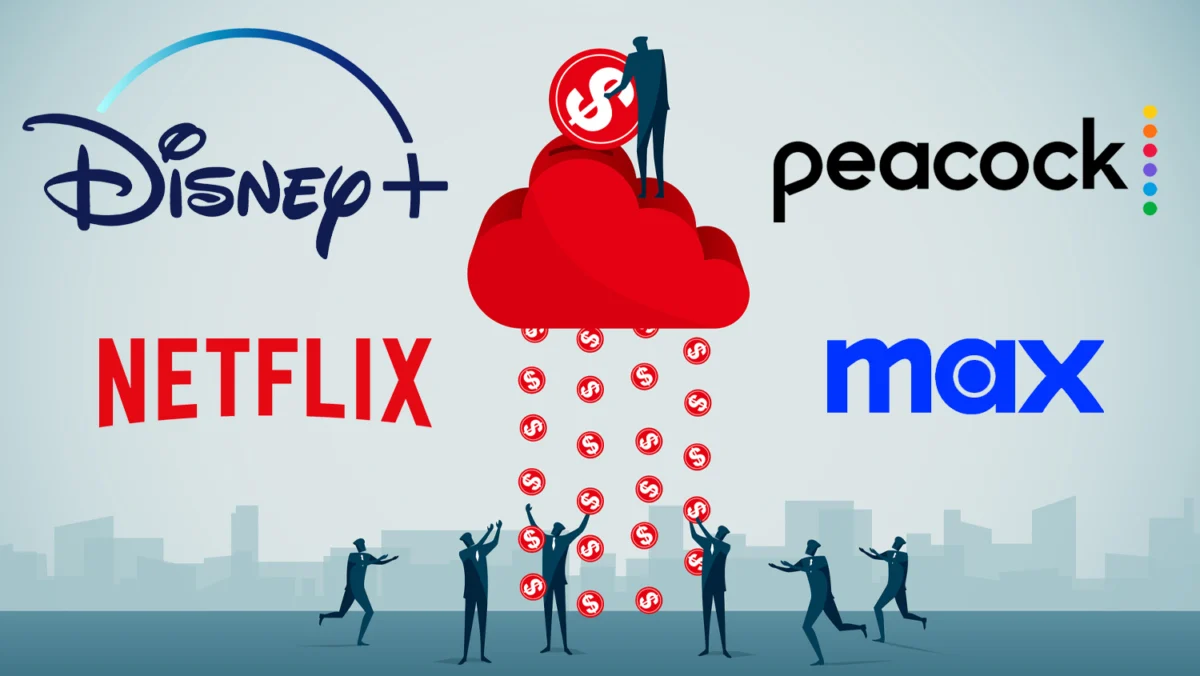
The golden era of cheap, ad-free streaming is officially a relic of the past. What began a decade and a half ago as a low-cost alternative to traditional cable—symbolized by the early days of Disney+ charging a mere $7 a month for uninterrupted entertainment—has evolved into a sprawling, high-stakes ecosystem characterized by relentless price hikes, complex ad tiers, aggressive password-sharing crackdowns, and a pivot toward old-school bundling.
According to data compiled by research firm Antenna, prices for both ad-free and ad-supported streaming services have surged on average by more than 20% since 2023. As inflation trickles through the broader economy, forcing the cost of daily essentials like groceries and fuel to historic highs, major platforms including Netflix, Disney+, Apple TV, Peacock, Max, and YouTube TV have continuously updated their pricing architectures. Today, keeping track of the going rate for home entertainment requires navigating a labyrinth of standard tiers, premium 4K options, ad-supported compromises, and cross-platform add-ons.
Main Facts: The Current Landscape of Streaming Costs
The macroeconomic pressures facing media conglomerates have forced a fundamental shift in how streaming services operate. No longer subsidized by venture capital or parent companies trying to build user bases at all costs, individual apps are now expected to turn a profit. Consequently, 2025 and 2026 have brought sweeping industry-wide price adjustments.
The landscape is now heavily stratified:
- The Ad Tier Strategy: Platforms are actively steering subscribers toward lower-cost tiers featuring advertisements by pricing ad-free experiences at a steep premium.
- Password Crackdowns: Following Netflix’s playbook, services like Max have instituted extra-member fees to monetize password sharing outside primary households.
- The Return of Cable-Like Bundles: Recognizing that consumers suffer from subscription fatigue, media giants are re-bundling their services or integrating with broadband and telecom providers to capture recurring revenue.
Chronology of Price Hikes (2023–2026)
The trajectory of streaming inflation over the last three years illustrates how rapidly companies have scaled up their pricing:
- Late 2023: Apple TV initiated a aggressive climb, raising its price to $6.99 monthly, before subsequent jumps pushed it higher. Amazon Prime Video also introduced a base ad-free upgrade fee.
- August 2024: Paramount+ implemented significant rate increases across its essential and premium plans, while STARZ pushed its monthly fees up to $10.99.
- May 2024: Comcast launched its Xfinity-exclusive "StreamSaver" bundle, attempting to capture broadband users with a $15-a-month package combining Apple TV, Netflix (with ads), and Peacock.
- Early 2025: Netflix executed a price bump across its tiers, setting a trend that competitors quickly followed. Max countered password sharing in April by launching a $7.99 "extra member add-on."
- Summer 2025: In a massive branding pivot, Max officially dropped its standalone identity and reverted to the classic "HBO Max" moniker while adjusting subscription costs. Meanwhile, Apple TV raised its monthly rate to $12.99, marking a 30% increase year-over-year. Peacock simultaneously hiked its Premium tier to $10.99.
- October 2025: Disney+ introduced a $2 increase to its ad-supported tier ($11.99), marking its fourth price hike in four years. HBO Max rolled out another broad price adjustment across its Standard and Premium offerings.
- December 2024 – January 2026: YouTube TV increased its basic plan by $10 to $82.99 per month, aligning its base level with heavyweights like Disney’s Hulu + Live TV package. Disney also finalized a major corporate maneuver to combine Hulu + Live TV with Fubo, acquiring majority ownership in the merged entity to settle antitrust litigation regarding the stalled Venu Sports venture.
- Early to Mid 2026: Netflix raised prices across all tiers at the end of March 2026, pushing its standard plan to $19.99 and its Premium plan to $26.99. Amazon rebranded its ad-free tier as "Prime Video Ultra" in March, raising the opt-out fee to $4.99. By August 2026, Peacock and Apple TV instituted their latest summer increases, bringing Apple TV to $14.99 a month ($119 annually) and Peacock Select to $8.99, with its Premium Plus tier reaching $19.99 a month.
Supporting Data: Comprehensive Breakdown of Major Services
Navigating the current market requires a detailed breakdown of what each major player charges for their various tiers:
Netflix
- Standard with Ads: $8.99 per month (up $1)
- Standard (Ad-Free): $19.99 per month (up $2)
- Premium: $26.99 per month (up $2)
- Key Content: Massive global tentpoles including Squid Game, Stranger Things, Bridgerton, alongside a growing slate of live sports and events such as WWE Raw and NFL broadcasts.
Apple TV
- Monthly Plan: $14.99 per month
- Annual Plan: $119 per year
- (Note: The platform formally dropped the "+" sign in late 2025 to rebrand simply as Apple TV).
- Key Content: Critically acclaimed prestige dramas and comedies like Severance and Pachinko, alongside Major League Soccer and Major League Baseball packages.
Disney+
- With Ads: $11.99 per month
- Ad-Free Monthly: $18.99 per month
- Ad-Free Annual: $189.99 per year
- Additional Member Fees: $6.99 per month for extra non-household members on ad tiers; $9.99 per month for premium additional members.
Hulu & Bundles
- Hulu (With Ads): $11.99 per month ($119.99 annually)
- Hulu (Ad-Free): $18.99 per month
- Disney+/Hulu/ESPN+ Bundle: Ranges from $21.99 (with ads) to $32.99 per month (ad-free).
HBO Max (Max)
- Basic with Ads: $10.99 per month ($109.99 annually)
- Standard (No Ads): $18.49 per month ($184.99 annually)
- Premium (No Ads / 4K): $22.99 per month ($229.99 annually)
- Extra Member Add-On: $7.99 per month to combat password sharing.
Paramount+
- Essential (With Ads): $8.99 per month
- Paramount+ Premium: $13.99 per month
- Note: BET+ is slated to fold directly into Paramount+, consolidating the company’s streaming ecosystem under one roof.
Peacock
- Select (Limited Library): $8.99 per month ($89.99 annually)
- Premium (With Ads/Full Library): $12.99 per month ($129.99 annually)
- Premium Plus (Ad-Free): $19.99 per month ($199.99 annually)
Prime Video
- Standalone Video: $8.99 per month
- Full Amazon Prime Membership: $14.99 per month or $139 annually (includes shipping and retail perks)
- Prime Video Ultra (Ad-Free Upgrade): An additional $4.99 per month.
STARZ
- Standard Monthly: $11.99 per month
- Annual Plan: $69.99 per year (frequently discounted via promotional signup offers).
Official Responses and Strategic Rationale
Streaming executives have been remarkably transparent about the necessity of these continuous price adjustments. During earnings calls, Wall Street analysts have consistently cheered price hikes, viewing them as a primary mechanism to drive average revenue per user (ARPU) and achieve sustainable profitability.
Executives have defended the push toward lower-priced ad tiers by pointing out consumer behavior. For instance, Netflix co-CEO Greg Peters noted that leadership "loves" maintaining a lower price point for ad-supported tiers to capture cost-conscious viewers while steadily extracting higher yields from premium subscribers.
Meanwhile, industry consolidation continues to shape executive strategy. Discussing potential market shifts, media figures like David Ellison have openly noted that structural integrations—such as exploring the combination of platforms like Paramount+ and HBO Max—are viewed as vital steps toward creating unified entities capable of directly challenging market leader Netflix. Furthermore, platform partnerships like the mid-2025 joint venture between Apple TV and Peacock—which introduced a joint bundle starting at $14.99 a month—demonstrate that competitors are increasingly willing to share ecosystem space to counter user churn.
Implications for the Consumer
For the everyday viewer, the modern streaming landscape presents a paradox of choice and financial fatigue. What was once heralded as a budget-friendly substitute for cable has fractured into a high-cost environment where assembling a personalized package of ad-free sports, movies, and television can easily rival or exceed a traditional cable bill.
As services like Roku and Amazon Prime Video expand their channel stores to feature native add-ons for Apple TV and Peacock, and as telecom providers roll out multi-service utility bundles, consumers are forced to adopt a strategic approach to their entertainment consumption. The days of "subscribing to everything all at once" are fading, rapidly giving way to a rotational model where households subscribe, binge, cancel, and move on to the next platform.