Main Facts
In what can only be described as one of the most astonishing turnarounds in modern gaming history, Bungie and its parent company, Sony, have officially reversed their decision to place Destiny 2 into end-of-life maintenance mode. Just over three months after announcing that the seminal live-service sci-fi shooter would cease all future content updates and be retired to "live out its days on a farm upstate," studio leadership has dramatically changed course, declaring Destiny "foundational" to the future of the company.
As an immediate gesture of good faith to a battered but fiercely loyal player base, Bungie confirmed that work has already begun to systematically reverse the controversial "Destiny Content Vault" (DCV) scheme. This means previously removed, paid expansions, raids, and planetary destinations—excised from the game over the years to combat technical bloat—are slated for eventual restoration.
The reversal follows a relentless, three-month community-led campaign that targeted Sony’s corporate infrastructure, high-profile live showcases, and social media presence. What began as widespread despair quickly morphed into organized, vocal resistance, ultimately proving that dedicated players can still bend corporate publishing giants to their will.
Chronology of a Crisis and Comeback
February: The Death Sentence
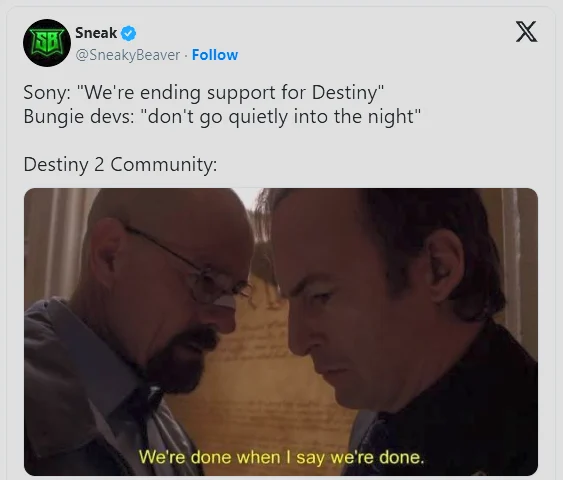
The crisis began earlier this year when Bungie and Sony shocked the gaming industry by revealing that Destiny 2 would officially sunset its live-service model. Following years of turbulent expansions, studio layoffs, and declining player sentiment, the executive leadership decided to wind down active development. The plan was to let the game coast on automated maintenance while the studio supposedly pivoted toward new horizons, chief among them the extraction shooter Marathon. For millions of Guardians who had invested thousands of hours and substantial financial capital into the universe over a decade, it felt like a sudden, unceremonious execution of a beloved virtual home.
March to May: The Siege of Sony
Refusing to go quietly into the night—a phrase heavily leaned upon by both the community and internal Bungie communications managers—players and content creators mobilized. Recognizing that Sony bore ultimate publishing responsibility, the community launched a multi-pronged assault on the corporate fortress.
Sony’s social media channels, corporate livestreams, and investor updates were inundated with a unified rallying cry: spamming "We Want Destiny 3" across every available chat room. Simultaneously, a Change.org petition demanding Sony commission a true successor skyrocketed past 400,000 signatures. Defying industry trends, Destiny 2’s concurrent player numbers stubbornly refused to drop, hovering at roughly six times the player counts of Bungie’s nascent projects. Even players from rival communities, such as Warframe, stepped forward to offer solidarity.
June: The Sudden Reversal
Caught off guard by the sheer tenacity and visibility of the backlash, Sony and Bungie’s C-suite buckled. Recognizing that the negative PR was bleeding into broader corporate brand perception—at a time when Sony was already navigating public relations friction elsewhere—executives initiated a secret internal pivot.
By late June, prominent community insiders began hinting that the winds were shifting. Finally, in a stunning announcement yesterday, Bungie officially un-canceled the game. The live-service model is back, active development has resumed, and the long-lost content vault is officially being unlocked.
Supporting Data and Community Metrics
The scale of the Destiny 2 community’s mobilization is historically rare in the video game industry. To understand how a multi-billion-dollar corporation was forced to rewrite its roadmap, one must look at the hard data and engagement metrics that defined the three-month standoff:
- The 400k Milestone: The Change.org petition addressed to Sony executives smashed through 400,000 verified signatures, serving as an undeniable quantitative metric of consumer demand.
- The Concurrency Gap: Throughout the period of supposed abandonment, Destiny 2’s daily active user concurrency remained roughly six times higher than that of Bungie’s heavily pushed extraction shooter, Marathon.
- Content Creator Reach: Reaction videos from foundational community figures generated millions of views within 24 hours of the announcement. Channels like My name is Byf, Aztecross, Mactics, and Llama captured real-time emotional highs, transitioning overnight from grief-stricken eulogies to unfiltered victory laps. Llama’s live-streamed reaction—shifting from shock to tears of joy—encapsulated the deep emotional stakes involved for those whose livelihoods are tied to the franchise.
Official Responses and Creator Reactions
The gaming community’s response to the resurrection has been a complex mixture of unbridled euphoria, vindication, and cautious skepticism.
The Euphoria of Victory
For many creators who spent years building their platforms on the back of Destiny, the news felt like a miraculous reprieve. Lore master My name is Byf titled his celebratory video "We did NOT go quietly. We Won," a direct nod to both Dylan Thomas’s famous poem and a parting message left by Bungie principal communications manager dmg04 when the mothballing was first announced.
Aztecross, who maintained relentless pressure on Sony through well-placed industry sources and direct commentary, simply titled his broadcast "Destiny Community, You Did It."
The Voices of Caution
Not everyone popped champagne immediately. A significant portion of the player base on Reddit (r/DestinyTheGame) and Twitter/X urged their peers to temper their excitement. Threads like "Please keep expectations in check" highlighted a collective trauma born from years of broken promises, unfulfilled roadmaps, and content removal.
Prominent veteran creator Datto made it clear he would not be returning to the fold, stating on X: "to anyone wondering: i am not unretiring from destiny. happy for y’all though! but i am gonna keep trying to do something new :)." He later added bluntly, "yeah I’m not planning a return for sunset content."
Similarly, long-departed community veteran Gladd sounded a stark warning:
"Here we go. Now everyone’s hopes are up. Most likely more unfulfilled promises. The ‘I-told-you-so’ people are gonna spam ‘We Won!’ And the folks with a single personality trait are gonna be let down… again. This seems like another repeated cycle."
Implications and Future Outlook
While the immediate emotional high of the announcement is palpable, the hard logistical realities of game development loom large over Bungie’s future. The un-cancellation of Destiny 2 raises more technical and structural questions than it immediately answers.
The Engineering and Staffing Dilemma
Can Bungie successfully reverse its own course after significant studio layoffs? A staggering amount of institutional knowledge walked out of Bungie’s doors during recent downsizing waves. Rebuilding, optimizing, and reintegrating years of vaulted content—much of it originally coded for older iterations of the engine—is a monumental technical undertaking. Furthermore, the studio must now solve the eternal paradox that plagued Destiny 2 from its inception: how to generate enough fresh, compelling content to satisfy a ravenous player base without causing game file sizes to balloon and operational costs to spiral out of control.
The Anatomy of Corporate Thin-Skin
Perhaps the most fascinating implication of this saga is the psychological leverage modern gaming communities hold over corporate conglomerates. Senior executives at major console manufacturers are notoriously sensitive to sustained, highly public brand degradation. While the initial decision to sunset the game may have looked pristine on a sterile corporate spreadsheet, Sony severely underestimated the stubborn loyalty of Guardians. Facing a relentless onslaught of pitchfork-wielding fans in every live chat and investor forum—compounded by existing consumer friction elsewhere—the leadership realized that killing Destiny was simply generating too much toxic noise.
A Fitting Legacy for "Unkillable Zombies"
Ultimately, this unprecedented reversal proves that the player base did move the needle. In an industry where corporate decisions are treated as immutable laws of physics, the Destiny community proved otherwise. For a franchise whose lore centers around immortal warriors gifted with the power of resurrection, rising from the dead feels poetically appropriate. Whether Bungie can stick the landing and rebuild the game to its former glory remains to be seen, but for now, the Tower lights are back on, and the Guardians have won their war.