In the rapidly evolving landscape of wearable technology, the boundary between personal privacy and machine learning advancement has become increasingly porous. Meta, the parent company of Facebook and Instagram, has recently taken a significant step toward transparency regarding its Ray-Ban Meta smart glasses. The company is now rolling out a new privacy setting that allows users to explicitly opt out of having their "visual data" used to train Meta’s artificial intelligence models.
This move follows growing scrutiny over how tech giants ingest user data to refine their large multimodal models (LMMs). For owners of Meta’s smart glasses, the update serves as a critical junction: a choice between contributing to the collective "intelligence" of the device or maintaining a strictly local, private experience.
The Core Facts: What Is Changing?
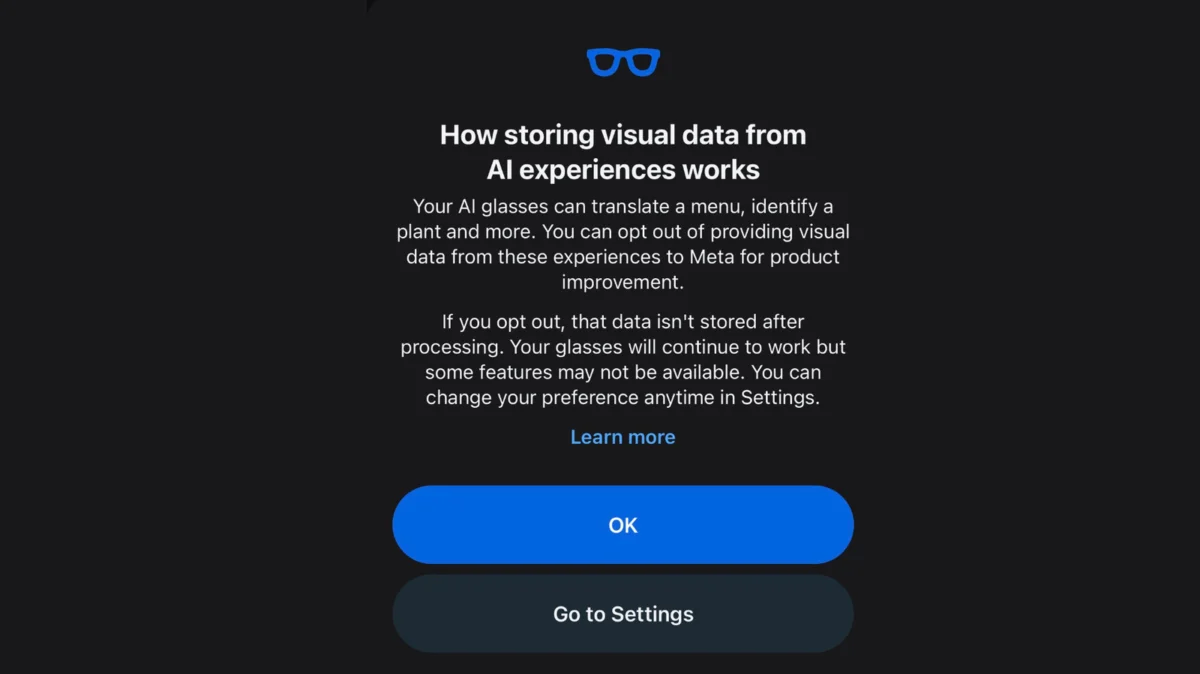
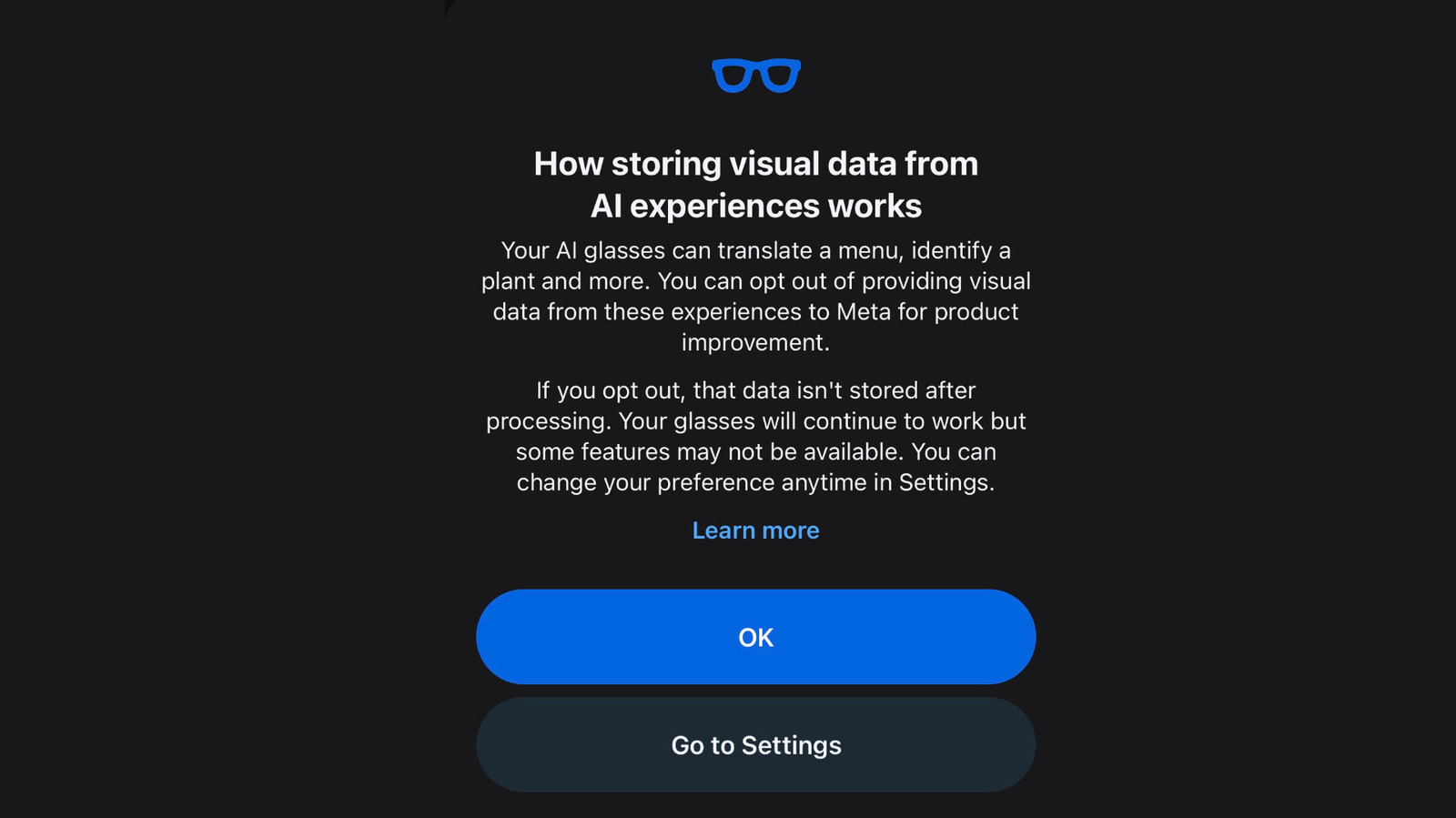
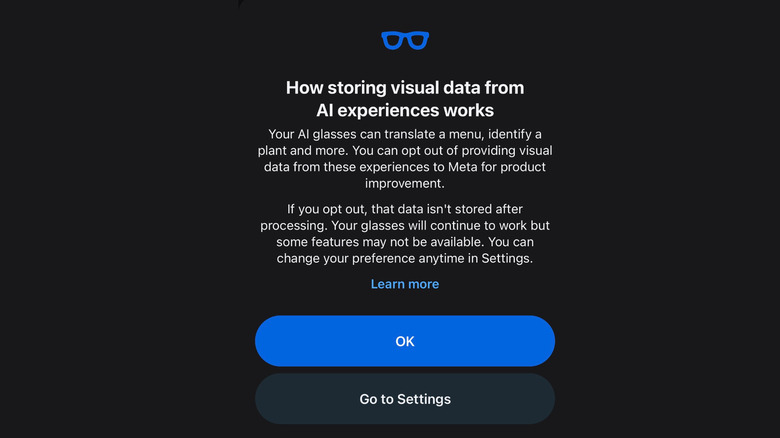
Meta has begun pushing a notification to users of its smart glasses via the Meta AI app. The alert informs users that their devices—which possess the capability to identify plants, translate menus, and provide real-time context about the world—have historically been harvesting visual data to improve future iterations of the technology.
The new setting, titled "Store visual data from AI experiences," allows users to revoke this permission. When a user opts out, Meta asserts that the visual data captured during AI-driven interactions will no longer be stored after the initial processing is complete.
How to Adjust Your Settings
The process for disabling this data collection is straightforward but requires specific conditions:
- Connectivity: Your smart glasses must be out of their charging case and actively connected to your smartphone.
- Navigation: Within the Meta AI app, navigate to the settings menu for your specific pair of glasses.
- Toggle: Select "Meta AI" and scroll down to the toggle labeled "Store visual data from AI experiences."
- Multi-Device Management: If you own multiple pairs of smart glasses, you must repeat this process for each individual device, as the setting is stored locally on the hardware rather than globally on your Meta account.
A Chronology of Data Transparency
To understand why this change is occurring now, one must look at the timeline of Meta’s wearable ambitions and the shifting regulatory environment regarding AI.
- September 2023: Meta officially launched the second generation of its Ray-Ban smart glasses, emphasizing the integration of Meta AI. At launch, the marketing focused on the "hands-free" nature of the device, with less public emphasis on the backend data pipeline.
- Early 2024: As Meta’s Llama 3 models began to dominate the headlines, researchers and privacy advocates began questioning the provenance of the training data used to make the glasses "smarter."
- Mid-2024: Regulatory pressure, particularly from the European Union’s Digital Markets Act and the AI Act, began forcing companies to be more explicit about their data retention policies.
- Late 2024: Meta initiated the current rollout, providing the "opt-out" mechanism as a proactive measure to preemptively address privacy concerns before they escalate into formal investigations or class-action litigation.
The "Human Review" Factor: What Does It Mean?
One of the most consequential revelations in Meta’s updated help center documentation is the explicit confirmation of manual human review. Meta has clarified that the data it collects is used to power AI features, and that this improvement process is not always handled by algorithms.
"The process of training and improving AI models… may be automated or manual (human)," the company states. This admission strikes a nerve with privacy advocates who worry about the sensitivity of visual data. While the company claims that standard photo and video captures (indicated by the LED capture light) are not part of this training pool, any visual data analyzed by "Meta AI" features—such as looking at a storefront or a document to translate it—is fair game unless the user opts out.
The prospect of a human employee reviewing images captured by a user’s glasses in a domestic or professional setting raises significant ethical questions. While companies often argue that such reviews are "anonymized" and necessary for quality control, the sensitive nature of the information—potentially including faces, private documents, or personal belongings—makes the manual review policy a contentious point of friction.
Implications for User Experience
Opting out of data collection is not without its costs. Meta has signaled that disabling the storage of visual data may degrade the functionality of certain "proactive" AI features.
The Cost of Privacy
The primary feature at risk is "visual reminders." For instance, if a user looks at a carton of milk and tells the glasses, "Remind me to buy more of this on Tuesday," the AI must store the visual context of the product to associate it with the reminder. If the data is deleted immediately after the command is processed, the system may lose the ability to provide accurate, context-aware assistance in the future.
While Meta has been vague regarding exactly which features will be neutered by an opt-out, the trade-off is clear: Personalization requires persistence. Users are essentially being asked to choose between a "dumb" assistant that respects their privacy and a "smart" assistant that learns from their daily environment.
Analyzing the Corporate Response
Meta’s official stance is that it is balancing innovation with user agency. By providing a clear, accessible toggle, they are attempting to shift the burden of privacy management onto the user.
"We are committed to building AI that is helpful and safe," a Meta spokesperson noted in an internal briefing. "Providing users with the tools to manage their data is a core component of our commitment to transparency."
However, privacy analysts argue that this is a classic "dark pattern" scenario. By defaulting the setting to "on" and burying the opt-out mechanism within the device-specific settings, Meta ensures that the vast majority of users—those who do not obsessively check their privacy dashboards—will continue to provide training data to the company. It is a calculated move to maximize data intake while providing a legal "out" for the privacy-conscious minority.
The Broader AI Landscape: Why It Matters
The situation with Meta’s smart glasses is a microcosm of the current state of AI development. Every major tech player—Google, Apple, Microsoft, and OpenAI—is currently engaged in a massive data grab. The quality of an AI model is increasingly defined by the diversity and density of its training data.
Visual data is considered the "holy grail" of AI training. Text is plentiful, but high-quality, ego-centric video and imagery—the kind captured by glasses—is rare and highly valuable for training AIs to navigate the physical world. This data allows models to understand spatial relationships, object permanence, and human social cues in ways that static web images cannot.
The Regulatory Horizon
Governments worldwide are beginning to recognize that visual data is "biometric-adjacent." If a pair of glasses captures a face, a license plate, or a private document, it is not just "data"; it is personal information. The coming years will likely see stricter regulations, perhaps requiring "Privacy by Design" where data collection is opt-in by default, rather than opt-out.
Conclusion: How to Stay Protected
For the average user, the takeaway is clear: the technology is moving faster than the regulations. If you own a pair of Ray-Ban Meta glasses, you should:
- Check your settings today: Do not assume your privacy is the default. Navigate to the Meta AI app and verify the state of your data-sharing toggles.
- Understand the trade-offs: Accept that some features may function less effectively if you choose to protect your privacy.
- Stay informed: Keep an eye on the Meta help center. As the company updates its AI capabilities, it is likely to update its data collection policies as well.
In the age of ambient computing, your eyes are effectively the sensors for a massive global network. Being an informed participant in that network is the only way to ensure that your personal digital footprint remains under your control. While Meta provides the bridge to the future of AI, the responsibility for guarding the gate remains firmly in the hands of the wearer.
As we move toward a future where smart glasses may become as ubiquitous as smartphones, the ability to selectively "go dark" and prevent our daily observations from fueling corporate AI models will become one of the most important digital skills of the 21st century.